
Loading, please wait...



LOT 0041
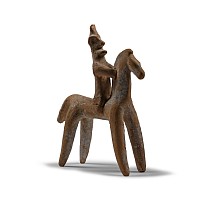
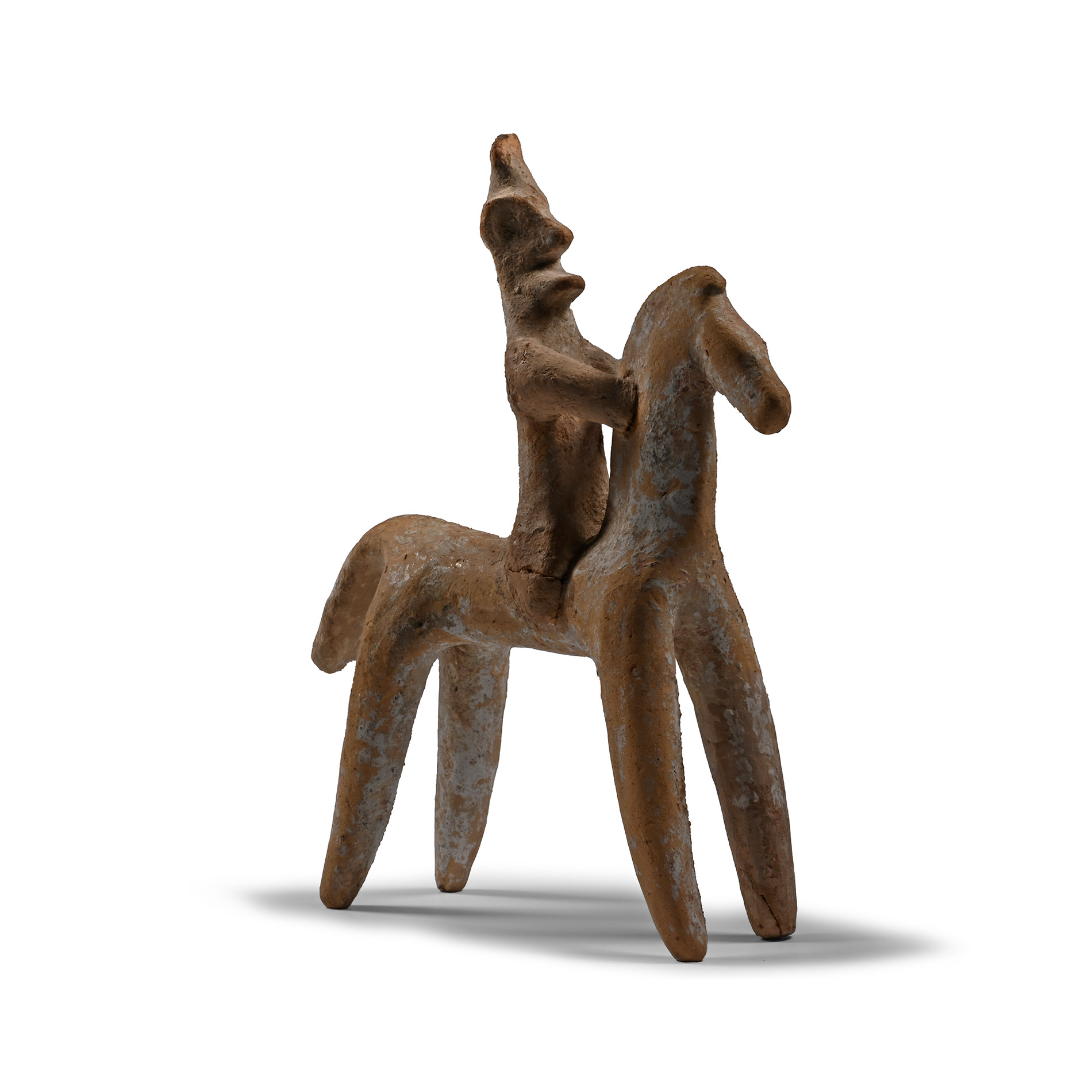
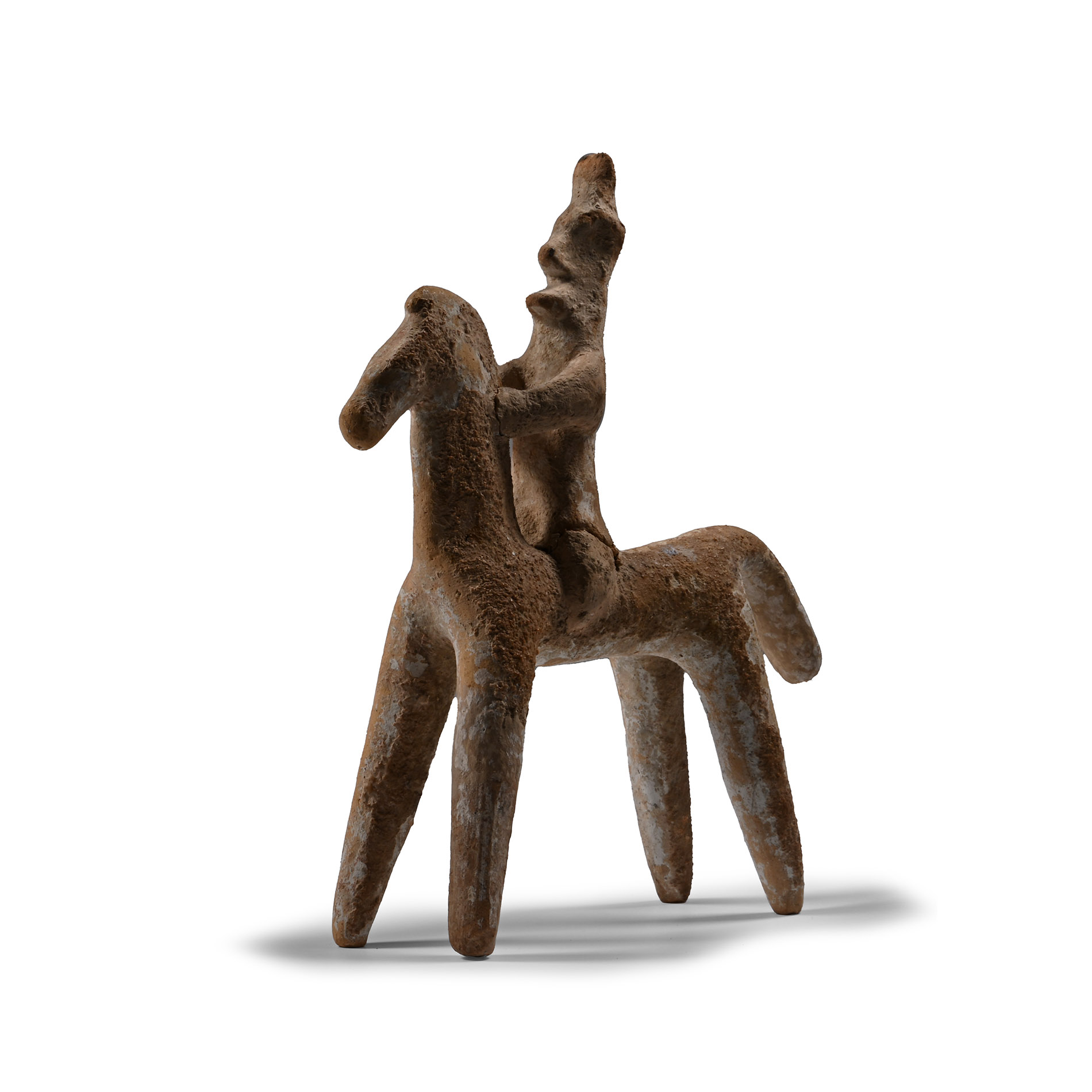
Cypriot Ceramic Horse and Rider
CIRCA 6TH CENTURY B.C.
5 3/4 in. (140 grams, 14.7 cm high).
Representing a warrior wearing a conical helmet, riding a horse with long neck and legs, short mane and tail; repaired.
ProvenanceMr F.D. collection, acquired on the European art market, 1975 to present.
This lot is accompanied by an illustrated lot declaration signed by the Head of the Antiquities Department, Dr Raffaele D’Amato.
Cf. Karageorghis, V., Cipro, Crocevia del Mondo Mediterraneo orientale 1600-500 a.C., Milano, 2002, figs.377, 383.
FootnotesThe most popular animals in Cypriot coroplasts of the 8th and 7th centuries B.C. were horses, with or without riders, with long necks and decorated bodies. It is worth remembering that the horse in this period represented a status symbol for the military aristocracy and that bodies of sacrificed horses have been found in royal tombs.
CONDITIONTimeLine Auctions follows a vetting process to ensure the authenticity and legality of all items, reinforcing our commitment to integrity and responsible trading. Each antiquity, antique, and coin lot undergoes thorough examination by a vetting committee of at least ten external specialists, professional trade association members, scientists, and archaeologists: Our Vetting Process
AUCTIONS:
TimeLine is a leading auction house specialising in antiquities, ancient art, collectables, natural history, coins, medals, and books. Our auctions offer museums, collectors, historians, and enthusiasts the opportunity to acquire unique and historically significant pieces.
-
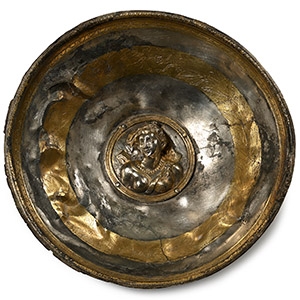
Hellenistic Silver-Gilt Bowl with Diana in Roundel
1st century B.C.Estimate: £50,000 - 70,000 (+bp*)
Opening Bid: £25,000
Comprising a deep hemispherical libation bowl with rolled rim bearing impressed egg-and-dart detailing, band of gilt wave-pattern ornament below the rim, separate broad band with ivy-leaf wreath; central tondo with repoussé bust of Diana with quiver over one shoulder, beaded necklace, deerskin mantle secured below her left shoulder, wayward hair fastened by an ivy-leaf diadem; beaded border with four studs; some restoration. 321 grams, 20 cm diameter
French art market, 1960s. Ex Kanter Collection, London, UK, 1975. Accompanied by an academic report by Dr Raffaele D'Amato. This lot has been checked against the Interpol Database of stolen works of art and is accompanied by search certificate no.12494-230333. This lot has been cleared against the Art Loss Register database, and is accompanied by an illustrated lot declaration signed by the Head of the Antiquities Department, Dr Raffaele D’Amato. -
.jpg)
Large Cypriot Buff Ware Storage Bowl
Iron Age, Cypro-Geometric, circa 950-850 B.C.Sold for (Inc. bp): £169
Drum-shaped in profile with carination above the foot, rolled rim to the mouth; chipped. 2.3 kg, 20.5 cm high
From a collection acquired on the UK art market from various auction houses and collections mostly before 2000. From an important Cambridgeshire estate; thence by descent. This lot is accompanied by an illustrated lot declaration signed by the Head of the Antiquities Department, Dr Raffaele D’Amato. -
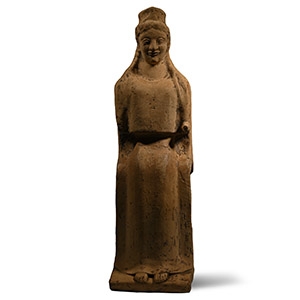
Massive Archaic Greek Terracotta Statuette of a Seated Goddess Demeter
Late 6th century B.C.Estimate: £4,000 - 6,000 (‡+bp*)
Opening Bid: £1,710
Seated on a high-backed throne, wearing a polos headdress with two long braids falling from underneath the headdress, wearing a long chiton fastened by a belt, the left arm raised, possibly once holding a dove; well marked facial features, slightly almond-shaped large symmetrical eyes with slightly raised eyelids, straight nose, strongly pronounced mouth with fleshy lips and shallow ears; traces of brown slip, repaired. 2.02 kg, 57.7 cm
with H.A.C., Basel, prior 1999. Accompanied by a thermoluminescence analysis report no.N125a51 from Oxford Authentication. Accompanied by an academic report by Dr Raffaele D'Amato. This lot has been checked against the Interpol Database of stolen works of art and is accompanied by search certificate no.12461-228712. This lot has been cleared against the Art Loss Register database, and is accompanied by an illustrated lot declaration signed by the Head of the Antiquities Department, Dr Raffaele D’Amato.
One of the most typical 6th century B.C. terracotta female figurines was that of a standing or seated woman wearing a chiton and a himation over it. It was a votive figure offered at the shrines or temples, usually representing the goddess Demeter. Attica was one of the principal centres of figurine production, but Corinth continued to produce solid standing or seated females with moulded fronts and flat backs. The mass production of such terracotta was also typical of Magna Graecia.
