
Loading, please wait...
LOT 0528
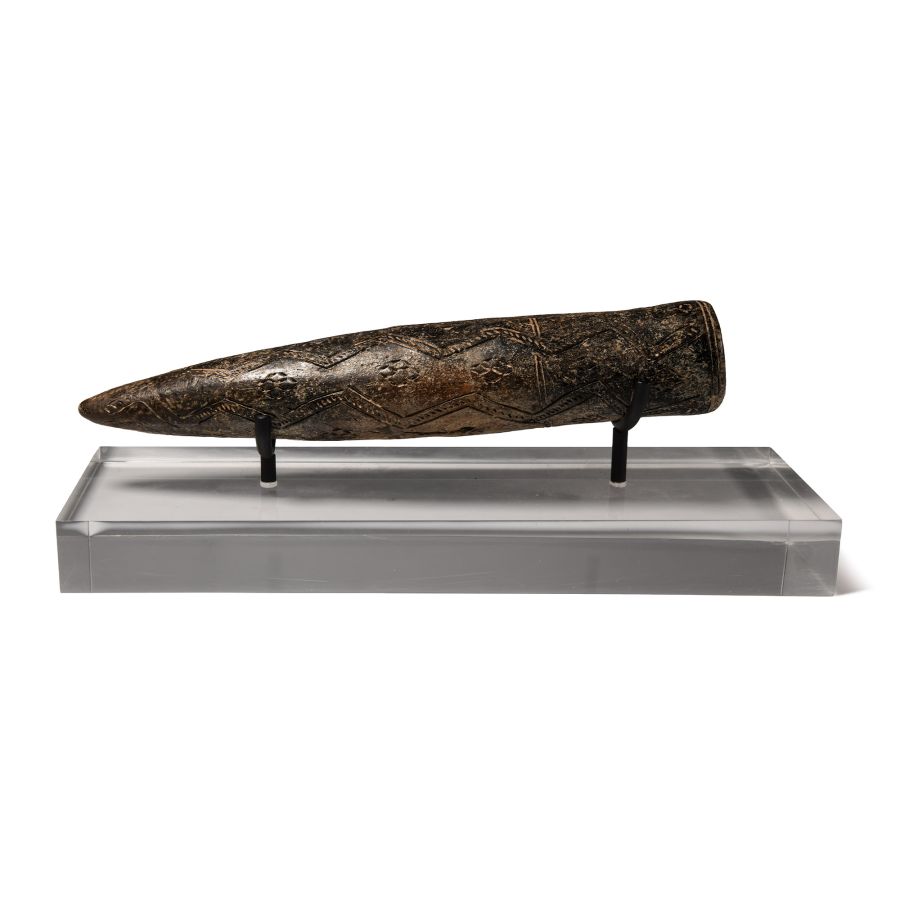
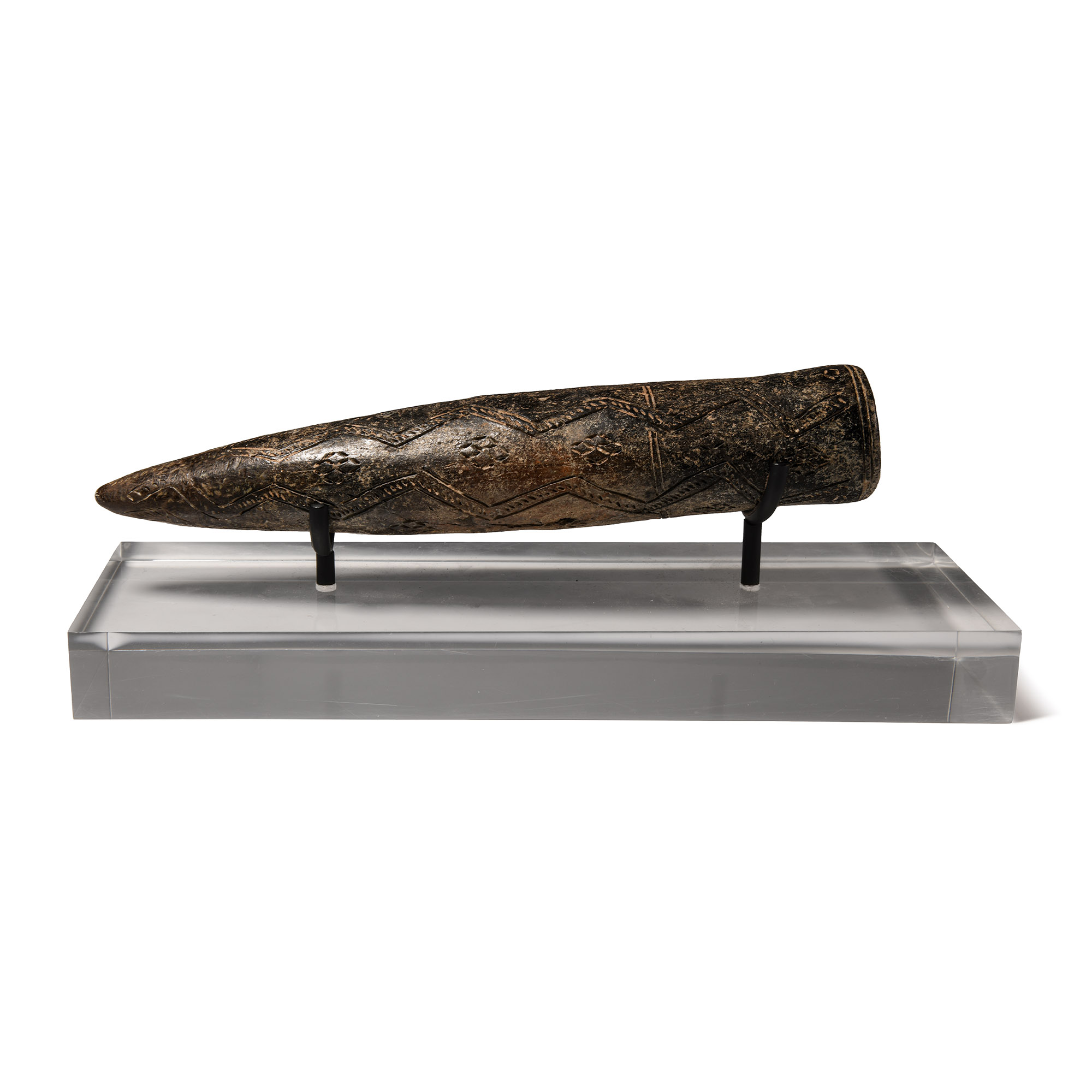
Cypriot Bronze Age Cone
2100-1850 B.C.
10 1/2 in. (12 in.) (1.55 kg total, 26.5 cm (30.5 cm including stand)).
Hollow-formed ceramic cone withlongitudonal hatched zigzag bands, incised circumferential band, impressed 'cross barby' and lozenge motifs; vertical 'seam' to the reverse with impressed 'stitching'; mounted on a custom-made stand. [No Reserve]
ProvenanceUS private collection.
with DuMouchelles Auction, Detroit, 18 February 2023, lot 1123.
TimeLine Auctions follows a vetting process to ensure the authenticity and legality of all items, reinforcing our commitment to integrity and responsible trading. Each antiquity, antique, and coin lot undergoes thorough examination by a vetting committee of at least ten external specialists, professional trade association members, scientists, and archaeologists: Our Vetting Process
AUCTIONS:
TimeLine is a leading auction house specialising in antiquities, ancient art, collectables, natural history, coins, medals, and books. Our auctions offer museums, collectors, historians, and enthusiasts the opportunity to acquire unique and historically significant pieces.
-
.jpg)
Gold Necklace with Agate Pendant
1st century B.C.-2nd century A.D.Estimate: £15,000 - 20,000 (+bp*)
Opening Bid: £7,500
A Graeco-Roman or Phoenician chain of loop-in-loop links and thick suspension ring, gold dome with bands of applied granules capping an egg-shaped banded agate drop. 26.19 grams, 48 cm long
Acquired in the late 1980s-early 1990s. Important North West London collection. Accompanied by an academic report by Dr Raffaele D’Amato. This lot has been checked against the Interpol Database of stolen works of art and is accompanied by search certificate no.11935-210477.
Agate was appreciated in the Greek and Roman world for its magical virtues. A recently found agate gemstone from Imperial-era Anapa, which differs from the other similar agate stones in its spherical shape and large size, was inscribed with a text referring to traditional Greek expulsion rituals against evil and diseases, ending with a list of human head parts similar to the one found in the Hippocratic medical handbook. The gemstone was probably worn not only as an amulet, but also as a miniature handbook with instructions for making amulets. According to Pliny the Elder (NH, XXXVII, 47) a certain type of agate was protected against spiders and scorpions. -
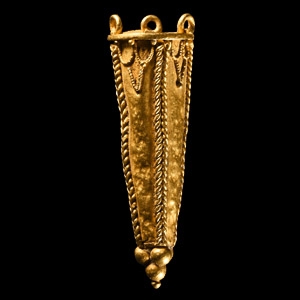
Greek Gold Vessel-Shaped Pendant
Circa 4th-3rd century B.C.Sold for (Inc. bp): £312
Conical sheet-gold dangle with applied rim and three suspension loops, filigree detailing beneath the rim, four vertical braided filigree bands to the sidewall, granule cluster finial. 2.25 grams, 26 mm
UK private collection formed before 2000. Ex North London, UK, gallery. -
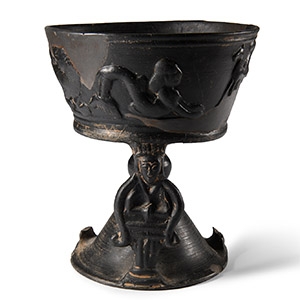
Etruscan Bucchero Chalice with Mythical Beasts, Animals, and Caryatid
Circa 7th-6th century B.C.Sold for (Inc. bp): £650
Blackware vessel comprising a broad bowl with frieze of animals (boar, lion, sphinx, horse); trumpet-shaped base with supporting caryatid; some restoration. 502 grams, 17 cm high
From the Steel family collection, 1950s-late 1990s.
