
Loading, please wait...


LOT 0575
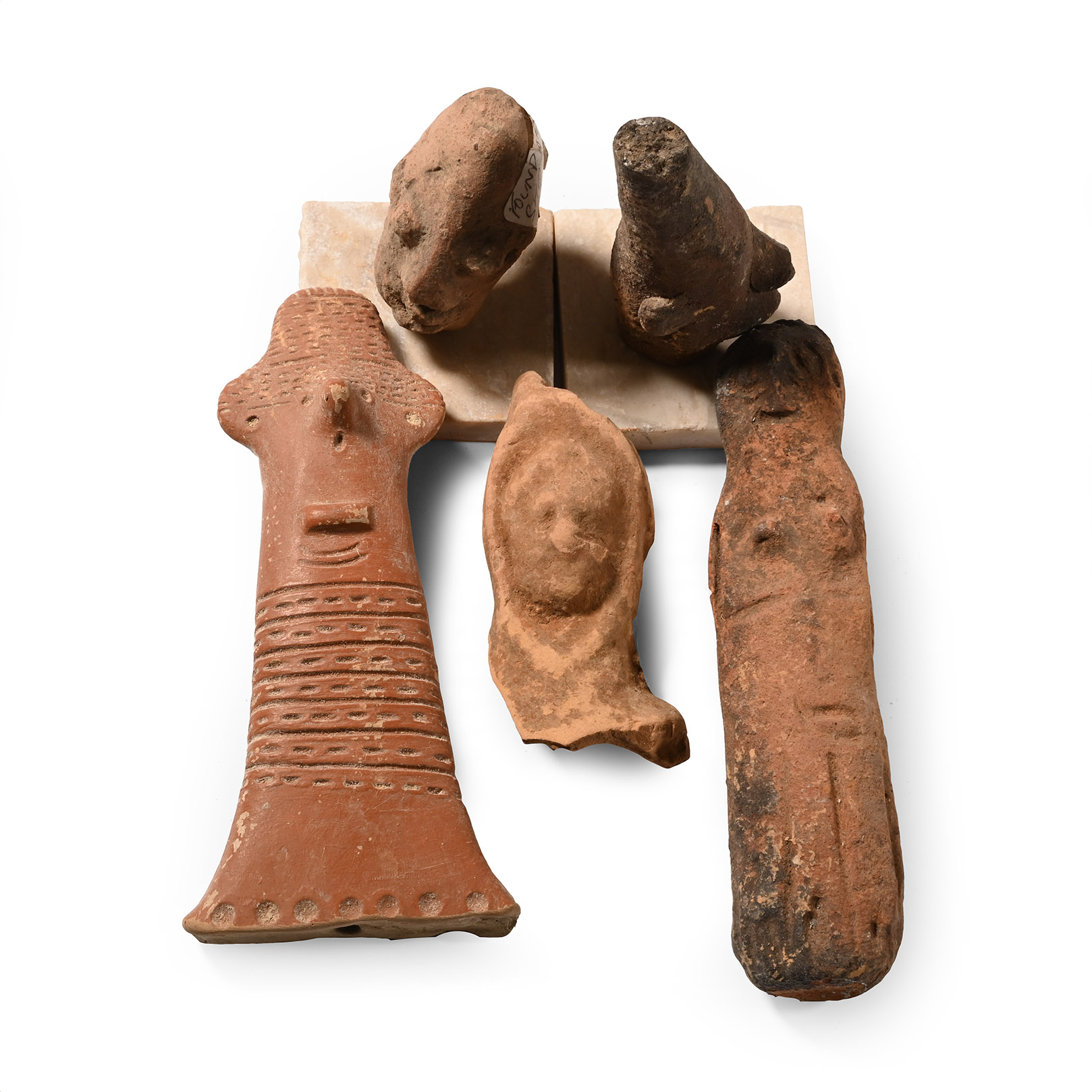
Cypriot and Other Idol Group
1ST MILLENNIUM B.C. AND LATER
2 3/8 - 5 1/8 in. (410 grams total, 6.1-12.9 cm).
Anthropomorphic figures, some mounted on a ceramic stand; plank idol after the antique. [5, No Reserve]
ProvenanceFrom a collection acquired on the UK art market from various auction houses and collections mostly before 2000.
From an important Cambridgeshire estate; thence by descent.
TimeLine Auctions follows a vetting process to ensure the authenticity and legality of all items, reinforcing our commitment to integrity and responsible trading. Each antiquity, antique, and coin lot undergoes thorough examination by a vetting committee of at least ten external specialists, professional trade association members, scientists, and archaeologists: Our Vetting Process
AUCTIONS:
TimeLine is a leading auction house specialising in antiquities, ancient art, collectables, natural history, coins, medals, and books. Our auctions offer museums, collectors, historians, and enthusiasts the opportunity to acquire unique and historically significant pieces.
-
.jpg)
Hellenistic Garnet Gemstone with Hercules Club and Lionskin
2nd century B.C.Estimate: £2,000 - 3,000 (+bp*)
Opening Bid: £1,000
Plano-convex with incuse image of spiked club and lionskin mantle. 1.8 grams, 17 mm
Acquired in the 1970s. Ex London, UK, collection. This lot has been checked against the Interpol Database of stolen works of art and is accompanied by a search certificate number no.12386-226380. -
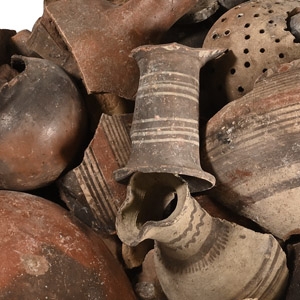
Cypriot and Other Pottery Sherd Group
2nd-1st millennium B.C.Sold for (Inc. bp): £72
Including fragments of tubular neck, rim sherds, basal rings and other items, many with polychrome painted geometric decoration. 8.95 kg total, 1.5-23.5 cm
From a collection acquired on the UK art market from various auction houses and collections mostly before 2000. From an important Cambridgeshire estate; thence by descent. -
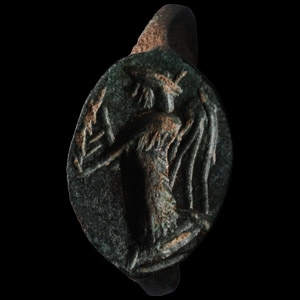
Greek Bronze Ring with Nike
4th-3rd century B.C.Sold for (Inc. bp): £117
With carinated hoop, scaphoid bezel with intaglio winged Nike holding a wreath. 3.06 grams, 20.71 mm overall, 17.59 mm internal diameter (approximate size British M, USA 6, Europe 12.46, Japan 12)
From the collection of a London antiquarian, formed since the 1980s.
