Loading, please wait...

Use mousewheel to zoom in and out, click to enlarge

Details

LOT 2080

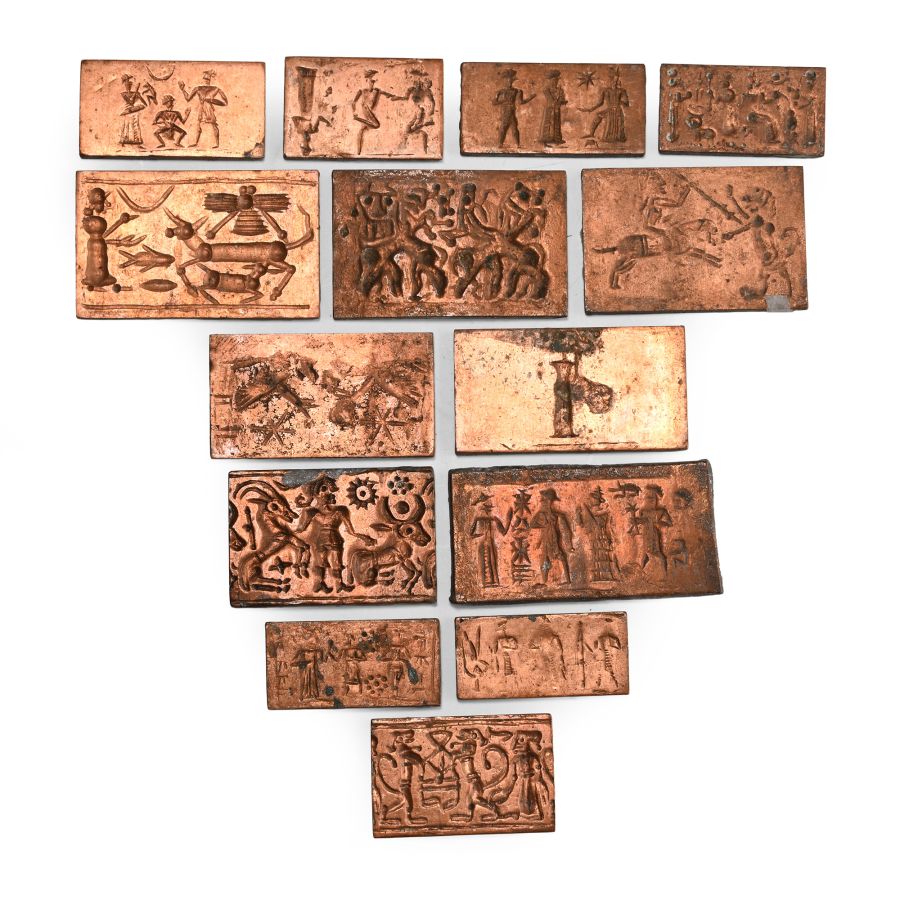
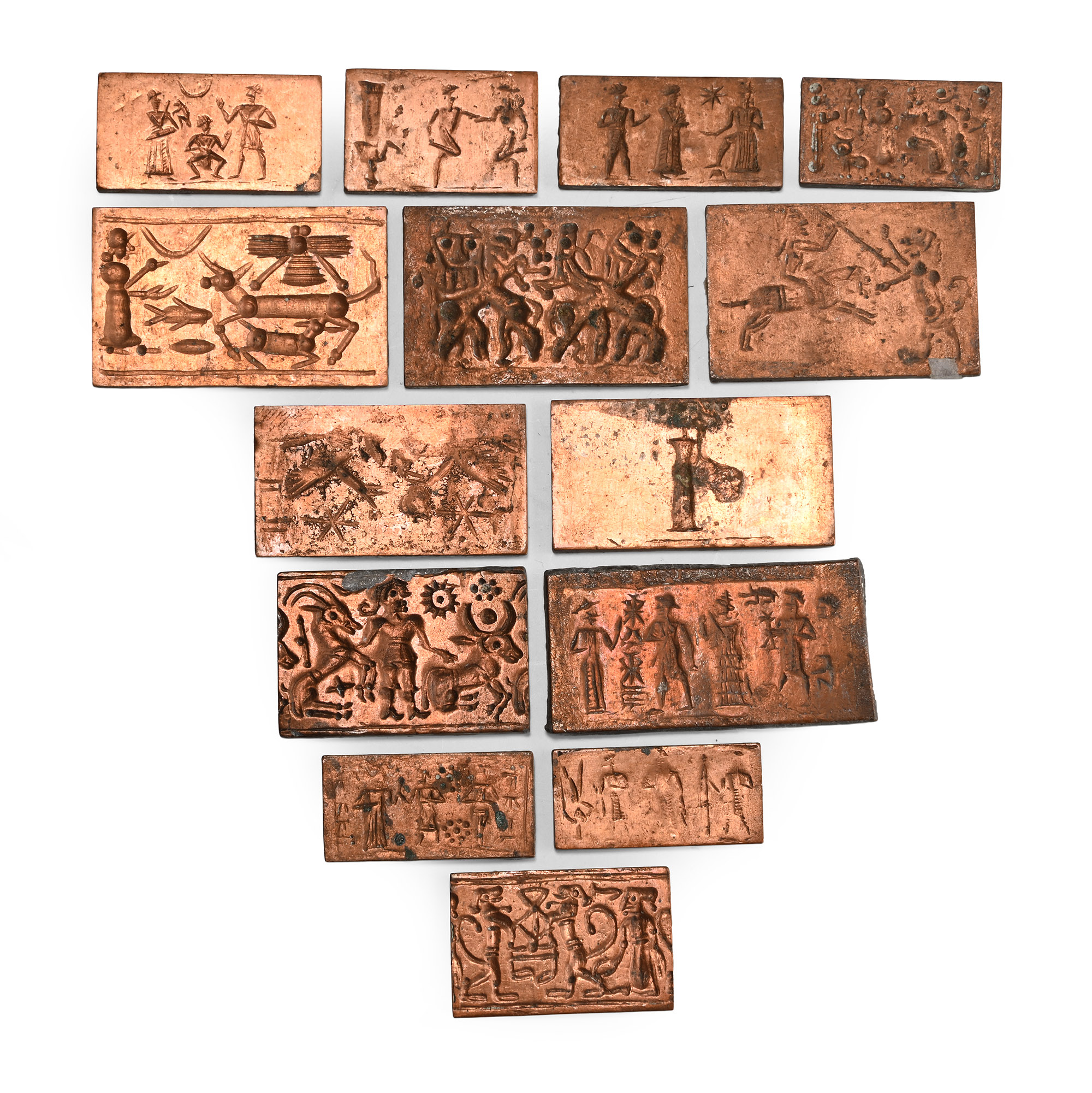
Cylinder Seal Electrotype Group

LATE 19TH-EARLY 20TH CENTURY A.D.

1 - 1 7/8 in. (231 grams total, 27-47 mm).

Of academic interest, copper coated lead seal impressions taken from cylinder seals, containing various different motifs. [14, No Reserve]

Provenance

Possibly made by the British Museum.
From a West Country, UK, private collection.

CONDITION

VETTING:

TimeLine Auctions follows a vetting process to ensure the authenticity and legality of all items, reinforcing our commitment to integrity and responsible trading. Each antiquity, antique, and coin lot undergoes thorough examination by a vetting committee of at least ten external specialists, professional trade association members, scientists, and archaeologists: Our Vetting Process


AUCTIONS:

TimeLine is a leading auction house specialising in antiquities, ancient art, collectables, natural history, coins, medals, and books. Our auctions offer museums, collectors, historians, and enthusiasts the opportunity to acquire unique and historically significant pieces.

LOT 2080

Cylinder Seal Electrotype Group

Sold for (Inc. bp): £65

Print page

RELATED LOTS

  • Large Post Medieval Merchant’s Seal Ring Engraved with BG and Shield
    Large Post Medieval Merchant’s Seal Ring Engraved with 'BG' and Shield
    Germany, 16th century A.D.

    Sold for (Inc. bp): £12,350

    Engraved with the owner's initials ‘B G’ above a tilting shield with flanche; merchant's mark motif of capital 'A' and a cross. 20.03 grams, 28.33 mm overall, 23.00 x 18.47 mm internal diameter (approximate size British T 1/2, USA 9 3/4, Europe 21.89, Japan 21)


    Private collection, Europe. Acquired on the English art market. This lot has been checked against the Interpol Database of stolen works of art and is accompanied by a search certificate number no.13051-248349.

    Merchants' marks were chosen by their owners as a form of personal cypher, and so it is almost impossible to decipher the owner of many merchants' marks, as they were not governed by the strict regulation and recording that heraldry laws dictated. Merchants' rings were engraved with geometric symbols used to mark their goods or personal belongings and used instead of a coat of arms for those not entitled to them. Most merchants in the sixteenth and seventeenth centuries had marks, easily identifiable and formed with a few strokes. Many such rings also bear religious or talismanic inscriptions or imagery, combining a spiritual with a commercial function. The shape of the shield on this example draws direct parallels to the heraldic shields and jewels of this period in Germany.

    Lot Details

  • Uzbek Double-Sided Tunic
    Uzbek Double-Sided Tunic
    20th century A.D.

    Sold for (Inc. bp): £78

    Reversible type with printed floral cotton design in crimson and green, and brown herringbone pattern cloth with trellis design. 1.1 kg, 106 cm high


    Private collection, UK.

    Lot Details

  • Silver-Gilt Mounted Jet Figa Amulet
    Silver-Gilt Mounted Jet 'Figa' Amulet
    Spain, 17th century A.D.

    Estimate: £700 - 900 (+bp*)

    Opening Bid: £350

    Formed as a hand showing figa gesture, silver mount with applied twisted wires; attachment loop and ring to the top. 19.6 grams, 56 mm


    Private collection, Europe. Acquired on the English art market.

    Mano Fico, as protective amulets have been used since the ancient world, it was believed to protect from the evil eye and other dark and magical forces and to promote fertility. In ancient Rome, the fig sign, or mano fico, was made by the pater familias (father of the family) to ward off the evil spirits of the dead as a part of the Lemuria ritual. The ancient Greeks wore amulets of the gesture around the neck to protect from the evil eye, and also used the gesture in artwork. What they considered an overtly sexual gesture was expected to distract evil spirits from causing harm. The pendant would have been worn from a belt or from a chatelaine containing other protective talismans. This carving would have served as a token representing a person's pilgrimage to Santiago de Compostela, one of the very few places in which jet can be found and mined since at least the Middle Ages.

    Lot Details

Stay up-to-date with the latest from TimeLine Auctions by joining our mailing list