
Loading, please wait...
LOT 0983
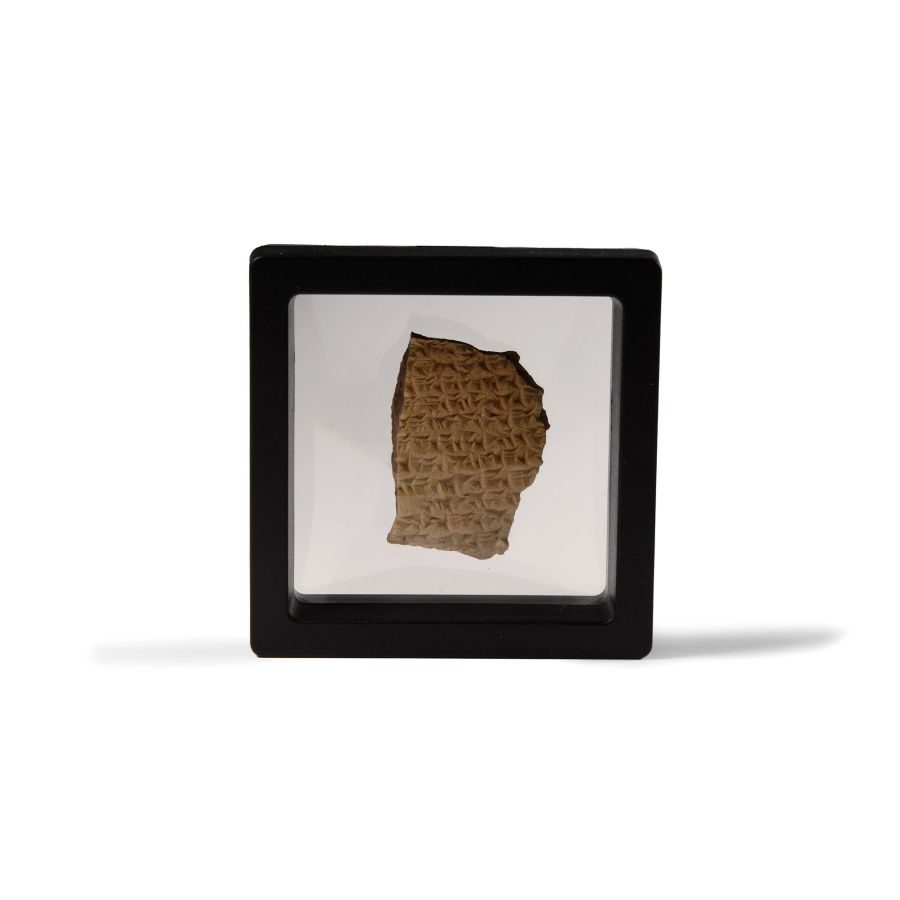
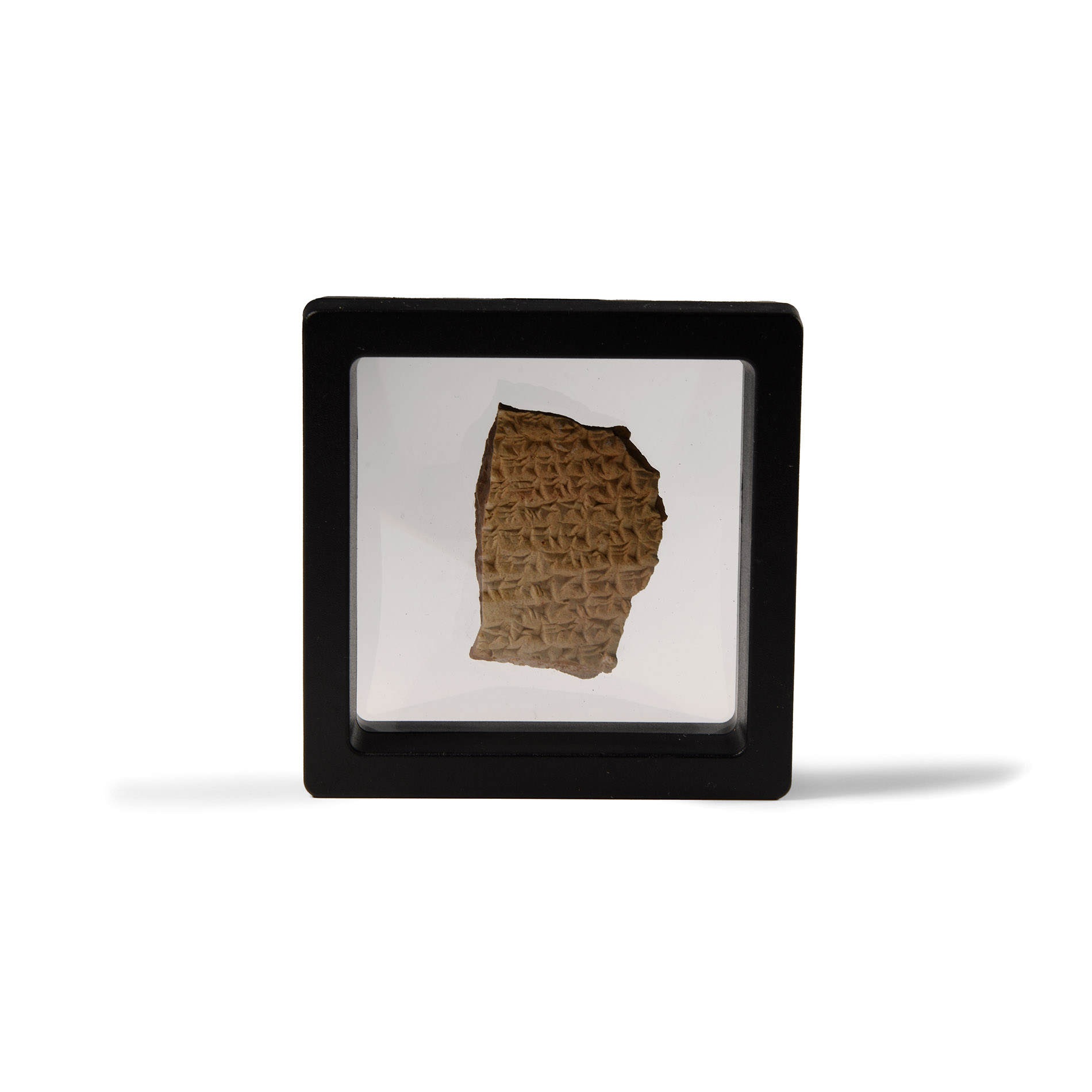
Cuneiform Tablet Fragment of a Divinatory Treaty Predicting the Peril of the Enemy Army
CIRCA 1ST MILLENNIUM B.C.
2 3/4 x 2 3/4 in. (32 grams total, 70 x 70 mm including case).
A ceramic tablet fragment bearing dense cuneiform text to one face; held in a membranous frame, a divinatory treaty with observations on different configurations of the liver of a sheep (?) and their apodosis, that is to say the prediction for each case: the theme of 'the peril of the enemy army' is recurrent. [No Reserve]
ProvenanceEx 1970s collection.
Property of a North London gentleman.
TimeLine Auctions follows a vetting process to ensure the authenticity and legality of all items, reinforcing our commitment to integrity and responsible trading. Each antiquity, antique, and coin lot undergoes thorough examination by a vetting committee of at least ten external specialists, professional trade association members, scientists, and archaeologists: Our Vetting Process
AUCTIONS:
TimeLine is a leading auction house specialising in antiquities, ancient art, collectables, natural history, coins, medals, and books. Our auctions offer museums, collectors, historians, and enthusiasts the opportunity to acquire unique and historically significant pieces.
LOT 0983
Cuneiform Tablet Fragment of a Divinatory Treaty Predicting the Peril of the Enemy Army
Sold for (Inc. bp): £364
-
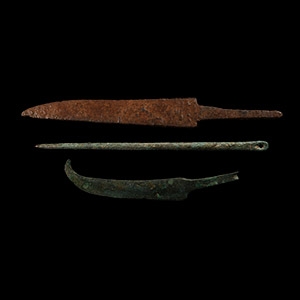
Western Asiatic Implement Group
Late 1st millennium B.C.Sold for (Inc. bp): £46
A trio of copper-alloy and iron implements: a tapering round-section needle with pierced head; a tanged knife blade with one cutting edge; a tanged knife blade with one cutting edge and curved pointed end. 44 grams total, 9.6 - 14.3 cm
Early 1990s London collection. Acquired on the UK art market. From a private collection, Lancashire, UK. -
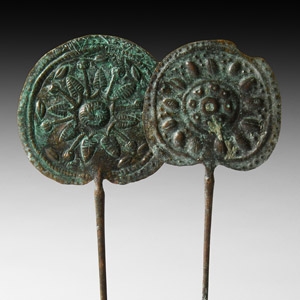
Luristan Decorated Pin Heads
13th-6th century B.C.Sold for (Inc. bp): £286
A pair of copper-alloy pin heads formed with tapering round-section stems and flat-section sub-oval heads, decorated in repoussé with geometric and stylised foliate motifs; accompanied by a custom-made display base. 81 grams total, 16 cm high including stand
UK private collection before 2000. UK art market. Property of a London gentleman. -
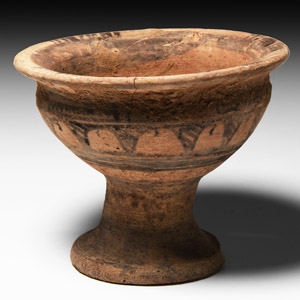
Western Asiatic Painted Chalice
2nd-1st millennium B.C.Sold for (Inc. bp): £117
A ceramic chalice with broad everted rim, painted with groups of dashed lines, chevrons and plain bands of varying width. 260 grams, 11.5 cm wide
Acquired 1980-2015. Ex Abelita family collection.
