
Loading, please wait...
LOT 0997
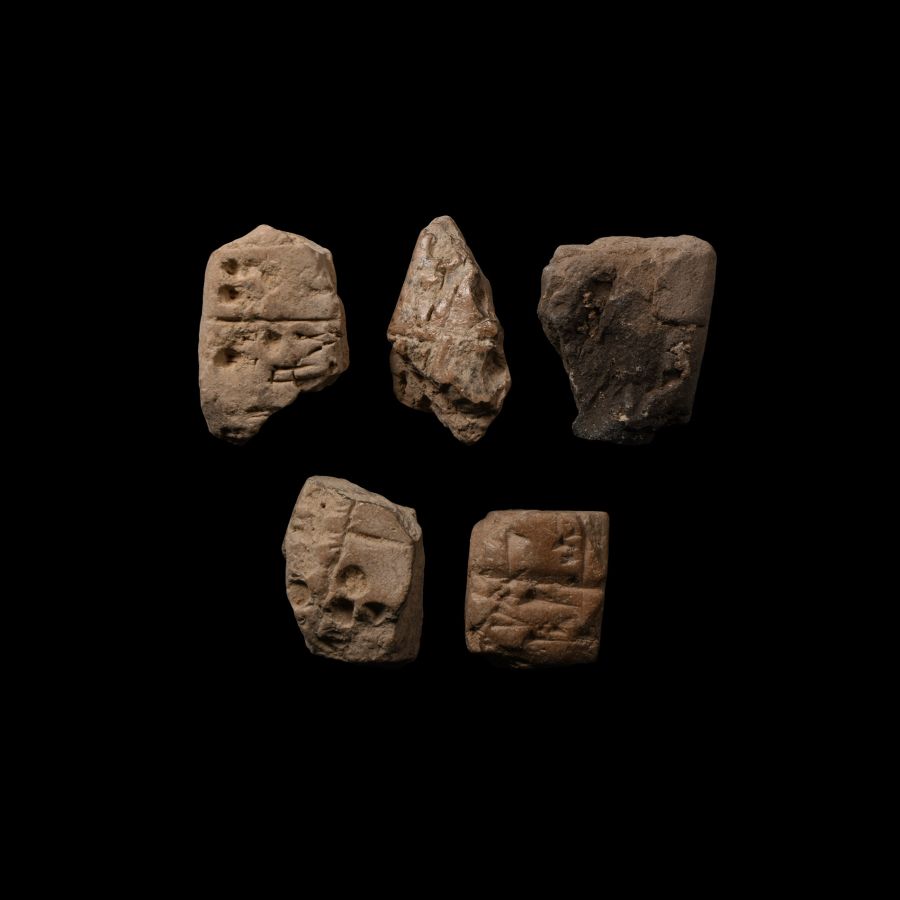
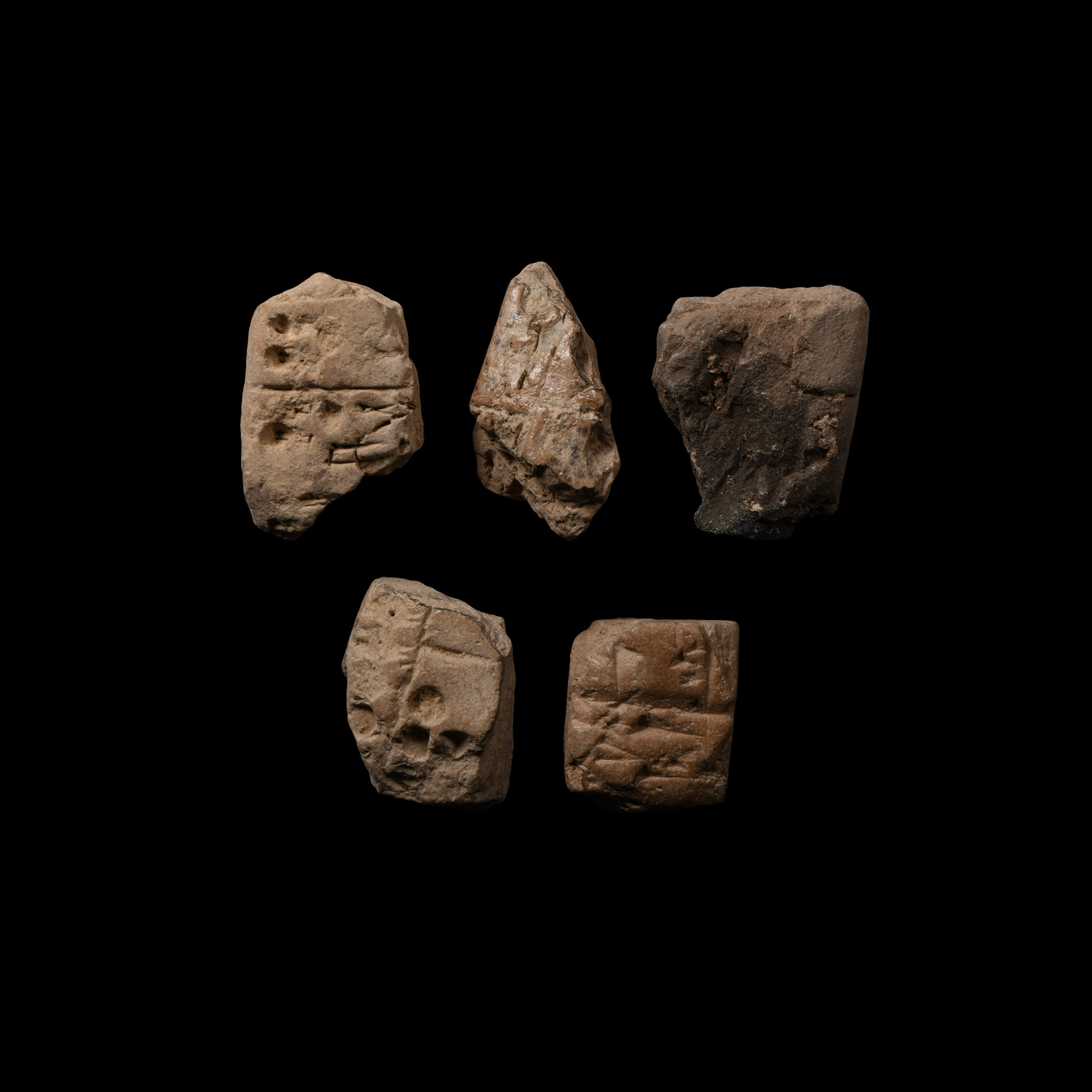
Cuneiform Tablet Fragment Group
3RD-2ND MILLENNIUM B.C.
1 - 1 1/4 in. (55 grams total, 25-33 mm).
A group of five cuneiform ceramic tablet fragments, each comprising at least one face of cuneiform text or pictographs, three are accounting texts of about 3000; one of the fragments is late Old Babylonian; the fifth fragment is anepigraphic. [5, No Reserve]
ProvenanceSpecialised collection of cuneiform texts, the property of a London gentleman and housed in London before 1992.
Thence by descent to family members.
Examined by Professor Wilfrid George Lambert FBA (1926-2011), historian, archaeologist, and specialist in Assyriology and Near Eastern archaeology, in the late 1980s and early 1990s.
This small collection is exceptional for the variety of types, including some very rare and well preserved examples.
TimeLine Auctions follows a vetting process to ensure the authenticity and legality of all items, reinforcing our commitment to integrity and responsible trading. Each antiquity, antique, and coin lot undergoes thorough examination by a vetting committee of at least ten external specialists, professional trade association members, scientists, and archaeologists: Our Vetting Process
AUCTIONS:
TimeLine is a leading auction house specialising in antiquities, ancient art, collectables, natural history, coins, medals, and books. Our auctions offer museums, collectors, historians, and enthusiasts the opportunity to acquire unique and historically significant pieces.
-
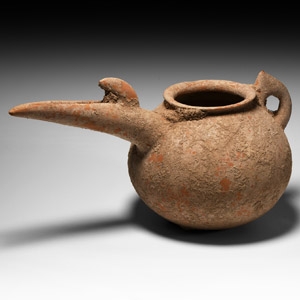
Luristan Zoomorphic Spouted Vessel
2nd-1st millennium B.C.Sold for (Inc. bp): £169
A zoomorphic ceramic pouring vessel, possibly in the form of a wading bird; formed with a bulbous body, everted rim, tapering spout with U-section channel and hooked projection, loop handle with conical apex to rear; two knop 'feet' to base. 548 grams, 39 cm
Acquired 1980-2015. Ex Abelita family collection. -
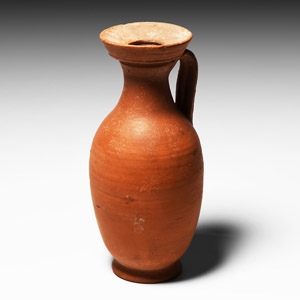
Nabataean Redware Jug
4th century B.C.-1st century A.D.Estimate: £300 - 400 (+bp*)
Opening Bid: £150
A burnished ceramic jug with gussetted foot, flared neck and mouth, ribbed strap handle to the reverse. 180 grams, 14.5 cm high
From an important collection of Holy Land pottery formed pre 1988, thence by descent. -
.jpg)
Sassanian Stamp Seal with Capricorn and Inscription
3rd-7th century A.D.Sold for (Inc. bp): £381
A plano-convex rock crystal stamp seal with oblong base, displaying a capricorn advancing left, with Pahlavi script in the field; drilled through the body for suspension; the body of the seal also engraved with circular and lozenge motifs; accompanied by a museum-quality impression. 8.46 grams, 22 mm
Fine condition.
Acquired 1980-2000s. Important collection of a London gentleman.
