

LOT 3118
Crispus, as Caesar BI Nummus. AD 316-326.
Treveri mint; struck AD 326. 2nd officina. FL IVL CRISPVS NOB CAES, laureate, draped and cuirassed bust to right / PROVIDENTIAE CAESS, camp gate with no doors and two turrets; star above, STR(pellet in crescent) in exergue. RIC VII 477. Extremely Fine. Dark glossy patina.(3.20gr, 18mm, 11h.).
ProvenanceFrom the Killingholme Hoard, North Lincolnshire, found in 1993;
Ex Spink & Son, 26 February 2004;
Property of a Cambridgeshire, UK, gentleman, collector's ticket included.
TimeLine Auctions follows a vetting process to ensure the authenticity and legality of all items, reinforcing our commitment to integrity and responsible trading. Each antiquity, antique, and coin lot undergoes thorough examination by a vetting committee of at least ten external specialists, professional trade association members, scientists, and archaeologists: Our Vetting Process
AUCTIONS:
TimeLine is a leading auction house specialising in antiquities, ancient art, collectables, natural history, coins, medals, and books. Our auctions offer museums, collectors, historians, and enthusiasts the opportunity to acquire unique and historically significant pieces.
-
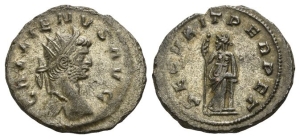
Gallienus BI Antoninianus. AD 253-268.
Sold for (Inc. bp): £20
Rome mint; struck AD 265-267. GALLIENVS AVG, radiate head to right / SECVRIT PERPET, Securitas standing facing, head to left, legs crossed, leaning on short column and holding sceptre. RIC V.1 516 (Mediolanum, sole reign); MIR 591w; RSC 962. 4.44gr, 22mm, 12h.
Near Extremely Fine.
Property of a Cambridgeshire, UK, gentleman. -

Domitian AE As. AD 81-96.
Sold for (Inc. bp): £26
Rome mint; struck AD 87. [IMP CAES DOMIT AVG GERM COS XIII] CENS PER P P, laureate head to right / [VIRTVTI] AVGVSTI, Virtus standing to right, foot on helmet, holding spear and parazonium; S C across fields. RIC II.1 550; BMCRE 404. 10.04gr, 28mm, 6h.
Fine. Edges having been tapped to create raised rims.
Property of a Cambridgeshire, UK, gentleman.
Proto-contorniate is the modern term used to describe Roman Imperial and Provincial bronze coins of the first, second, and early third centuries with hammered-up edges. These raised edges on the rims probably occurred after these bronze issues no longer circulated and ceased to be part of the currency in general use. A common assumption is that proto-contorniates functioned as game counters since the rim created through hammering could protect the designs. Andreas Alföldi in Die Kontorniaten (Budapest, 1943) believed proto-contorniates to be forerunners of the contorniates of the fourth and fifth centuries. He argued that proto-contorniates were New Year's gifts and that the older coins were actually hammered in the fourth century before the contorniates proper came into being. -
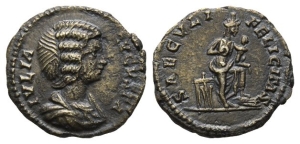
Julia Domna AR Denarius. AD 193-211.
Sold for (Inc. bp): £65
Rome mint; struck AD 196-211. IVLIA AVGVSTA, draped bust to right / SAECVLI FELICITAS, Isis, wearing polos, standing to right, resting left foot on prow, holding patera and infant Horus at breast, rudder leaning against altar behind. RIC IV 577 (Septimius); BMCRE 75 (Septimius and Caracalla); RSC 174. 2.37gr, 18mm, 6h.
Very Fine. Toned.
Ex Stocker collection, Kent, UK, 1955-early 2000s.
