
Loading, please wait...
LOT 0535
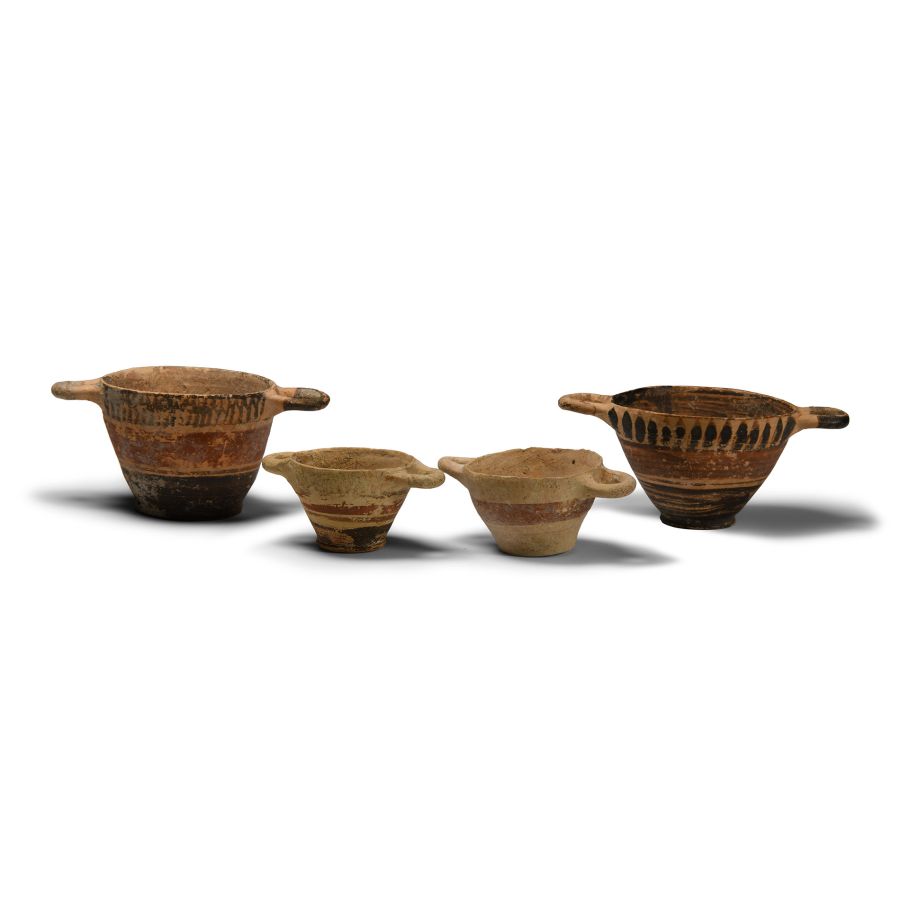
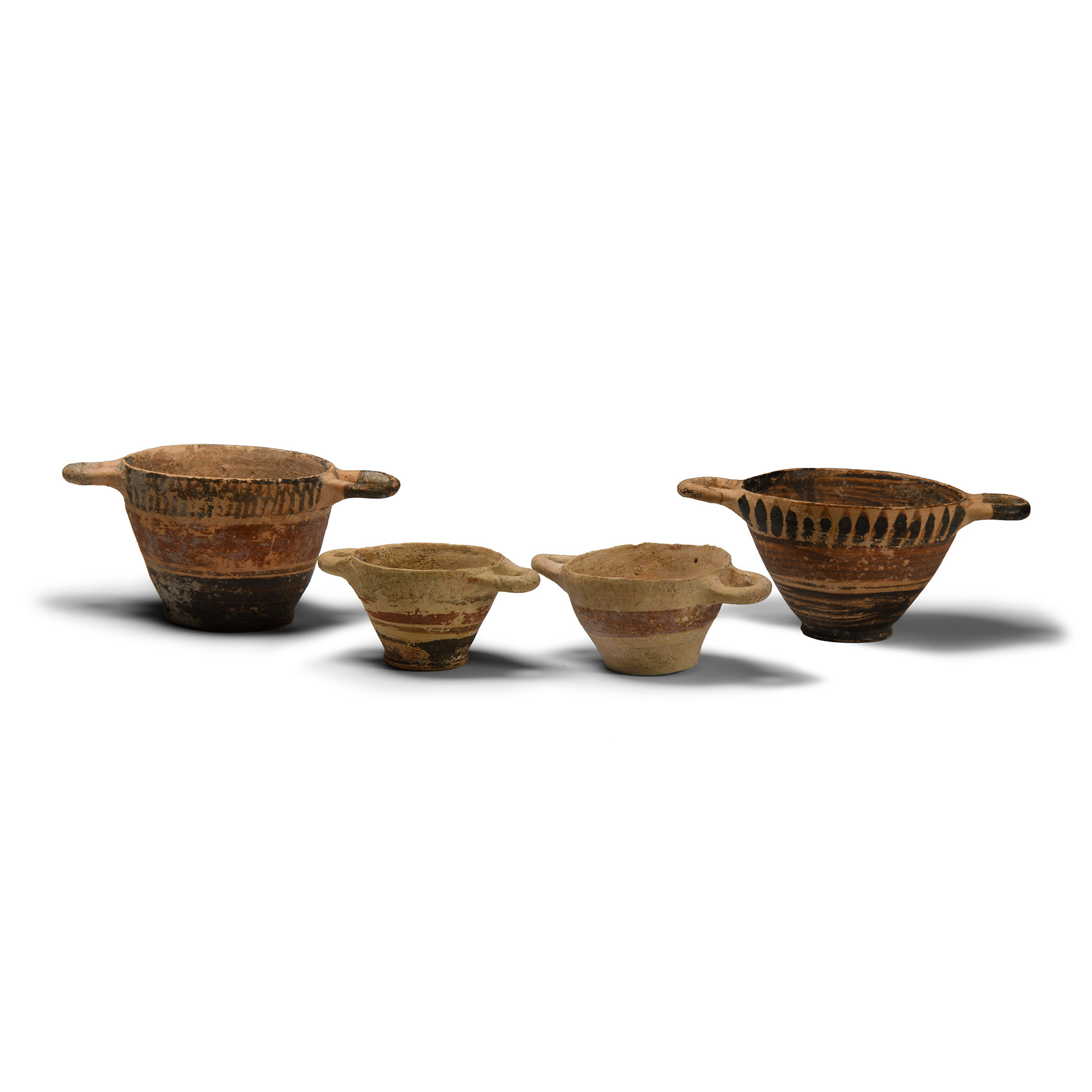
Corinthian Miniature Terracotta Skyphos Collection
6TH CENTURY B.C.
2 1/2 - 4 in. (103 grams total, 6.5-10.1 cm).
Group of four graduated ceramic cups, each with two loop handles to the rim and painted detailing to the outer face. [4]
ProvenanceAcquired from Gallery Gryphos, Munich, early 2000s.
European private collection.
This lot is accompanied by an illustrated lot declaration signed by the Head of the Antiquities Department, Dr Raffaele D’Amato.
TimeLine Auctions follows a vetting process to ensure the authenticity and legality of all items, reinforcing our commitment to integrity and responsible trading. Each antiquity, antique, and coin lot undergoes thorough examination by a vetting committee of at least ten external specialists, professional trade association members, scientists, and archaeologists: Our Vetting Process
AUCTIONS:
TimeLine is a leading auction house specialising in antiquities, ancient art, collectables, natural history, coins, medals, and books. Our auctions offer museums, collectors, historians, and enthusiasts the opportunity to acquire unique and historically significant pieces.
LOT 0535
Corinthian Miniature Terracotta Skyphos Collection
Estimate £400 - 600€460 - 700 (for guidance only)$540 - 810 (for guidance only)
-
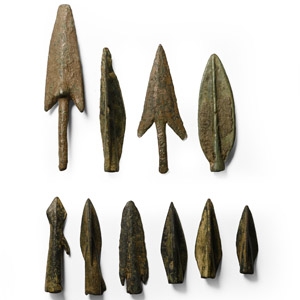
Large Greek Period Bronze Arrowhead Collection
5th-3rd century B.C.Sold for (Inc. bp): £156
High-quality, mainly leaf-shaped with long median socket. 56.4 grams total, 27-70 mm
From an English collection formed before 2000. This lot is accompanied by an illustrated lot declaration signed by the Head of the Antiquities Department, Dr Raffaele D’Amato. -
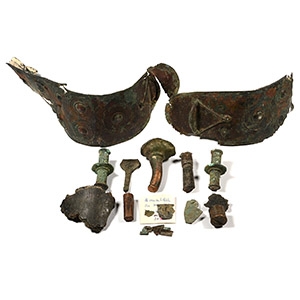
Archaic Greek Assemblage of Fragmentary Bronze Elements
Iron Age, 1200-600 B.C.Sold for (Inc. bp): £156
Including sections of rod with biconvex bulb, rod with flared base, repoussé sheet-bronze pectoral band and other items. 1.11 kg total, 0.7-29 cm
with H.A.C., Basel, prior 1999. This lot is accompanied by an illustrated lot declaration signed by the Head of the Antiquities Department, Dr Raffaele D’Amato. -
.jpg)
Greek Apulian Single-Handled Fluted Blackware Wine Cup
4th century B.C.Sold for (Inc. bp): £1,560
High-glazed with raised fluting decorating the body, broad c-section neck and everted rim, segmented openwork handle. 174 grams, 90 mm high
Acquired in the 1960s-1970s. Ex European private collection. This lot has been checked against the Interpol Database of stolen works of art and is accompanied by search certificate number no.11856-206542. This lot has been cleared against the Art Loss Register database, and is accompanied by an illustrated lot declaration signed by the Head of the Antiquities Department, Dr Raffaele D’Amato.
