
Loading, please wait...
LOT 0066
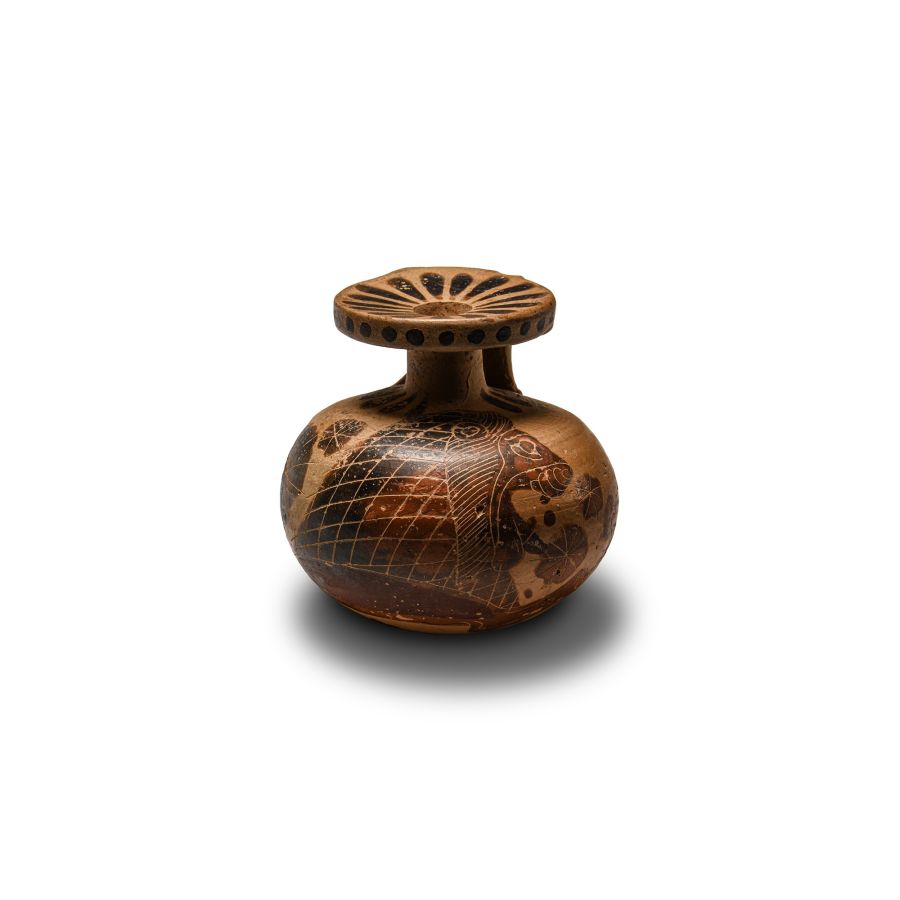
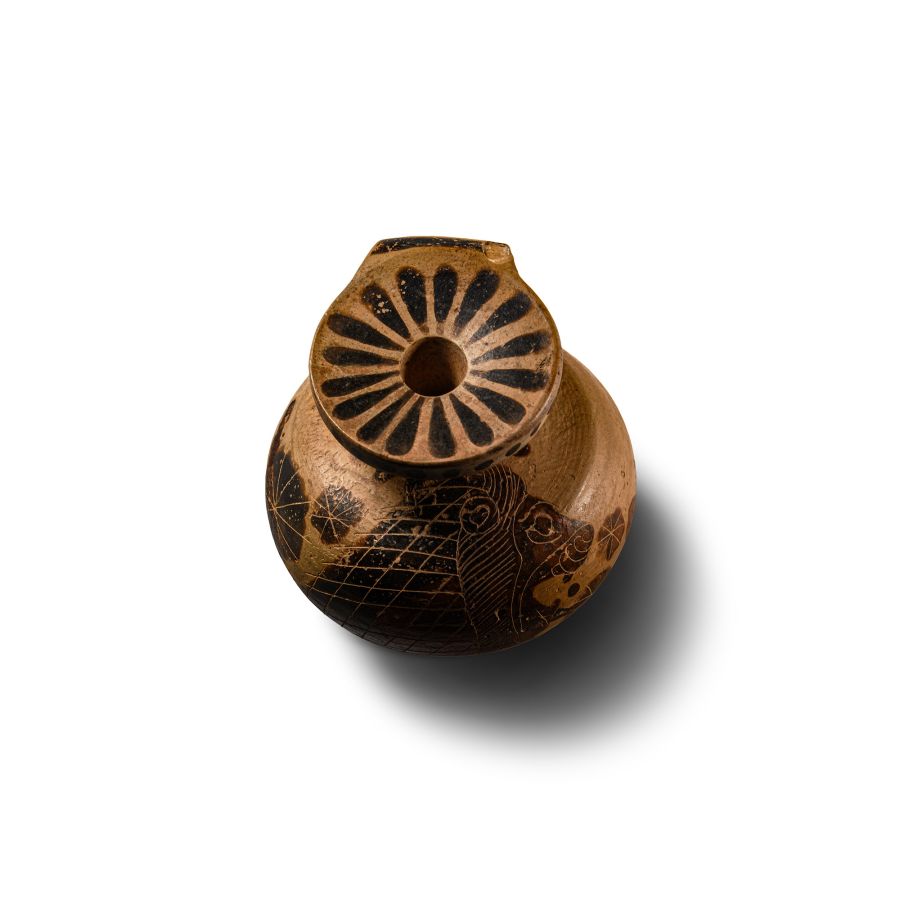
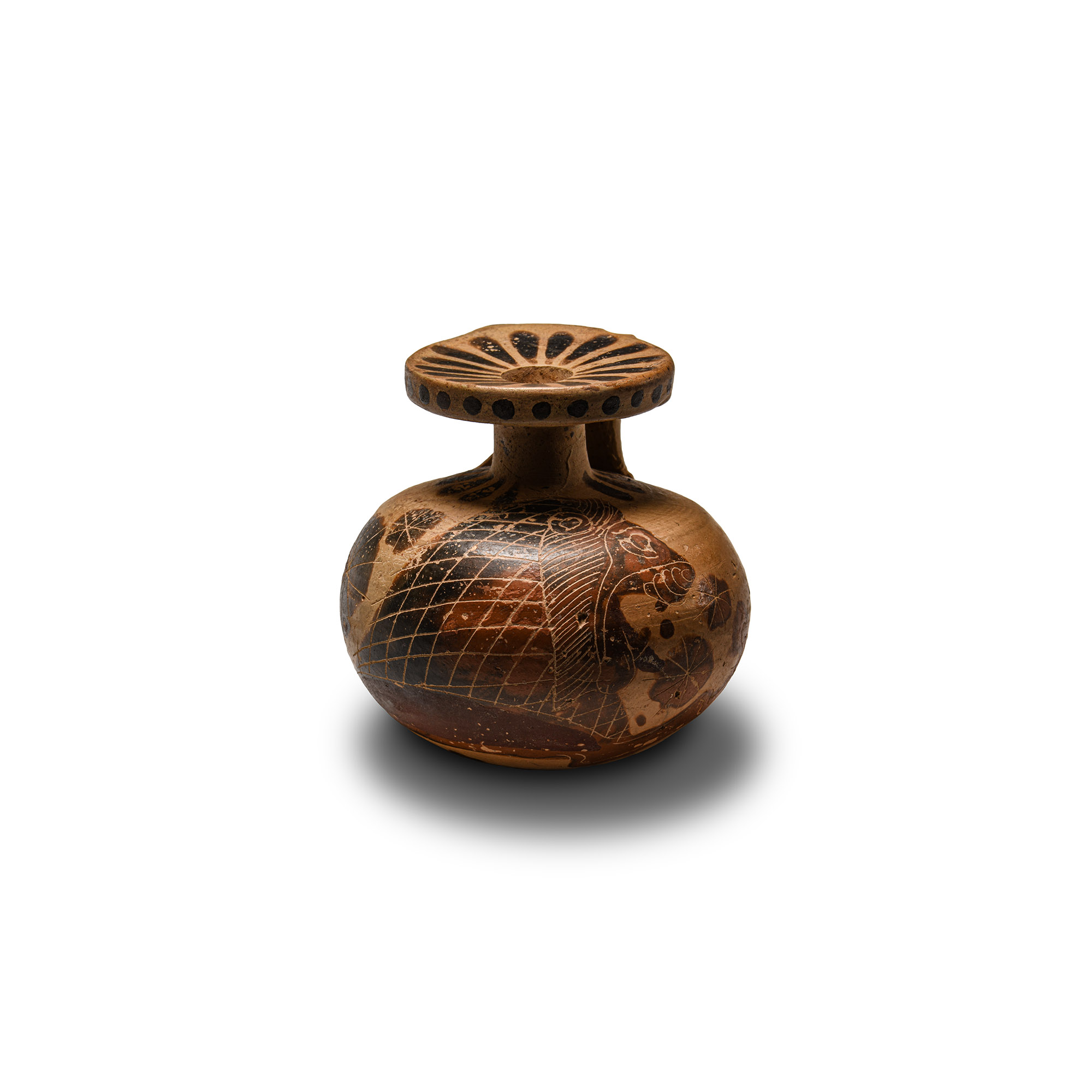
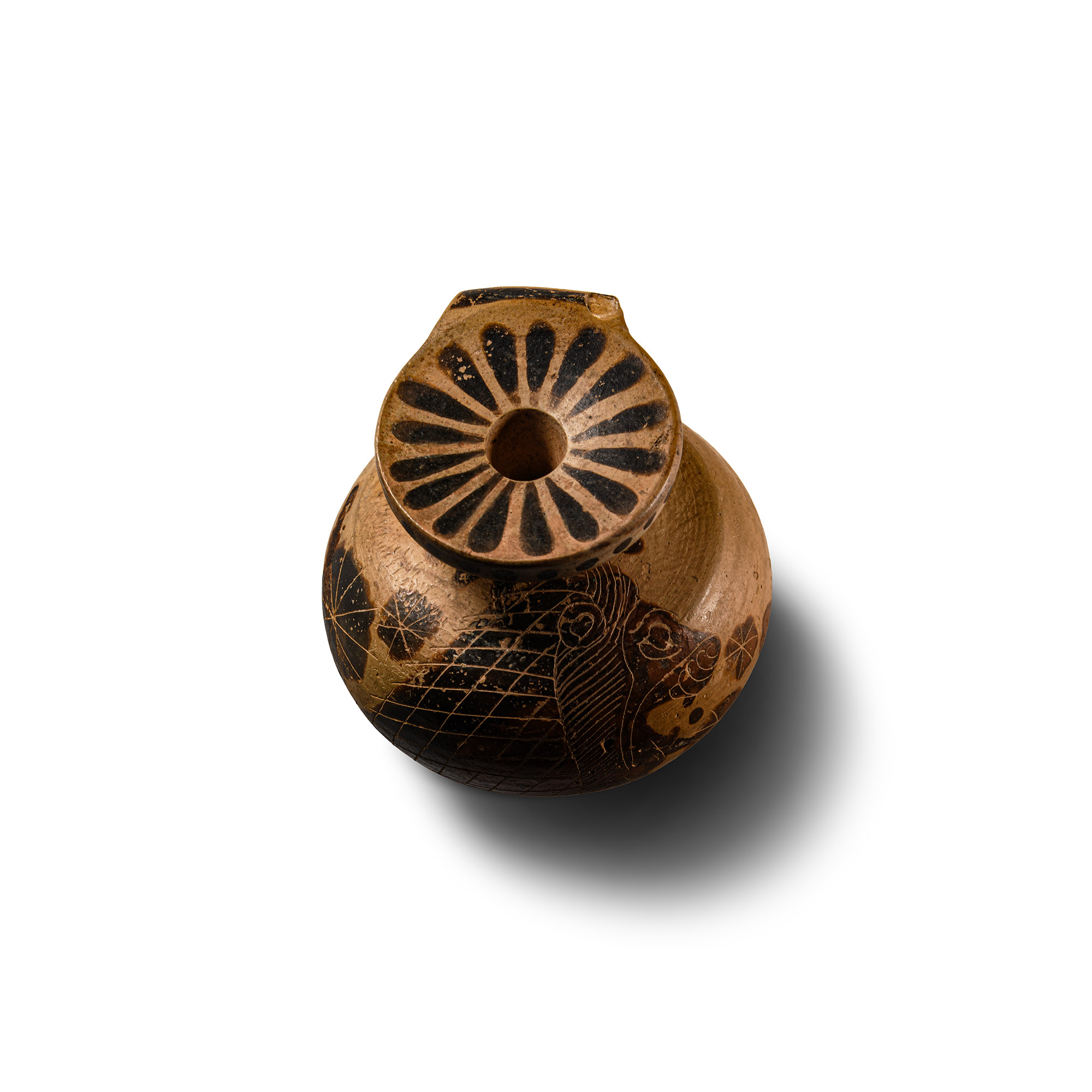
Corinthian Black-Figure Aryballos with a Lion
CIRCA 600 B.C.
2 1/8 in. (41.7 grams, 55 mm).
The squat oil flask with slender neck and broad everted rim, painted with rosette petals around the mouth and base, spots encircling the rim, horizontal stipes to the strap handle, vegetal motifs and the forequarters of a roaring lion to one face of the body.
ProvenanceAcquired from Dr. Jean Lauffenburger, circa 1980.
Private collection, Europe.
This lot has been checked against the Interpol Database of stolen works of art and is accompanied by search certificate number no.11850-206480.
Cf. The Metropolitan Museum, accession number 41.162.59, for similar.
CONDITIONTimeLine Auctions follows a vetting process to ensure the authenticity and legality of all items, reinforcing our commitment to integrity and responsible trading. Each antiquity, antique, and coin lot undergoes thorough examination by a vetting committee of at least ten external specialists, professional trade association members, scientists, and archaeologists: Our Vetting Process
AUCTIONS:
TimeLine is a leading auction house specialising in antiquities, ancient art, collectables, natural history, coins, medals, and books. Our auctions offer museums, collectors, historians, and enthusiasts the opportunity to acquire unique and historically significant pieces.
-
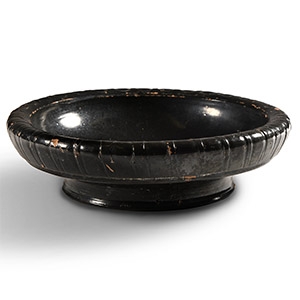
Greek Black-Glazed Plate
5th-4th century B.C.Estimate: £500 - 700 (‡+bp*)
Opening Bid: £250
Shallow-bodied with broad foot; incised fluting around the exterior body and rim. 192 grams, 12.7 cm wide
Acquired in the 1960s-1970s. Ex European private collection. -
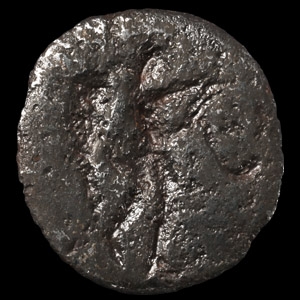
Greek Iron Ring with Figure
3rd-2nd century B.C.Sold for (Inc. bp): £39
Composed of a D-section hoop with slightly splayed arms and a large sub-oval bezel, engraved with a figure advancing right. 7.81 grams, 23.00 mm overall, 17.00 mm internal diameter (approximate size British N 1/2, USA 6 3/4, Europe 14.35, Japan 13)
Ex old English collection. London art market, 1980s. -
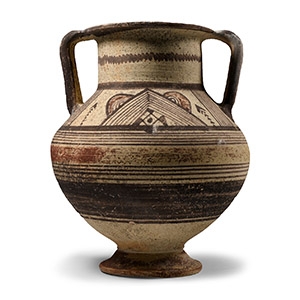
Cypriot Decorated Amphora
700-600 B.C.Sold for (Inc. bp): £3,120
Creamware body with broad neck and pear-shaped body, trumpet-shaped base; ribbed strap handles extending to the everted rim; painted with dense zones of concentric black chevrons, rings, and other geometric ornament, red detailing. 1.12 kg, 23.5 cm high
with Christie's, London, 11 July 1990, lot 122. Subsequently in the collection of Dr Takey Crist, Jacksonville, North Carolina.
