
Loading, please wait...

LOT 0444
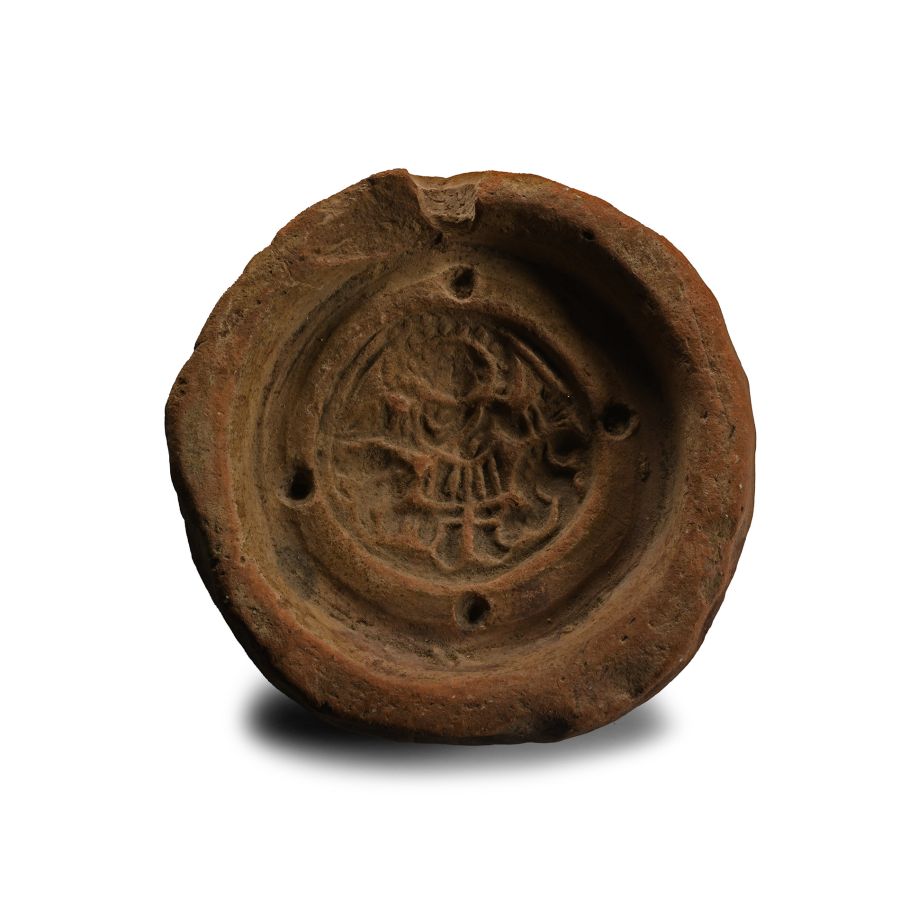
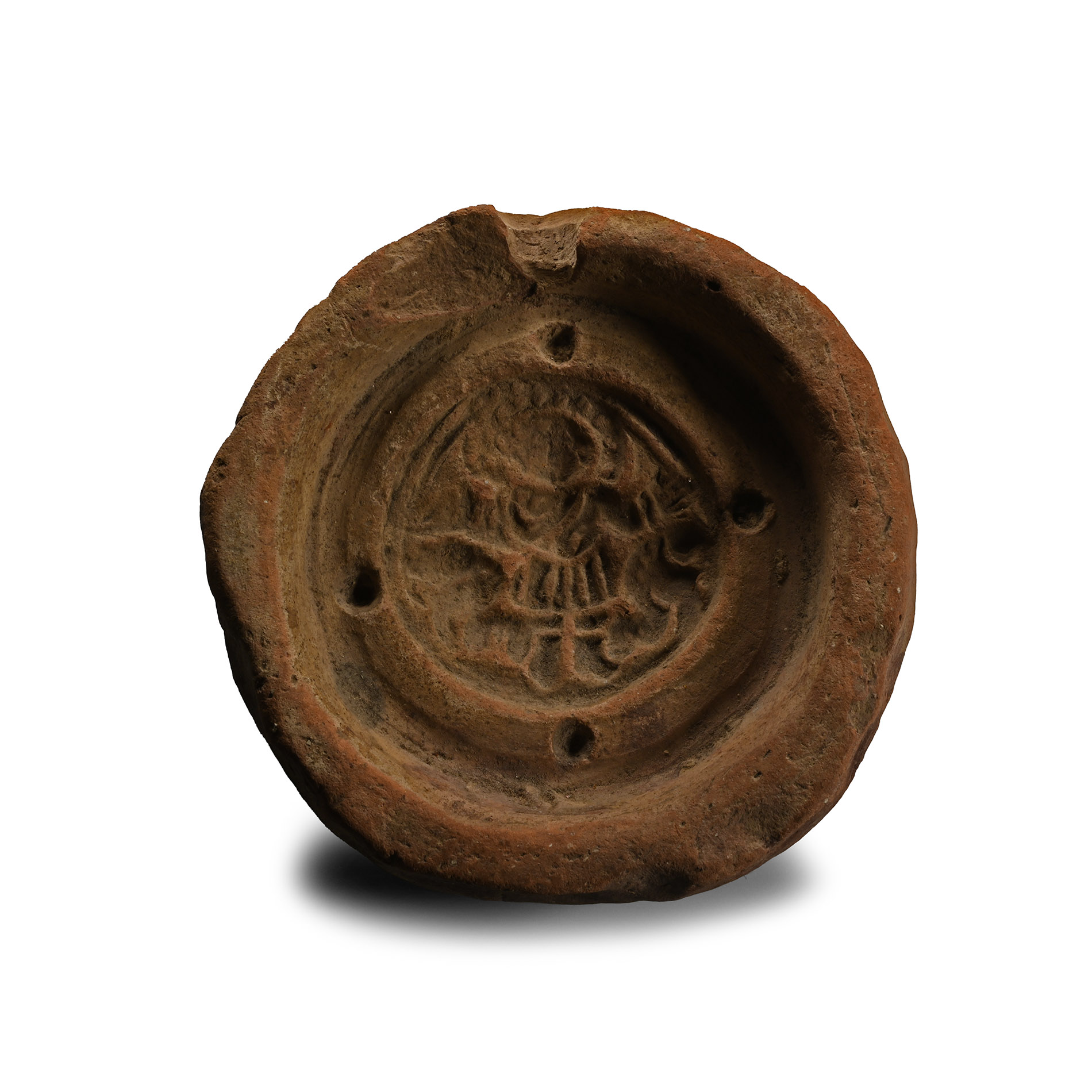
Coptic Terracotta Clay Mould
6TH-7TH CENTURY A.D.
3 1/2 in. (198 grams, 89 mm).
Discoid receptacle with a military saint in Roman armour (Saint Menas), with muscular cuirass and pteryges, arms open in the manner of the orans pose, animals (camels?) on his side. [No Reserve]
ProvenanceMaurice Bouvier, Alexandrie, prior 1959.
This lot is accompanied by an illustrated lot declaration signed by the Head of the Antiquities Department, Dr Raffaele D’Amato.
Suisse Collections Bouvier Exposition: Musée Bargoin de Clermont-Ferrand (2008-2009): Two Coptic terracotta plate fragments and a mould.
LiteratureCf. for ampullae of this type, British Museum, A guide to the early Christian and Byzantine Antiquities, London, 1921, p.82.
FootnotesThe majority of the terracotta ampullae come from Egypt and bear representations of St. Menas or Mennas, an Egyptian Christian officer decapitated during the persecutions of Diocletian's time. The legend relates that the saint's body was placed upon a camel which was let loose to follow what course it chose; in the place where the camel stopped, some miles from Alexandria, a grave and a shrine were subsequently built. In allusion to this legend, St. Menas is often represented as standing between two camels, though the animals are often of so fantastic a form as to be very difficult to recognise.
CONDITIONTimeLine Auctions follows a vetting process to ensure the authenticity and legality of all items, reinforcing our commitment to integrity and responsible trading. Each antiquity, antique, and coin lot undergoes thorough examination by a vetting committee of at least ten external specialists, professional trade association members, scientists, and archaeologists: Our Vetting Process
AUCTIONS:
TimeLine is a leading auction house specialising in antiquities, ancient art, collectables, natural history, coins, medals, and books. Our auctions offer museums, collectors, historians, and enthusiasts the opportunity to acquire unique and historically significant pieces.
-
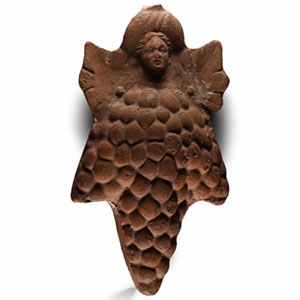
Egyptian Terracotta Figure of Artemis of Ephesus
Ptolemaic Period, 2nd-1st century B.C.Sold for (Inc. bp): £910
Hollow-formed figure of Artemis wearing a voluminous wreath, head emerging from a bunch of grapes between two vine leaves; vent on top of the head; opening to rear. 222 grams, 18 cm
The Erotica Collection Christian von Faber-Castell, Küsnacgt ZH, Switzerland, since the late 1970s. This lot is accompanied by an illustrated lot declaration signed by the Head of the Antiquities Department, Dr Raffaele D’Amato.
The statue of Artemis at Ephesus (modern Turkey) is modelled with breasts in multiple tiers and with a hairstyle reminiscent of that on this figure. -
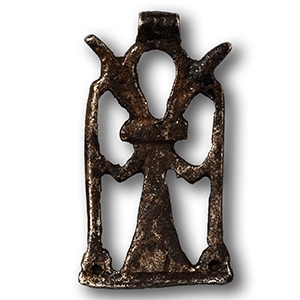
Egyptian Silver Ankh and Was-Sceptre Amulet
Late-Ptolemaic Period, 664-30 B.C. or earlierSold for (Inc. bp): £91
A silver openwork amulet featuring an ankh with outstretched arms holding tall was-sceptres. 0.31 grams, 13 mm
From an early 20th century collection. This lot is accompanied by an illustrated lot declaration signed by the Head of the Antiquities Department, Dr Raffaele D’Amato. -
.jpg)
Egyptian Steatite Scarab with Bes
Late Period, 664-332 B.C.Estimate: £120 - 170 (+bp*)
Opening Bid: £67
Plano-convex in section with detailed obverse, the underside with the figure of Bes flanked by adoring baboons and sun discs. 10.7 grams, 31 mm
Ex London, UK collection, 1990s. This lot is accompanied by an illustrated lot declaration signed by the Head of the Antiquities Department, Dr Raffaele D’Amato.
Bes became one of ancient Egypt's most popular apotropaic deities from the New Kingdom onwards. Despite his somewhat fearful appearance, Bes was the patron and protector of pregnant women and children and believed to protect the wearer from snakes. The depiction of baboons flanking Bes with their arms raised before the sun disk was a common feature on temple wall reliefs. In ancient Egyptian religious literature, baboons heralded the dawn and, thus, the rebirth of the sun.
