
Loading, please wait...
LOT 0392
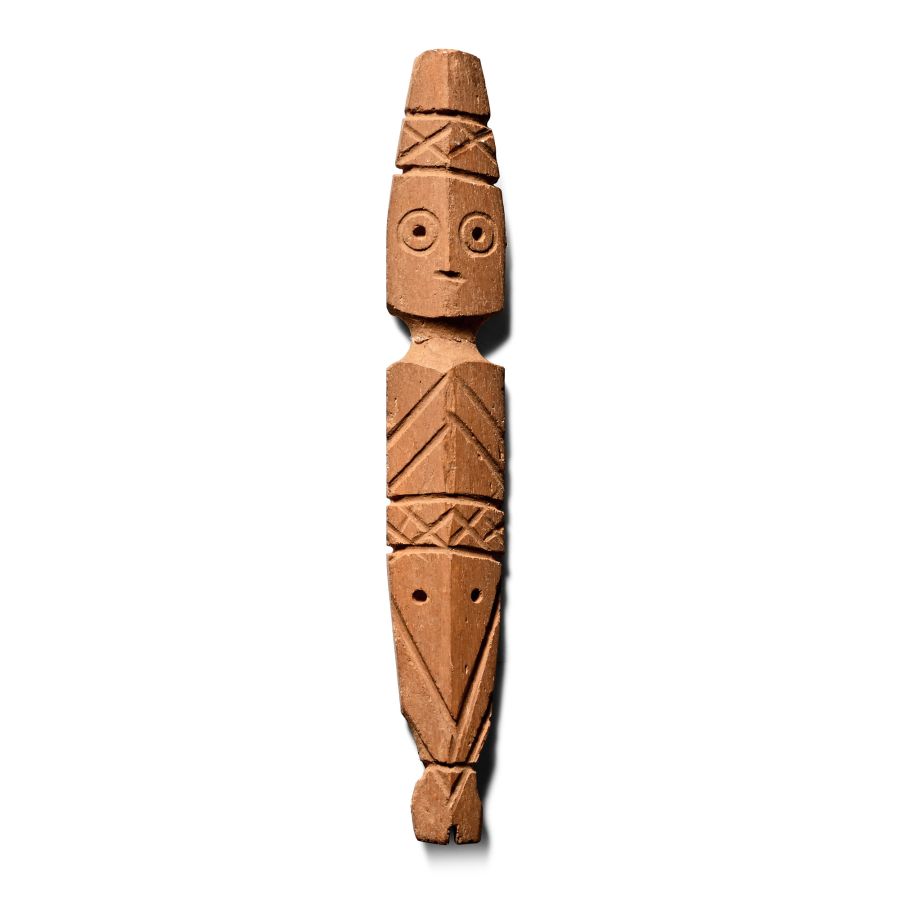
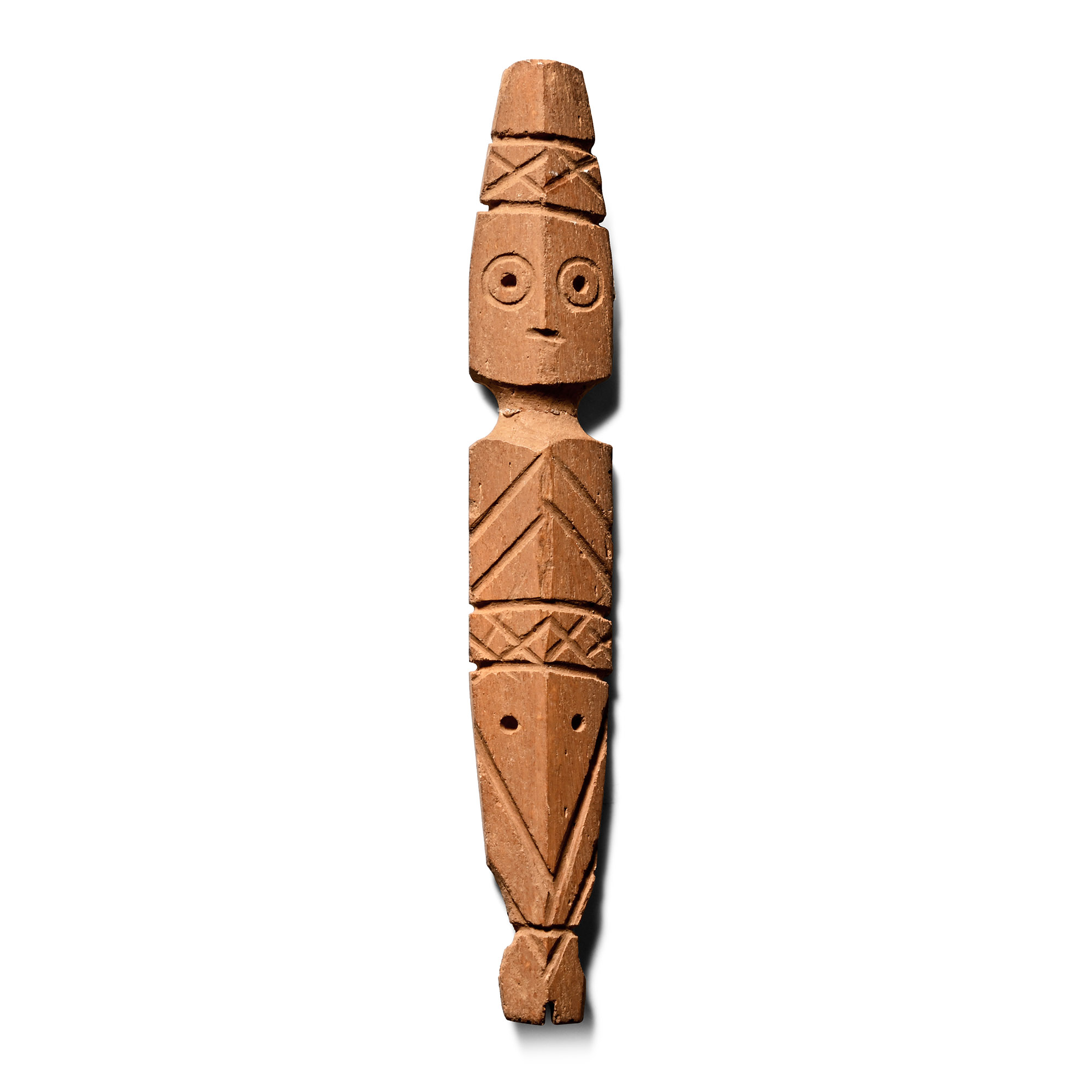
Coptic Carved Bone Doll
CIRCA 4TH-7TH CENTURY A.D.
4 in. (7.92 grams, 10.3 cm).
Plano-convex in section with carinated upper face, incised linear and drilled detailing. [No Reserve]
ProvenanceFrom the private collection of Peter Clayton, FCILIP, Dip, Arch, FSA, FRNS, Hemel Hempstead, Hertfordshire, UK; formed since the late 1950s.
CONDITIONTimeLine Auctions follows a vetting process to ensure the authenticity and legality of all items, reinforcing our commitment to integrity and responsible trading. Each antiquity, antique, and coin lot undergoes thorough examination by a vetting committee of at least ten external specialists, professional trade association members, scientists, and archaeologists: Our Vetting Process
AUCTIONS:
TimeLine is a leading auction house specialising in antiquities, ancient art, collectables, natural history, coins, medals, and books. Our auctions offer museums, collectors, historians, and enthusiasts the opportunity to acquire unique and historically significant pieces.
LOT 0392
Coptic Carved Bone Doll
Estimate £60 - 80€70 - 93 (for guidance only)$81 - 108 (for guidance only)
Opening Bid
£5 (EUR 6; USD 7) +BP*
-
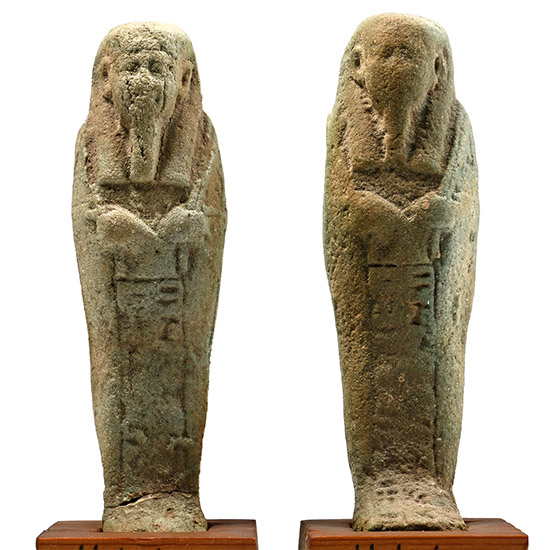
Egyptian Blue Faience Palestinian Shabti Pair
Late Period, 664-332 B.C.Estimate: £400 - 600 (+bp*)
Opening Bid: £5
Two mummiform figures, produced from the same mould, wearing lappet wigs, with arms crossed and hands holding agricultural implements; illegible hieroglyphic text on the lower body; display stand marked 'Ushabti Palestinian 1000-800 B.C.'. 120 grams total, 11.5-11.6 cm
Acquired near the British Museum, circa 1949, at 3 shillings each. From the private collection of Peter Clayton, FCILIP, Dip, Arch, FSA, FRNS, Hemel Hempstead, Hertfordshire, UK; formed since the late 1950s. Accompanied by an old handwritten information card by Peter Clayton, collection nos.7,7a. -
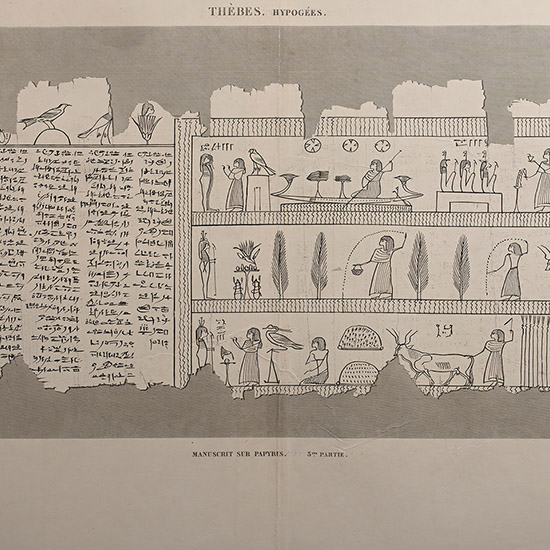
Very Large Egyptian Expedition Lithograph of the Hypogees Papyrus Manuscript from Thebes
Early 19th century A.D.Estimate: £80 - 100 (+bp*)
Opening Bid: £40
Proof etching on laid paper of plate 63 from Vol.II of Description de l'Égypte : ou, Recueil des observations et des recherches qui ont été faites en Égypte pendant l'expédition de l'armée française. entitled Thèbes. Hypogées. Manuscrit sur papyrus. 3eme partie. 272 grams, 103.5 x 69 cm
From the collection of a North American priest. Acquired between 1981-1996. Property of a North American collector.
Produced between February 1802 and 1830 on the orders of Napoleon Bonaparte; published between 1809 and 1828. Just 1,000 copies were distributed to various institutions, printed on laid paper with an 'Égypte ancienne et moderne' watermark. The book is subtitled Recueil des observations et des recherches qui ont été faites en Égypte pendant l’expédition de l’Armée française, publié par les ordres de Sa Majesté l’Empereur Napoléon le Grand (Gathering of observations and discoveries which were made in Egypt during the expedition of the French army, published on the orders of His Majesty the Emperor Napoleon the Great). It was the world's first encyclopedia devoted exclusively to the remains of ancient Egypt. The plates of this book are the first to present the archaeological sites of Thebes (Luxor). The papyrus manuscript was recovered from an underground tomb chamber (hypogeum). The scene depicts the Fields of Iaru, a verdant paradise in the ancient Egyptian afterlife, where the deceased could enjoy abundant harvests. -
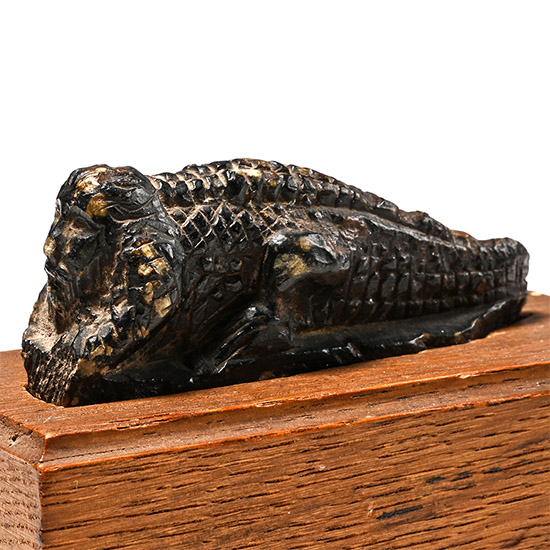
Romano-Egyptian Stone Crocodile Figure
Late Period, 664-332 B.C.Estimate: £400 - 600 (+bp*)
Opening Bid: £200
Carved in high relief with a flat underside, reptilian body with finely rendered scales, and a small human head, mounted on a custom-made wooden stand. 40.79 grams, 68 mm wide (116 grams total, 93 mmm wide including stand)
Private collection. with Mallams, Oxford, Library Sale, 2025. Acquired by the current owner from the above.
The earliest representation of a human-headed crocodile appears in a vignette from Spell 88 of the Book of the Dead dating to the reign of Ramesses II (13th century B.C.), and identifies the deceased as Sobek. Stylistically, this example appears to be from the Late Period, when amulets representing Sobek-Osiris or Sobek-Re are known.
