
LOT 3442
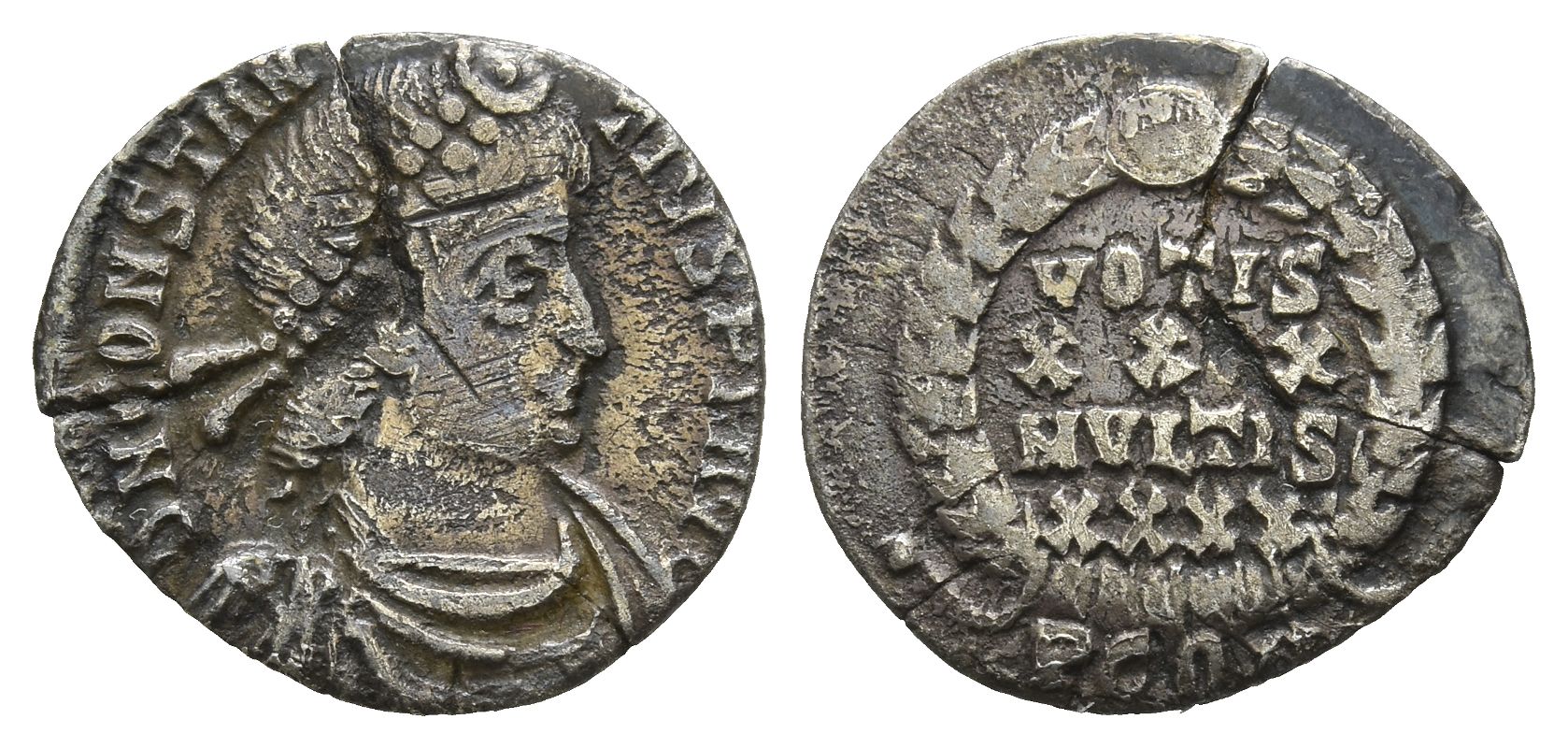
Constantius II AR Reduced Siliqua. AD 337-361.
Arelate mint; struck AD 355-360. 1st officina. D N CONSTANTIVS P F AVG, pearl-diademed, draped and cuirassed bust to right / VOTIS XXX MVLTIS XXXX in four lines within wreath with jewel at apex; PCON in exergue. RIC VIII 261 and 291. Near Very Fine.(1.34gr, 16mm, 12h.).
ProvenanceFrom the private collection of Kenneth Machin (1936-2020).
TimeLine Auctions follows a vetting process to ensure the authenticity and legality of all items, reinforcing our commitment to integrity and responsible trading. Each antiquity, antique, and coin lot undergoes thorough examination by a vetting committee of at least ten external specialists, professional trade association members, scientists, and archaeologists: Our Vetting Process
AUCTIONS:
TimeLine is a leading auction house specialising in antiquities, ancient art, collectables, natural history, coins, medals, and books. Our auctions offer museums, collectors, historians, and enthusiasts the opportunity to acquire unique and historically significant pieces.
-
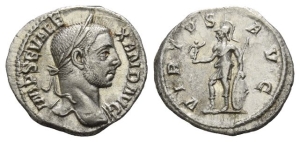
Severus Alexander AR Denarius. AD 222-235.
Sold for (Inc. bp): £78
Rome mint; struck AD 228-231. IMP SEV ALE-XAND AVG, laureate bust to right, slight drapery on far shoulder / VIRTVS AVG, Virtus standing to left, holding Victory with wreath and spear, and leaning on shield. RIC IV 220; BMCRE 709 var. (bust type); RSC 579a. 3.19gr, 19mm, 6h.
Extremely Fine.
Property of a gentleman; acquired in the UK before 2000. -
![Group of Nine [9] Roman Imperial AE Coins.](https://timelineauctions.com/upload/images/items/small/227341s.jpg)
Group of Nine [9] Roman Imperial AE Coins. 3rd-4th century AD.
Sold for (Inc. bp): £111
Various emperors. 26.17gr total.
Fine to Near Very Fine.
Found South Gloucestershire, UK. -
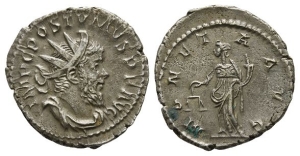
Postumus, Romano-Gallic Emperor AR Antoninianus. AD 260-269.
Sold for (Inc. bp): £20
Treveri mint; struck AD 262-263. IMP C POSTVMVS P F AVG, radiate, draped and cuirassed bust to right / MONETA AVG, Moneta standing facing, head to left, holding scales and cornucopia. RIC V.2 75 (Lugdunum) and 315 (Colonia Agrippinensis); RSC 199a. 4.41gr, 22mm, 8h.
Extremely Fine.
Property of a Cambridgeshire, UK, gentleman.
