
LOT 3431
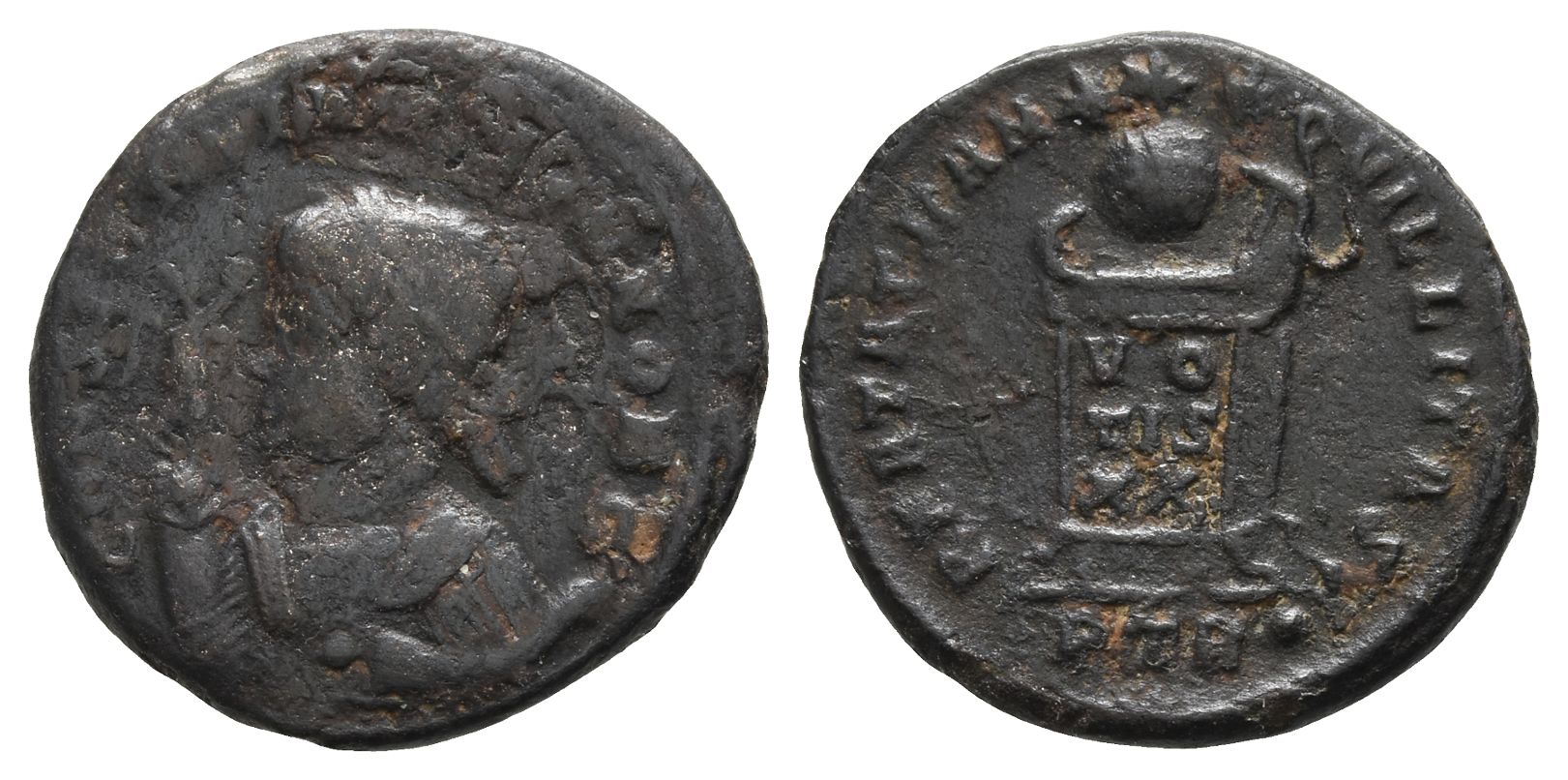
Constantine II, as Caesar BI Nummus. AD 316-337.
Treveri mint; struck AD 322. 1st officina. CONSTANTINVS IVN NOB C, laureate bust to left wearing ornate trabea, holding Victory on globe in right hand and mappa in left / BEATA TRAN-QVILLITAS, banded globe set on altar inscribed VOTIS XX in three lines; three stars above, PTR• in exergue. RIC VII 353. Near Very Fine.(2.88gr, 19mm, 7h.).
ProvenanceAcquired on the UK art market before 2000.
Property of an Essex, UK, gentleman.
TimeLine Auctions follows a vetting process to ensure the authenticity and legality of all items, reinforcing our commitment to integrity and responsible trading. Each antiquity, antique, and coin lot undergoes thorough examination by a vetting committee of at least ten external specialists, professional trade association members, scientists, and archaeologists: Our Vetting Process
AUCTIONS:
TimeLine is a leading auction house specialising in antiquities, ancient art, collectables, natural history, coins, medals, and books. Our auctions offer museums, collectors, historians, and enthusiasts the opportunity to acquire unique and historically significant pieces.
-
.jpg)
Magnentius BI Centenionalis. AD 350-353.
Sold for (Inc. bp): £26
Lugdunum mint. 1st officina. D N MAGNENTIVS P F AVG, bare-headed, draped and cuirassed bust to right; A behind / VICTORIAE DD NN AVG ET CAE, two Victories standing facing one another, together holding shield inscribed VOT V MVLT X in four lines; SV below, RPLG• in exergue. RIC VIII 128. 5.67gr, 20mm, 6h.
Near Extremely Fine.
Purchased from Fritz Rudolf Künker GmbH & Co. KG, September 2010; From an old UK collection; From the collection of a London antiquarian. -
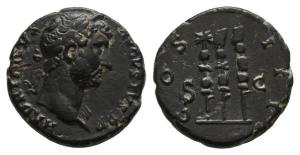
Hadrian AE Semis. AD 117-138.
Sold for (Inc. bp): £39
Rome mint; struck AD 125-128. HADRIANVS AVGVSTVS P P, laureate head to right, light drapery on far shoulder / COS III, legionary eagle between two standards, S C across field. RIC II.3 976; Cohen 450; BMCRE 1381A. 3.66gr, 16mm, 6h.
Very Fine.
From the collection of a London antiquarian, formed since the 1980s. -
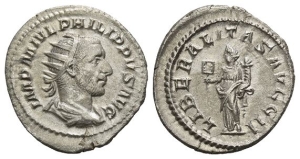
Philip I AR Antoninianus. AD 244-249.
Sold for (Inc. bp): £39
Rome mint; struck AD 244-247. IMP M IVL PHILIPPVS AVG, radiate, draped and cuirassed bust to right / LIBERALITAS AVGG II, Liberalitas standing to left, holding abacus and cornucopia. RIC IV 38b; RSC 87. 4.09gr, 24mm, 6h.
Good Very Fine.
Ex German art market, 2000s. Acquired from an EU collector living in London. From the collection of a Surrey, UK, gentleman.
