
Loading, please wait...
LOT 0104
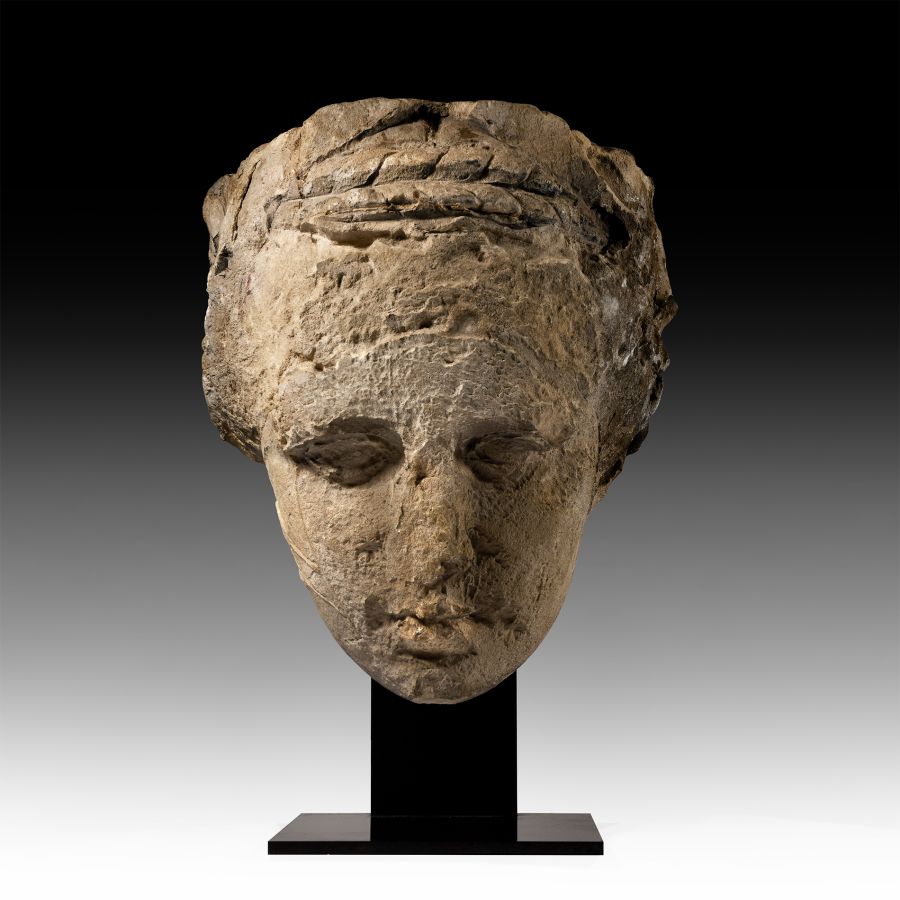
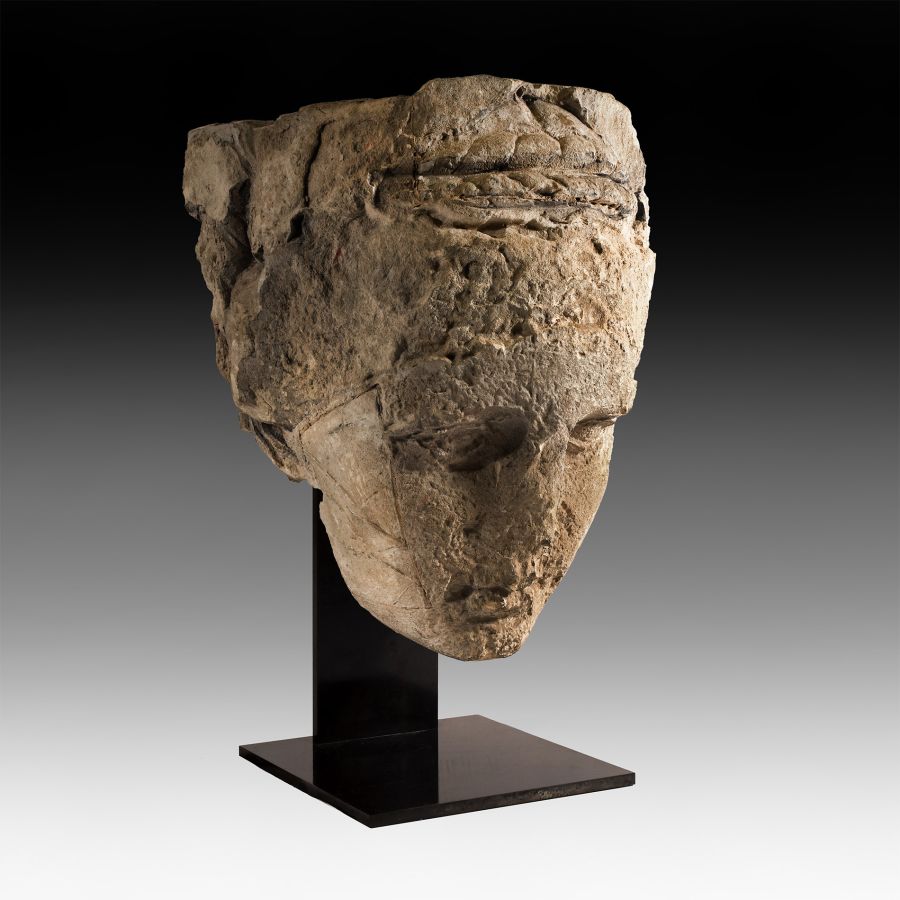
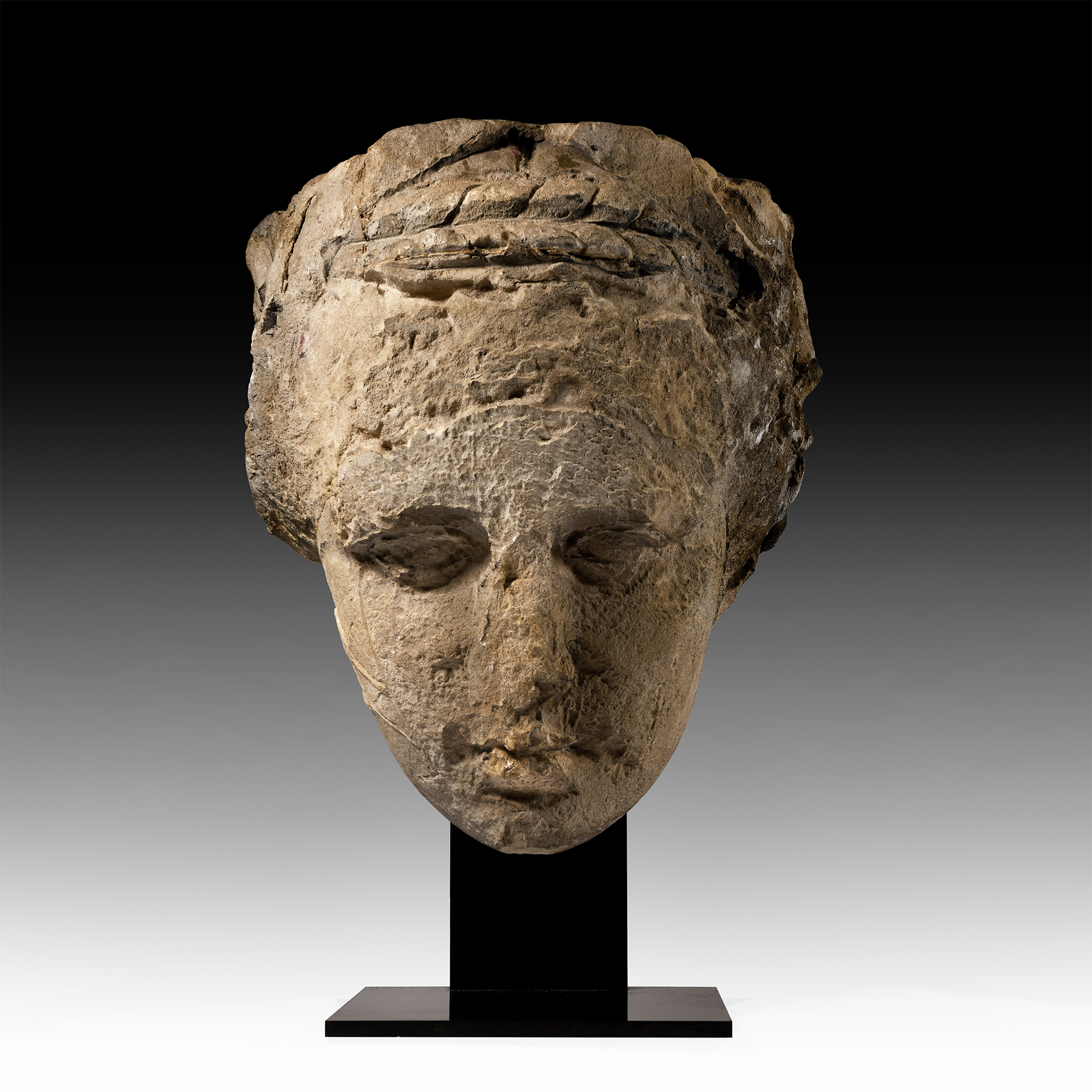
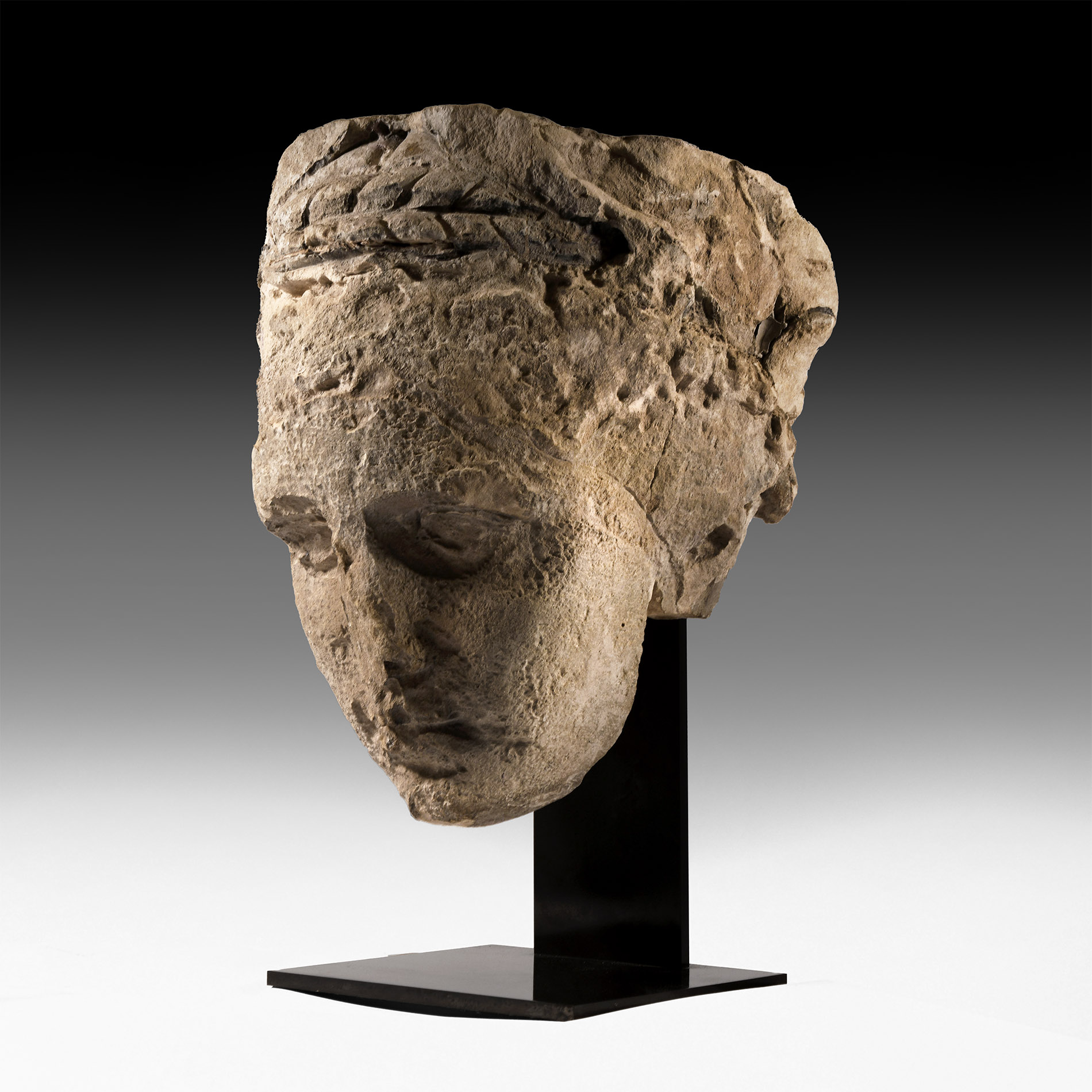
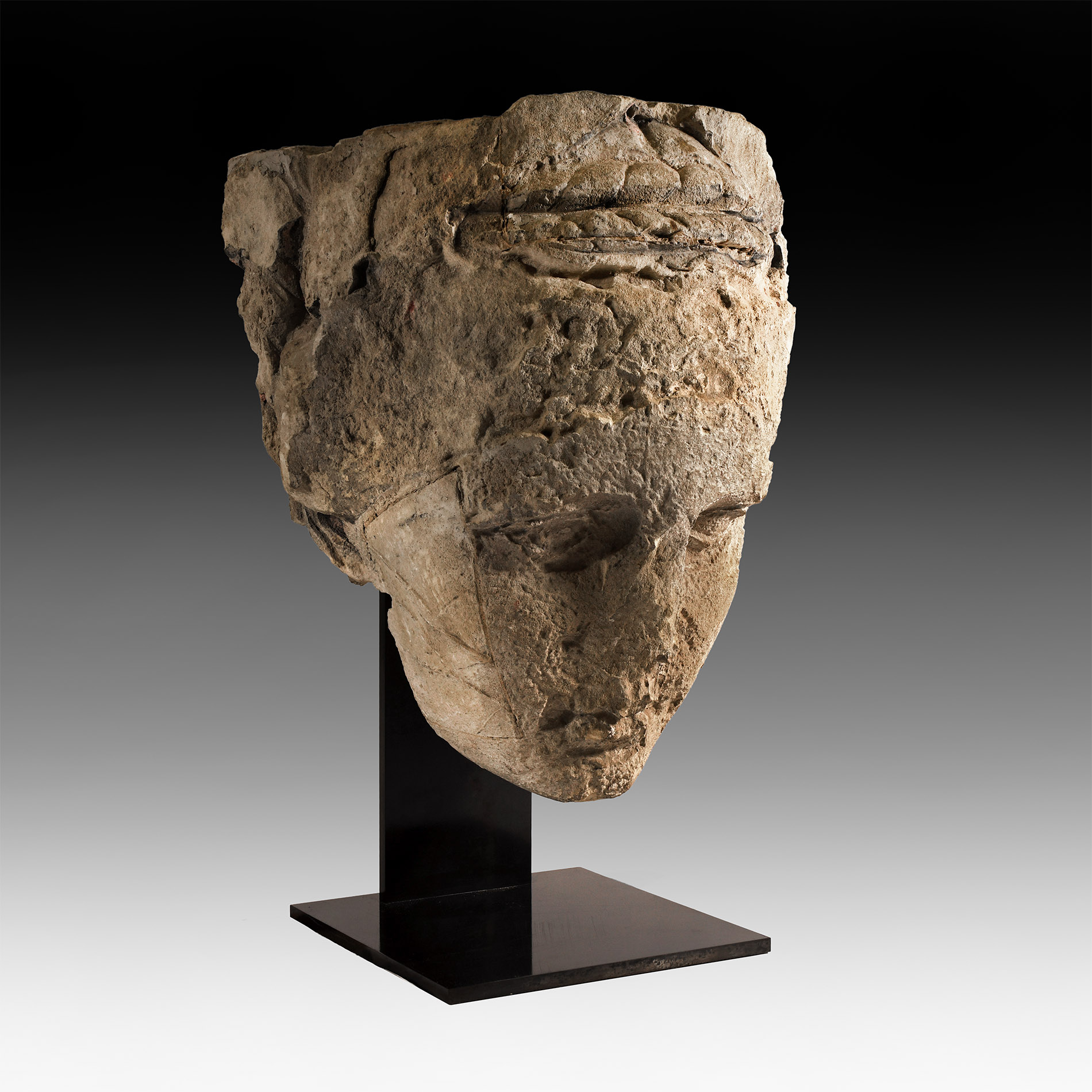
Colossal Roman Head of Diana
1ST-2ND CENTURY A.D.
28 3/8 in. (72 cm high including stand).
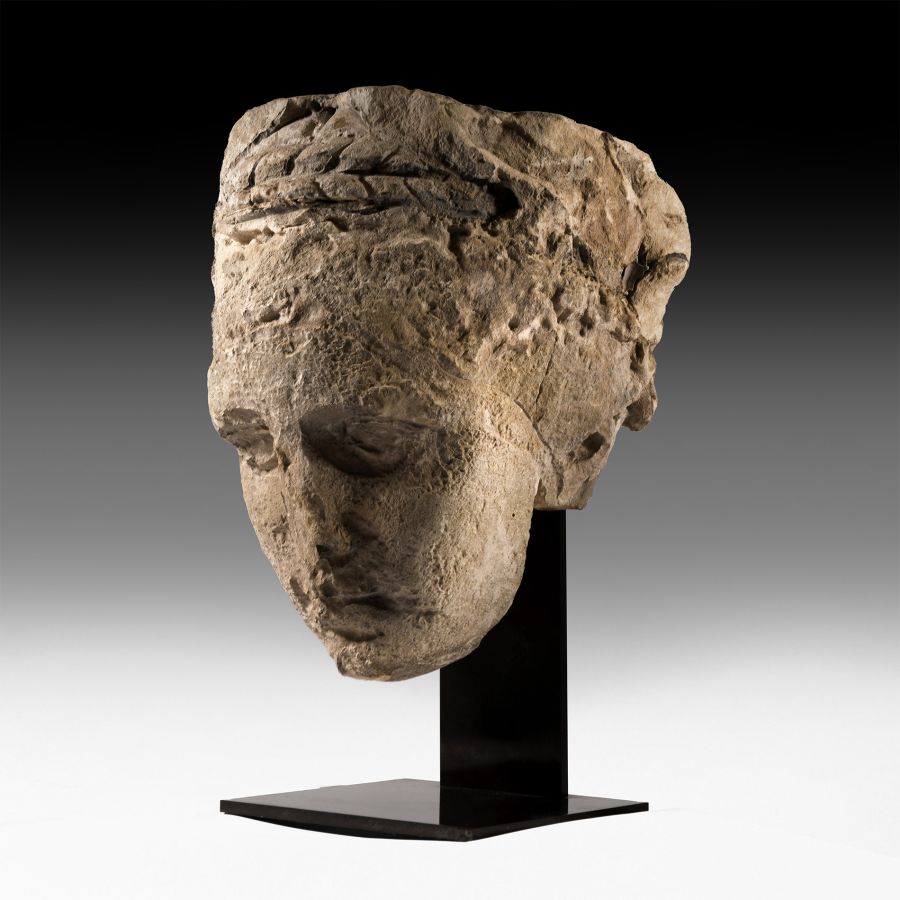
A colossal architectural limestone head of the goddess Diana (Greek Artemis) with elegant features, sensual lips and deep eyes; detailed treatment of the hairstyle in transverse braids across the brow, laurel wreath with two rows of leaves resting above the forehead; mounted on a custom-made display stand.
ProvenanceEx private Belgian collection.
with Madame Andree Mace collection.
English private collection.
Accompanied by an academic report by Prof. Neritan Ceka.
This lot has been checked against the Interpol Database of stolen works of art and is accompanied by search certificate no.11625-199748.
See Bartman, E., Hair and the Artifice of Roman Female Adornment in American Journal of Archaeology Vol. 105, No. 1 (Jan 2001), pp.1-25, for discussion of Roman hairstyling in its social context; Fischer-Hansen, T. & Poulsen, B. (eds.), From Artemis to Diana: the goddess of man and beast. Collegium Hyperboreum and Museum Tusculanum Press, Copenhagen, 2009.
FootnotesThe upper part of the head, cut horizontally, creates a semi-circular surface, on which the rest of the hair, or an architectonic capital, may have been mounted. A T-shaped indentation on that surface served to secure that attachment. The back of the head, cut perpendicularly, proves that the head was made to repose on an architectural surface. The fragmentary preservation of the neck does not allow a clear determination, whether we are dealing with the head of a caryatid, i.e. the head of a sculpture in the function of a pilaster, or whether the colossal head was an architectural stone corbel, i.e. an architectural element that was placed for the support of the sima of a building of great size.
CONDITIONTimeLine Auctions follows a vetting process to ensure the authenticity and legality of all items, reinforcing our commitment to integrity and responsible trading. Each antiquity, antique, and coin lot undergoes thorough examination by a vetting committee of at least ten external specialists, professional trade association members, scientists, and archaeologists: Our Vetting Process
AUCTIONS:
TimeLine is a leading auction house specialising in antiquities, ancient art, collectables, natural history, coins, medals, and books. Our auctions offer museums, collectors, historians, and enthusiasts the opportunity to acquire unique and historically significant pieces.
LOT 0104
Colossal Roman Head of Diana
Estimate £15,000 - 20,000€17,400 - 23,200 (for guidance only)$20,250 - 27,000 (for guidance only)
-
Roman Goddess Statuette Heads
Circa 1st-3rd century A.D.Estimate: £300 - 400 (+bp*)
Opening Bid: £150
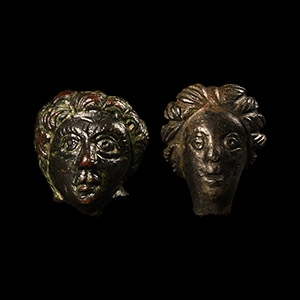
A pair of semi-naturalistic bronze statue heads modelled in the round: a female with hair held in a chignon at the nape; figure with hair dressed in short wavy tufts, large eyes with exaggerated eyelashes. 71 grams total, 23-25 mm
Acquired before 2000. From the collection of a European gentleman living in the UK.
Bronze statuettes of Roman work representing Roman gods and goddesses were widespread all around the empire, and are also known as far as archaeological sites of Jutland and the islands. The two heads represent probably tutela divinities of the home, like Vesta and Juno (Greek Hera). -
Roman Gold Earring Pair
1st-3rd century A.D.Sold for (Inc. bp): £546
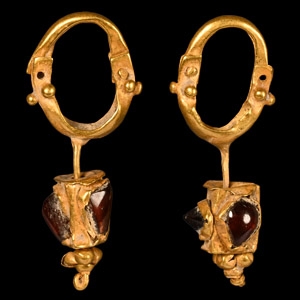
A matched pair of gold earrings, each a substantial hoop with hinged closure and granule detailing, columnar sleeve with applied cells and inset carnelian cloisons, granule cluster finial. 3.45 grams total, 31 mm each
Acquired early 1990s. Ex private American collection; thence by descent. Private collection since 1998. -
Roman Artefact Group
1st-4th century A.D.Sold for (Inc. bp): £52
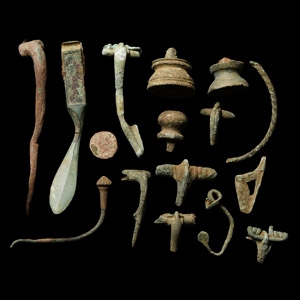
A group of bronze artefacts comprising: two pommel or box mounts with concentric decoration, a section of a twisted wire bracelet, a dress pin, nice bow brooch fragments, a 4th century coin and a implement handle. 123 grams total, 13-82 mm
Found Rodings, Essex, UK. Acquired on the UK antiques market between 1974-1985. Albert Ward collection, Essex, UK.
