
Loading, please wait...
LOT 2707
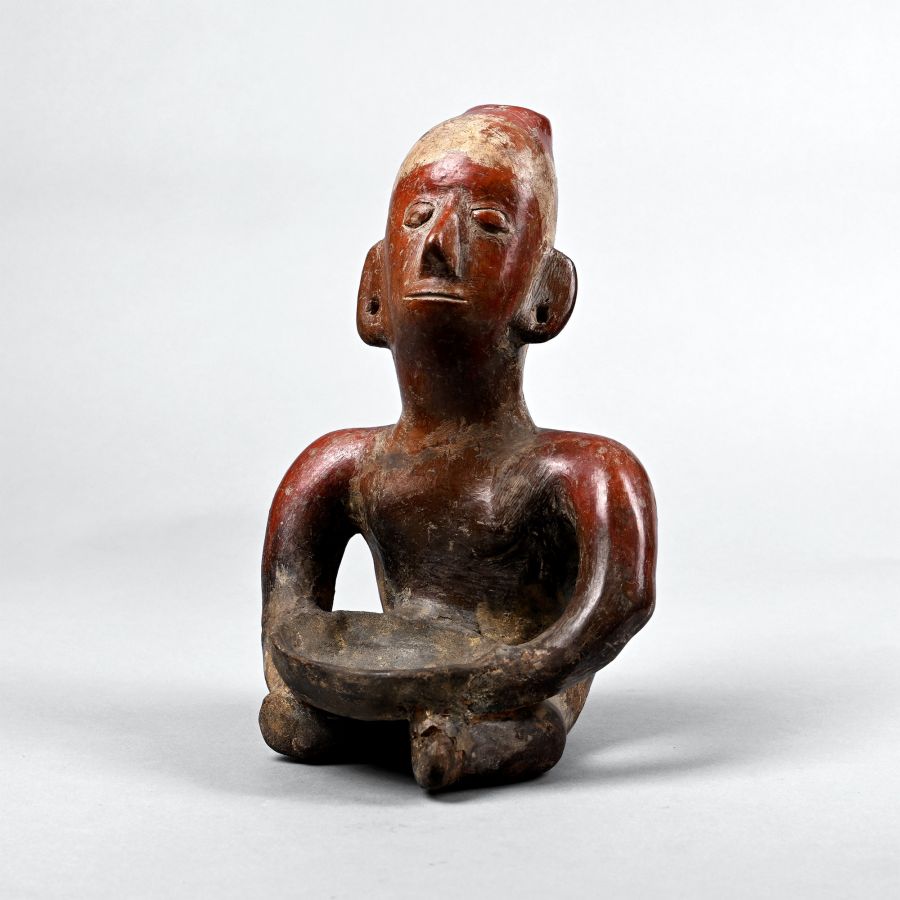
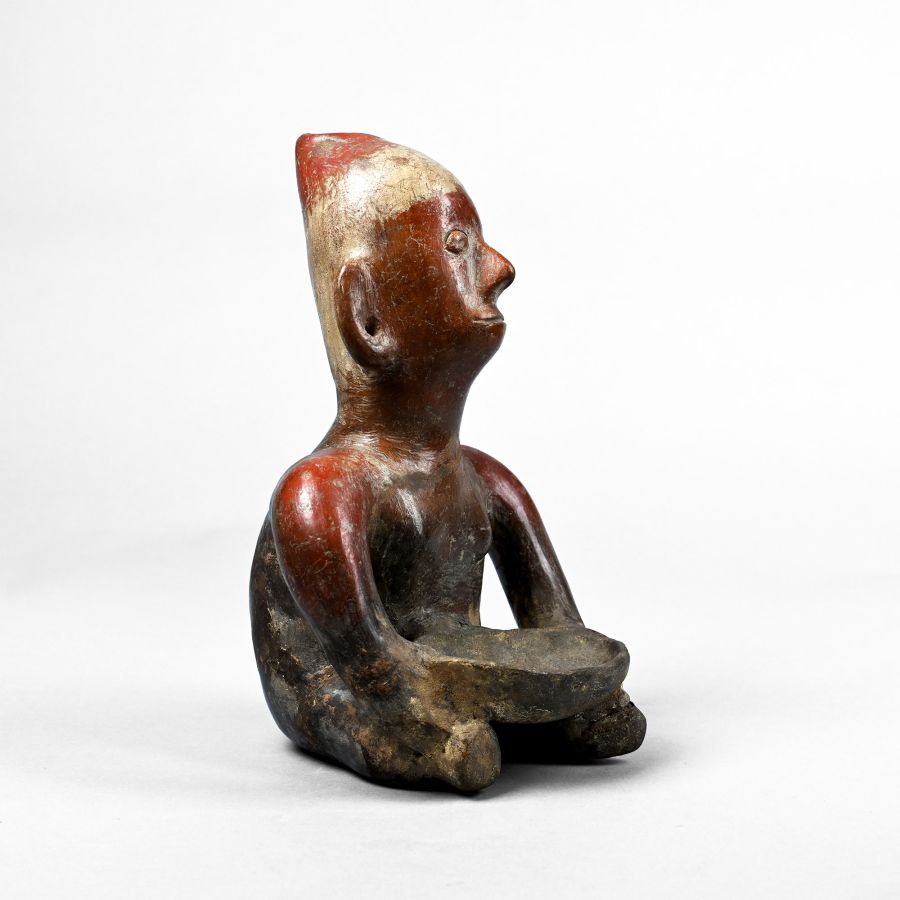
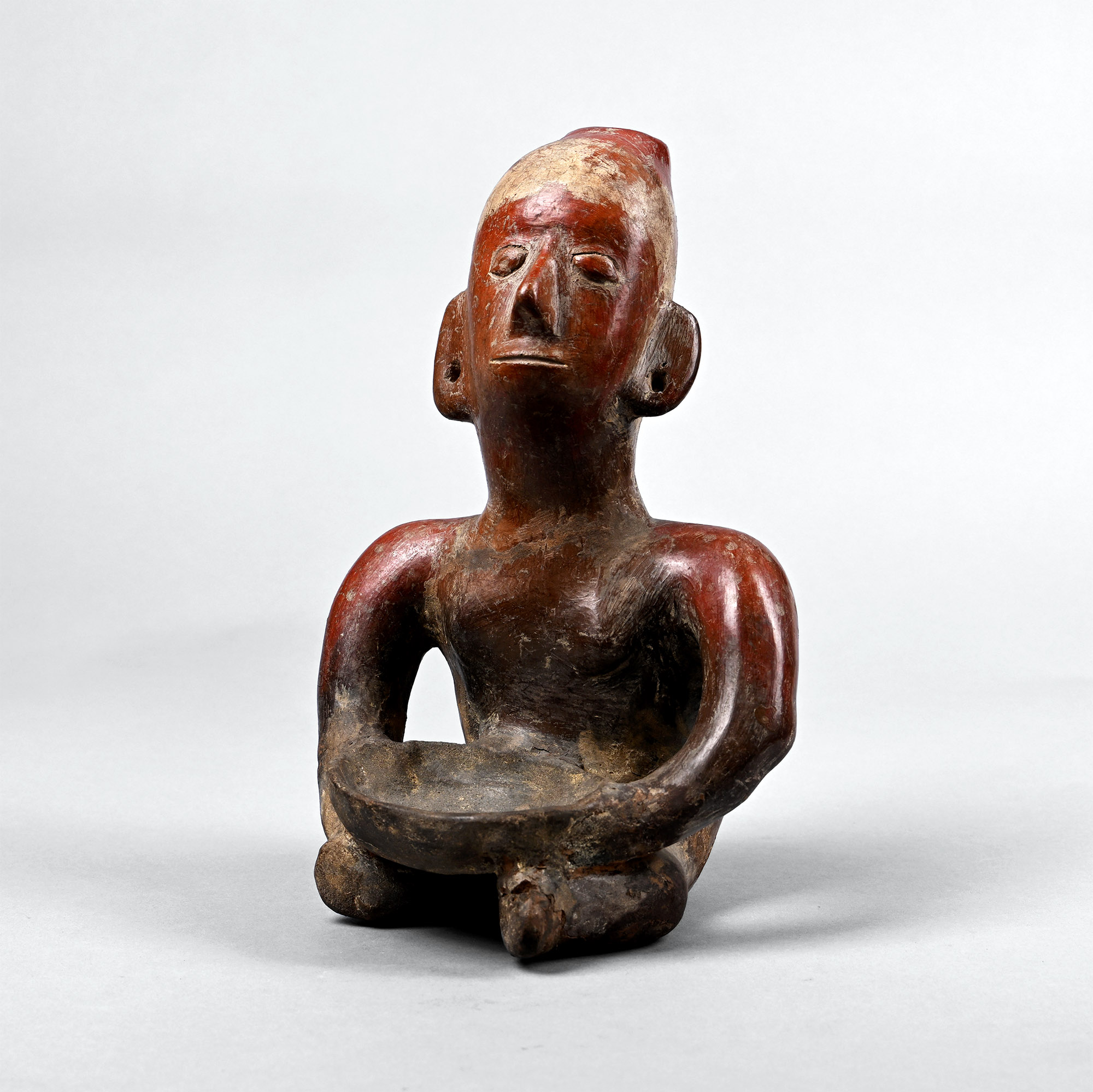
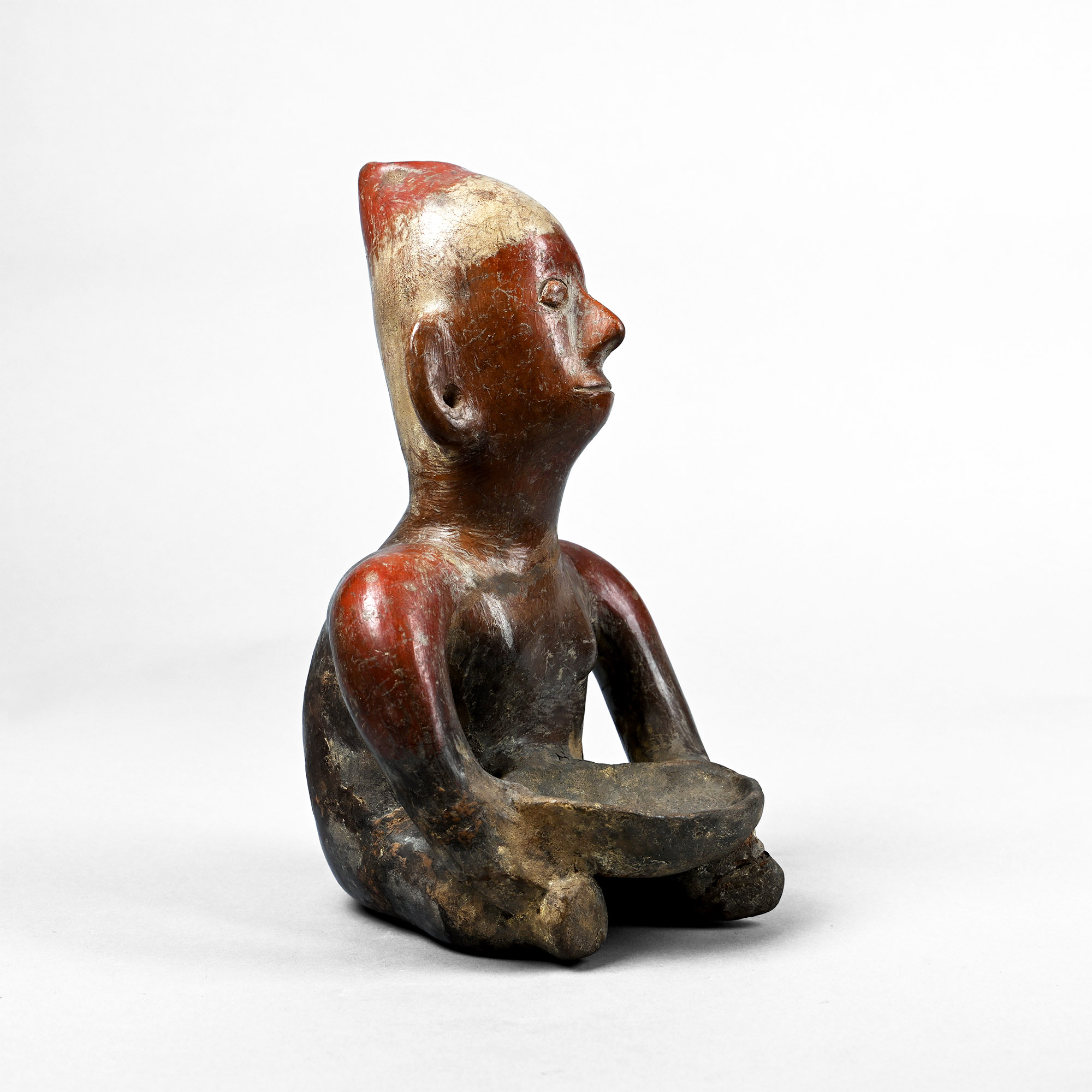
Colima Culture Terracotta Seated Figure
CIRCA 200 B.C.-300 A.D.
10 5/8 in. (1.71 kg, 27 cm high).
Hollow-formed figure in sitting pose with stub legs and shallow bowl on the lap; broad shoulders and bowed arms, elongated head with lentoid eyes and large ears pierced at the lower edge to accept rings; conical upper head developing to a spout; traces of pigment. [No Reserve]
ProvenancePreviously in the private collection of Leo (1922-1979), and Evelyn D. Farland (1930-2025), New York; thence by descent.
LiteratureSee Bruhns, K.O., Ancient South America, Cambridge World Archaeology series, Cambridge, 1994, for discussion of Colima / Western Mexico Shaft Tomb Culture; see also Holsbeke, M., Offerings for a New Life, Antwerp Ethnograhic Museum, 1998, figure 13, for an example of a colima figure holding a ceremonial bowl.
CONDITIONTimeLine Auctions follows a vetting process to ensure the authenticity and legality of all items, reinforcing our commitment to integrity and responsible trading. Each antiquity, antique, and coin lot undergoes thorough examination by a vetting committee of at least ten external specialists, professional trade association members, scientists, and archaeologists: Our Vetting Process
AUCTIONS:
TimeLine is a leading auction house specialising in antiquities, ancient art, collectables, natural history, coins, medals, and books. Our auctions offer museums, collectors, historians, and enthusiasts the opportunity to acquire unique and historically significant pieces.
-
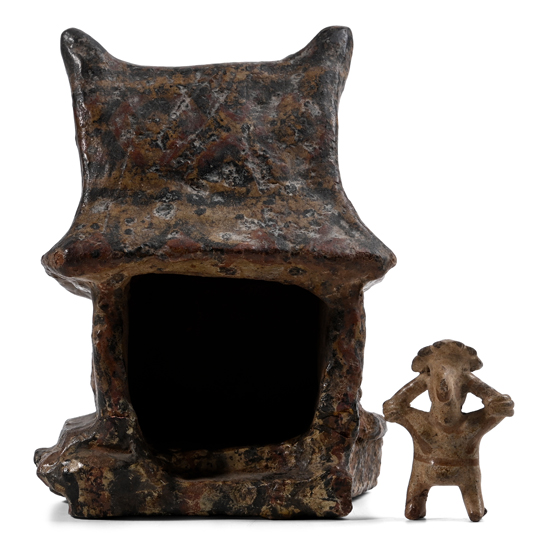
Nayarit Culture Terracotta Model of a House
Circa 200 B.C.-300 A.D.Sold for (Inc. bp): £247
Rectangular in plan with flange rim to the thick base, one side open, gabled roof with broad eaves and tall finials; pigment detailing. 720 grams, 13.5 cm
Previously in the private collection of Leo (1922-1979), and Evelyn D. Farland (1930-2025), New York; thence by descent.
Examples of Nayarit dwellings provide an insight into the life of ancient West Mexico. Made of perishable materials, these terracotta examples often depict family gatherings, including domestic animals, often dogs. It is thought that these houses may represent individuals of higher status. -
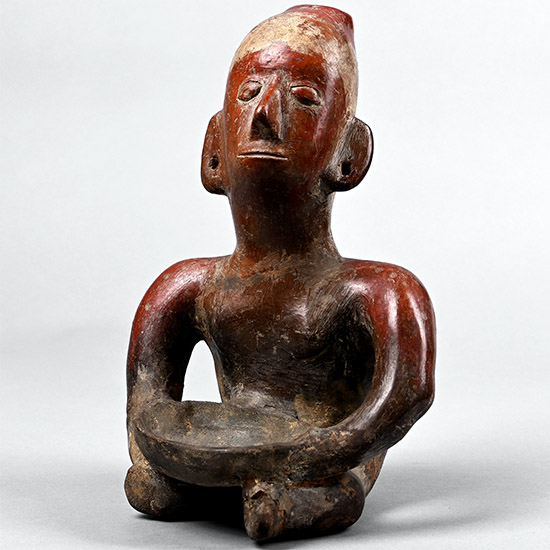
Colima Culture Terracotta Seated Figure
Circa 200 B.C.-300 A.D.Sold for (Inc. bp): £520
Hollow-formed figure in sitting pose with stub legs and shallow bowl on the lap; broad shoulders and bowed arms, elongated head with lentoid eyes and large ears pierced at the lower edge to accept rings; conical upper head developing to a spout; traces of pigment. 1.71 kg, 27 cm high
Previously in the private collection of Leo (1922-1979), and Evelyn D. Farland (1930-2025), New York; thence by descent. -
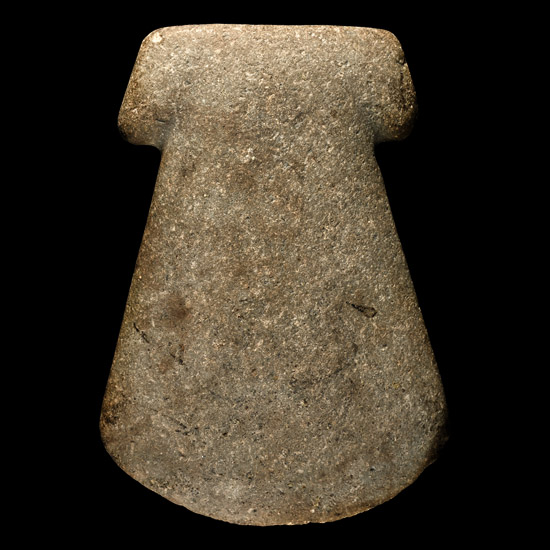
Pre-Columbian Polished Stone Axe Head
Inca, circa 1438-1533 A.D.Sold for (Inc. bp): £364
Lentoid in section with transverse head, curved cutting edge. 670 grams, 14 cm
From the collection of a Hampshire, UK, gentleman, established from the 1960s.
