
Loading, please wait...
LOT 2040
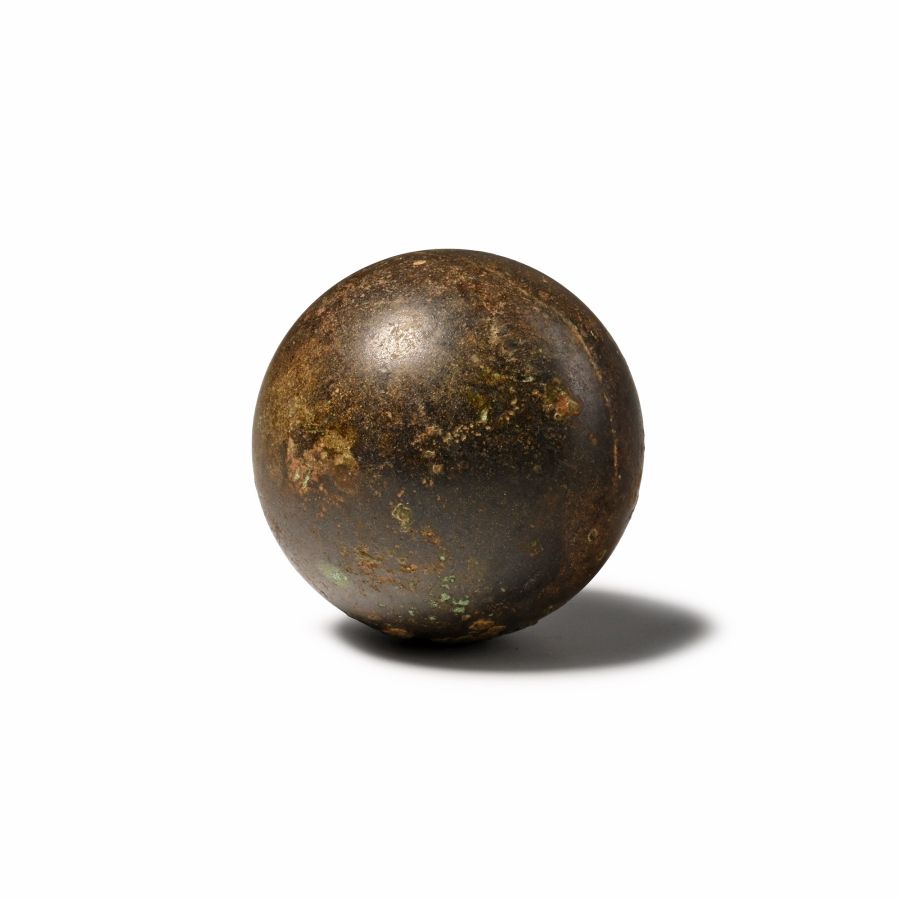
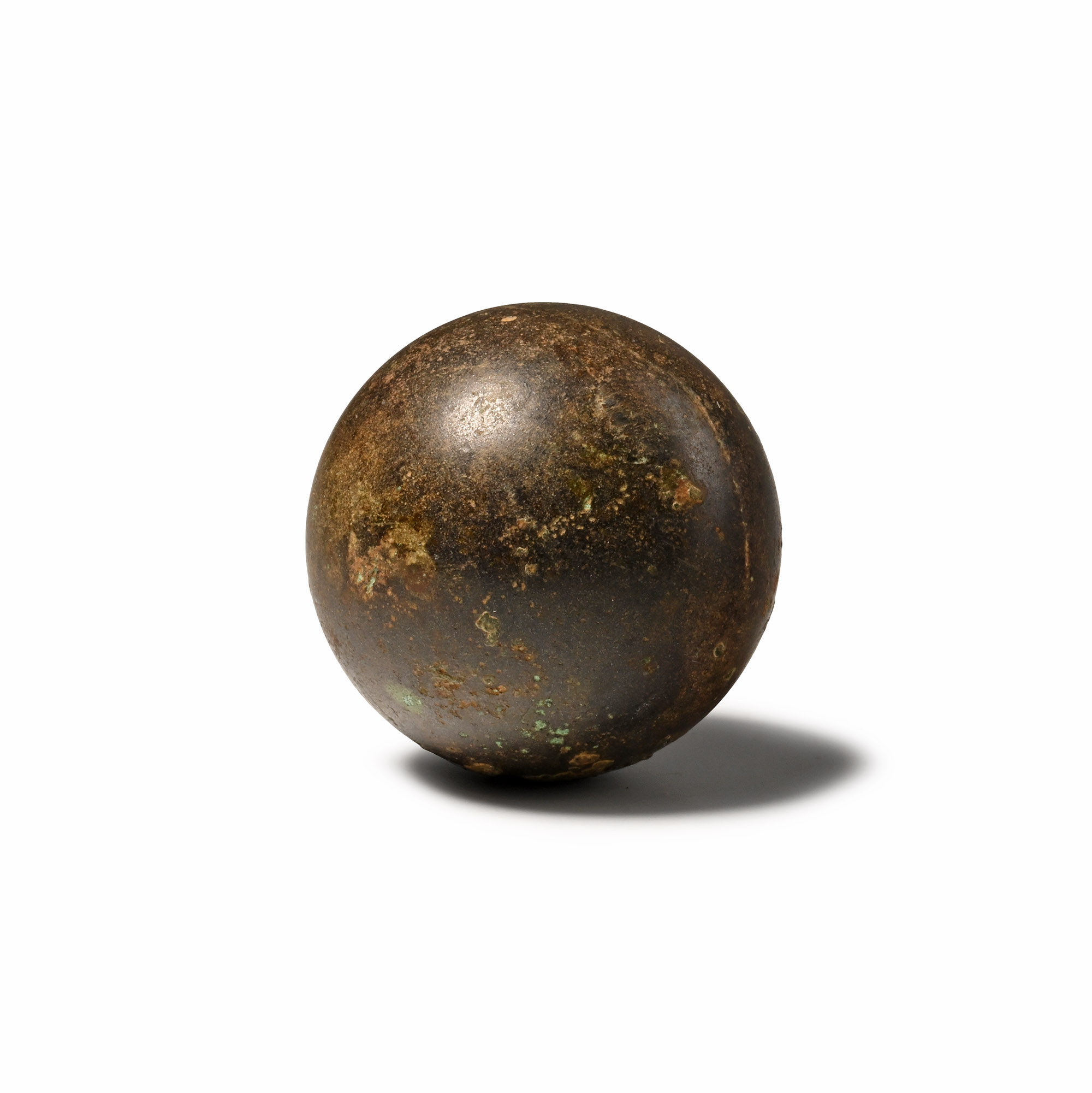
Civil War Period Bronze Cannon Shot
CIRCA 17TH CENTURY A.D.
1 1/4 in. (141 grams, 31 mm).
Spherical solid-core type of about 5 ounces. [No Reserve]
ProvenanceFrom a UK collection formed in the 1980s.
Property of an Essex, UK, gentleman.
TimeLine Auctions follows a vetting process to ensure the authenticity and legality of all items, reinforcing our commitment to integrity and responsible trading. Each antiquity, antique, and coin lot undergoes thorough examination by a vetting committee of at least ten external specialists, professional trade association members, scientists, and archaeologists: Our Vetting Process
AUCTIONS:
TimeLine is a leading auction house specialising in antiquities, ancient art, collectables, natural history, coins, medals, and books. Our auctions offer museums, collectors, historians, and enthusiasts the opportunity to acquire unique and historically significant pieces.
LOT 2040
Civil War Period Bronze Cannon Shot
Estimate £40 - 60€46 - 70 (for guidance only)$54 - 81 (for guidance only)
Opening Bid
£5 (EUR 6; USD 7) +BP*
-
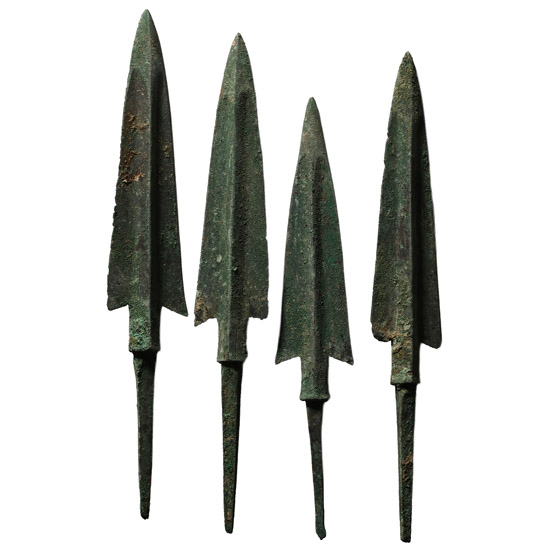
Western Asiatic Bronze Arrowhead Collection
2nd-1st millennium B.C.Estimate: £100 - 140 (+bp*)
Opening Bid: £50
Barbed and tanged type with thick square-section neck and long tang. 179 grams total, 15-17 cm
Ex Abelita collection, 1980-2010. -
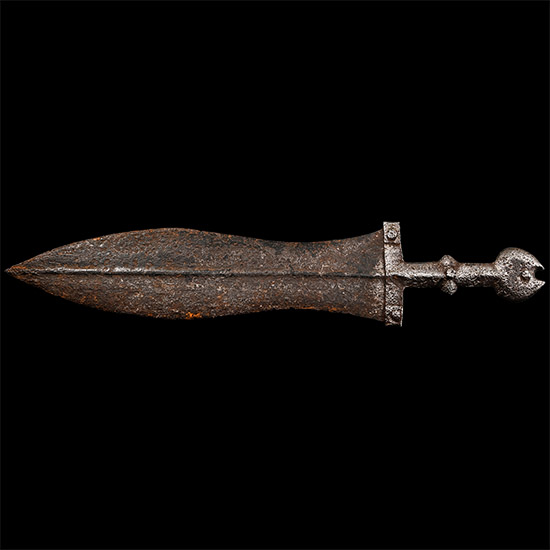
Roman Iron Pugio Dagger
Circa 3rd century A.D.Estimate: £2,500 - 3,500 (+bp*)
Opening Bid: £1,250
Leaf-shaped wide blade with a narrow waist, a thick crossbar and a lozenge-section handle with a double-lobed pommel; accompanied by a custom-made display stand. 772 grams total including stand, dagger: 343 grams, 37 cm
Spanish collection, German auction, 1980s. Ex John Lawton private collection, Surrey, UK. Accompanied by a copy of a previous illustrated catalogue page, including provenance This lot has been checked against the Interpol Database of stolen works of art and is accompanied by search certificate no.13495-263284.
This dagger belongs to the last period of evolution of the Roman type III pugio, and to the blade types of the III period, according to the Saliola-Casprini classification (Saliola-Casprini, 2012, nos.45,54). Compared to the previous types of the 1st century A.D., the slender, lanceolate blade shows a considerable size, up to 45 cm long or longer, with a plain appearance and no decoration, even on the scabbard, when preserved. -
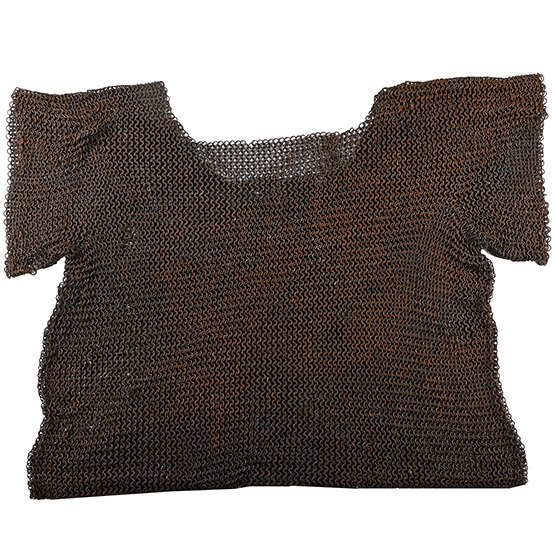
Medieval Warrior's Iron Chain Mail Armour Shirt
Circa 15th century A.D.Estimate: £3,000 - 4,000 (+bp*)
Opening Bid: £750
A butted short-sleeved chainmail shirt made of thick oval rings assembled in the usual system of one-to-four; in an excellent state of preservation, with over 95% of the rings intact, very few broken or corroded, with no later additions. 9.93 kg, 87 x 56 cm
Acquired on the German art market before 2000. Private collection, South Germany. Accompanied by an academic report by Dr Raffaele D'Amato. This lot has been checked against the Interpol Database of stolen works of art and is accompanied by search certificate no.13066-249665.
In the German-manufactured ring mail armours, in the 15th century A.D., the rings protecting the breast were very thick, whereas the sleeved mail armours were thinner. Master armourers from Nuremberg were famous for this production across Europe.
