
Loading, please wait...
LOT 1495
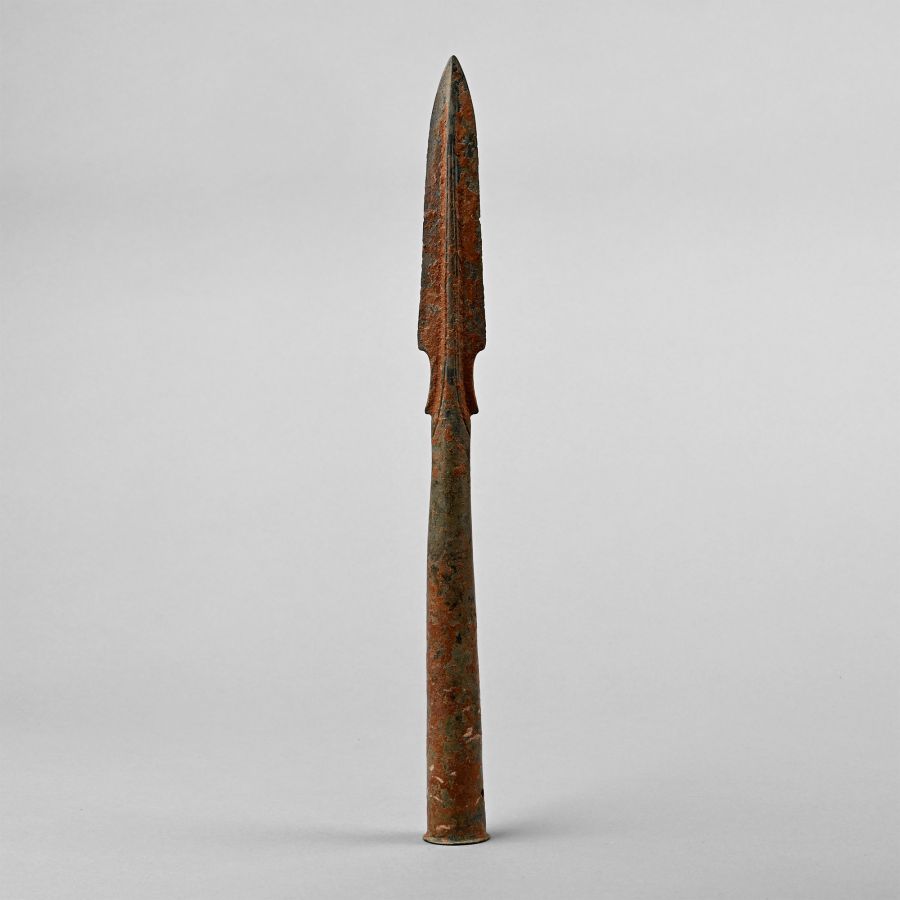
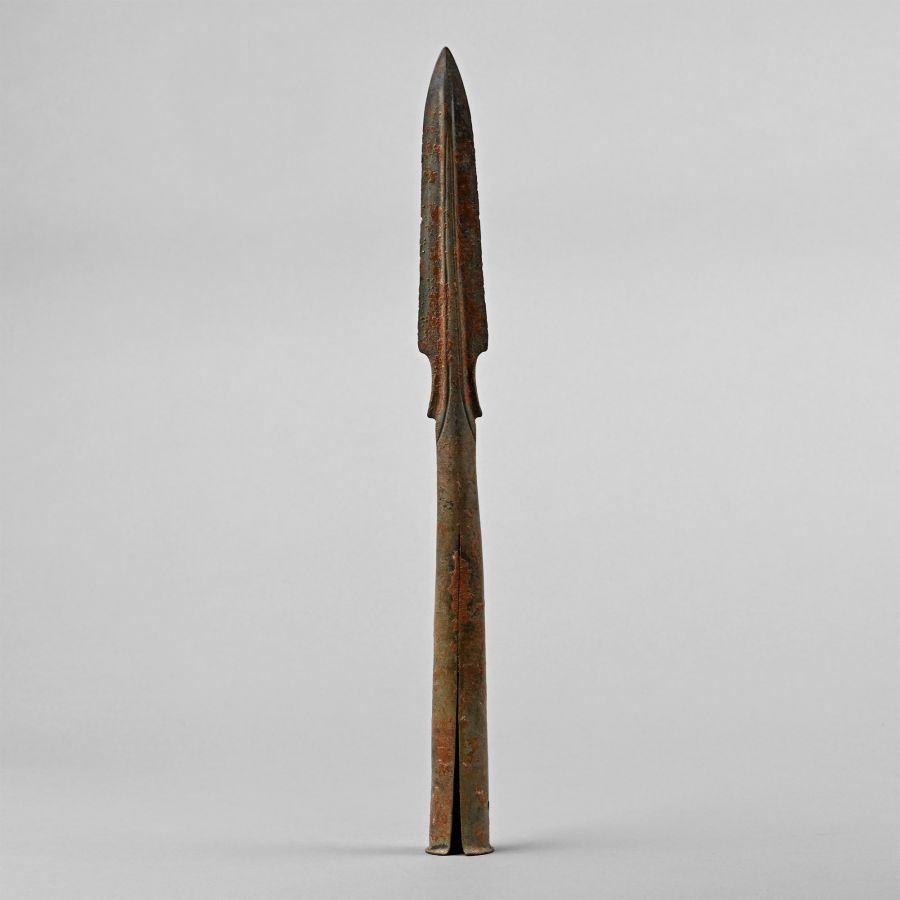
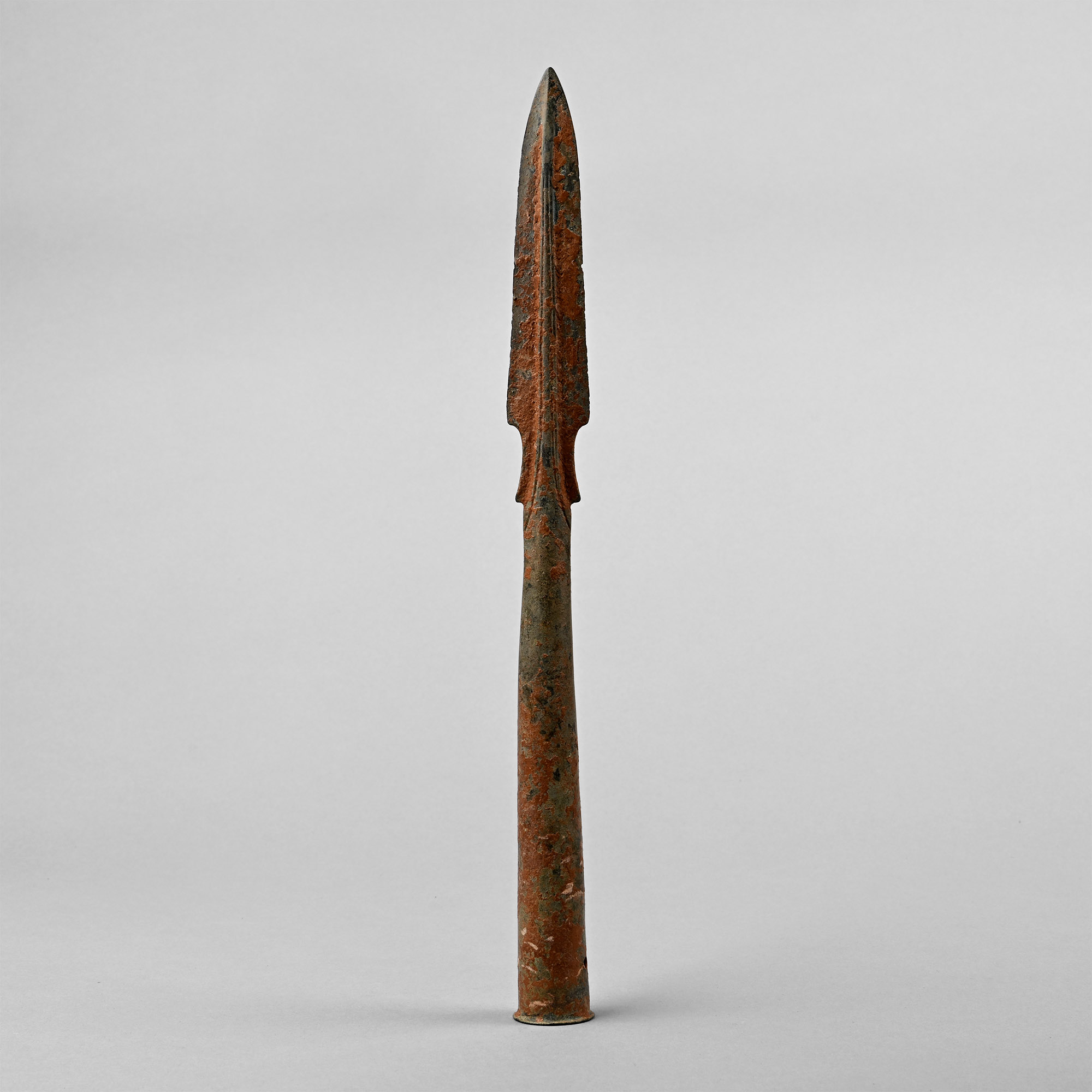
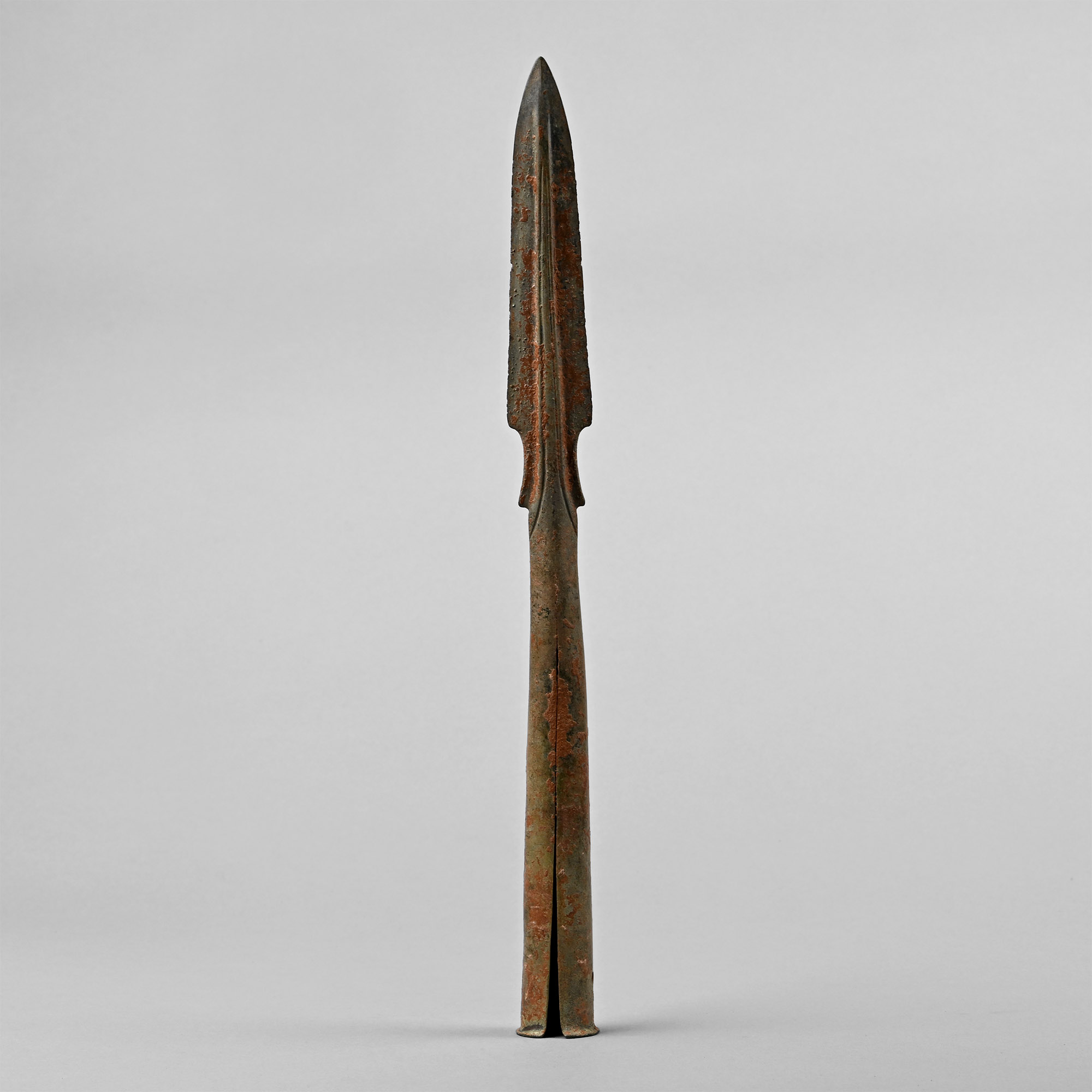
Chinese Zhou Bronze Socketted Spearhead
ZHOU DYNASTY, 1046-256 B.C.
12 1/2 in. (250 grams, 32 cm).
With thick midrib, leaf-shaped blade with lateral spurs, deep tubular socket with fastening hole for the attachment to the wooden shaft.
ProvenanceAcquired in the mid 1980s-1990s.
Private collection, Switzerland, thence by descent.
Private collection, since the late 1990s.
Cf. Gorelik, M., Weapons of Ancient East, IV millennium BC-IV century BC, Saint Petersburg, 2003, in Russian, (plate XXXVIII nos.47-48, for a similar spearhead from Wuchengqiao, country of Liuhe, Prov. Jiangsu, and Fengshuiling, near Changzhen, prov. Shanxi.
CONDITIONTimeLine Auctions follows a vetting process to ensure the authenticity and legality of all items, reinforcing our commitment to integrity and responsible trading. Each antiquity, antique, and coin lot undergoes thorough examination by a vetting committee of at least ten external specialists, professional trade association members, scientists, and archaeologists: Our Vetting Process
AUCTIONS:
TimeLine is a leading auction house specialising in antiquities, ancient art, collectables, natural history, coins, medals, and books. Our auctions offer museums, collectors, historians, and enthusiasts the opportunity to acquire unique and historically significant pieces.
LOT 1495
Chinese Zhou Bronze Socketted Spearhead
Estimate £450 - 650€520 - 750 (for guidance only)$610 - 880 (for guidance only)
-
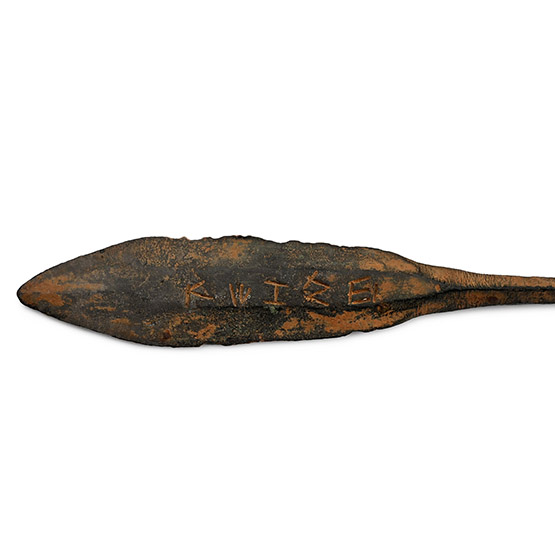
Aramaic Inscribed Bronze Arrowhead for Zscha..., Son of Adnb
1st millennium B.C.Sold for (Inc. bp): £1,105
Comprising a two-edged lentoid-section leaf-shaped blade and lozenge-section tang; each side with a short incised Aramaic inscription; ḥṣ zš bn ʾdnb = arrow of Zscha..., son of Adnb. 14 grams, 94 mm
From the collection of a gentleman, acquired on the London art market in the 1990s. -
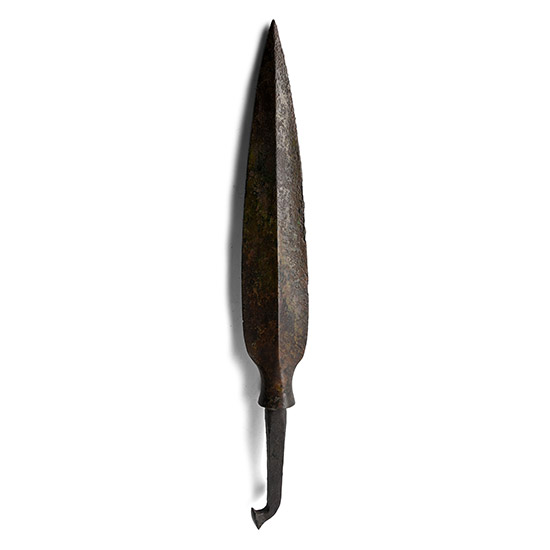
Luristan Bronze Spearhead
2nd-1st millennium B.C.Sold for (Inc. bp): £286
Comprising a leaf-shaped blade with a raised midrib extending to the shaft with a flared collar, rectangular-section tang with curved end and a button finial. 608 grams, 34.2 cm
Ex Abelita family collection, 1980s-2000s.
The type belongs to the category of tripartite lances with a long, pointed biconvex blade and single bevelled tang. In this typology, the blade, of rhomboidal section, is usually well balanced. The stem, medium or short, is widened at its base and forms a fairly clean stop. Elements of the shaft of a similar spear found at Tepe Hissar have allowed the reconstruction of the length of the spear reaching up to 1.40 m. -
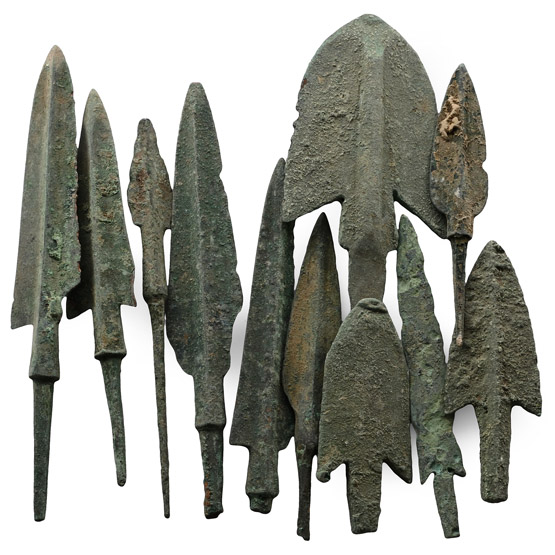
Western Asiatic Bronze Arrowhead Collection
1st millennium B.C.Sold for (Inc. bp): £117
Including barbed-and-tanged, leaf-shaped, spade-shaped and other types. 339 grams total, 7.9-14 cm
Ex London, UK, collection, 1990s.
