
Loading, please wait...
LOT 1562
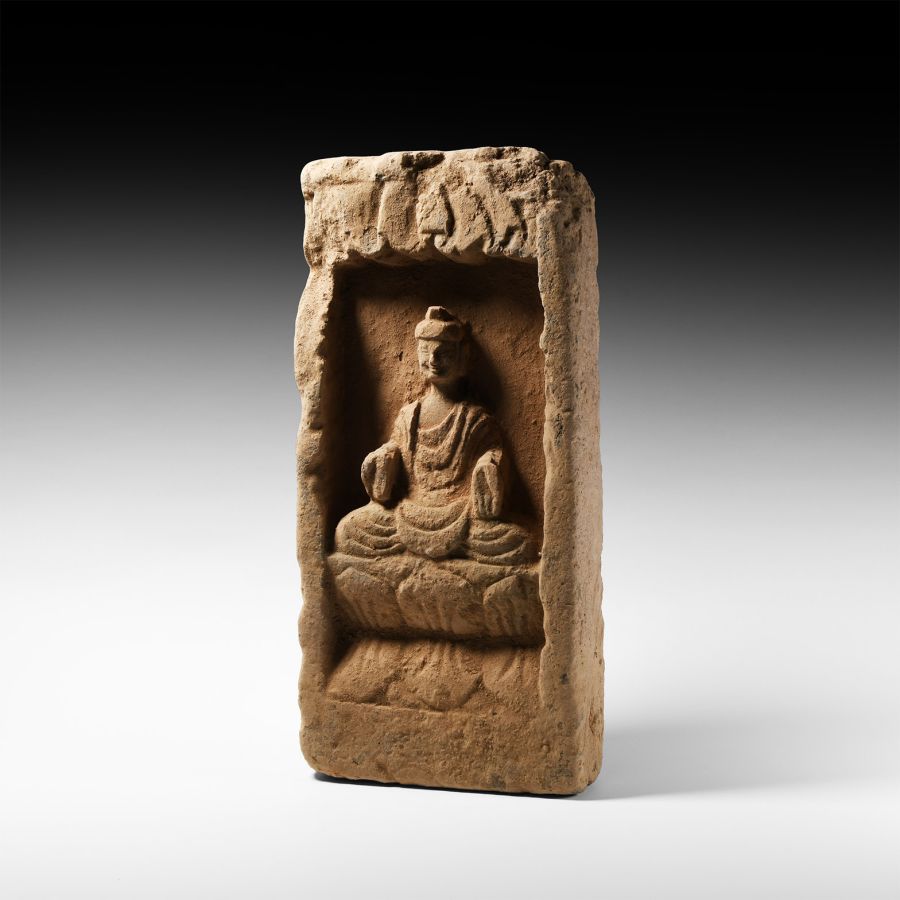
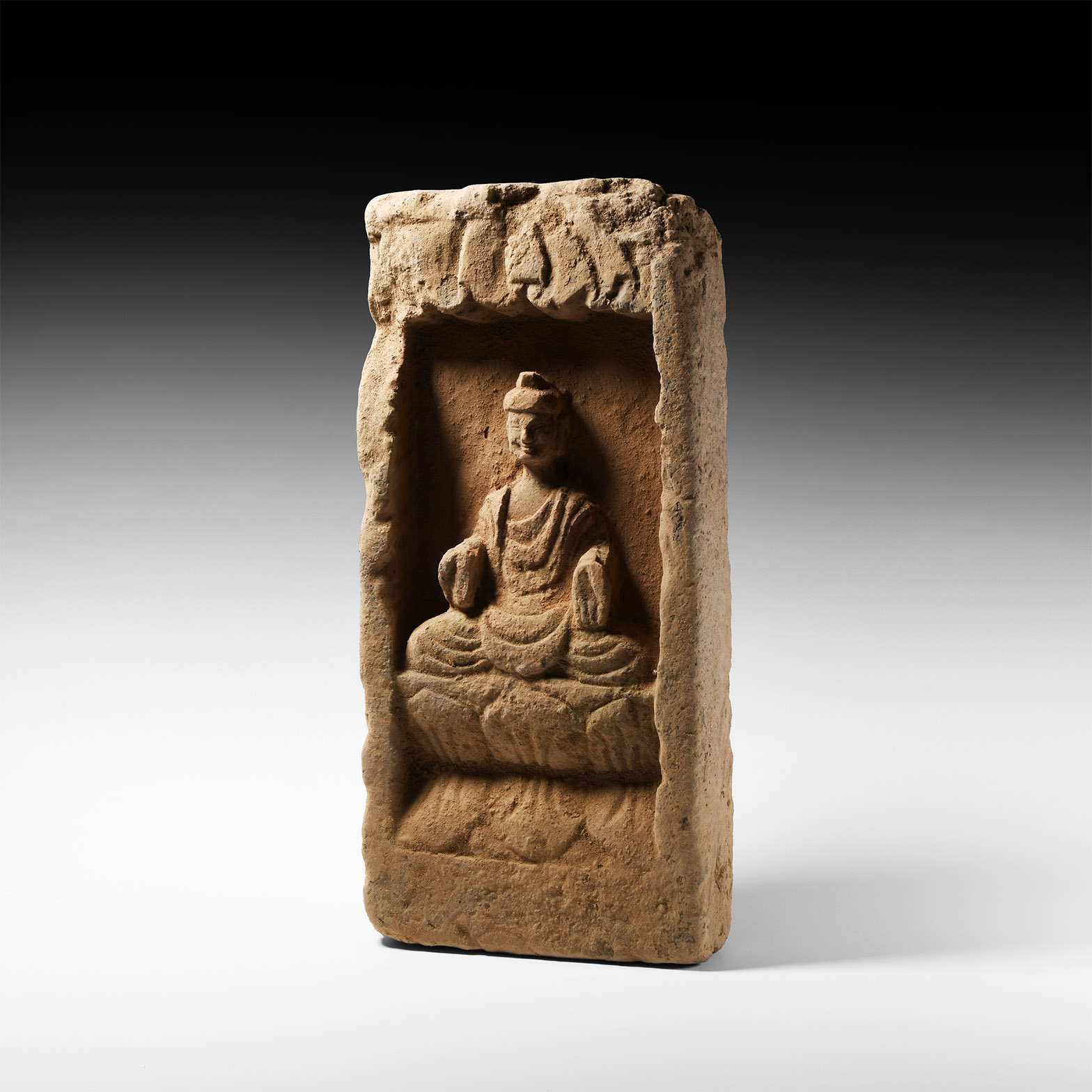
Chinese Wei Buddha Brick
WEI DYNASTY, 534-550 A.D.
12 5/8 in. (3.83 kg, 32 cm high).
A rectangular ceramic Buddha brick displaying Buddha seated cross-legged on a lotus flower base beneath a canopy, in raised relief within a rectangular niche, his hands held in the varada mudra of charity and compassion.
ProvenanceAcquired in the 1970s.
From a Hong Kong collection.
London collection, 1990s-2000s.
TimeLine Auctions follows a vetting process to ensure the authenticity and legality of all items, reinforcing our commitment to integrity and responsible trading. Each antiquity, antique, and coin lot undergoes thorough examination by a vetting committee of at least ten external specialists, professional trade association members, scientists, and archaeologists: Our Vetting Process
AUCTIONS:
TimeLine is a leading auction house specialising in antiquities, ancient art, collectables, natural history, coins, medals, and books. Our auctions offer museums, collectors, historians, and enthusiasts the opportunity to acquire unique and historically significant pieces.
-
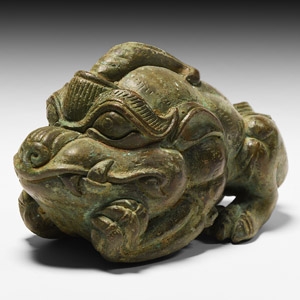
Chinese Han Style Beast Weight
20th century A.D.Estimate: £250 - 350 (+bp*)
Opening Bid: £139
A bronze weight formed as a stylised beast with exaggerated facial features, curved tusks, bristles to the back; hollow to the underside. 679 grams, 12.1 cm
Fine condition.
Acquired 1980-1990s. From a West Country collection. -
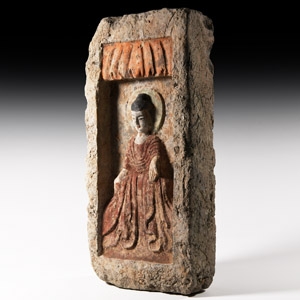
Chinese Wei Buddha Brick
Wei Dynasty, 534-550 A.D.Sold for (Inc. bp): £234
A rectangular ceramic brick with central recess displaying Buddha in high-relief seated cross-legged on a lotus flower base beneath a canopy, his hands held in the varada mudra of charity and compassion. 5.6 kg, 35.5 x 17cm
Acquired 1970-1990s. Ex Hong Kong collection. From a private West Country collection. -
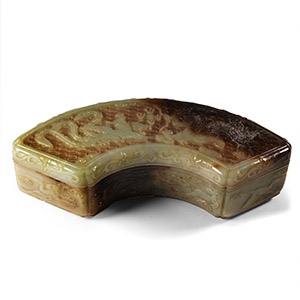
Chinese Carved Jade Box
Circa 19th century A.D.Sold for (Inc. bp): £91
A jade box with curved profile, the base carved to the exterior with a stylised landscape composed of bounding deer, trees, mountains, swirling clouds and birds; lid with raised opposed fenghuangs pierced against a pierced field, flowering vines to the rim. 394 grams, 19.5 cm wide
Acquired London, UK, in the 1990s. Property of a London gentleman.
