
Loading, please wait...
LOT 0373
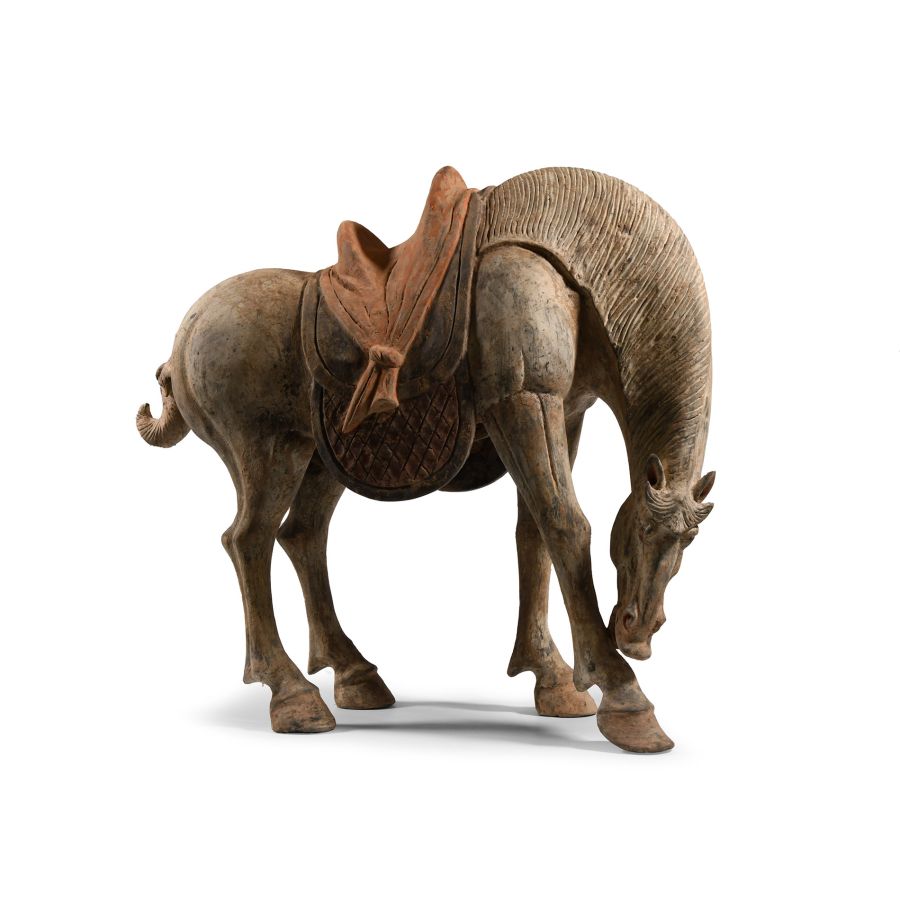
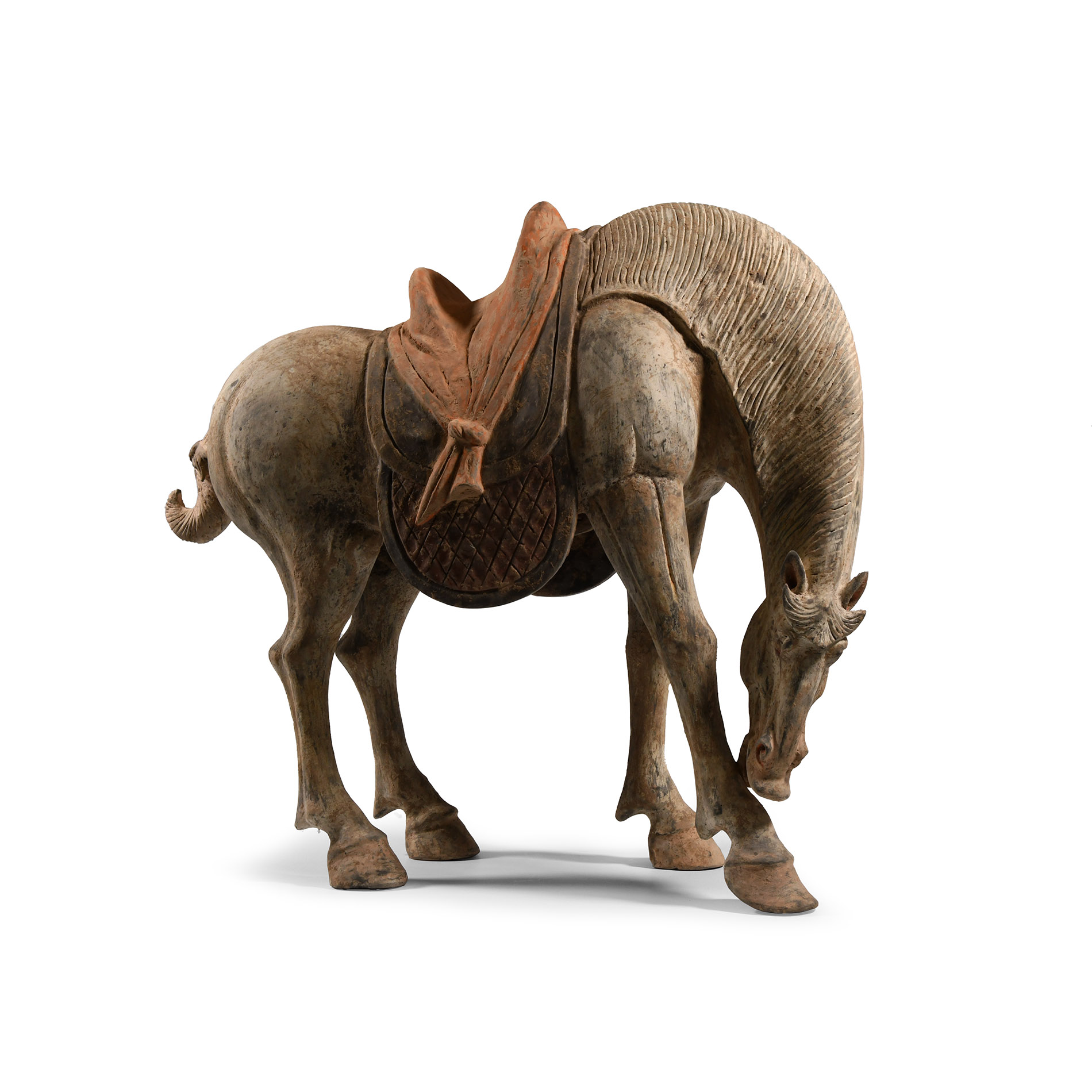
Chinese Tang Terracotta Horse Standing with Head Down
TANG DYNASTY, 618-907 A.D.
24 in. (13.35 kg, 61 cm wide).
With extended neck and head bent forward, mouth open to chew the grass, ears pinned back; saddle and saddle-rug modelled integrally; tail cropped and bound; salmon-pink pigment to the saddle.
ProvenanceEx West Country collection, Bath, 1990s.
Accompanied by an original thermoluminescence analysis report no.CJ182522022 from Laboratory Kotalla.
This lot has been checked against the Interpol Database of stolen works of art and is accompanied by search certificate number no.11913-207699.
TimeLine Auctions follows a vetting process to ensure the authenticity and legality of all items, reinforcing our commitment to integrity and responsible trading. Each antiquity, antique, and coin lot undergoes thorough examination by a vetting committee of at least ten external specialists, professional trade association members, scientists, and archaeologists: Our Vetting Process
AUCTIONS:
TimeLine is a leading auction house specialising in antiquities, ancient art, collectables, natural history, coins, medals, and books. Our auctions offer museums, collectors, historians, and enthusiasts the opportunity to acquire unique and historically significant pieces.
LOT 0373
Chinese Tang Terracotta Horse Standing with Head Down
Sold for (Inc. bp): £2,925
-
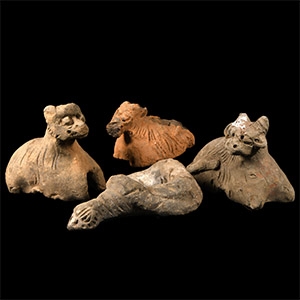
Chinese Han Ceramic Animal Figure Group
Han Dynasty, 206 B.C.-220 A.D. or laterSold for (Inc. bp): £117
Including couchant cattle animals with stylised anatomical and coat detailing and a possible serpent. 850 grams total, 10-12 cm
Acquired 1990s-early 2000s. East Anglian private collection.
This animal group is typical of mingqi or 'spirit utensils' that accompanied the deceased of the Eastern Han Dynasty (25–220 A.D.). Miniatures of farm animals, utilitarian objects, and entertainers were believed to provide nourishment and amusement for the soul of the tomb occupant. -
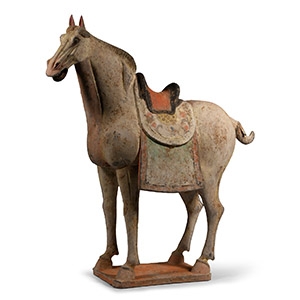
Large Chinese Tang Terracotta Horse Figurine
Tang Dynasty, 618-907 A.D.Sold for (Inc. bp): £4,680
On a rectangular base, modelled standing with head erect and slightly turned. with integral saddlecloth and saddle; remains of coral pink, black and ochre detailing. 10.4 kg, 64.5 cm
Ex West Country collection, Bath, 1990s. Accompanied by an original thermoluminescence analysis report no.CJ172522022 from Laboratory Kotalla. This lot has been checked against the Interpol Database of stolen works of art and is accompanied by search certificate number no.11914-207698. -
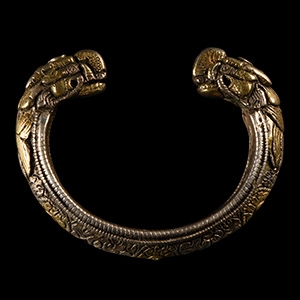
Bhutan Part Gilded Bracelet with Dragon Terminals
Mid 20th century A.D.Sold for (Inc. bp): £247
The penannular body with dragon-head terminals formed in the round, the body decorated with floral roundels punctuated by scrolling tendrils. 140 grams, 77 mm
Acquired Germany. Property of RWM Collection.
