
Loading, please wait...
LOT 0422
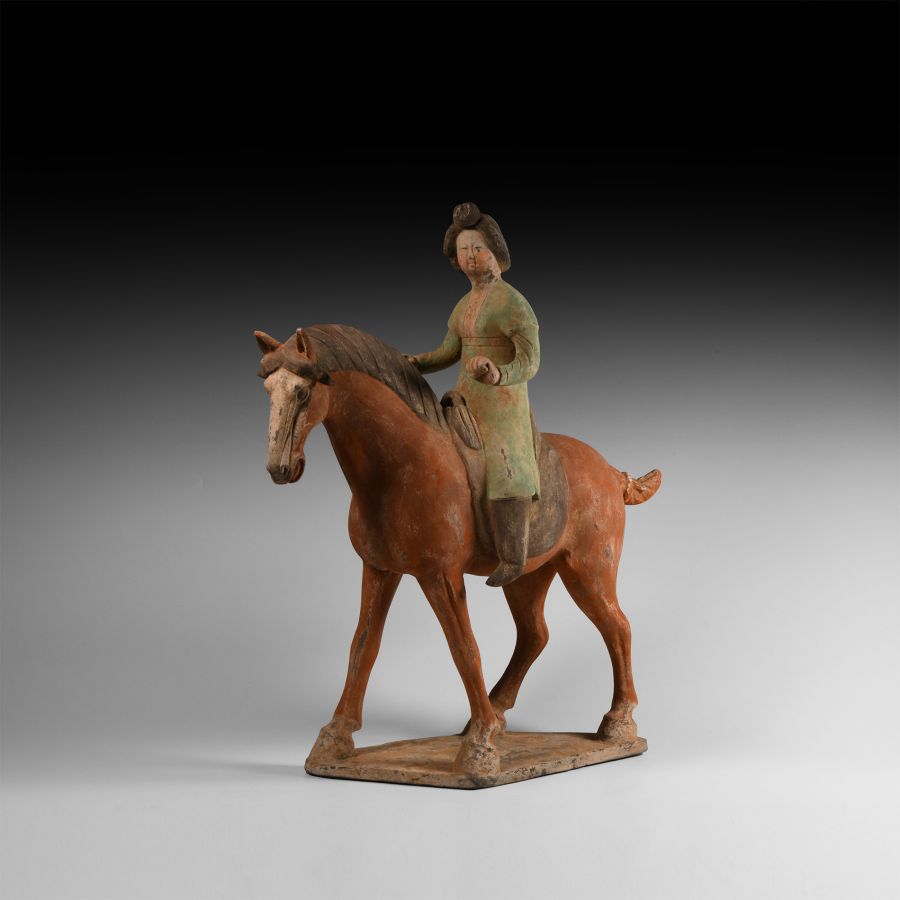
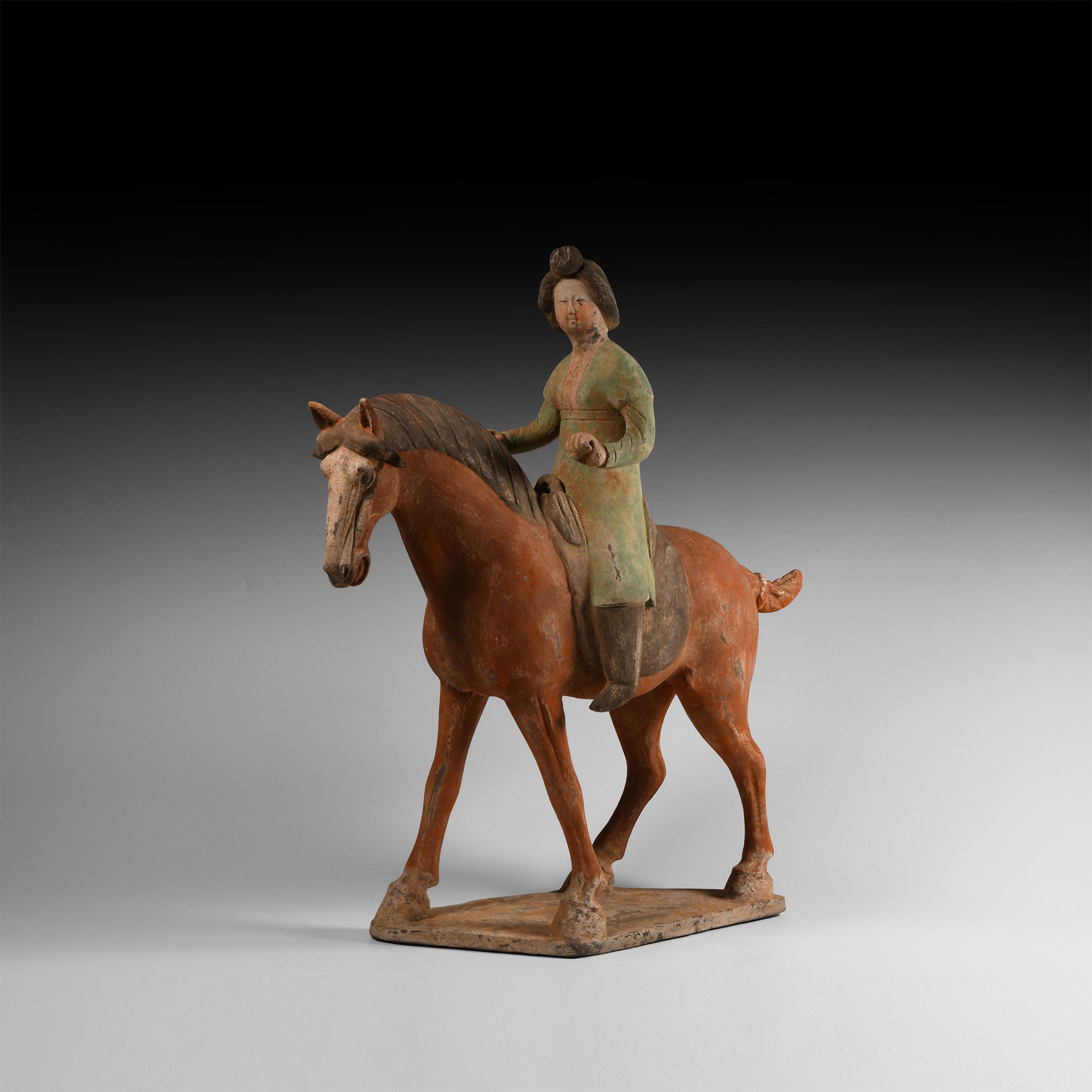
Chinese Tang Horse with Female Rider
TANG DYNASTY, 618-907 A.D.
17 3/4 in. (5.1 kg, 45 cm high).
A ceramic horse and female rider figure, modelled in the round on a rhomboidal base; the horse portrayed with semi-naturalistic anatomical detailing, medium-length mane, short tail dressed with a ribbon, its head angled slightly downwards and ears pricked forwards; the female rider modelled seated in a saddle, wearing a knee-length robe and boots, arms held in front of her body, hands held in a gripping position to accept reins (absent), her hair dressed in a top knot, stylised facial features; extensive remains of polychrome pigmentation.
ProvenanceAcquired in the 1990s.
From a North Yorkshire private collection, UK.
Accompanied by an original thermoluminescence analysis report no.C122h21 from Oxford Authentication.
Cf. Zhang, B., 'On the Change of the Female Status in the Tang Dynasty from the Horse-riding Tomb Figurine' in Advances in Social Science, Education and Humanities Research (ASSEHR), volume 3002018 International Workshop on Education Reform and Social Sciences, 2018, 2019, pp.589-594, fig.1 no.3.
FootnotesIn Tang art, poetry and painting the horse was exalted. The delight taken in portraying horses became an end in itself. Women were made to mount them, according to the Tang conception, so that the two can be considered together, introducing in China a fashion from Kotan.
CONDITIONTimeLine Auctions follows a vetting process to ensure the authenticity and legality of all items, reinforcing our commitment to integrity and responsible trading. Each antiquity, antique, and coin lot undergoes thorough examination by a vetting committee of at least ten external specialists, professional trade association members, scientists, and archaeologists: Our Vetting Process
AUCTIONS:
TimeLine is a leading auction house specialising in antiquities, ancient art, collectables, natural history, coins, medals, and books. Our auctions offer museums, collectors, historians, and enthusiasts the opportunity to acquire unique and historically significant pieces.
-
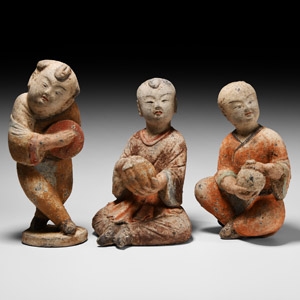
Chinese Tang Musician Set
Tang Dynasty, 618-907 A.D.Sold for (Inc. bp): £2,080
A group of three ceramic musician figurines, each in loose-fitting garments with painted detailing: one cross-legged with a pot, another sitting with a gord, a third standing with a tambour. 1.9 kg total, 16-18 cm
Ex Hong Kong collection. London Mayfair gallery, UK. Accompanied by a thermoluminescence analysis report no.C122k23 from Oxford Authentication for one of the figures. -
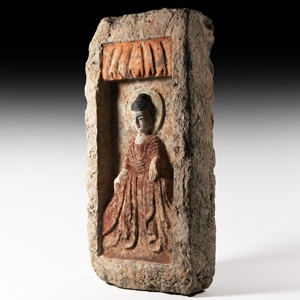
Chinese Wei Buddha Brick
Wei Dynasty, 534-550 A.D.Sold for (Inc. bp): £234
A rectangular ceramic brick with central recess displaying Buddha in high-relief seated cross-legged on a lotus flower base beneath a canopy, his hands held in the varada mudra of charity and compassion. 5.6 kg, 35.5 x 17cm
Acquired 1970-1990s. Ex Hong Kong collection. From a private West Country collection. -
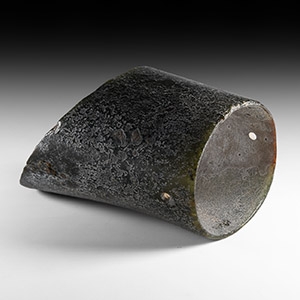
Chinese Hongshan Hoof-Shaped Black Jade Hair Ornament
Hongshan Dynasty, circa 3500 B.C.Estimate: £5,000 - 7,000 (+bp*)
Opening Bid: £2,500
A black jade hoof-shaped hair ornament of open-ended, truncated cylindrical form, two piercings towards the base for attachment; retaining its original patina. 188 grams, 12.5 cm high
Acquired in Hong Kong, 1980s. Ex Prof. David Anderson collection, circa 2009. UK private collection. This lot has been checked against the Interpol Database of stolen works of art and is accompanied by search certificate number no.11709-198346.
The Hongshan Neolithic culture flourished in north-east China between ca. 4700 to 2900 B.C. Such items were tomb deposits, usually found cradling the head of the interred human remains. It is presumed such pieces gathered the hair which would be passed through the cylindrical body. They invariably feature a rippling effect around the top interior, and two holes at the bottom which may once have accommodated a wooden peg. Confucius stated that 'Jade is the incorruptible stone', leading to the trend for those who discovered such artefacts in Chinese tombs to polish them, removing their authenticating patina, before returning them to the grave to be photographed, so as to propagate the myth that they were unearthed in unblemished condition.
