
Loading, please wait...
LOT 0419
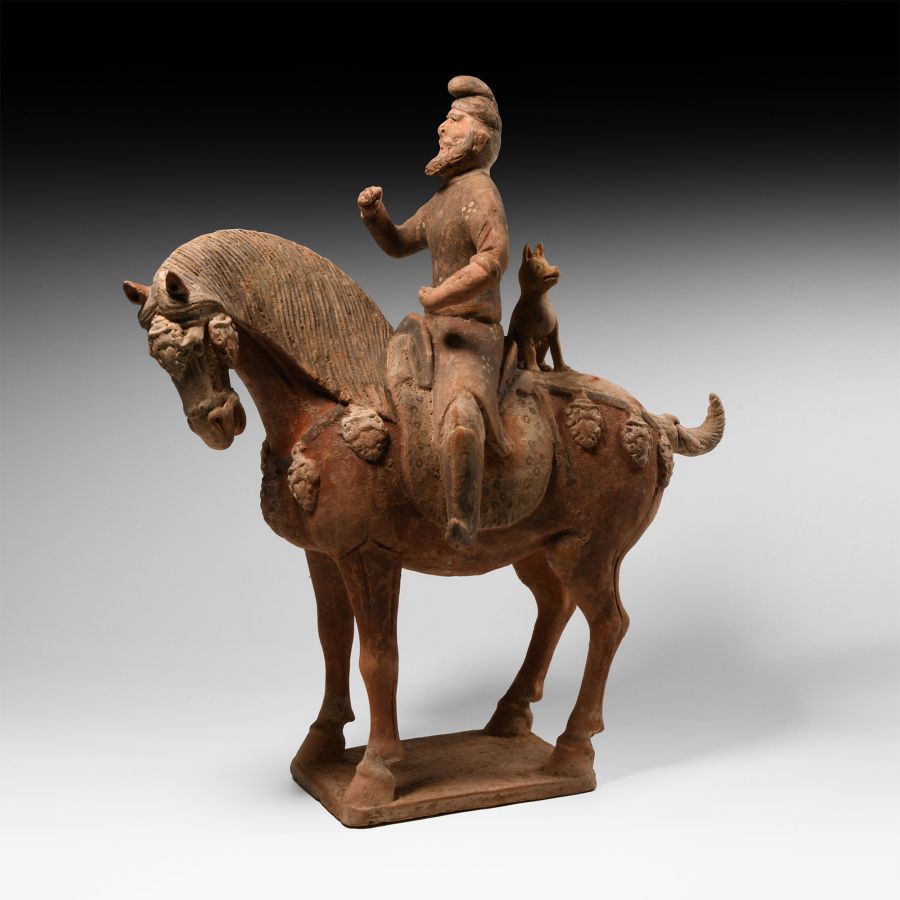
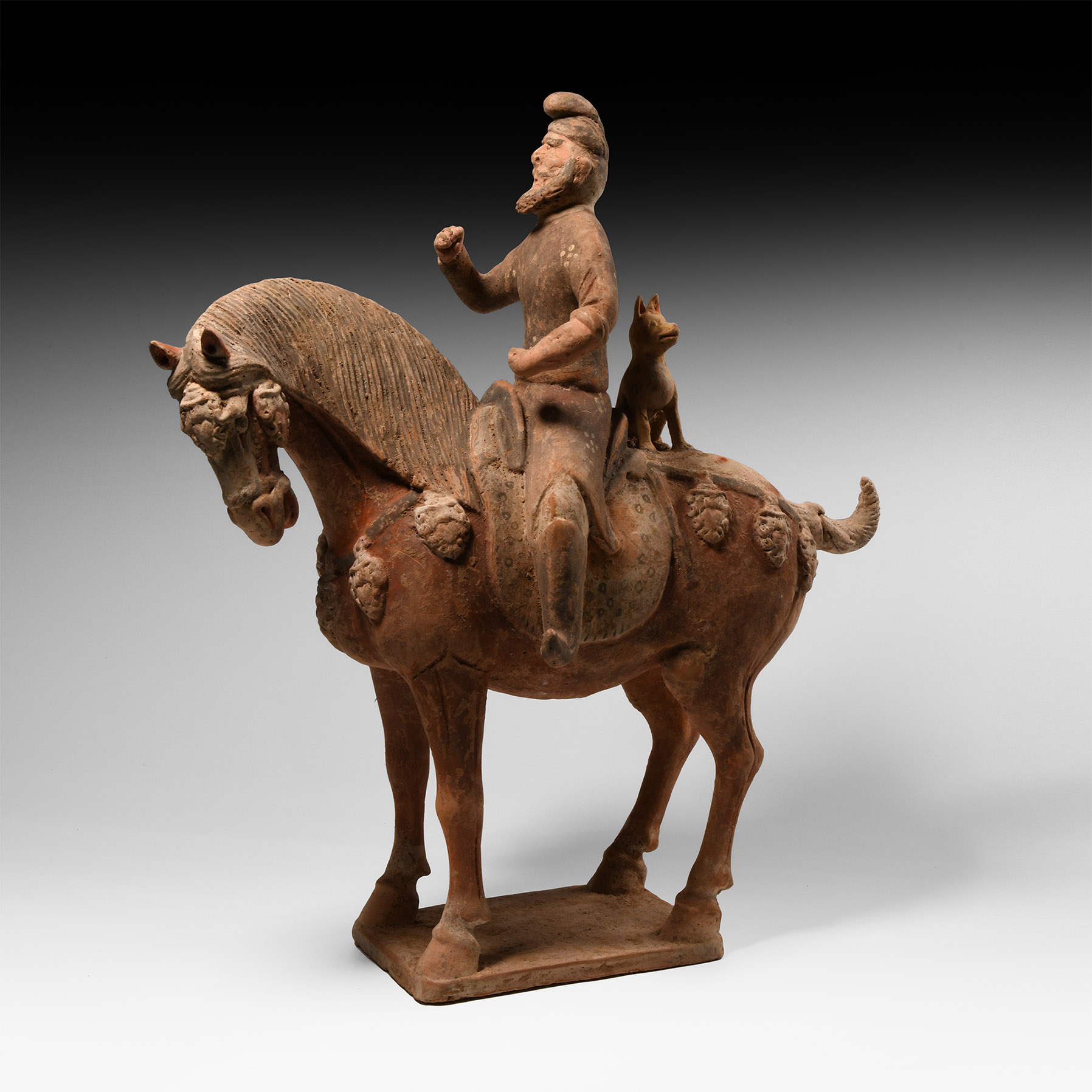
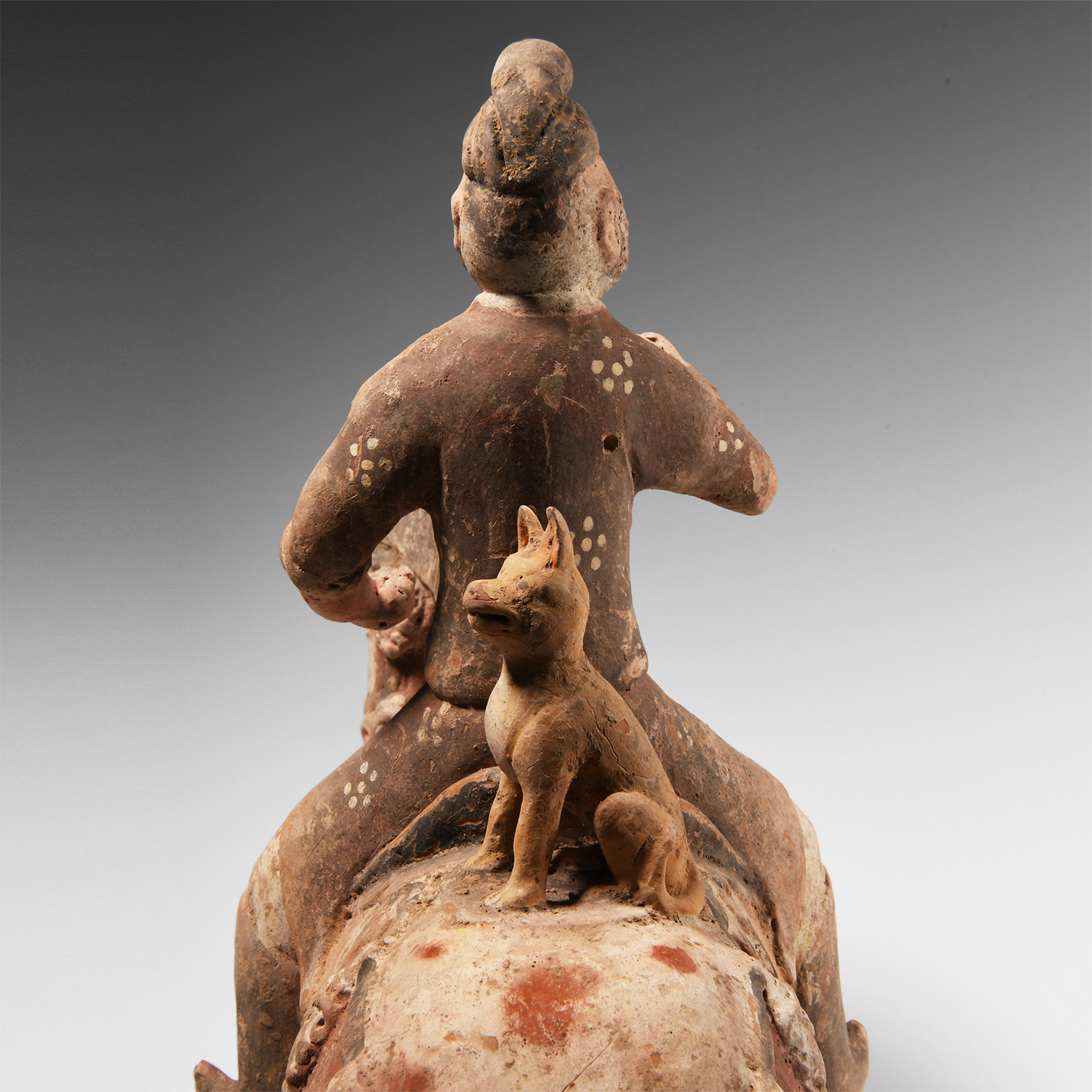
Chinese Tang Horse and Rider with Dog
TANG DYNASTY, 618-907 A.D.
16 1/2 in. (3.9 kg, 42 cm high).
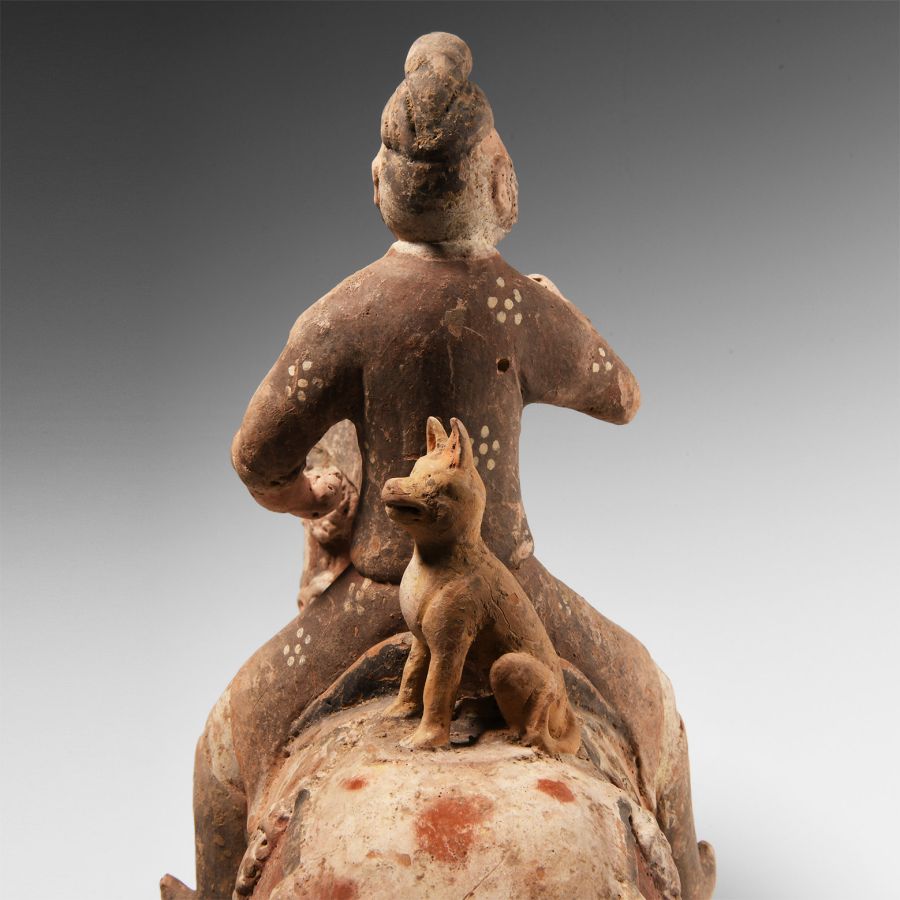
A ceramic horse and rider figure modelled in the round standing on a rectangular base, the animal's head bowed down and turned slightly left, shown with a long and immaculately-kept mane, short dressed tail, saddle cloth decorated with an 'animal skin' pattern and a harness adorned with pendants; the male rider seated in the saddle wearing a knee-length robe and riding boots, his arms positioned to hold reins (absent), a domestic dog perched on a covering behind him; semi-naturalistic anatomical detailing to both figures, the rider shown with a full beard and mustache, wearing a cap.
ProvenanceAcquired 1980s-1990s.
Ex West Country collection.
Accompanied by an original thermoluminescence analysis report no. C122f84 from Oxford Authentication.
This lot has been checked against the Interpol Database of stolen works of art and is accompanied by search certificate number no.11702-199228.
Cf. The Metropolitan Museum, accession number 991.253.7a, b, for a broadly comparable figure.
CONDITIONTimeLine Auctions follows a vetting process to ensure the authenticity and legality of all items, reinforcing our commitment to integrity and responsible trading. Each antiquity, antique, and coin lot undergoes thorough examination by a vetting committee of at least ten external specialists, professional trade association members, scientists, and archaeologists: Our Vetting Process
AUCTIONS:
TimeLine is a leading auction house specialising in antiquities, ancient art, collectables, natural history, coins, medals, and books. Our auctions offer museums, collectors, historians, and enthusiasts the opportunity to acquire unique and historically significant pieces.
LOT 0419
Chinese Tang Horse and Rider with Dog
Estimate £3,000 - 4,000€3,480 - 4,640 (for guidance only)$4,050 - 5,400 (for guidance only)
-
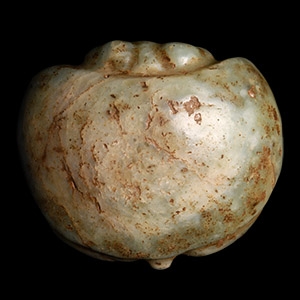
Chinese Han Jade Zoomorphic Carving
Han Dynasty, 206 B.C.-220 A.D. or laterEstimate: £400 - 600 (+bp*)
Opening Bid: £222
A carved zoomorphic jade amulet, possibly depicting a stylised turtle or crab, with piercing to reverse for suspension. 110 grams, 65 mm wide
Fine condition.
Ex Asiatika-Sammlung Günther Köpping, Berlin, Germany, with small label. Pieces from the collection were sold in a European auction in the 2000s. -
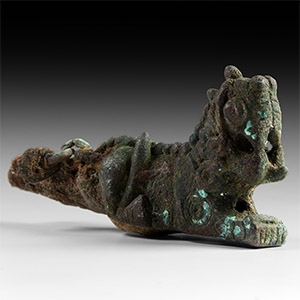
South East Asian Dragon Terminal
11th-12th century A.D.Sold for (Inc. bp): £33
A copper-alloy terminal formed as a couchant dragon modelled with forepaws outstretched, stylised head with bulging eyes and four huge fangs, tail curved to one side of the body, chain with dangle to rear and tapering cylindrical bar. 186 grams, 10 cm wide
Essex gallery, early 2000s. -
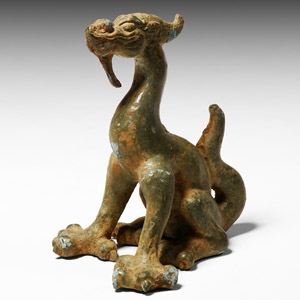
Chinese Han Style Bronze Dragon Weight
19th-20th century A.D.Estimate: £250 - 350 (+bp*)
Opening Bid: £125
A Han style bronze weight in the form of a dragon, modelled seated and facing with out-splayed front paws, stylised facial features, beard and quiff to rear of head, undulating tail held along the beast's back, forming a loop for suspension; hollow-formed with void to base. 438 grams, 12 cm high
Fine condition.
Acquired 1980-1990s. From a West Country collection.
