
Loading, please wait...
LOT 2178
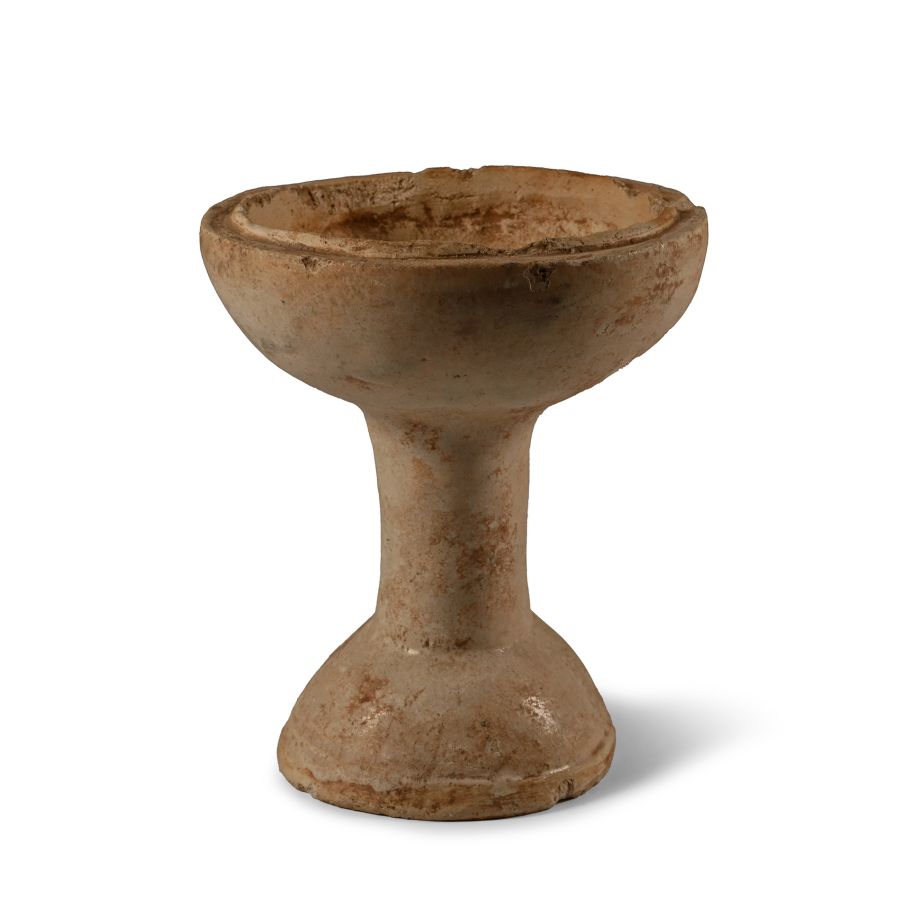
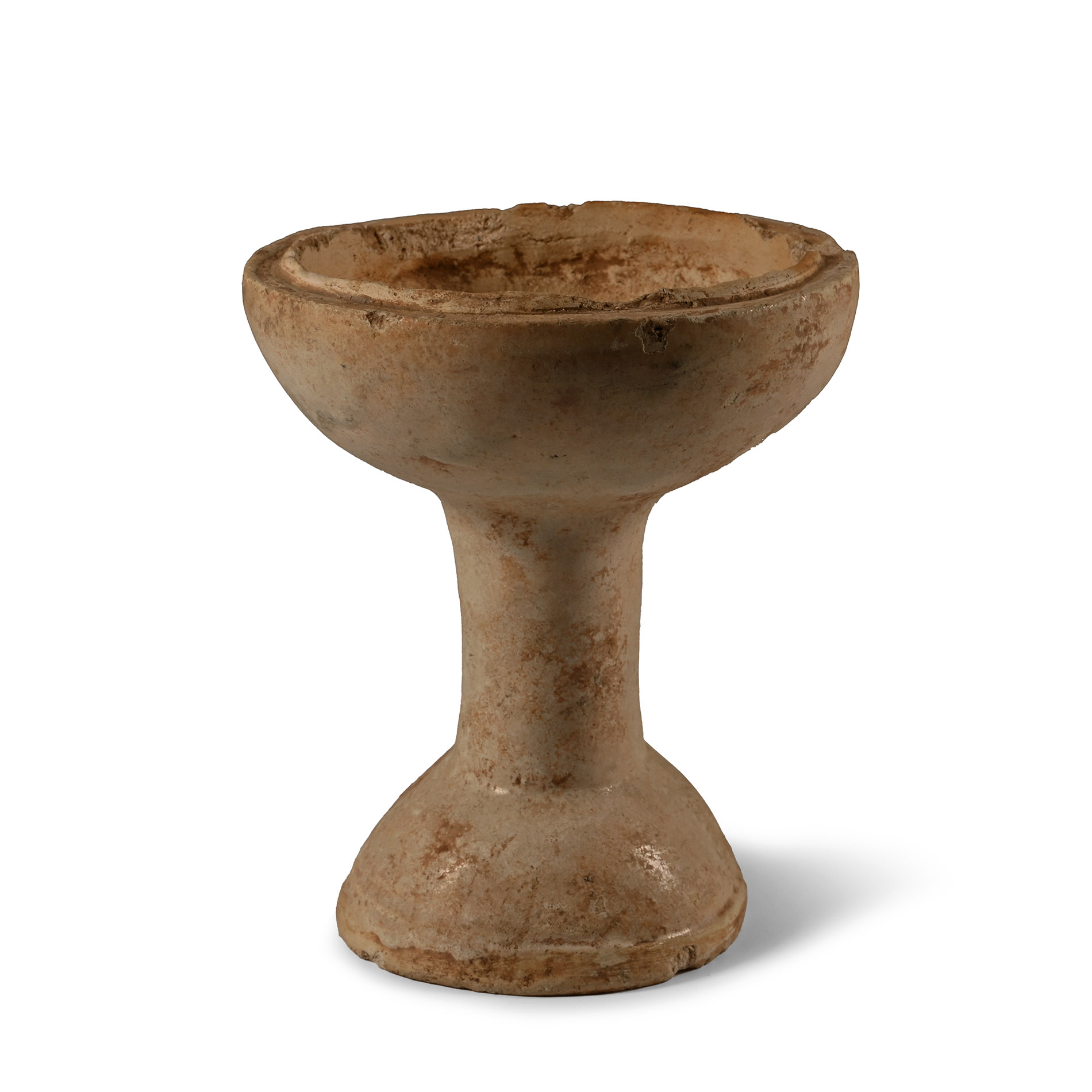
Chinese Tang Glazed Whiteware Footed Bowl
TANG DYNASTY, 618-907 A.D. OR LATER
5 1/4 in. (599 grams, 13.5 cm).
Comprising a columnar stem connecting a domed base with carinated rim, hemispherical bowl with ridged rim. [No Reserve]
ProvenanceAcquired on the UK art market before 2000.
Property of an Essex, UK, gentleman.
TimeLine Auctions follows a vetting process to ensure the authenticity and legality of all items, reinforcing our commitment to integrity and responsible trading. Each antiquity, antique, and coin lot undergoes thorough examination by a vetting committee of at least ten external specialists, professional trade association members, scientists, and archaeologists: Our Vetting Process
AUCTIONS:
TimeLine is a leading auction house specialising in antiquities, ancient art, collectables, natural history, coins, medals, and books. Our auctions offer museums, collectors, historians, and enthusiasts the opportunity to acquire unique and historically significant pieces.
-
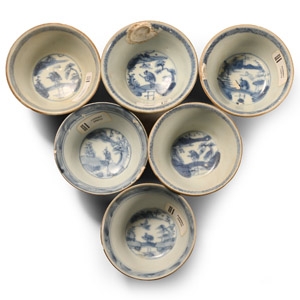
Ca Mau Cargo Shipwreck Glazed Blue and White Tea Bowl Group
Early 18th century A.D.Sold for (Inc. bp): £156
Each a miniature bowl with landscape motif to the centre, stippled band below the rim, tan-brown exterior. 250 grams total, 65-66 mm
Ex Sotheby's, Amsterdam, 29-31 January 2007. Accompanied by an illustrated information sheet about the Ca Mau shipwreck.
The Ca Mau shipwreck refers to a cargo of Chinese porcelain sunk between 1723 and 1735 off the coast of Vietnam. The wreck was discovered by Vietnamese fishermen in 1998. It is believed the wreck was a merchant’s junk on its way from Canton (Guangzhou) to Batavia when it caught fire and sank. The ship was carrying goods destined for Dutch traders who had limited access to China and its ports. -
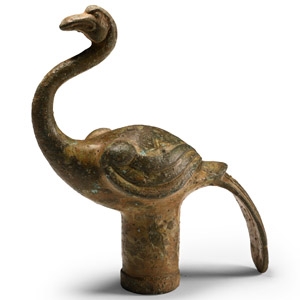
Chinese Han Style Bronze Crane Finial
20th century A.D.Sold for (Inc. bp): £117
With stylised detailing and cylindrical socket, S-curved neck. 273 grams, 13 cm
Acquired 1980-1990s. Ex West Country, UK, collection. -
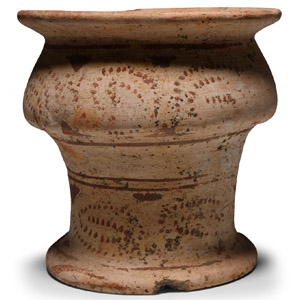
South East Asian Ban Chiang Period Painted Chalice
Middle Period, 900-300 B.C.Sold for (Inc. bp): £72
Squat carinated bowl with flared neck and rim atop a trumpet-shaped base, remains of painted interlocking spiral motifs; foot repaired. 879 grams, 16.5 cm high
From a collection acquired on the UK art market from various auction houses and collections mostly before 2000. From an important Cambridgeshire estate; thence by descent.
In Ban Chiang pottery the most common body shape is an ellipsoid form with a rounded bottom covered by a low outflaring pedestal base. The neck variations include a low straight-sided neck and a higher outflaring neck. Body-pedestal juncture and body-neck juncture may be either angular or curved. The same neck variations occur on a globular body, in addition to a composite concave-convex neck form not occurring on the ellipsoid bodies. Again, all examples have low outflaring pedestal bases.
