Loading, please wait...
Details
LOT 2138
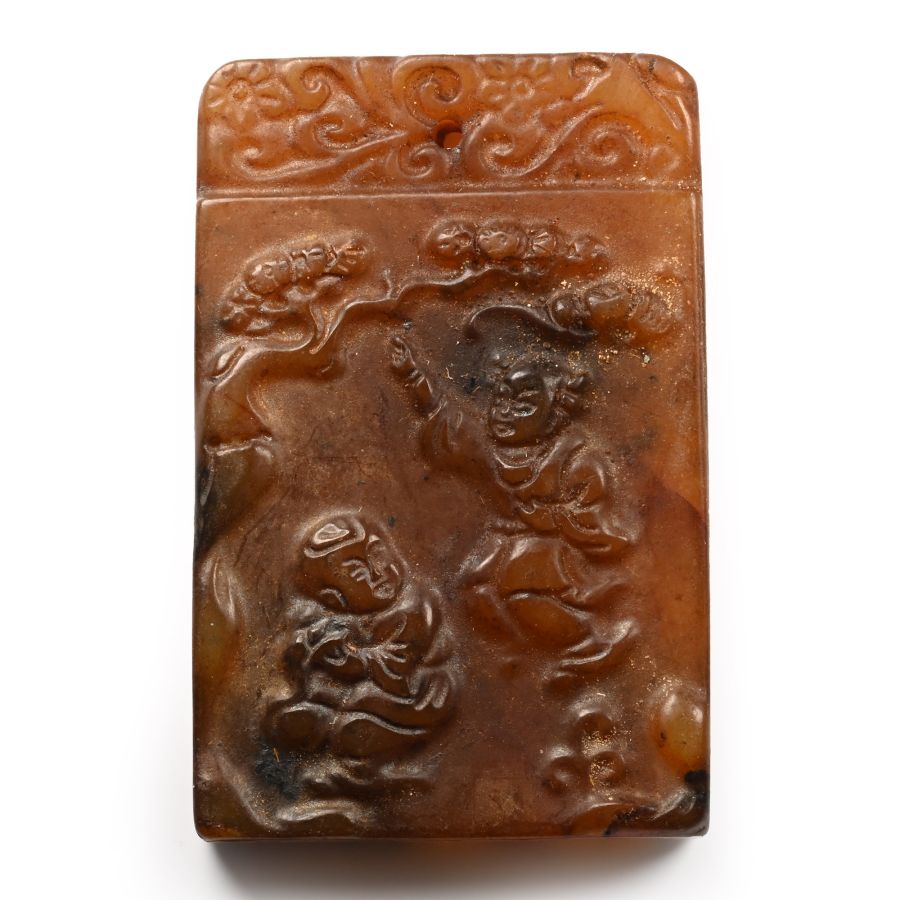
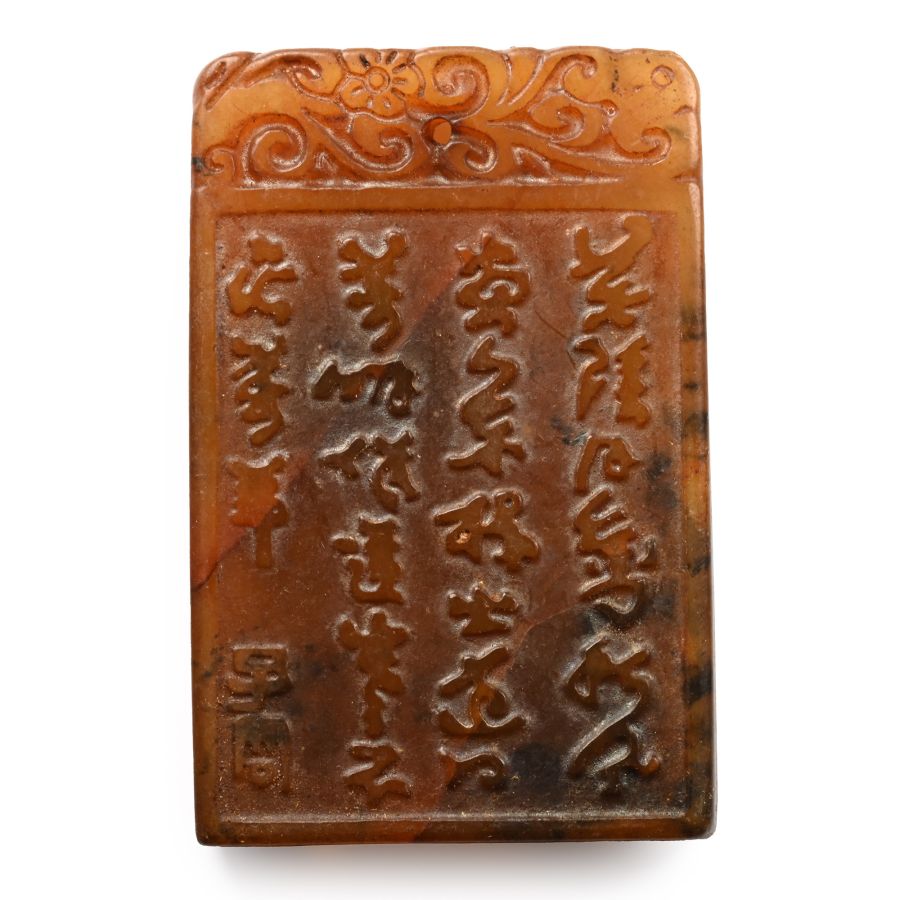
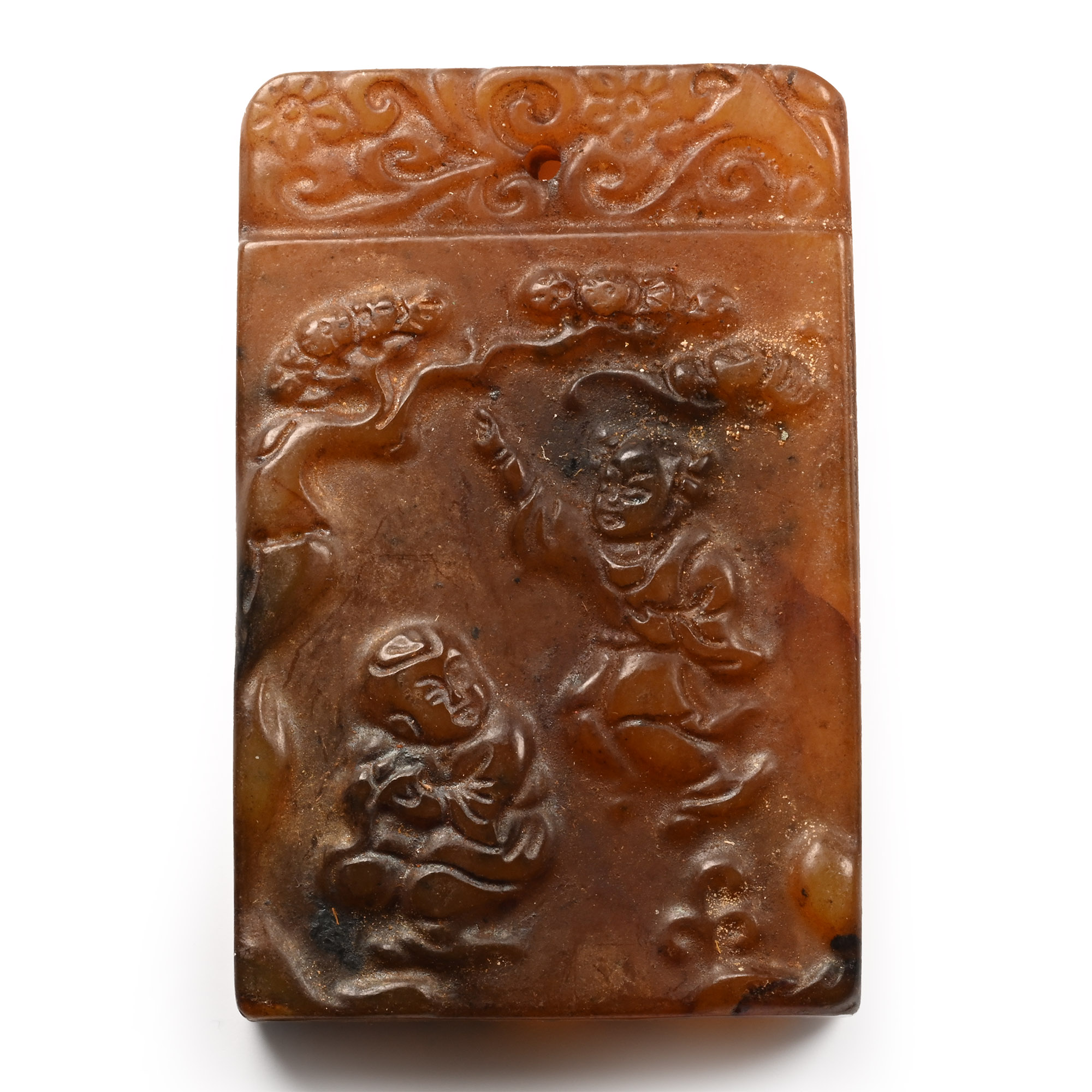
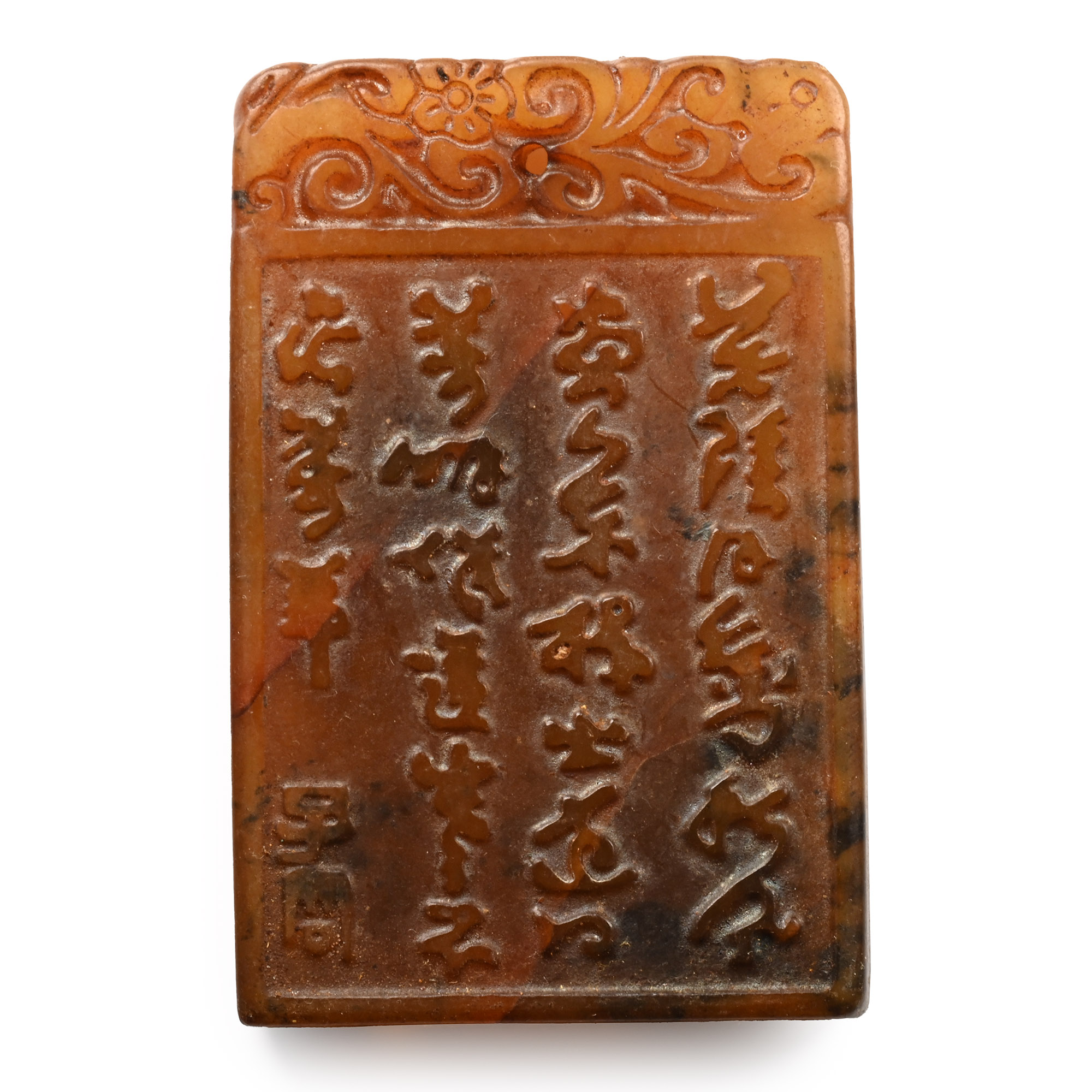
Chinese Style Hardstone Plaque
20TH CENTURY A.D.
2 3/8 in. (46 grams, 61 mm).
Rectangular bifacial plaque with hole for suspension; obverse with scrolled ornament to upper edge, reserved characters in four columns; reverse with figures in a landscape with a tree. [No Reserve]
Provenance
From a Parisian collection, 1980-2000s.
This lot is accompanied by an illustrated lot declaration signed by the Head of the Antiquities Department, Dr Raffaele D’Amato.
VETTING:
TimeLine Auctions follows a vetting process to ensure the authenticity and legality of all items, reinforcing our commitment to integrity and responsible trading. Each antiquity, antique, and coin lot undergoes thorough examination by a vetting committee of at least ten external specialists, professional trade association members, scientists, and archaeologists: Our Vetting Process
AUCTIONS:
TimeLine is a leading auction house specialising in antiquities, ancient art, collectables, natural history, coins, medals, and books. Our auctions offer museums, collectors, historians, and enthusiasts the opportunity to acquire unique and historically significant pieces.
RELATED LOTS
-
Mount Athos Wooden Cross with the Crucifixion and the Baptism
Circa 1669 A.D.Sold for (Inc. bp): £2,080
Showing the Evangelists and the Crucifixion with Saint Mary, Saint John and Saint Longinos on one side with Greek inscription 'STAVROSIS (Η ΣΤΑΥΡΟΣΙΣ = the Crucifixion)' above; the Baptism on the other side with Greek inscription 'VANGELISMOU (Η ΒΑΝΓΕΛΙΣΜΟΥ = the Apparition)' above, evangelists depicted above and below with the angels Gabriel and Michael to the sides. 93 grams, 19.5 cm
Acquired from Portobello Road, London, in the 1980s. Property of a London, UK, gentleman collector. This lot is accompanied by an illustrated lot declaration signed by the Head of the Antiquities Department, Dr Raffaele D’Amato.
The term ‘Dodekaorton cross’ is the most appropriate for this category of crosses and is used in other codices of the post-Byzantine period. These small crosses were used by the Hieromonks for blessings to the faithful and in various processions and liturgies, and were often mounted with frames made of precious materials. The carving of wooden crosses is regarded as an art traditionally practiced by Athonite monks. Ioannis Komninos in 1698 and the Jesuit priest Braconnier in 1706 both refer to the carved wooden pectorals and crosses made by the monks in order to provide themselves with a livelihood. -
Greek Gold Thread Needle Point with Mary and Jesus in Silver with Inscription to the Archbishop of Jerusalem
Dated 1698 A.D.Sold for (Inc. bp): £520
Depicting Mary holding a lily flower with her right hand and supporting infant Jesus with her left arm; Jesus crowned by a crossed diadem and holding a gospel in his hand; background in gold thread, framed in a circular silver frame with dedicatory inscription to the reverse from a certain Alexander to the Jerusalem’s Archbishop Dositheus, reciting: + Τω ΜΑΚΑΡΙΟΤΑΤω ΚΑΙ CΟΦωΤΑΤω ΠΑΤΡΙΑΡΧΗ ΙΕΡΟCΟΛΥΜωΝ ΔΟCΙΘΕω ΤΙΜΗC ΕΝΕΚΕΝ – μηνι cεπτεμβριω 1698 – Αλεξανδρος – To His Beatitude and Enlighted Patriarch of Jerusalem Dositheus, as a sign of respect – September 1698 – Alexander; internal padding with floral decoration. 82 grams, 10 cm
Property of a London, UK, gentleman collector. This lot is accompanied by an illustrated lot declaration signed by the Head of the Antiquities Department, Dr Raffaele D’Amato.
The art of gold embroidery developed in Constantinople, with its own guild, and continued also after the end of the empire. Important artists like the legendary Despoineta, Mariora, Eusebia and Kokona, were famous in the 'painterly' rendering of religious subjects, not with the brush, but with the needle: red satin, and silver and gold wire created dresses, shadows, volumes with a sense of depth and sculptural quality. The artists conceived their works like a true prayer: a hope, based on human creativity. -
Ethiopian Painted Parchment of Two Evangelist Portraits from a Gospel
Circa 1650-1700 A.D.Sold for (Inc. bp): £1,235
Two leaves from a vellum manuscript, each with a hand-coloured image of a male figure (Evangelists) seated on low stools, covered with embroidered cloths, holding a vellum page in one hand and quill in the other, nimbus around their head; dressed in blue, red and green garments, in front of them two cups in brown and white colour. 19 grams total, 22.5 x 19.8 cm each
Ex central London gallery. This lot is accompanied by an illustrated lot declaration signed by the Head of the Antiquities Department, Dr Raffaele D’Amato.
During the Aksumite period, the Greek text of the Gospels was brought to Ethiopia and translated into Geez. Along with the Greek text came a standard method of Gospel manuscript production, as well as the Eusebian canon tables with their characteristic decoration and tholos miniature, and portraits of the evangelists. In the Gondar period, the tradition continued: usually the four Evangelists were portrayed as a series. Evangelist portraits serve as an introduction, and narrative illustrations were placed within the Gospel texts.