
Loading, please wait...
_900x900.jpg "Chinese Style Funerary Vase")
_200x200.jpg "Chinese Style Funerary Vase")
.jpg "Chinese Style Funerary Vase")
LOT 2087
Chinese Style Funerary Vase
20TH CENTURY A.D.
9 in. (675 grams, 23 cm high).
A bronze funerary vase comprising a bulbous body and slender neck with bulb below the mouth; raised detailing and painted finish in coral pink, red, blue and green; applied model dragon coiled about the stem. [No Reserve]
ProvenanceAcquired 1990s.
West Country, UK, collection.
TimeLine Auctions follows a vetting process to ensure the authenticity and legality of all items, reinforcing our commitment to integrity and responsible trading. Each antiquity, antique, and coin lot undergoes thorough examination by a vetting committee of at least ten external specialists, professional trade association members, scientists, and archaeologists: Our Vetting Process
AUCTIONS:
TimeLine is a leading auction house specialising in antiquities, ancient art, collectables, natural history, coins, medals, and books. Our auctions offer museums, collectors, historians, and enthusiasts the opportunity to acquire unique and historically significant pieces.
-
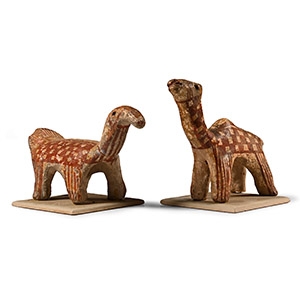
Painted Terracotta Animal Group
20th century A.D. or earlierSold for (Inc. bp): £7
Comprising: a ceramic camel with painted bridle detailing, checked body; similar equid with socketted eyes; each mounted on a ceramic stand. 785 grams total, 16-18 cm wide including stand
From a collection acquired on the UK art market from various auction houses and collections mostly before 2000. From an important Cambridgeshire estate; thence by descent. -
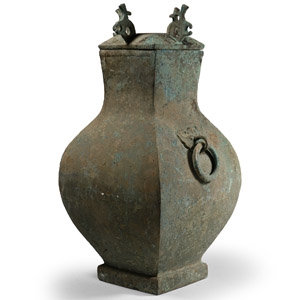
Archaic Chinese Style Bronze Vessel
20th century A.D.Sold for (Inc. bp): £169
Square in plan with chamfered base, scooped profile with latera; taotie masks and lifting rings, chamfered lid with stylised dragon to each face; after the antique. 4.85 kg, 37.5 cm high
Acquired from the London art market in the 2000s. -
.jpg)
Egyptian Style Lapis Lazuli Harpocrates Amulet
20th century A.D.Sold for (Inc. bp): £59
Carved in the round standing nude, right hand raised in his usual gesture with finger against lips, wearing the Sidelock of Youth; pierced through the shoulders for suspension. 8.44 grams, 39 mm
UK gallery, early 2000s.
