
Loading, please wait...

LOT 2643
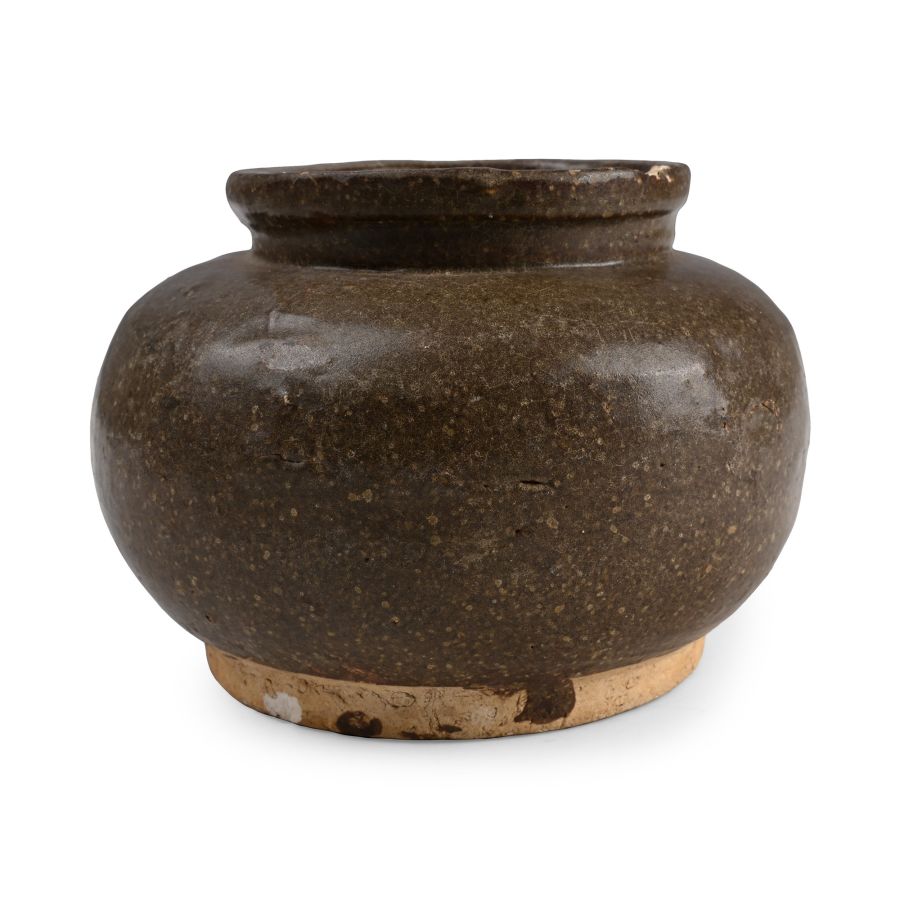
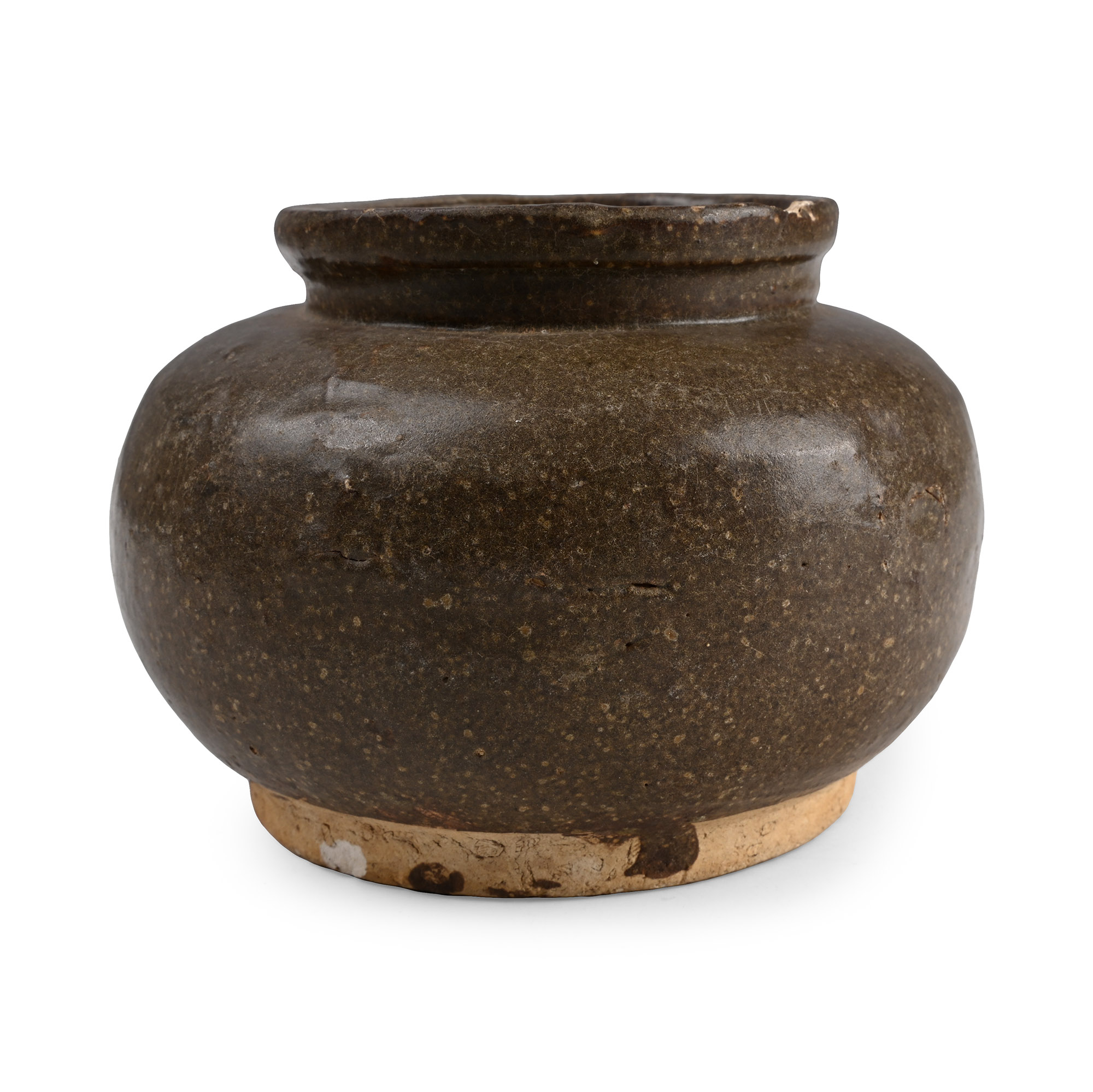
Chinese Song Green Glazed Globular Vessel
SONG DYNASTY, CIRCA 960-1279 A.D. OR LATER
4 5/8 in. (341 grams, 11.8 cm).
Squat in profile with thick squared rim to the mouth, low basal ring. [No Reserve]
ProvenanceFrom a old Cheshire, UK, oriental collection, acquired 1960s-1970s.
Acquired on the UK art market since the 1990s.
From the property of a late Lincolnshire, UK, gentleman; thence by descent.
Accompanied by a previous catalogue information slip.
TimeLine Auctions follows a vetting process to ensure the authenticity and legality of all items, reinforcing our commitment to integrity and responsible trading. Each antiquity, antique, and coin lot undergoes thorough examination by a vetting committee of at least ten external specialists, professional trade association members, scientists, and archaeologists: Our Vetting Process
AUCTIONS:
TimeLine is a leading auction house specialising in antiquities, ancient art, collectables, natural history, coins, medals, and books. Our auctions offer museums, collectors, historians, and enthusiasts the opportunity to acquire unique and historically significant pieces.
LOT 2643
Chinese Song Green Glazed Globular Vessel
Estimate £40 - 60€46 - 70 (for guidance only)$54 - 81 (for guidance only)
Opening Bid
£5 (EUR 6; USD 7) +BP*
-
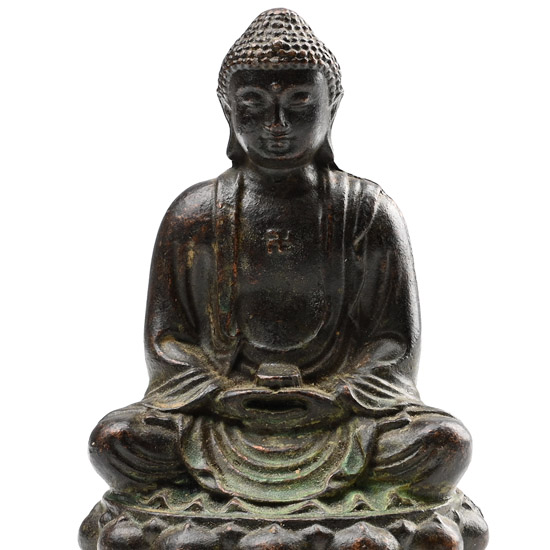
Bronze Seated Buddha Figure
China, early 18th-19th century A.D.Estimate: £40 - 60 (+bp*)
Opening Bid: £5
Modelled in the round seated cross-legged on a tiered lotus-flower base, holding the bumpa in his lap. 266 grams, 93 mm
From an old Carmarthen, Wales, collection. Acquired on the UK art market since the 1990s. From the property of a late Lincolnshire, UK, gentleman; thence by descent. -
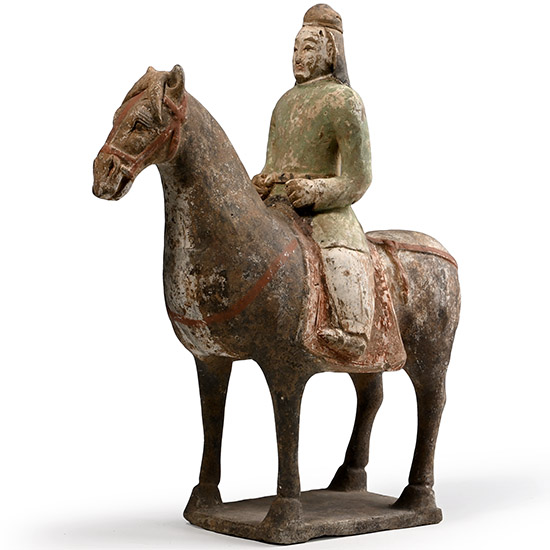
Chinese Tang Terracotta Horse and Rider
Tang Dynasty, 618-906 A.D.Estimate: £500 - 700 (+bp*)
Opening Bid: £250
Modelled in the round on a rectangular base, horse with integral saddlecloth and saddle, crupper and harness; rider sitting erect with belted riding coat, trousers and boots, cap and mantle to the head, arms bent and hands pierced to accept reins (absent); pigment to coat, cap, horse's harness and body. 1.92 kg, 32 cm high
From the collection of a deceased gentleman who worked for Bukowski & Sotherbys; acquired 1960s-1970s. Accompanied by an original thermoluminescence report issued by Oxford Authentication, no.C125q17. -
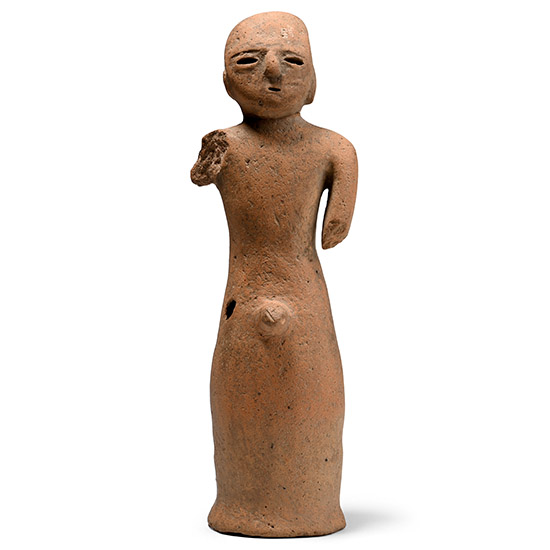
Haniwa Terracotta Figurine of a Man
6th century A.D.Estimate: £1,800 - 2,400 (‡+bp*)
Opening Bid: £900
A hollow, tubular-shaped body; an oval head with incised almond-shaped eyes and an oval mouth, a raised rectangular nose, discoid earrings; broad shoulders with D-section arms, an applied, erect phallus to the pelvic area; with an old handwritten label reading 'R. LA PLANA (IBIZA): Idolo de barro cocido con el sexo marcado'; three holes to the body. 315 grams, 19.5 cm
On the back an old label 'Illa Plana (Ibiza) / Idolo de Barro Cocido / Con el Sexo Marcado / n'2'. Ex Jean-Marie Talleux, Grand Fort Philippe, France. Consigned at Drouot Auction, Paris, 6 December 1995, no.63. Ex The Erotica Collection of Christian von Faber-Castell, Kusnacht, Switzerland. with Cahn Auktionen AG, Basel, 9 November 13, no.5. This lot has been checked against the Interpol Database of stolen works of art and is accompanied by search certificate no.13485-263104.
Haniwa are terracotta figures crafted for ritual purposes to be buried alongside the dead, together with other funerary objects, and were used primarily during the Kofun period (3rd–6th century) in Japan. Thanks to the discovery of these statues, we possess detailed knowledge of the weapons and armour of the warrior caste that emerged during this specific period of Japanese history. Phallic statuettes are rare, but have been found in locations like Gunma Prefecture.
