
Loading, please wait...
LOT 0430
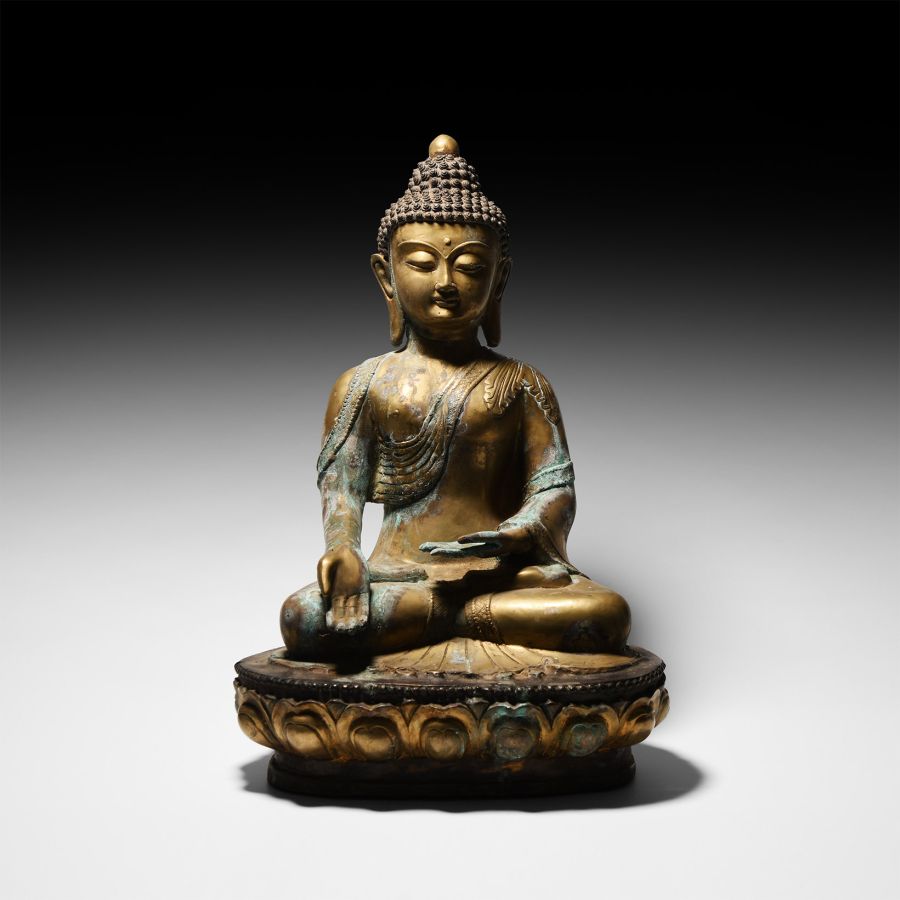
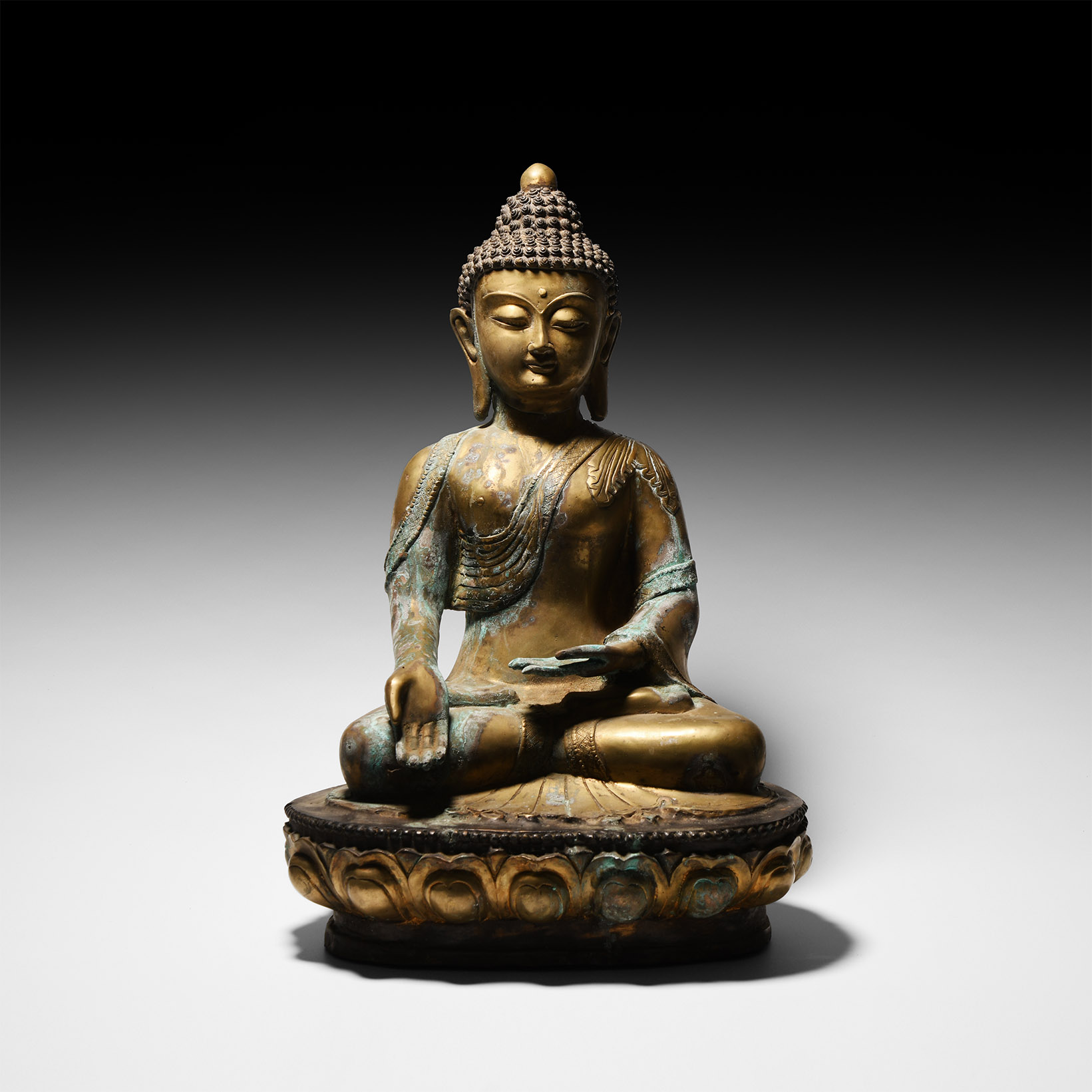
Chinese Sino-Tibetan Gilt Bronze Buddha
CIRCA 20TH CENTURY A.D.
17 3/4 in. (6.85 kg, 45 cm high).
A hollow-forme gilt-bronze Buddha figurine sitting cross-legged on a lotus-flower dais with left hand resting palm-upward in the lap to accept a bumpa vessel.
ProvenanceFrench collection, 1960s-early 2000s.
From an important Paris gallery, France.
with Ogotai (?) Auctions, Paris, France, 22 January 2016, lot 5.
This lot has been checked against the Interpol Database of stolen works of art and is accompanied by search certificate number no.11712-199349.
TimeLine Auctions follows a vetting process to ensure the authenticity and legality of all items, reinforcing our commitment to integrity and responsible trading. Each antiquity, antique, and coin lot undergoes thorough examination by a vetting committee of at least ten external specialists, professional trade association members, scientists, and archaeologists: Our Vetting Process
AUCTIONS:
TimeLine is a leading auction house specialising in antiquities, ancient art, collectables, natural history, coins, medals, and books. Our auctions offer museums, collectors, historians, and enthusiasts the opportunity to acquire unique and historically significant pieces.
LOT 0430
Chinese Sino-Tibetan Gilt Bronze Buddha
Estimate £2,000 - 3,000€2,320 - 3,480 (for guidance only)$2,700 - 4,050 (for guidance only)
-
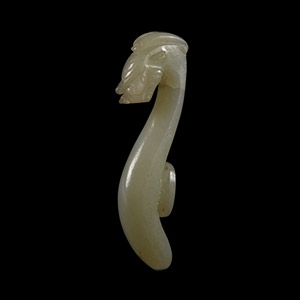
Chinese Han Style Garment Fastener
19th-20th century A.D.Estimate: £200 - 300 (+bp*)
Opening Bid: £100
A jade dragonesque garment fastener with a roughly S-shaped profile, one terminal carved as a dragon's head with bulging eyes and snub nose; oval lug to reverse; repaired. 32.3 grams, 78 mm
Acquired 1990s. Ex French collection. -
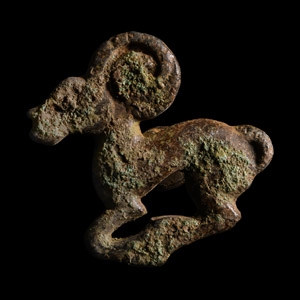
Chinese Ordos Animal Mount
6th-2nd century B.C.Estimate: £100 - 140 (+bp*)
Opening Bid: £50
A belt mount formed as a ram running left with large curled horns, legs tucked beneath body; mounting lug with discoid head to reverse. 32 grams, 43 mm
Fine condition.
Acquired 1980-2015. Ex Abelita family collection. -
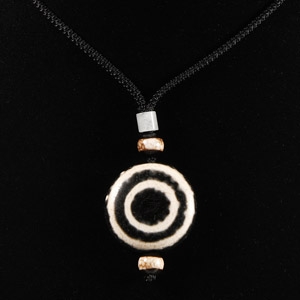
Chinese Giant 'Eye' Agate Bead Necklace
20th century A.D.Sold for (Inc. bp): £33
A large, bifacial banded agate bead, chemically treated to show the circular 'eye' design; suspended on a cord, additional beads above and below. 30 grams, 62 cm long
Ex London, UK, gallery. Property of a London gentleman.
