
Loading, please wait...
LOT 1569
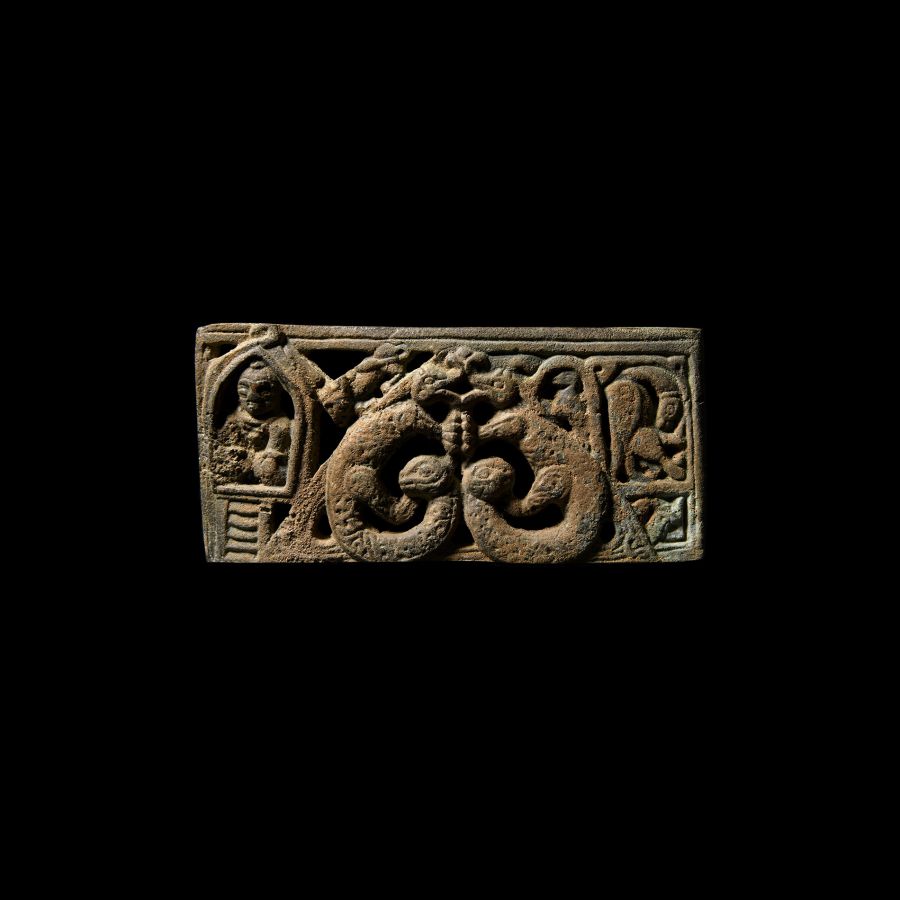
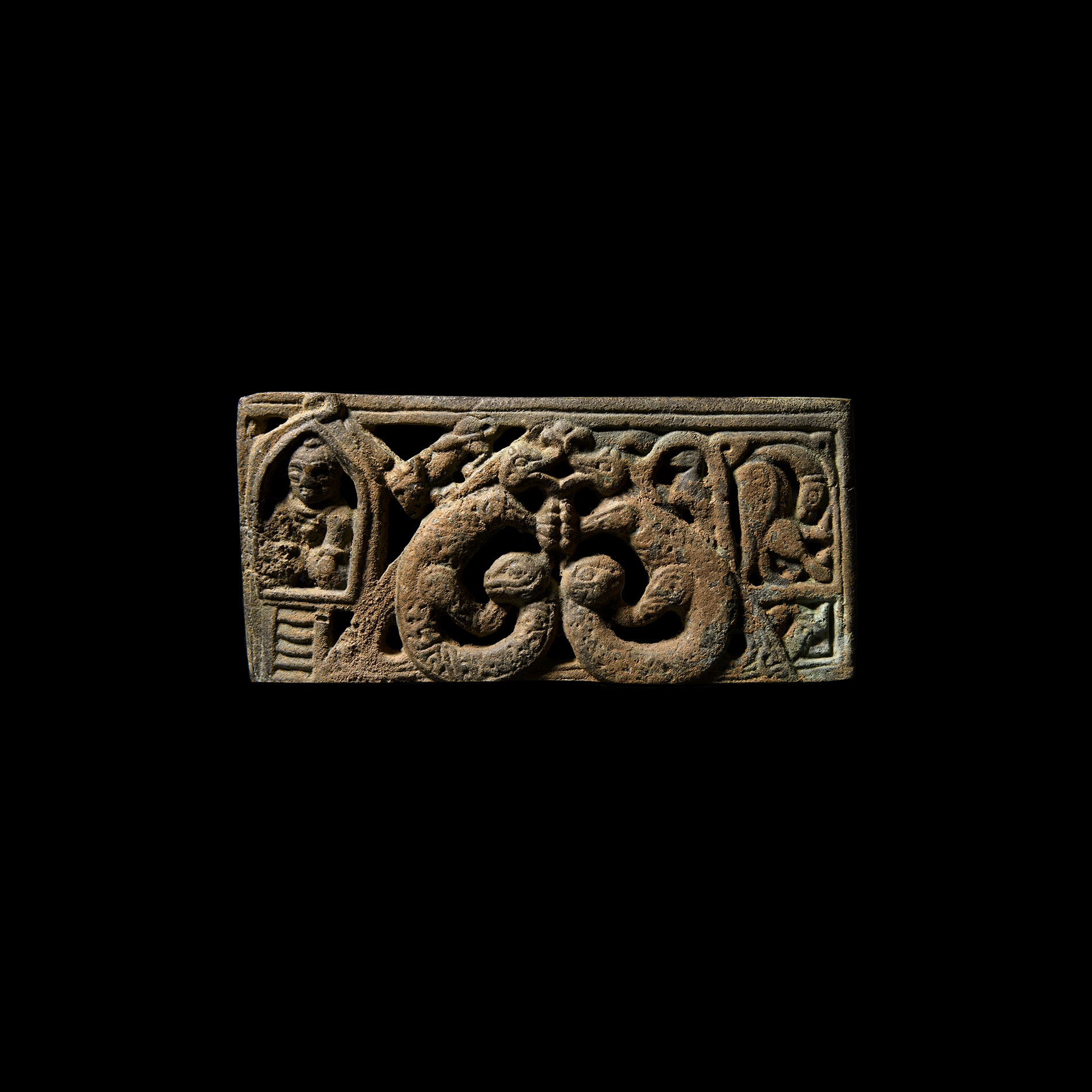
Chinese Ordos Style Decorative Plaque with Buddha and Beasts
19TH-20TH CENTURY A.D.
6 7/8 in. (503 grams, 17.5 cm).
A rectangular openwork plaque displaying two central grappling beasts and a Buddha figure within an arched niche, birds in the field.
ProvenanceAcquired on the European art market circa 2000.
Private British collection, London, UK, early 2000's.
TimeLine Auctions follows a vetting process to ensure the authenticity and legality of all items, reinforcing our commitment to integrity and responsible trading. Each antiquity, antique, and coin lot undergoes thorough examination by a vetting committee of at least ten external specialists, professional trade association members, scientists, and archaeologists: Our Vetting Process
AUCTIONS:
TimeLine is a leading auction house specialising in antiquities, ancient art, collectables, natural history, coins, medals, and books. Our auctions offer museums, collectors, historians, and enthusiasts the opportunity to acquire unique and historically significant pieces.
LOT 1569
Chinese Ordos Style Decorative Plaque with Buddha and Beasts
Estimate £300 - 400€350 - 460 (for guidance only)$410 - 540 (for guidance only)
-
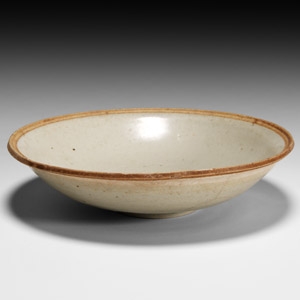
Chinese Tang Whiteware Dish
Tang Dynasty, 618-907 A.D. or laterSold for (Inc. bp): £20
A glazed ceramic whiteware dish with carinated rim in olive green. 170 grams, 14.5 cm wide
Ex specialist Japanese collection of oriental ceramics, 1970s. -
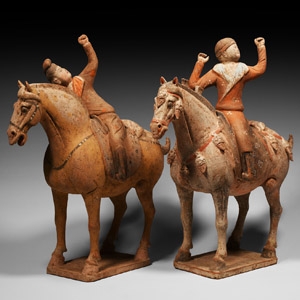
Chinese Tang Hunter Pair
Tang Dynasty, 618-907 A.D.Estimate: £4,000 - 6,000 (+bp*)
Opening Bid: £2,222
A pair of ceramic mounted hunter figures, each modelled in the round on an integral rectangular base; horses standing facing with pricked ears, cropped manes and dressed tails, wearing bridles, harnesses and cruppers with studs and pendants; seated riders turned left in their saddles, directing their attention skywards, arms and hands positioned as though drawing bows (now absent); one saddle cloth possibly designed to mimic animal skin, the other with a floral design; successful kills slung over each horse's rump; extensive remains of polychrome pigmentation. 7.8 kg total, 40.5-41.5 cm high
Fine condition.
Acquired 1970-1990s. From a private West Country collection. Accompanied by two original thermoluminescence analysis report nos.C122g64 and C122g68 from Oxford Authentication. This lot has been checked against the Interpol Database of stolen works of art and is accompanied by search certificate no.11517-195275. -
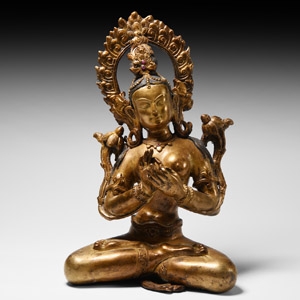
Sino-Tibetan Gilt Arya Tara Figure
19th-early 20th century A.D.Sold for (Inc. bp): £468
A hollow-formed gilt-bronze figure of Arya Tara sitting cross-legged flanked by uptala flowers, hands held in the mudra of instruction; black pigment to the hair and inset rub-coloured gemstones to the headdress. 1.29 kg, 22 cm high
Acquired 1980-2015. Ex Abelita family collection.
