
Loading, please wait...
LOT 1596
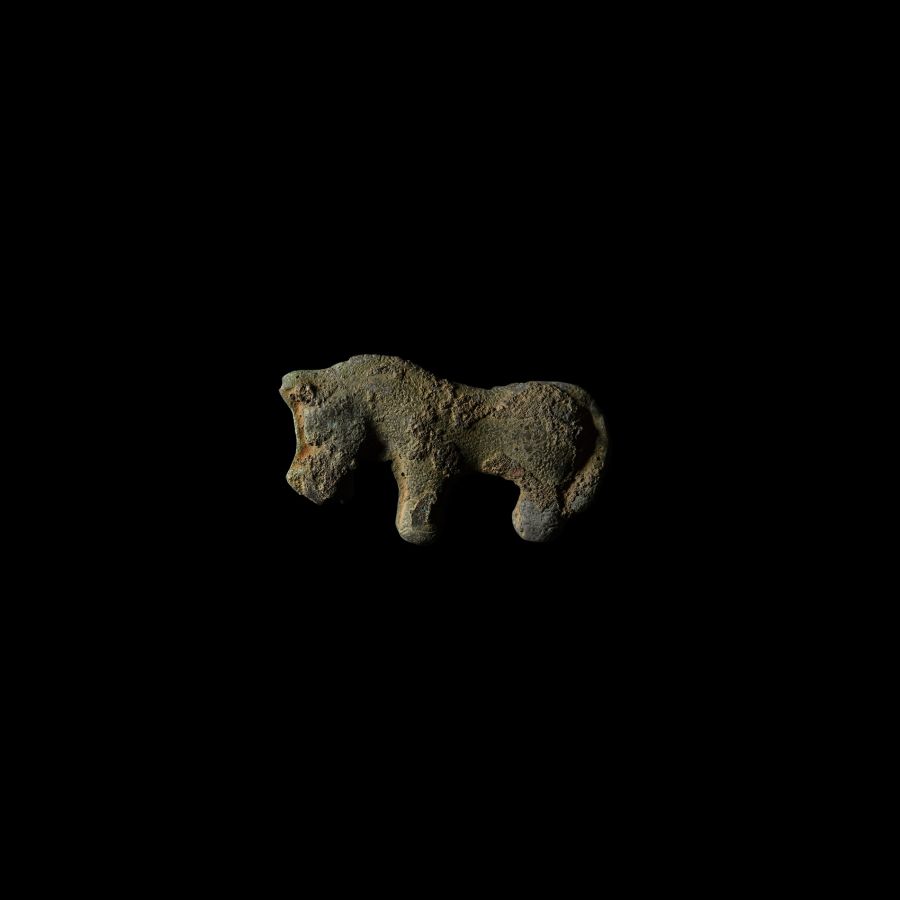
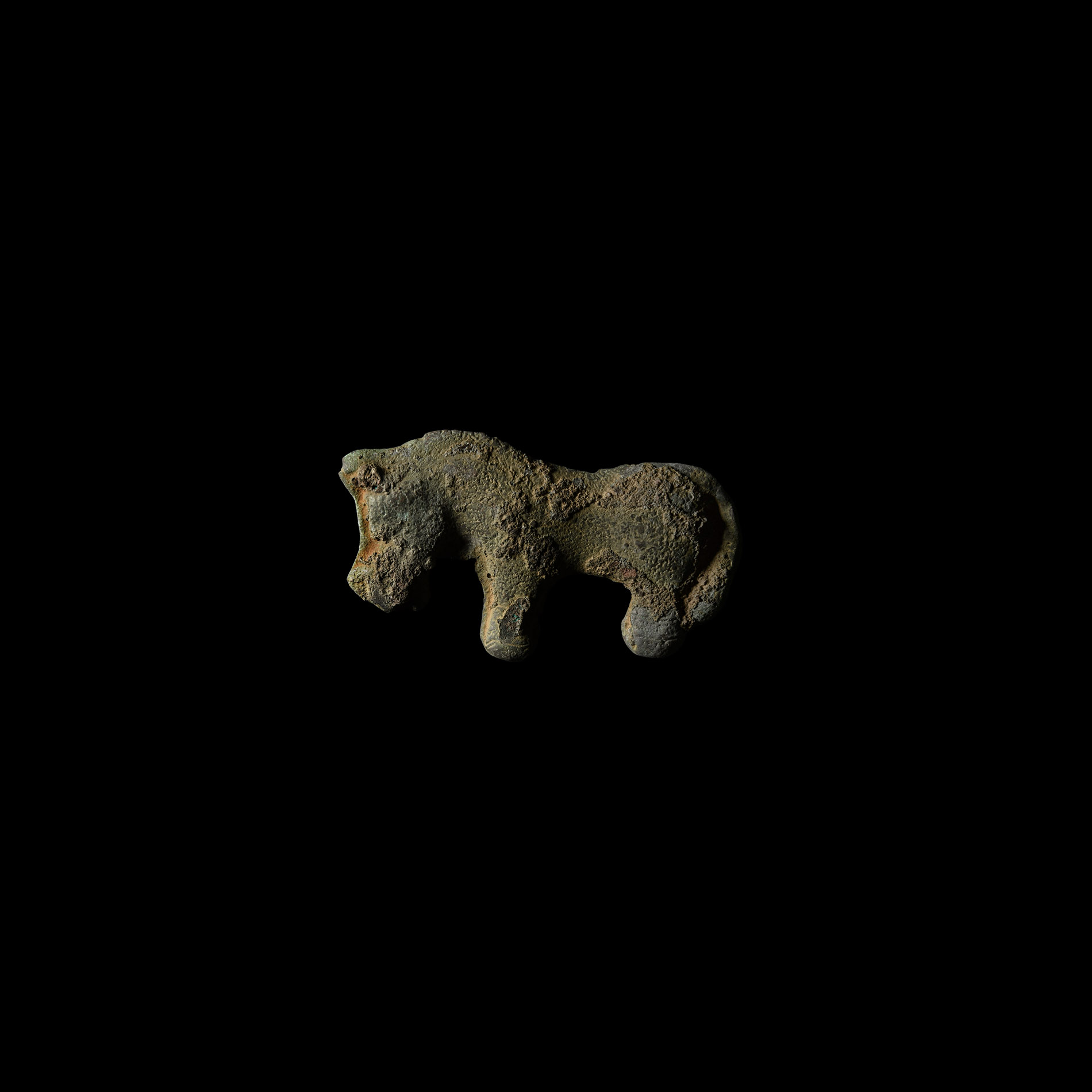
Chinese Ordos Animal Mount
6TH-2ND CENTURY B.C. OR LATER
3 3/8 in. (75 grams, 86 mm).
A copper-alloy mount in the form of a horse standing left, its head facing downwards; some remaining detailing to the body and tail; two mounting lugs to the reverse.
ProvenanceAcquired 1980-2015.
Ex Abelita family collection.
TimeLine Auctions follows a vetting process to ensure the authenticity and legality of all items, reinforcing our commitment to integrity and responsible trading. Each antiquity, antique, and coin lot undergoes thorough examination by a vetting committee of at least ten external specialists, professional trade association members, scientists, and archaeologists: Our Vetting Process
AUCTIONS:
TimeLine is a leading auction house specialising in antiquities, ancient art, collectables, natural history, coins, medals, and books. Our auctions offer museums, collectors, historians, and enthusiasts the opportunity to acquire unique and historically significant pieces.
LOT 1596
Chinese Ordos Animal Mount
Estimate £80 - 100€93 - 116 (for guidance only)$108 - 135 (for guidance only)
-
Chinese Han Gilded Bronze and Jade Beaker
Han Dynasty, 206 B.C-220 A.D.Sold for (Inc. bp): £23,400
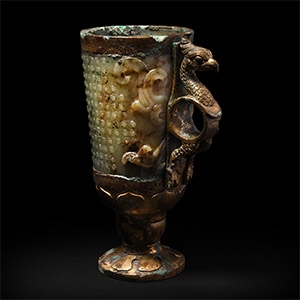
A gilt bronze and Khotain moonstone quality jade beaker composed of a slender U-shaped body, bulbous stem and discoid foot, the applied handle formed as the head, neck and legs of a mythical bird, likely a fenghuang, with detailing to the creature's feathers, face, beak and limbs, body formed as the handle loop, wings carved in relief in the jade; the jade vessel body carved in relief with neat rows of volute scrolls, stylised petals in relief around the lower body and foot; some restoration. 709 grams, 14.5 cm high
Acquired from Dandelion Fine Arts, Hollywood Road, Hong Kong, 1970s. Ex Prof. David Anderson collection. UK private collection, circa 2010. Accompanied by a copy of metallurgic analytical results, written by Metallurgist Dr Peter Northover (ex Department of Materials, Materials Science-Based Archaeology Group & Department of Materials, University of Oxford). This lot has been checked against the Interpol Database of stolen works of art and is accompanied by search certificate number no.11707-198358.
Khotain jade was available between the years 69 B.C. and 101 A.D. as a result of a military treaty. It was sourced from the White Jade River. This object is believed to be produced for a notable client. The object's original patina, prior to restoration, suggested that the vessel was part of a ritual which involved exposure to intense heat. -
.jpg)
Chinese Tang Horse with Separate Rider
Tang Dynasty, 618-907 A.D.Sold for (Inc. bp): £975
A ceramic horse and rider figure modelled in the round with semi-naturalistic anatomical detailing, the horse standing on a rectangular base, its stocky neck and head slightly turned to the right, ears pricked forwards, cropped mane and short, dressed tail; rider seated in saddle wearing a knee-length robe, hood and riding boots, one arm held in front of his body, the other raised above his head, detailing to his face; remains of polychrome pigmentation; the upper half of the rider's body modelled separately. 1.75 kg, 32 cm high
From the R.M.Hicks OBE private collection, UK. Accompanied by an original thermoluminescence analysis report no.C106u29 from Oxford Authentication.
A symbol of military strength and social status, the horse was ever a potent mythological and symbolic animal in China. During the Tang Dynasty, both polo and hunting from horseback became fashionable for men and women. It was also during the Tang Dynasty period that female court attendants on horses appeared in art and in tomb sculpture. The fruits of China's relationship with the horse include three of the most important innovations in equestrian history: the horse collar, the stirrup and harnesses based on the breast strap. The failure of China's domestic horse breeding programmes forced them to artificially inflate the price of tea (the production of which was controlled by China), so that tea could be traded for horses from their neighbours. -
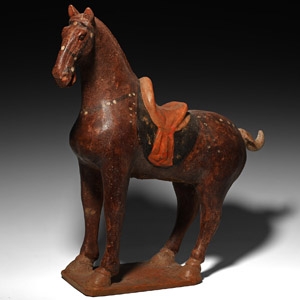
Chinese Tang Deep Maroon Horse
Tang Dynasty, 618-907 A.D. or laterEstimate: £400 - 600 (+bp*)
Opening Bid: £222
A ceramic horse figure modelled in the round, standing on a rectangular base with semi-naturalistic anatomical detailing, cropped mane and dressed tail, integral moulded saddle, painted bridle and harness; remains of polychrome painted pigmentation on a deep maroon body. 5.6 kg, 47 cm high
Finely modelled.
Oriental Gallery, Bath 1980s. Desmond Morris collection, 1980s-2019.
