
Loading, please wait...
LOT 1592
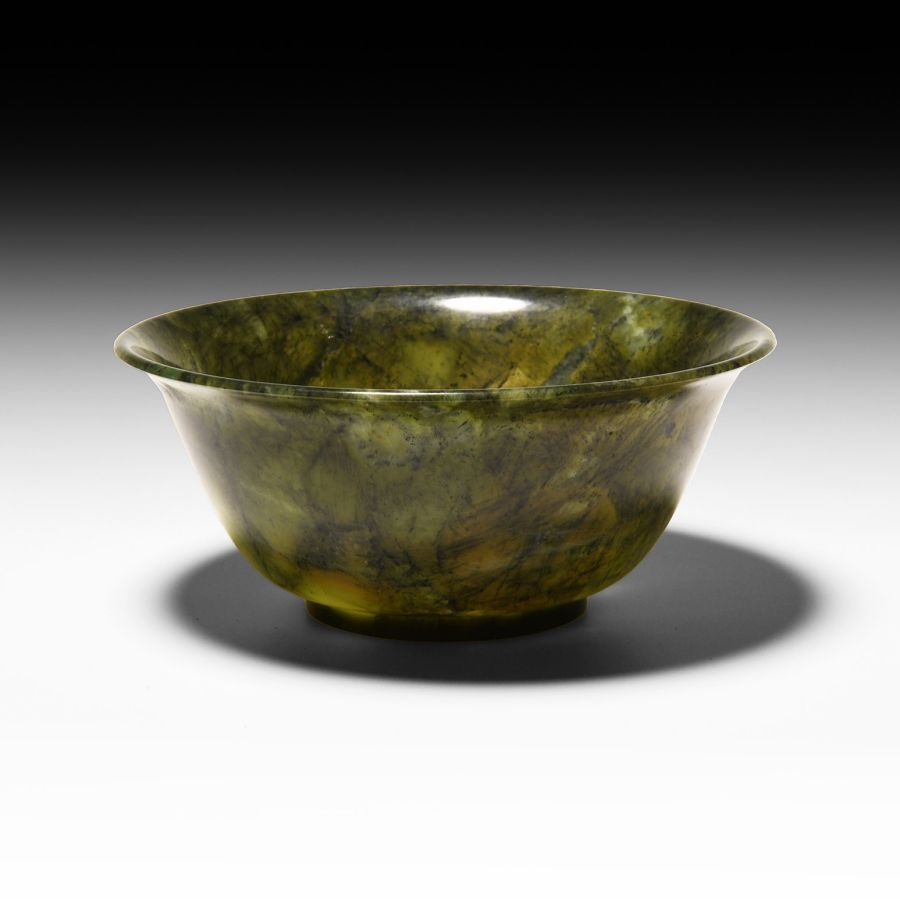
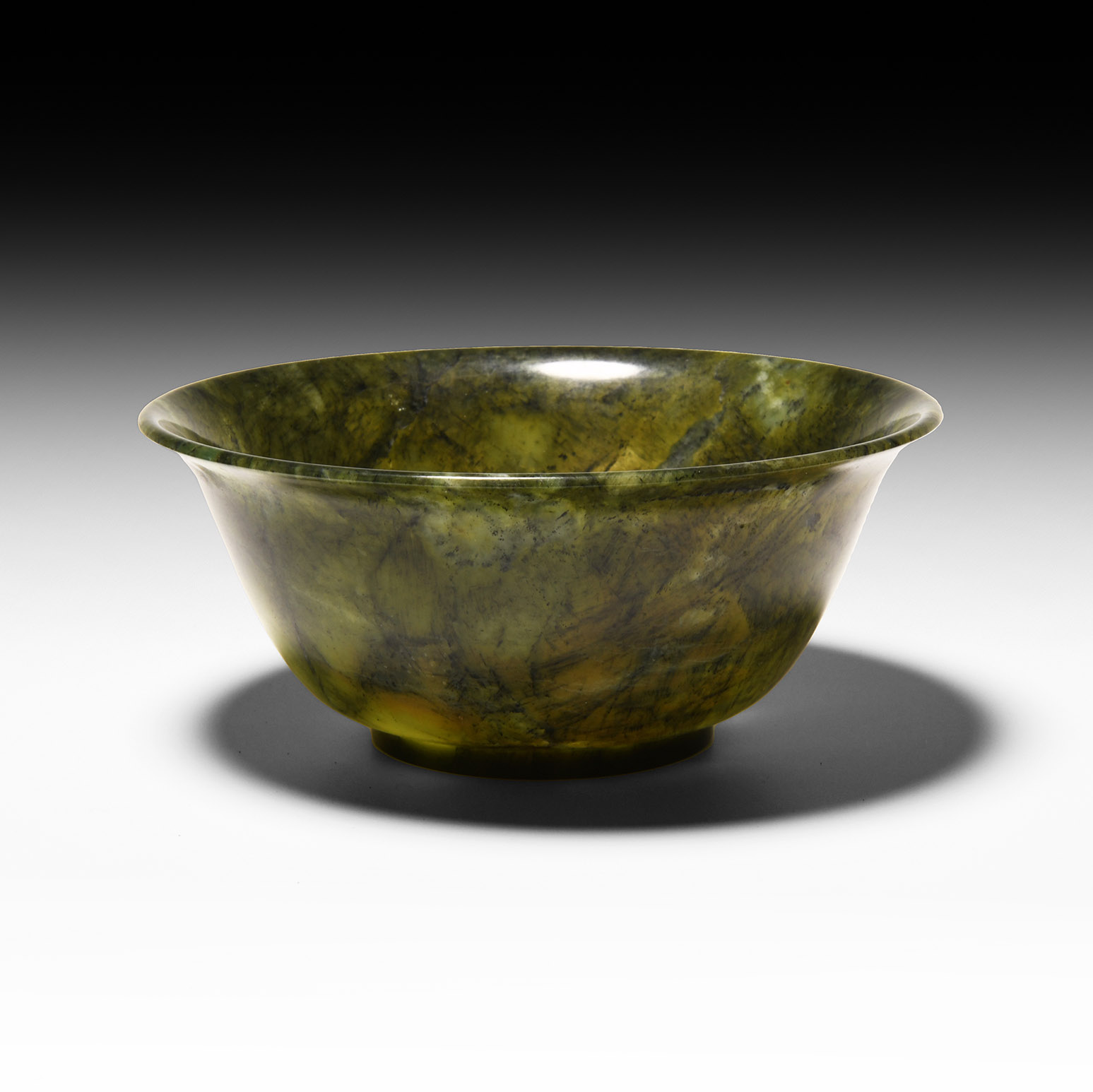
Chinese Ming Style Green Stone Bowl
19TH-20TH CENTURY A.D.
5 in. (112 grams, 12.5 cm wide).
A mottled green stone bowl with basal ring and flared rim.
ProvenanceAcquired 1970s.
West Country, UK, collection.
Cf. similar item of later date in the British Museum, London, under accession number 1889,0507.15.
CONDITIONTimeLine Auctions follows a vetting process to ensure the authenticity and legality of all items, reinforcing our commitment to integrity and responsible trading. Each antiquity, antique, and coin lot undergoes thorough examination by a vetting committee of at least ten external specialists, professional trade association members, scientists, and archaeologists: Our Vetting Process
AUCTIONS:
TimeLine is a leading auction house specialising in antiquities, ancient art, collectables, natural history, coins, medals, and books. Our auctions offer museums, collectors, historians, and enthusiasts the opportunity to acquire unique and historically significant pieces.
LOT 1592
Chinese Ming Style Green Stone Bowl
Estimate £150 - 200€170 - 230 (for guidance only)$200 - 270 (for guidance only)
-
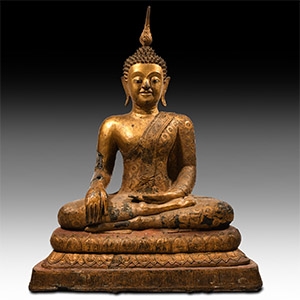
Very Large Thai Gilt Bronze Buddha Shakyamuni
19th-20th century A.D.Estimate: £10,000 - 14,000 (+bp*)
Opening Bid: £5,000
A large gilt bronze Shakyamuni Buddha figure seated cross-legged in virasana on a semi-circular lotus flower dais, right hand in bhumisparsha mudra, the left resting on his lap, wearing a samghati adorned with floral motifs, his face with a meditative expression and with downcast eyes below arched eyebrows, aquiline nose, gentle smile, elongated earlobes, the hair in tight curls surmounted by a flame. 99.5 kg, 95 cm high
French collection, 1960s-early 2000s. From an important Paris gallery, France. with Ogotai (?) Auctions, Paris, France, 22 January 2016, lot 2. This lot has been checked against the Interpol Database of stolen works of art and is accompanied by search certificate number no.11714-199350.
The historical Buddha, Shakyamuni Buddha, (born Prince Siddhartha Gautama) was the founder of the Buddhist religion; he lived and taught in 6th century India. Born to a royal or aristocratic family of the Shakya kingdom, at age 29 he learned of the deep suffering experience by the people of his land, causing him to relinquish his title and palace home and after six years of study, self-sacrifice and meditation, became an enlightened Buddha. Here, Buddha is shown seated in a yogic meditative posture, his right hand gesturing towards the Earth Goddess at the moment prior to his enlightenment. He displays many of the lakshanas, or auspicious marks of Buddhahood- the extended earlobes remind the viewer of his former princely status; three rings around the neck; urna formed from a curl of hair. -
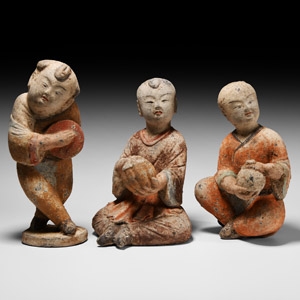
Chinese Tang Musician Set
Tang Dynasty, 618-907 A.D.Sold for (Inc. bp): £2,080
A group of three ceramic musician figurines, each in loose-fitting garments with painted detailing: one cross-legged with a pot, another sitting with a gord, a third standing with a tambour. 1.9 kg total, 16-18 cm
Ex Hong Kong collection. London Mayfair gallery, UK. Accompanied by a thermoluminescence analysis report no.C122k23 from Oxford Authentication for one of the figures. -
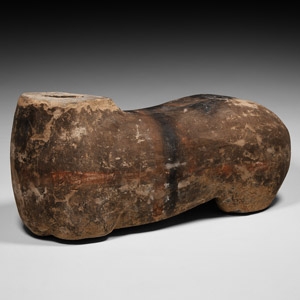
Chinese Han Horse Torso
Han Dynasty, 206 B.C.-220 A.D.Estimate: £200 - 300 (+bp*)
Opening Bid: £111
A terracotta horse torso with socket to neck and underside of legs to accept other body parts, remains of pigmentation delineating harness straps. 3.85 kg, 46 cm
Fine condition.
Acquired 1960s-1990s. Late Alison Barker collection, a retired London barrister.
