
Loading, please wait...
LOT 1629
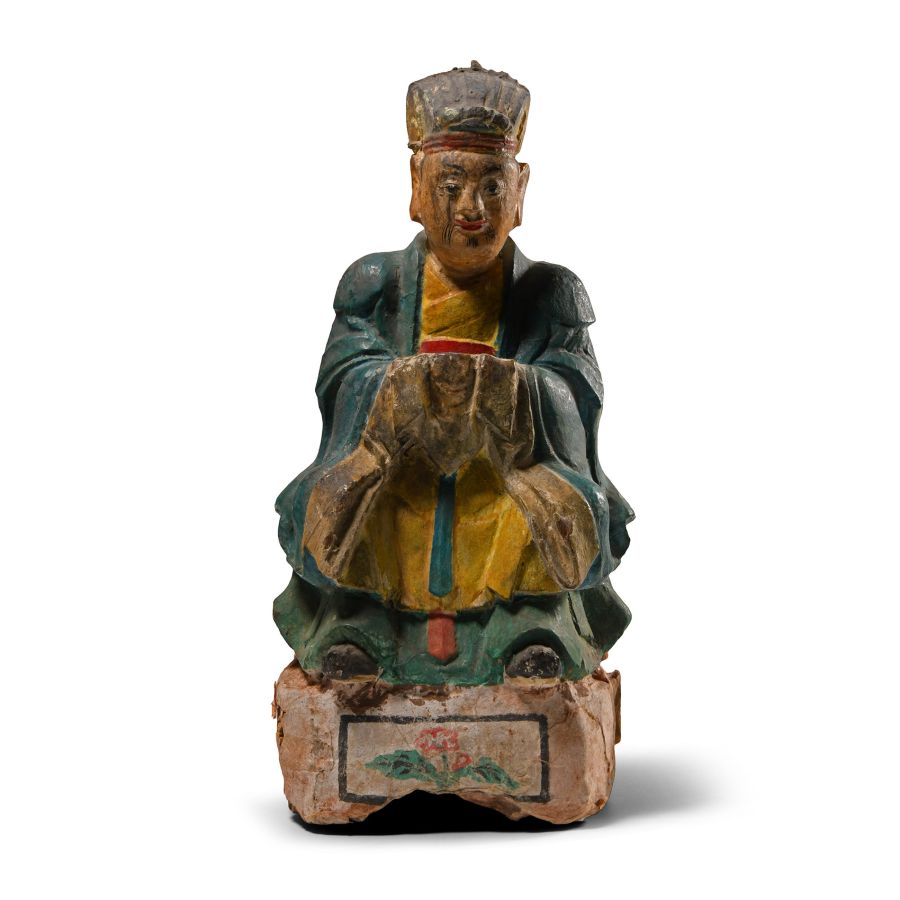
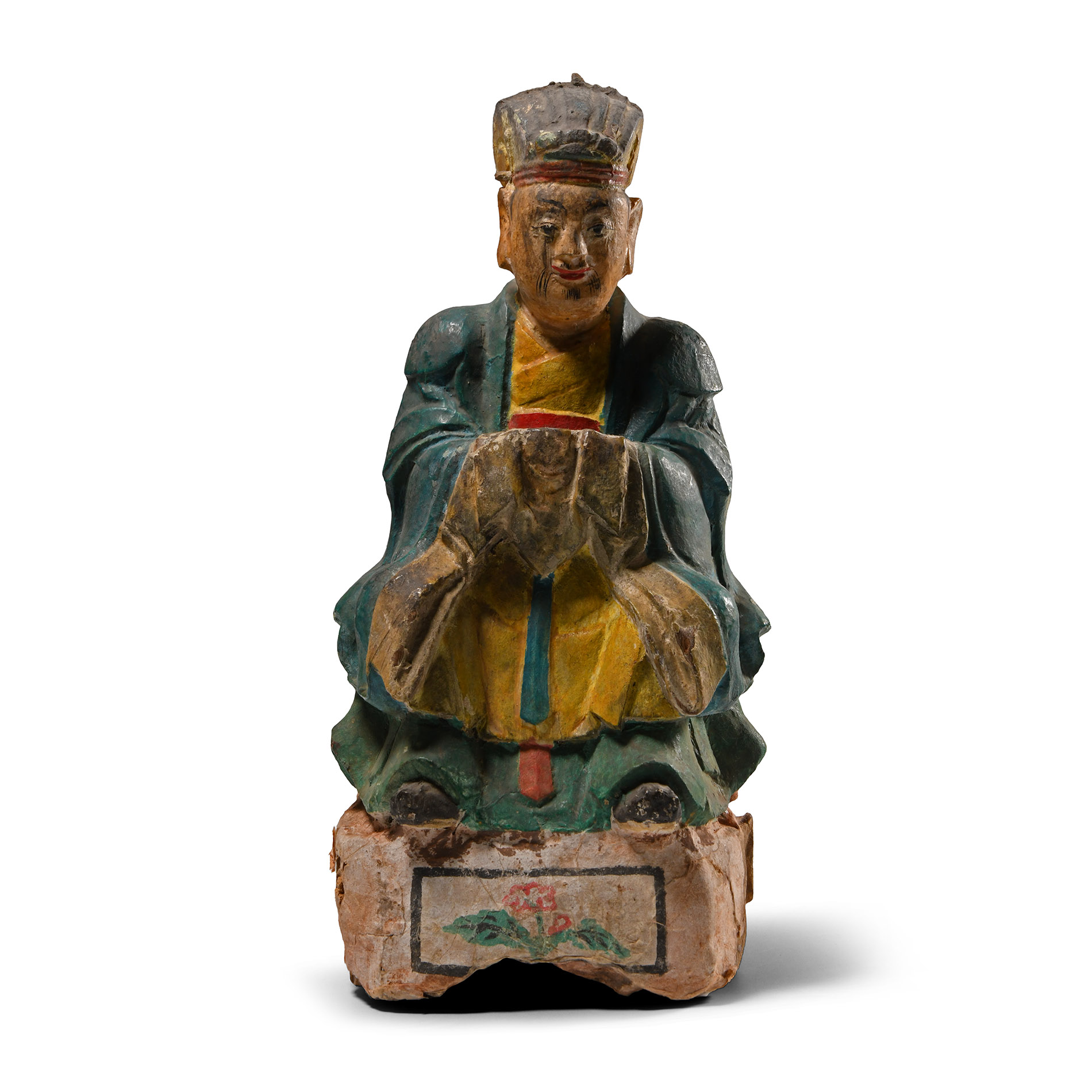
Chinese Ming Painted Wooden House God
MING DYNASTY, 1368-1644 A.D. OR LATER
11 in. (1.02 kg, 28 cm high).
Carved in the round gesso-covered wooden figure of Zao Jun seated on a dais wearing floor-length flounced robes and a scholar's cap; his hands inside his voluminous sleeves slotted to accept an offering tray or bowl. [No Reserve]
ProvenanceEx North Yorkshire, UK, collection, 1990s.
CONDITIONTimeLine Auctions follows a vetting process to ensure the authenticity and legality of all items, reinforcing our commitment to integrity and responsible trading. Each antiquity, antique, and coin lot undergoes thorough examination by a vetting committee of at least ten external specialists, professional trade association members, scientists, and archaeologists: Our Vetting Process
AUCTIONS:
TimeLine is a leading auction house specialising in antiquities, ancient art, collectables, natural history, coins, medals, and books. Our auctions offer museums, collectors, historians, and enthusiasts the opportunity to acquire unique and historically significant pieces.
-
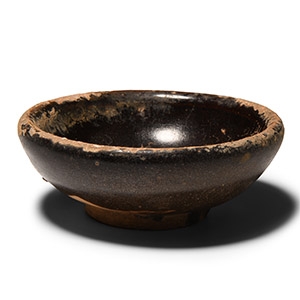
Chinese Jianyao Tea Bowl
Song Dynasty, 960-1279 A.D.Sold for (Inc. bp): £26
With rounded rim and discoid foot, the interior and exterior decorated with a dark brown glaze, the exterior displaying the cream ware visible towards the foot. 139 grams, 89 mm wide
UK gallery, early 2000s. -
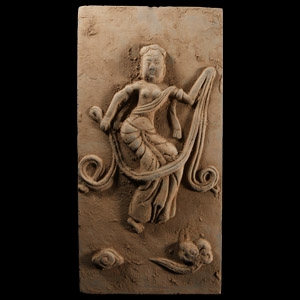
Chinese Song Terracotta Wall Tile
Song Dynasty, circa 960-1279 A.D.Sold for (Inc. bp): £260
Circular recess with high-relief modelled figure of Mahākāla sitting cross-legged on a lotus dais, six arms holding various symbols. 5.4 kg, 28.5 cm wide
Ex Cotswold, UK, collection, 1970-1990. -
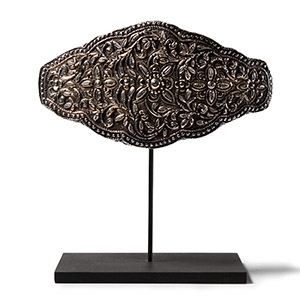
South East Asian Peranakan Silver 'Pending' Belt Buckle Plate
Early 20th century A.D.Sold for (Inc. bp): £143
Of slightly curved profile with mounting bracket to the reverse, pelletted border and field of dense floral and foliage ornament; accompanied by a custom-made display stand. 88 grams, 16 cm wide (173 grams total, 17 cm high including stand)
From Malaysia or Singapore. Acquired on the Singapore art market in 2002. Property of a Kent lady collector.
