
Loading, please wait...
LOT 1600
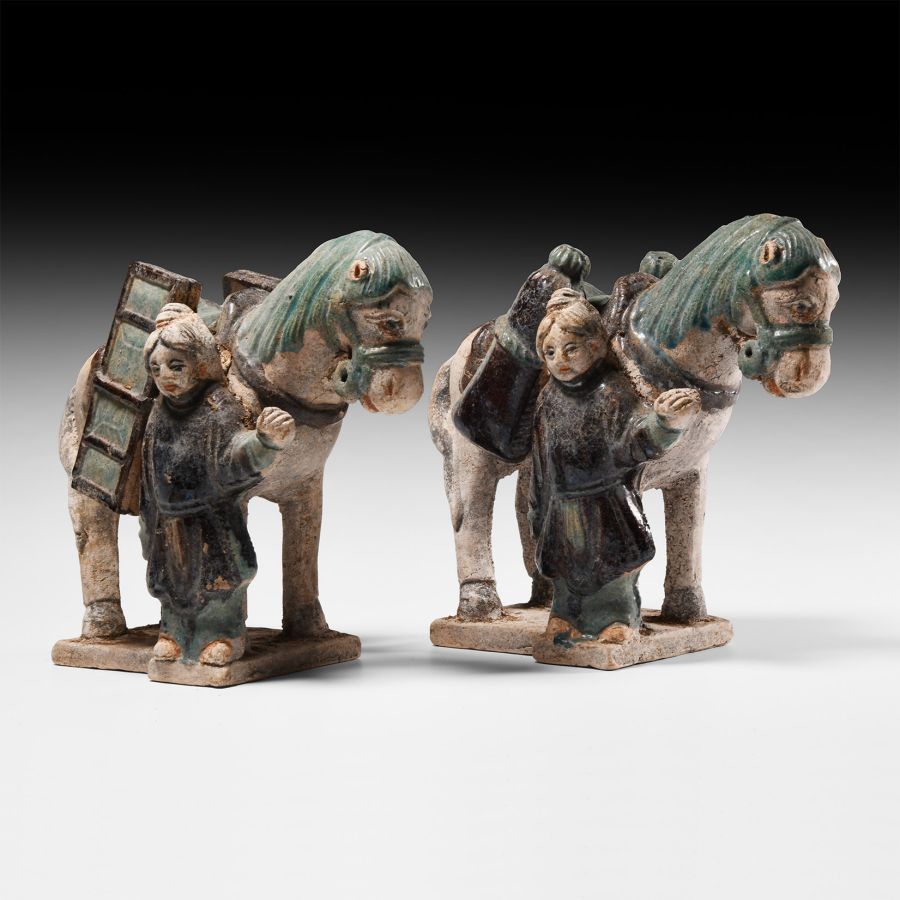
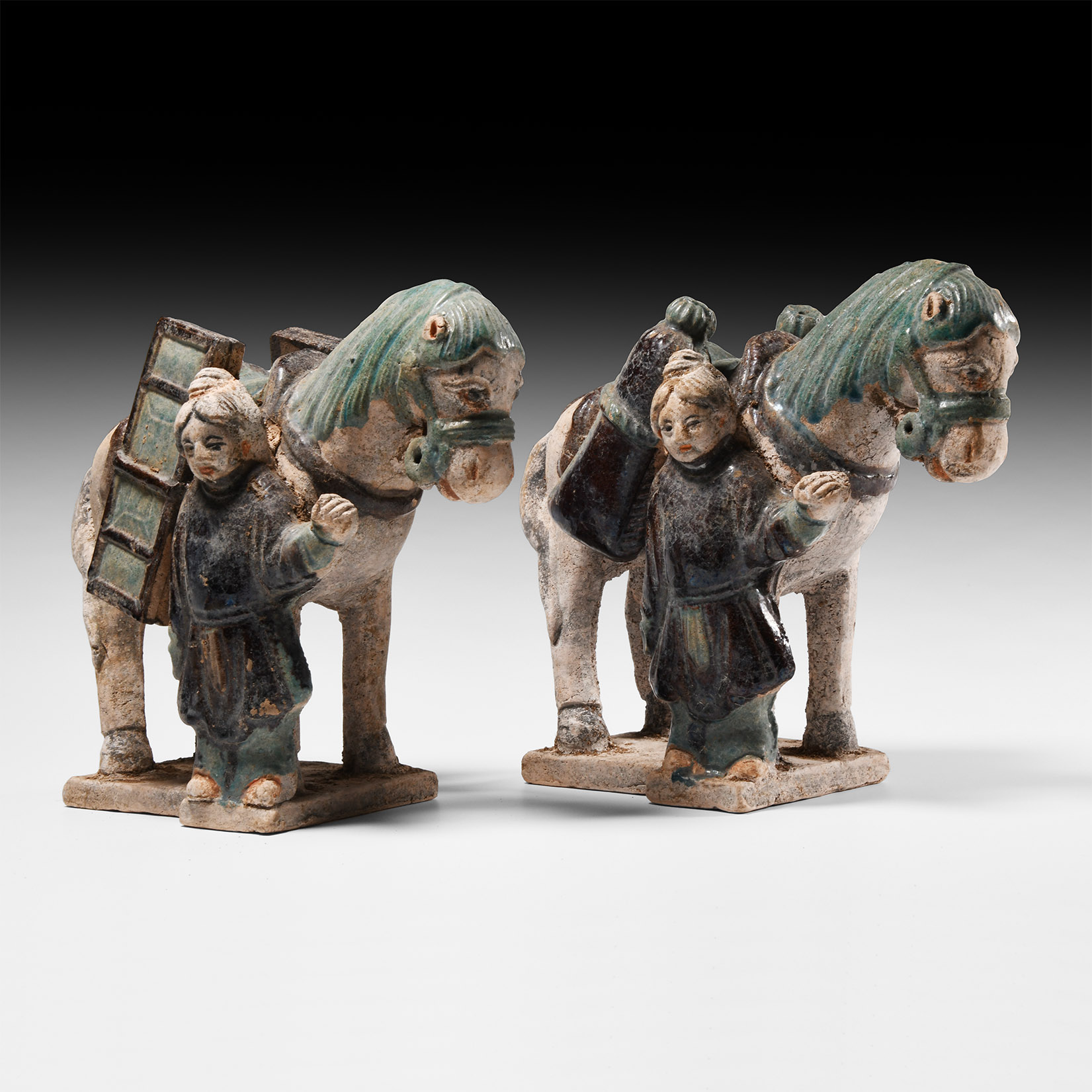
Chinese Ming Green Horse and Attendant Pair
LATE MING DYNASTY-EARLY QING DYNASTY, 16TH-17TH CENTURY A.D.
7 1/2 in. (1.98 kg total, 19 cm wide each).
A group of two glazed ceramic figurines, each a packhorse standing on a rectangular base with a robed attendant gripping the reins, one with rectangular case slung from the saddle, the other with large jars bound with rope. [2]
ProvenanceAcquired 1970s.
West Country, UK, collection.
TimeLine Auctions follows a vetting process to ensure the authenticity and legality of all items, reinforcing our commitment to integrity and responsible trading. Each antiquity, antique, and coin lot undergoes thorough examination by a vetting committee of at least ten external specialists, professional trade association members, scientists, and archaeologists: Our Vetting Process
AUCTIONS:
TimeLine is a leading auction house specialising in antiquities, ancient art, collectables, natural history, coins, medals, and books. Our auctions offer museums, collectors, historians, and enthusiasts the opportunity to acquire unique and historically significant pieces.
LOT 1600
Chinese Ming Green Horse and Attendant Pair
Estimate £400 - 600€460 - 700 (for guidance only)$540 - 810 (for guidance only)
-

Chinese Tang Horse with Separate Rider
Tang Dynasty, 618-907 A.D.Sold for (Inc. bp): £975
A ceramic horse and rider figure modelled in the round with semi-naturalistic anatomical detailing, the horse standing on a rectangular base, its stocky neck and head slightly turned to the right, ears pricked forwards, cropped mane and short, dressed tail; rider seated in saddle wearing a knee-length robe, hood and riding boots, one arm held in front of his body, the other raised above his head, detailing to his face; remains of polychrome pigmentation; the upper half of the rider's body modelled separately. 1.75 kg, 32 cm high
From the R.M.Hicks OBE private collection, UK. Accompanied by an original thermoluminescence analysis report no.C106u29 from Oxford Authentication.
A symbol of military strength and social status, the horse was ever a potent mythological and symbolic animal in China. During the Tang Dynasty, both polo and hunting from horseback became fashionable for men and women. It was also during the Tang Dynasty period that female court attendants on horses appeared in art and in tomb sculpture. The fruits of China's relationship with the horse include three of the most important innovations in equestrian history: the horse collar, the stirrup and harnesses based on the breast strap. The failure of China's domestic horse breeding programmes forced them to artificially inflate the price of tea (the production of which was controlled by China), so that tea could be traded for horses from their neighbours. -
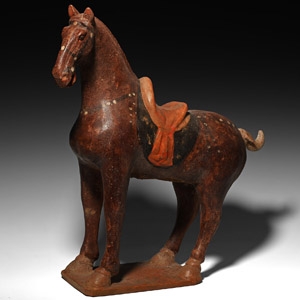
Chinese Tang Deep Maroon Horse
Tang Dynasty, 618-907 A.D. or laterEstimate: £400 - 600 (+bp*)
Opening Bid: £222
A ceramic horse figure modelled in the round, standing on a rectangular base with semi-naturalistic anatomical detailing, cropped mane and dressed tail, integral moulded saddle, painted bridle and harness; remains of polychrome painted pigmentation on a deep maroon body. 5.6 kg, 47 cm high
Finely modelled.
Oriental Gallery, Bath 1980s. Desmond Morris collection, 1980s-2019. -

Chinese Glazed Bowl
12th-13th century A.D.Sold for (Inc. bp): £39
A Tang or Song period style provincial conical ceramic bowl. 140 grams, 11.5 cm diameter
Fine condition.
Acquired 1990s. West Country, UK, collection.
