
Loading, please wait...
LOT 2133
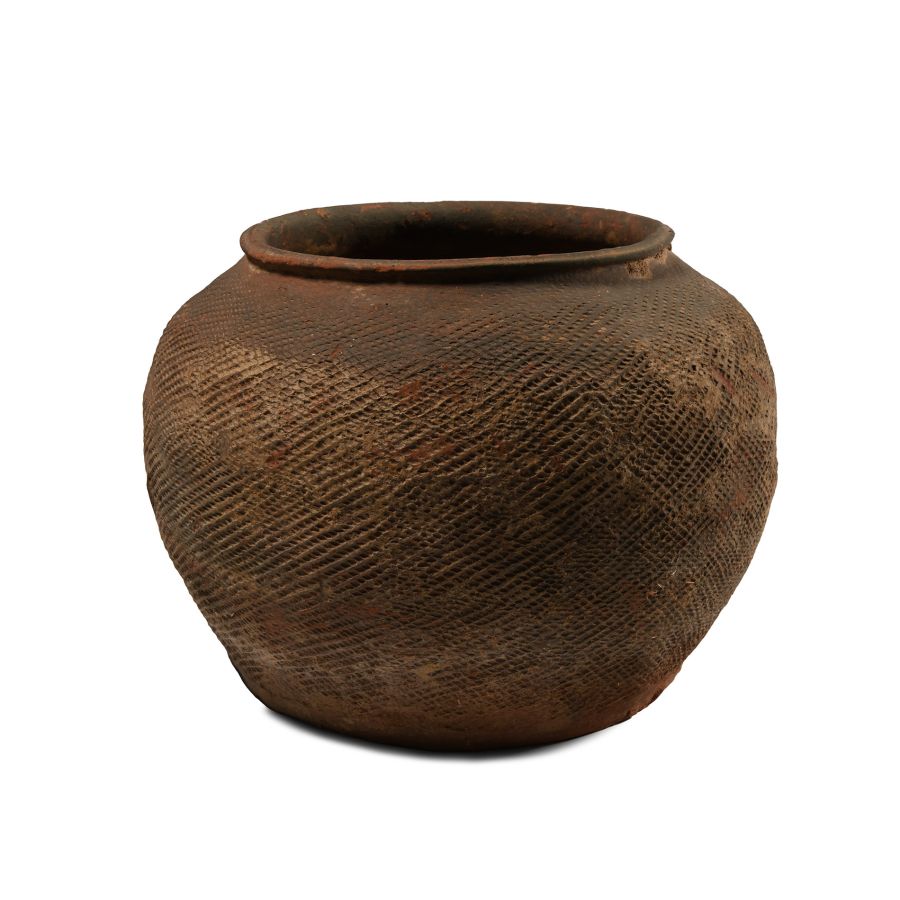
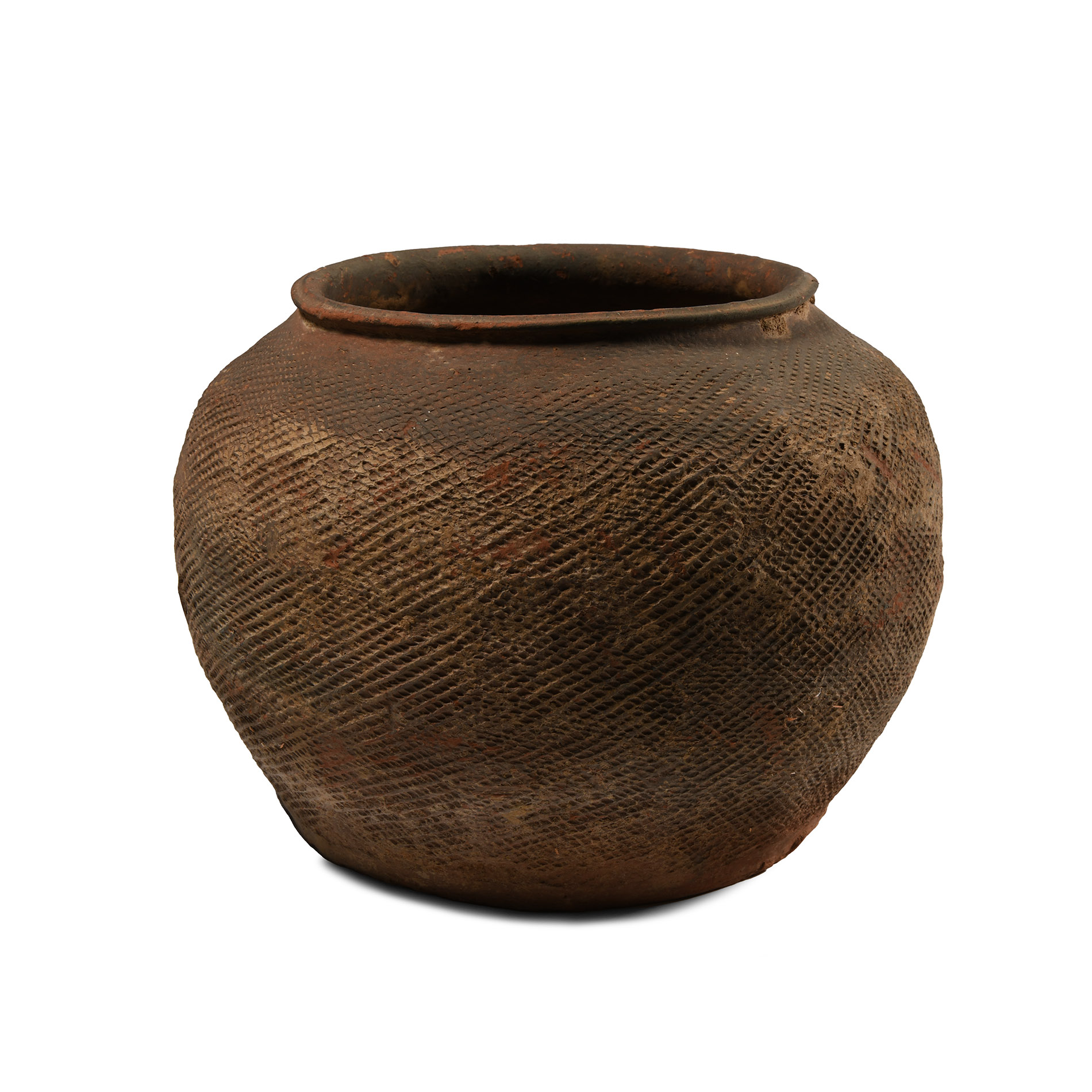
Chinese Large Eastern Zhou Ceramic Jar
WARRING STATES, CIRCA 475-221 B.C.
8 1/2 in. (1.6 kg, 21.5 cm wide).
The surface of the piriform body with a moulded textile like appearance.
ProvenanceAcquired New York, USA, prior to 2000.
From the private collection of a County Durham, UK, gentleman.
TimeLine Auctions follows a vetting process to ensure the authenticity and legality of all items, reinforcing our commitment to integrity and responsible trading. Each antiquity, antique, and coin lot undergoes thorough examination by a vetting committee of at least ten external specialists, professional trade association members, scientists, and archaeologists: Our Vetting Process
AUCTIONS:
TimeLine is a leading auction house specialising in antiquities, ancient art, collectables, natural history, coins, medals, and books. Our auctions offer museums, collectors, historians, and enthusiasts the opportunity to acquire unique and historically significant pieces.
-
.jpg)
Large Chinese Tang Bronze 'Pagoda' Reliquary Stupa
Tang to Liao Dynasty, circa 907-1125 A.D. or laterEstimate: £4,000 - 6,000 (+bp*)
Opening Bid: £2,000
With three-tiered square and stepped base showing bodhi leaves, flaming jewels and foliage tendrils respectively, surmounted by a pierced frieze, each side depicting a seated Buddha flanked by standing figures and clouds; with triple pitched and hipped roof elements rising above pierced wall panels; in turn all surmounted by a column with five graduated discs affixed and terminating in a four-lobed lamniform element. 4.9 kg, 59 cm
Fine condition.
Acquired 1960s to early 1970s. ‘Buckingham Collection’, the late Nik Douglas (1944-2012), renowned author, curator and Asian art expert. -
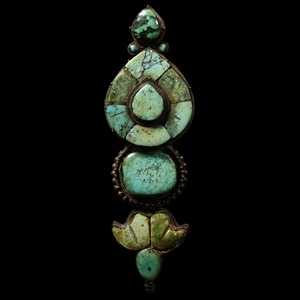
Tibetan Large Silver Brooch with Turquoise Inlays
Early 19th century A.D.Sold for (Inc. bp): £416
The polished stones set into cells embellished with filigree borders studded with granules; loop and most of the remains of a catch to reverse. 39 grams, 11.6 cm
Acquired old German collection. Property of RWM Collection. -
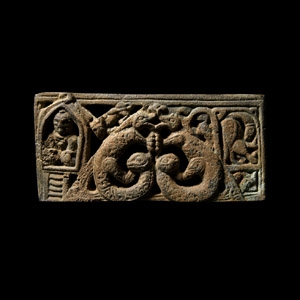
Chinese Ordos Style Bronze Decorative Plaque with Buddha and Beasts
20th century A.D.Sold for (Inc. bp): £286
Displaying two central grappling beasts and a Buddha figure within an arched niche, birds in the field. 503 grams, 17.5 cm
Fair condition.
Acquired on the European art market circa 2000. Private British collection, London, UK, early 2000's.
