
Loading, please wait...
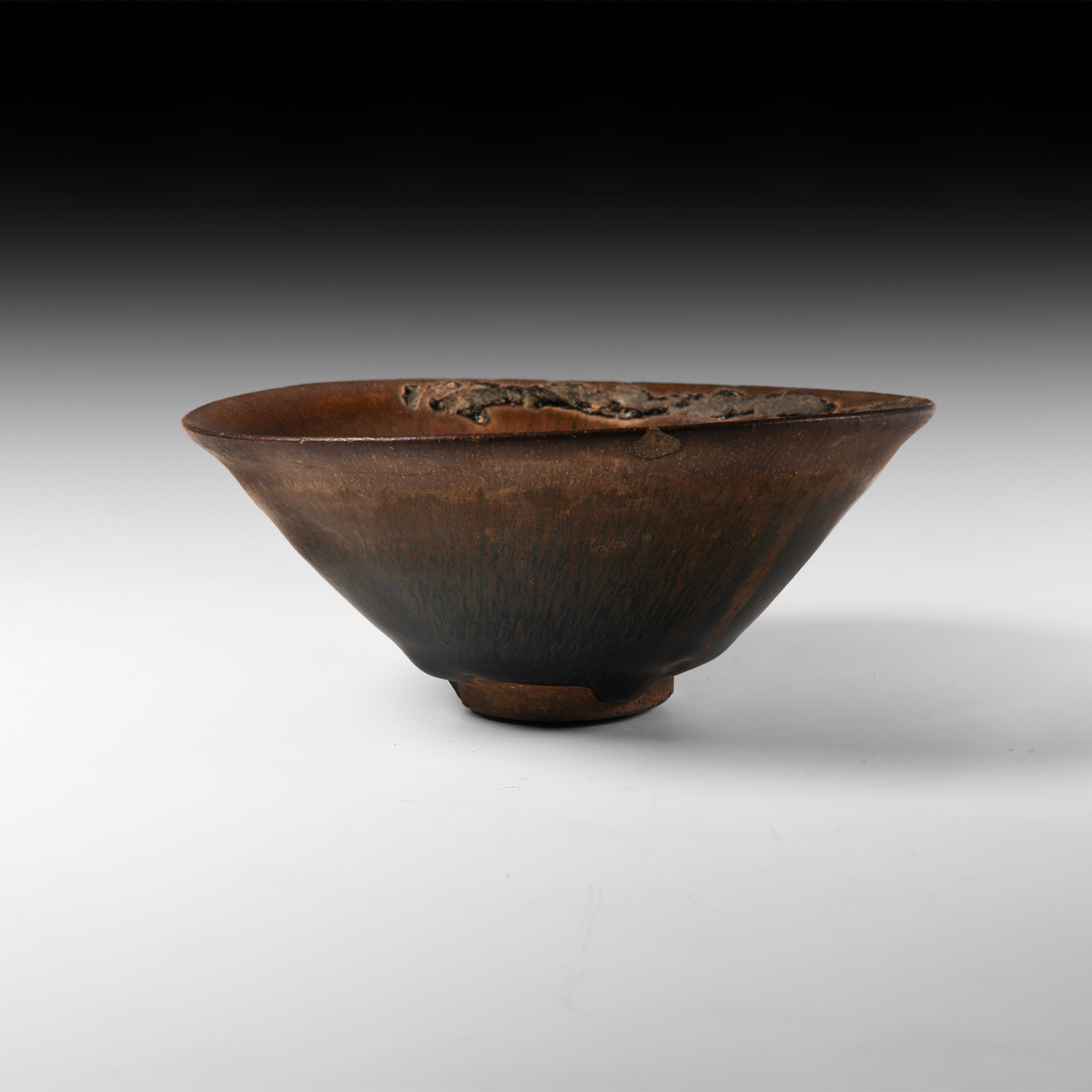
LOT 0436
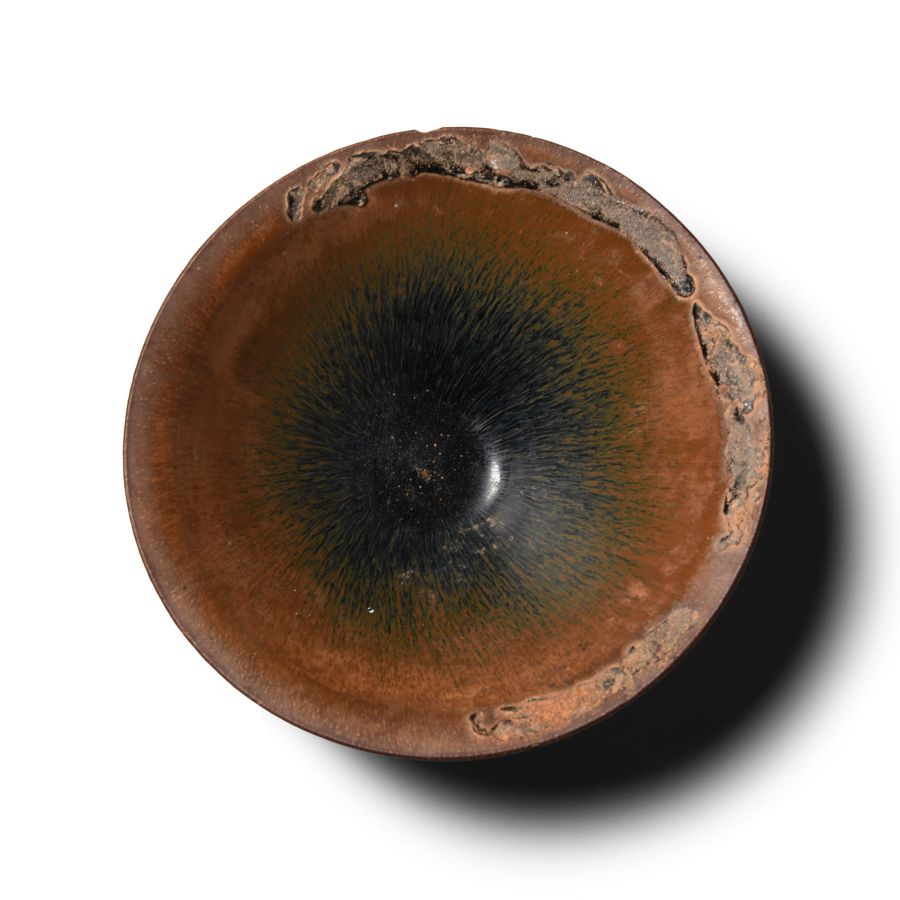
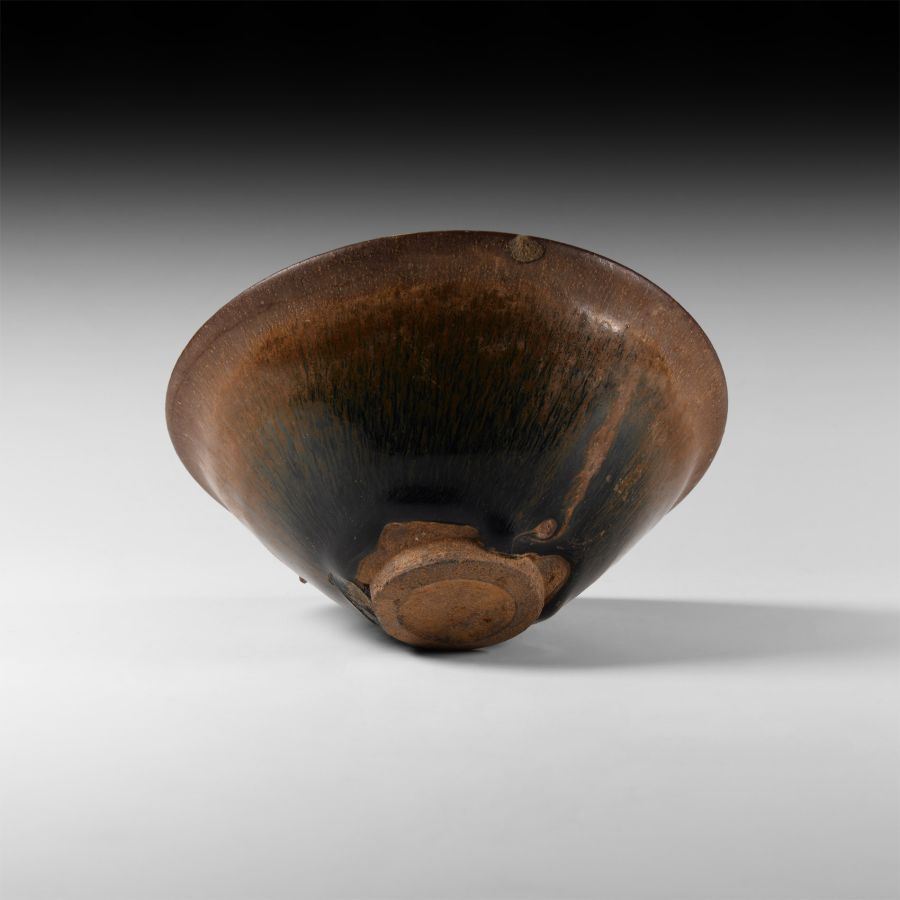
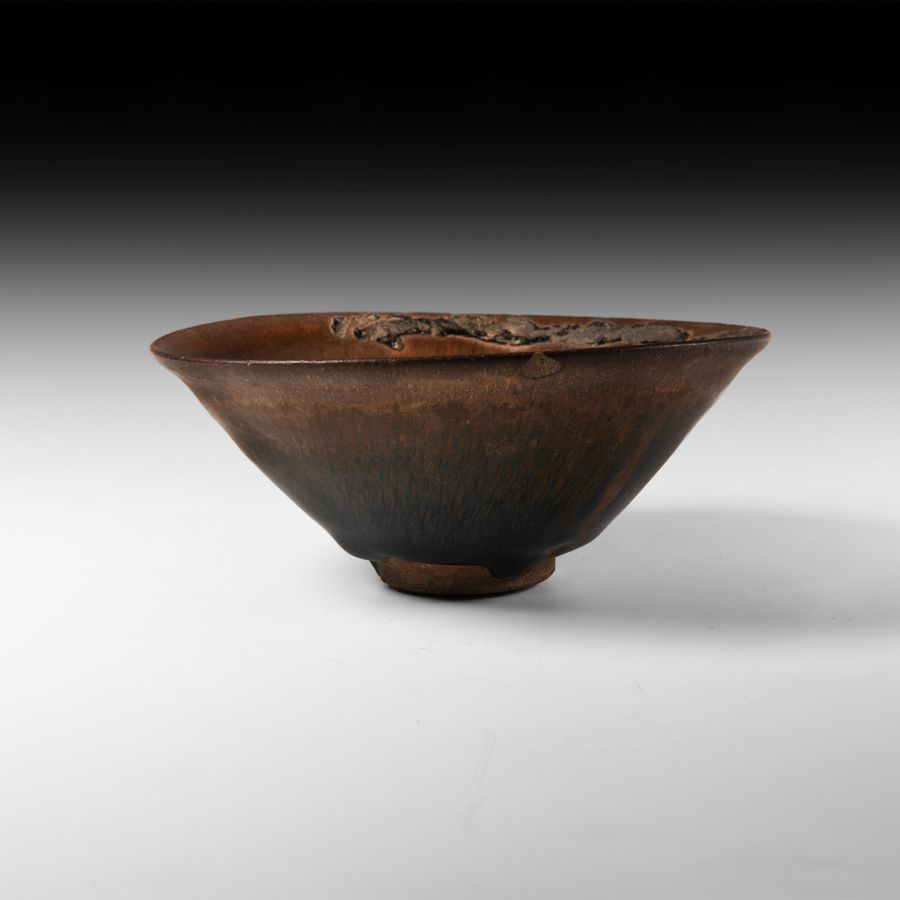
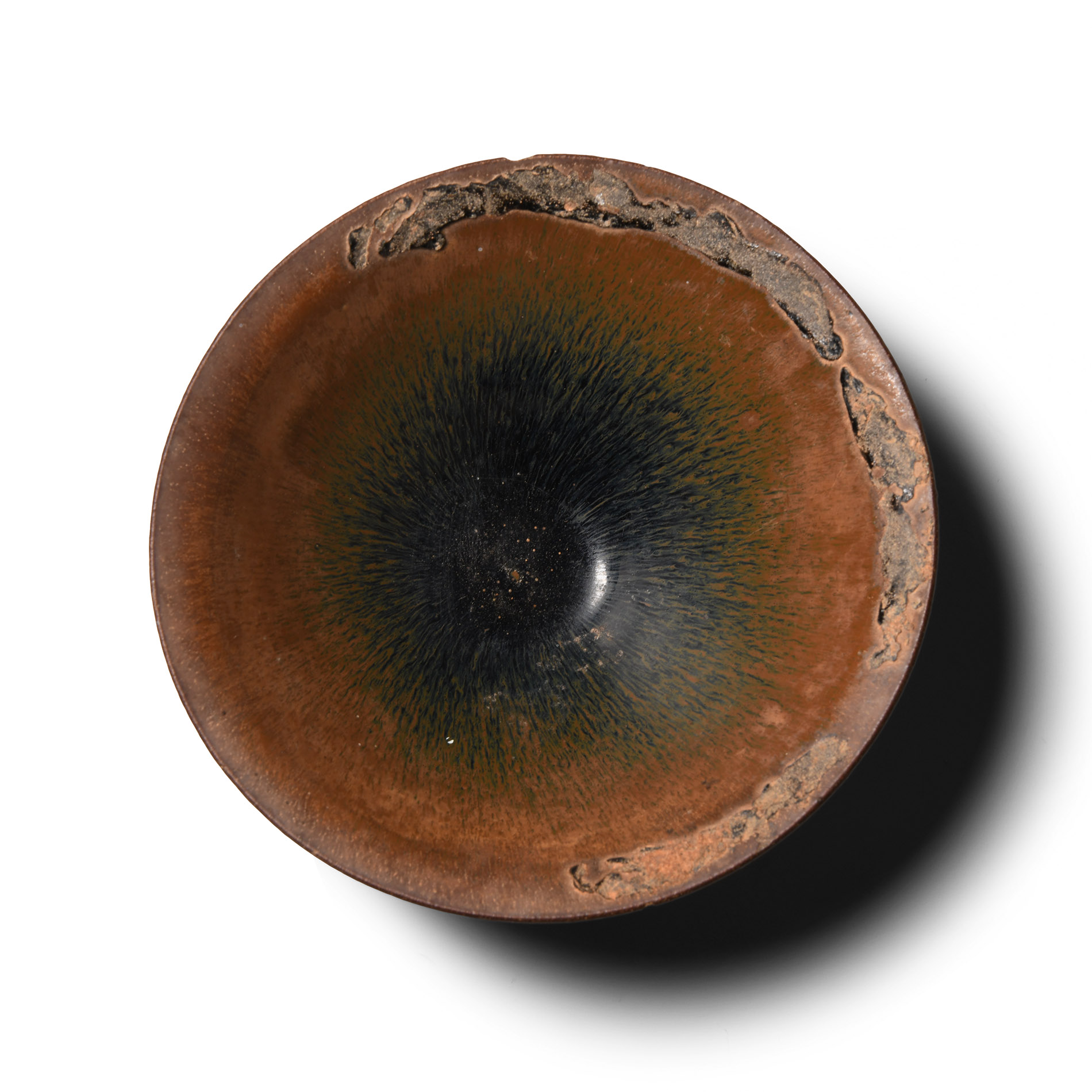
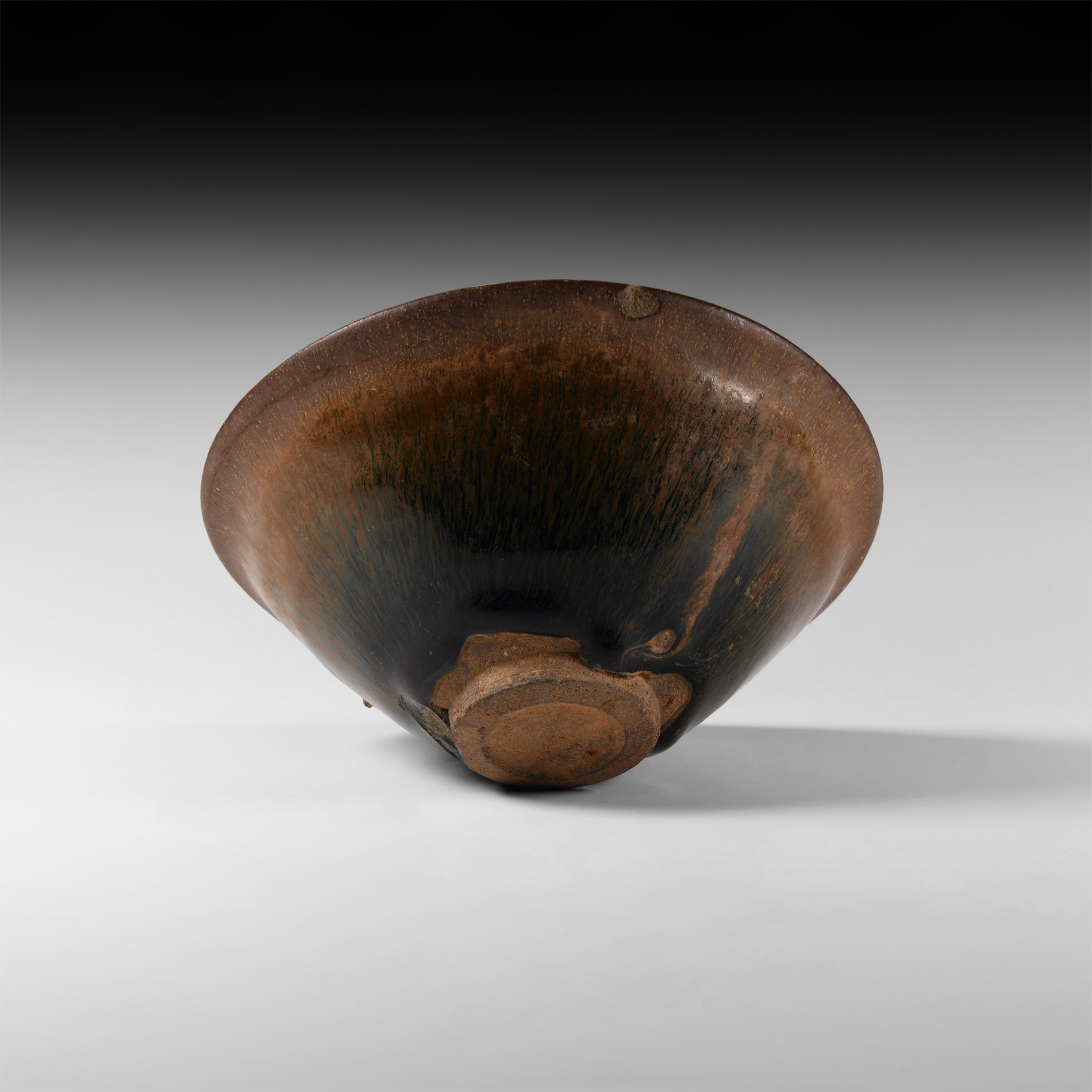
Chinese Jianyao Hare's Fur Tea Bowl
SONG DYNASTY, 960-1279 A.D.
5 1/8 in. (173 grams, 13 cm wide).
A hare's fur tea bowl of conical form, with everted rim and discoid foot, the interior decorated with a lustrous blackish glaze shot through with streaks of blue-silver 'hare's fur' markings, the exterior displaying russet and silver markings, the brown ware visible towards the foot.
ProvenanceAcquired in Hong Kong, 1980s.
UK private collection.
Cf. The Metropolitan Museum, New York, accession number 91.1.226, for similar.
CONDITIONTimeLine Auctions follows a vetting process to ensure the authenticity and legality of all items, reinforcing our commitment to integrity and responsible trading. Each antiquity, antique, and coin lot undergoes thorough examination by a vetting committee of at least ten external specialists, professional trade association members, scientists, and archaeologists: Our Vetting Process
AUCTIONS:
TimeLine is a leading auction house specialising in antiquities, ancient art, collectables, natural history, coins, medals, and books. Our auctions offer museums, collectors, historians, and enthusiasts the opportunity to acquire unique and historically significant pieces.
LOT 0436
Chinese Jianyao Hare's Fur Tea Bowl
Estimate £800 - 1,000€930 - 1,160 (for guidance only)$1,080 - 1,350 (for guidance only)
-
Chinese Neolithic Leather-Look Jar
3rd millennium B.C.Sold for (Inc. bp): £39
An unglazed ceramic rounded vase with flared rim and 'leather' texture to the body. 1.04 kg, 18.5 cm high
Acquired 1970s-1990s. Ex West Country collection. -
Chinese Han Style Bronze Dragon Weight
19th-20th century A.D.Estimate: £250 - 350 (+bp*)
Opening Bid: £125
A Han style bronze weight in the form of a dragon, modelled seated and facing with out-splayed front paws, stylised facial features, beard and quiff to rear of head, undulating tail held along the beast's back, forming a loop for suspension; hollow-formed with void to base. 438 grams, 12 cm high
Fine condition.
Acquired 1980-1990s. From a West Country collection. -
Chinese Giant 'Eye' Agate Bead Necklace
20th century A.D.Sold for (Inc. bp): £33
A large, bifacial banded agate bead, chemically treated to show the circular 'eye' design; suspended on a cord, additional beads above and below. 30 grams, 62 cm long
Ex London, UK, gallery. Property of a London gentleman.
