
Loading, please wait...
LOT 2110
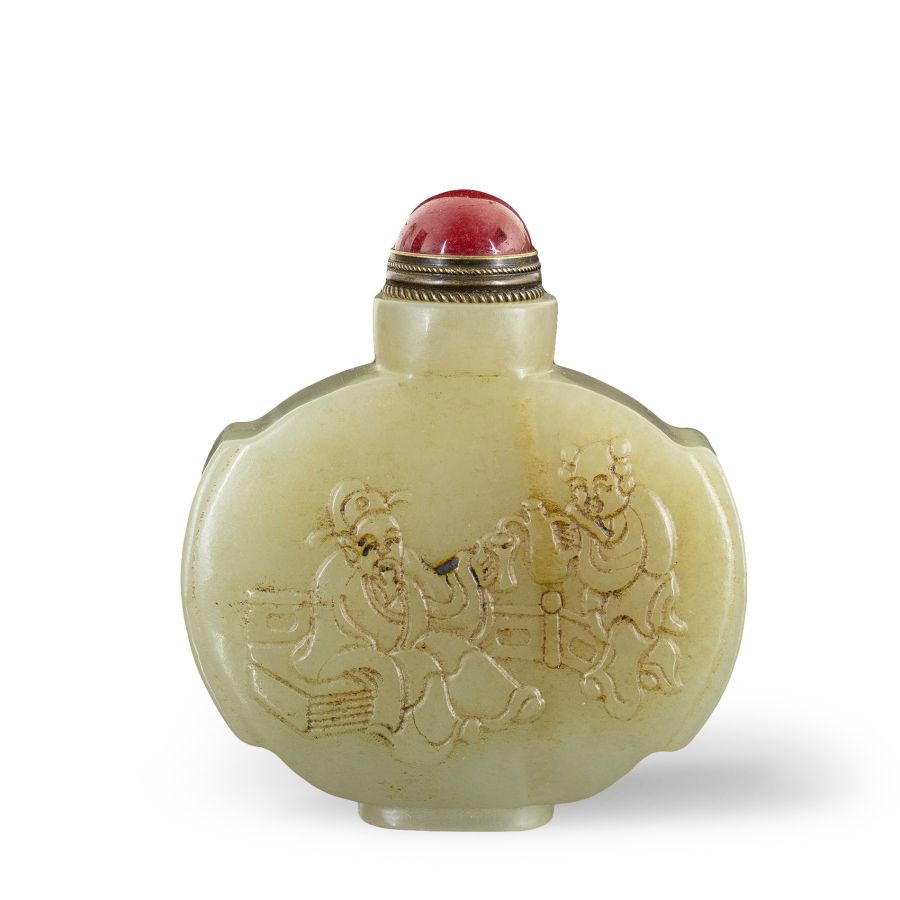
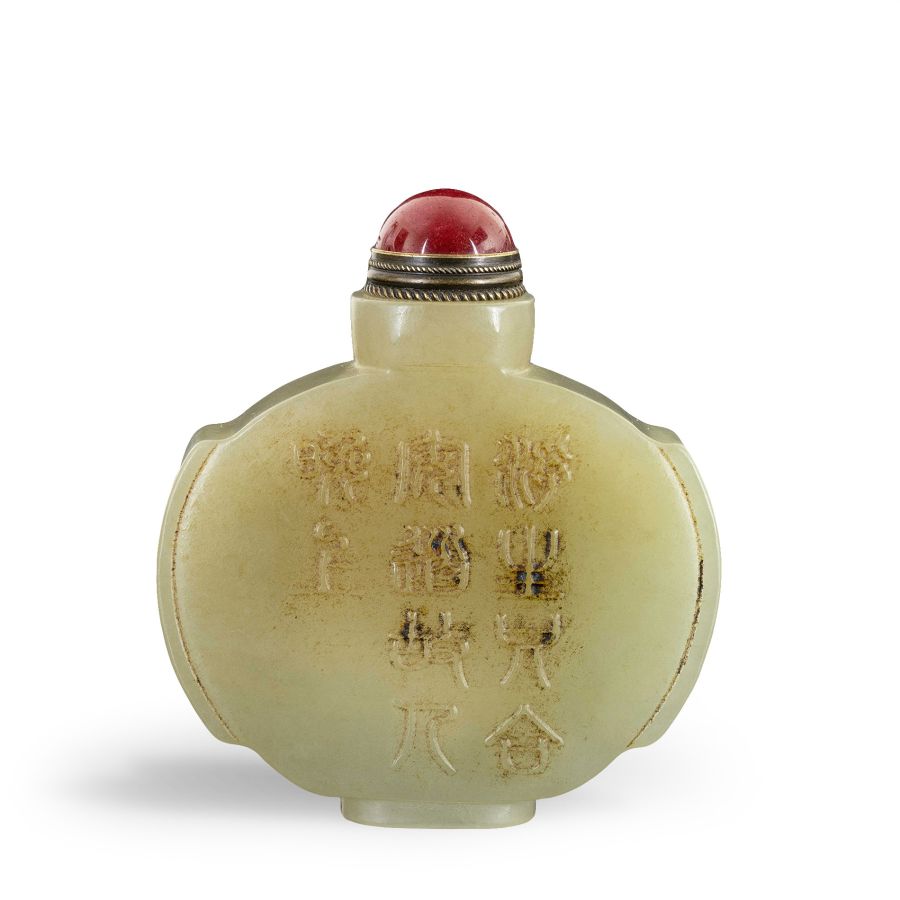
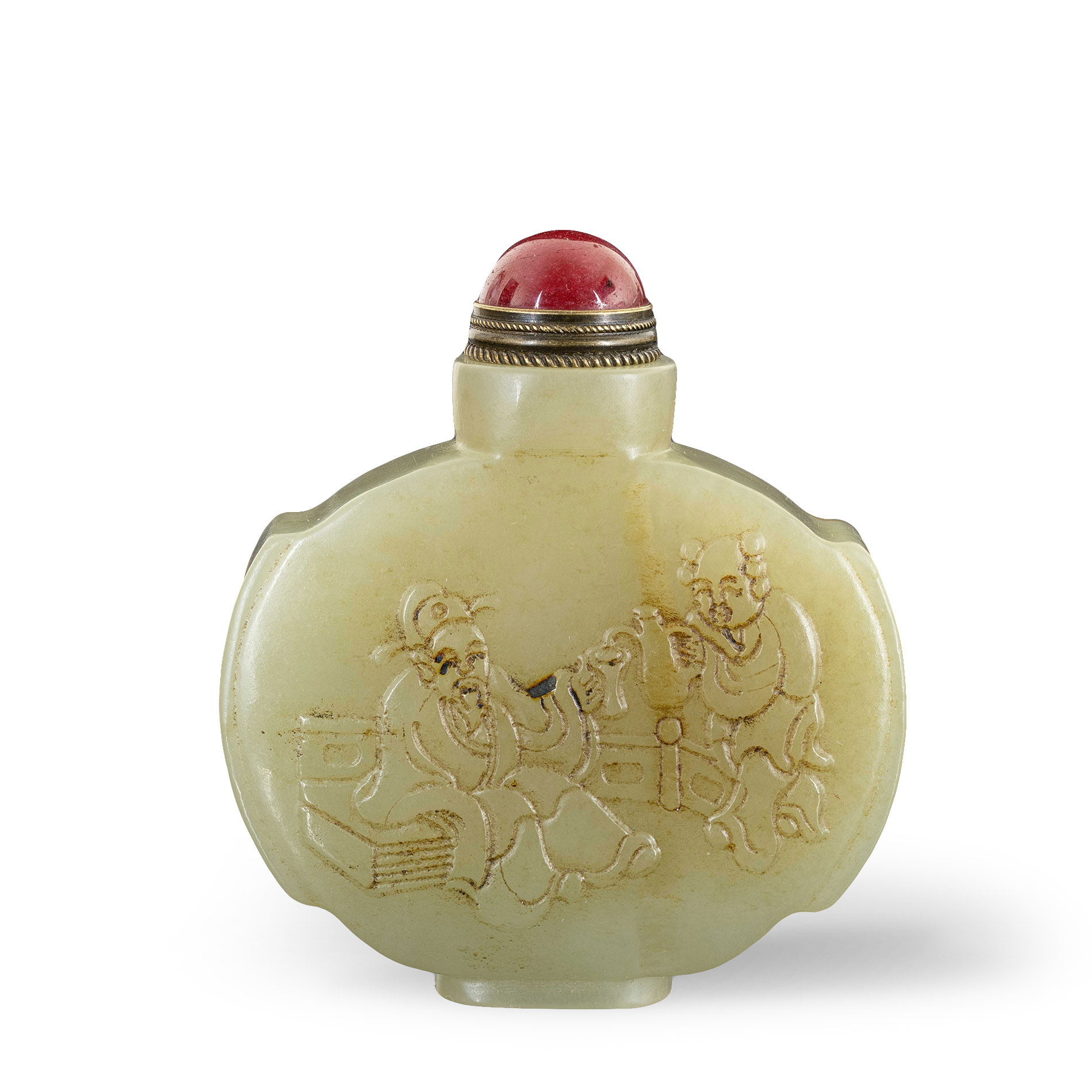
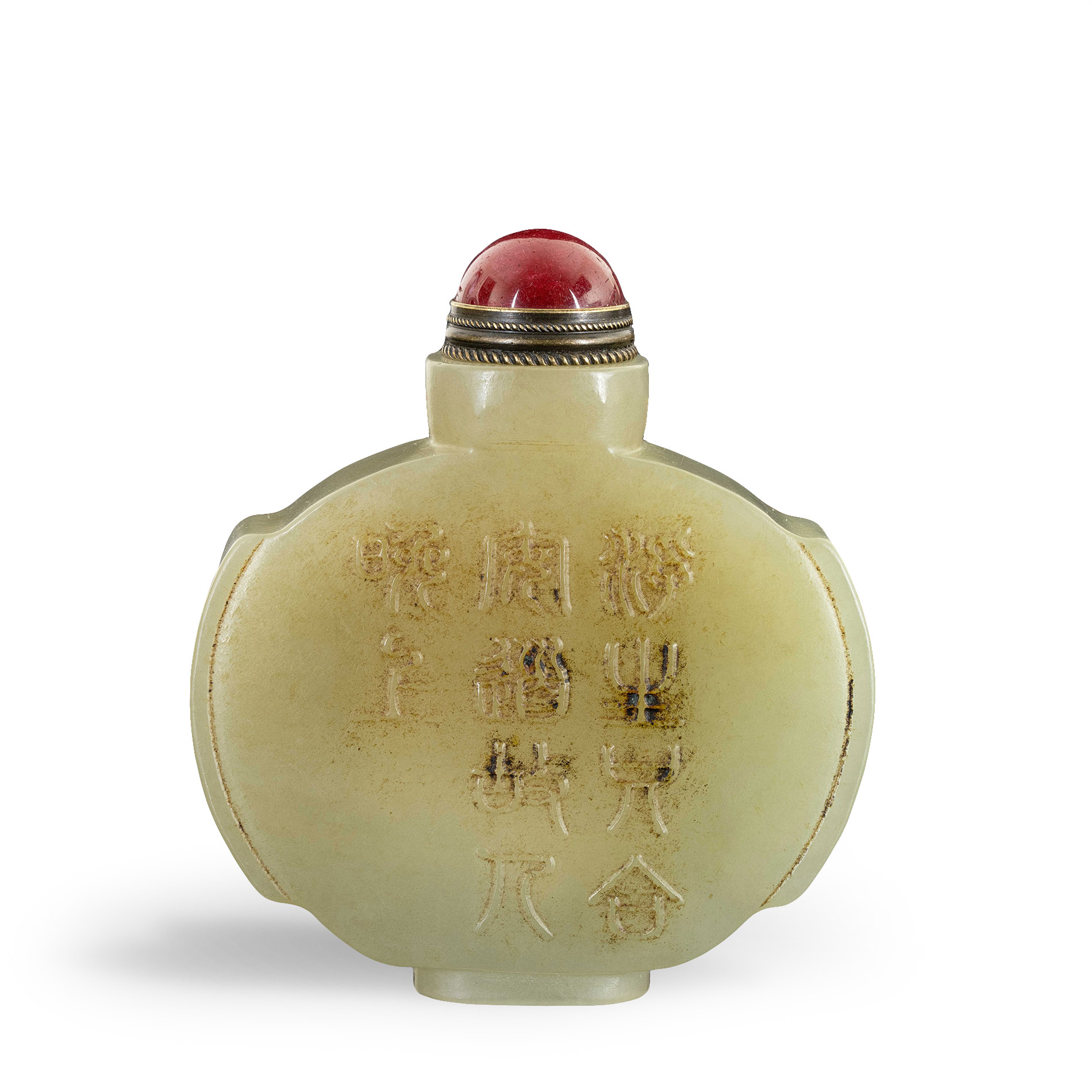
Chinese Jade Snuff Bottle
19TH CENTURY A.D.
2 3/8 in. (94.6 grams, 62 mm high).
Bearing a figural scene in relief of an attendant serving tea to a seated scholar to one face and characters to the other; polished stone cabochon in the stopper.
ProvenanceProperty of a lady, from her grandfather's collection, 1960s-1970s; thence by descent.
CONDITIONTimeLine Auctions follows a vetting process to ensure the authenticity and legality of all items, reinforcing our commitment to integrity and responsible trading. Each antiquity, antique, and coin lot undergoes thorough examination by a vetting committee of at least ten external specialists, professional trade association members, scientists, and archaeologists: Our Vetting Process
AUCTIONS:
TimeLine is a leading auction house specialising in antiquities, ancient art, collectables, natural history, coins, medals, and books. Our auctions offer museums, collectors, historians, and enthusiasts the opportunity to acquire unique and historically significant pieces.
LOT 2110
Chinese Jade Snuff Bottle
Estimate £250 - 350€290 - 410 (for guidance only)$340 - 470 (for guidance only)
-
Tibetan Cased Masculine Earring with Turquoise and Coral Inlays
Late 19th century A.D.Sold for (Inc. bp): £416
Composed of an articulate top plate suspending a substantial silver-bodied dangle with filigree ornament, each section studded with polished turquoise, coral bead between and blue coral(?) finial; held in a copper case with suspension loop. 81 grams, 15.5 cm
Acquired by private treaty from old US collection. Property of RWM Collection. -
Gilt Burmese Buddhist Kammavaca Manuscript Group
Konbaung Dynasty, 18th-19th century A.D.Sold for (Inc. bp): £520
Written in Pali in Burmese square script on gilded, lacquered and numbered palm leaves; each leaf is double-sided with the exception of one cover leaf which displays interlaced geometric panels populated with female figures, dragonesques and birds to one face; accompanied by an ornately decorated sword-shaped 'pointer', also gilded, possibly not belonging. 1.15 kg total, 29-56.5 cm
London collection since the 1980s. Property of a Canadian family.
Kammavaca is a Pali term describing an assemblage of passages from the Tipitaka (the Theravada Buddhist canon) relating to ordination, the bestowing of robes and other rituals of monastic life. The texts typically contain religious instructions for monks. The piercings in the leaves are functional; each leaf was placed over a skewer (likely bamboo) when read. -
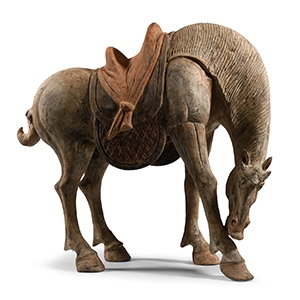
Chinese Tang Terracotta Horse Standing with Head Down
Tang Dynasty, 618-907 A.D.Sold for (Inc. bp): £2,925
With extended neck and head bent forward, mouth open to chew the grass, ears pinned back; saddle and saddle-rug modelled integrally; tail cropped and bound; salmon-pink pigment to the saddle. 13.35 kg, 61 cm wide
Ex West Country collection, Bath, 1990s. Accompanied by an original thermoluminescence analysis report no.CJ182522022 from Laboratory Kotalla. This lot has been checked against the Interpol Database of stolen works of art and is accompanied by search certificate number no.11913-207699.
