
Loading, please wait...
LOT 2471
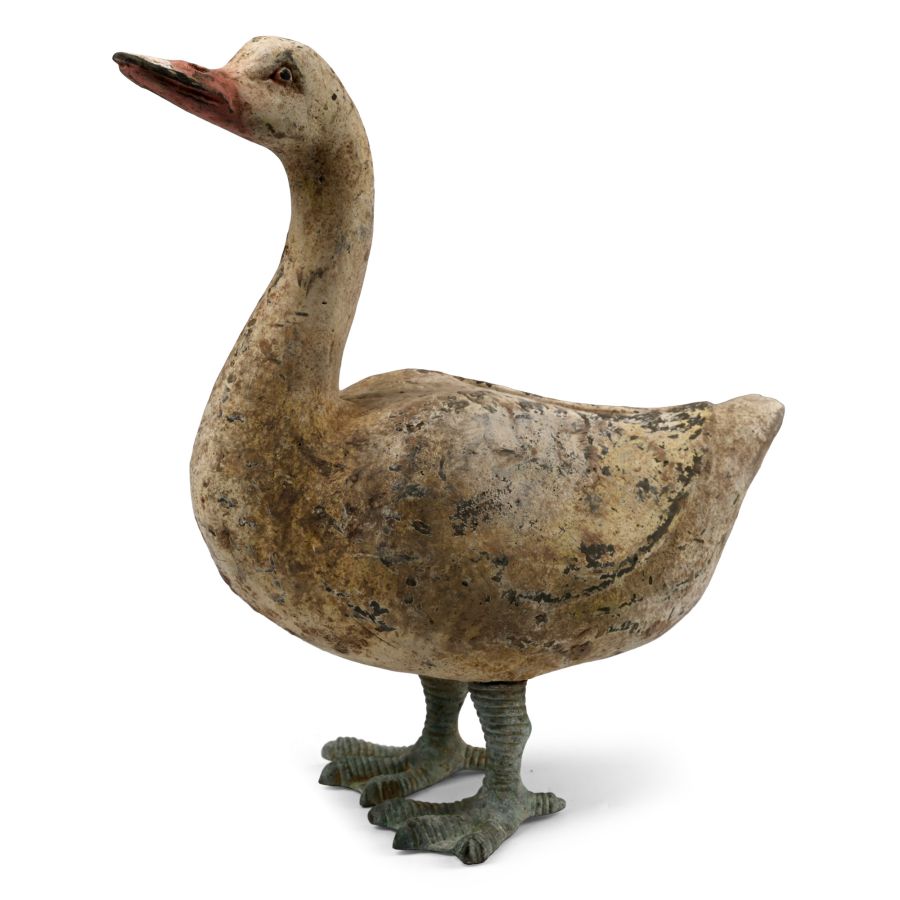
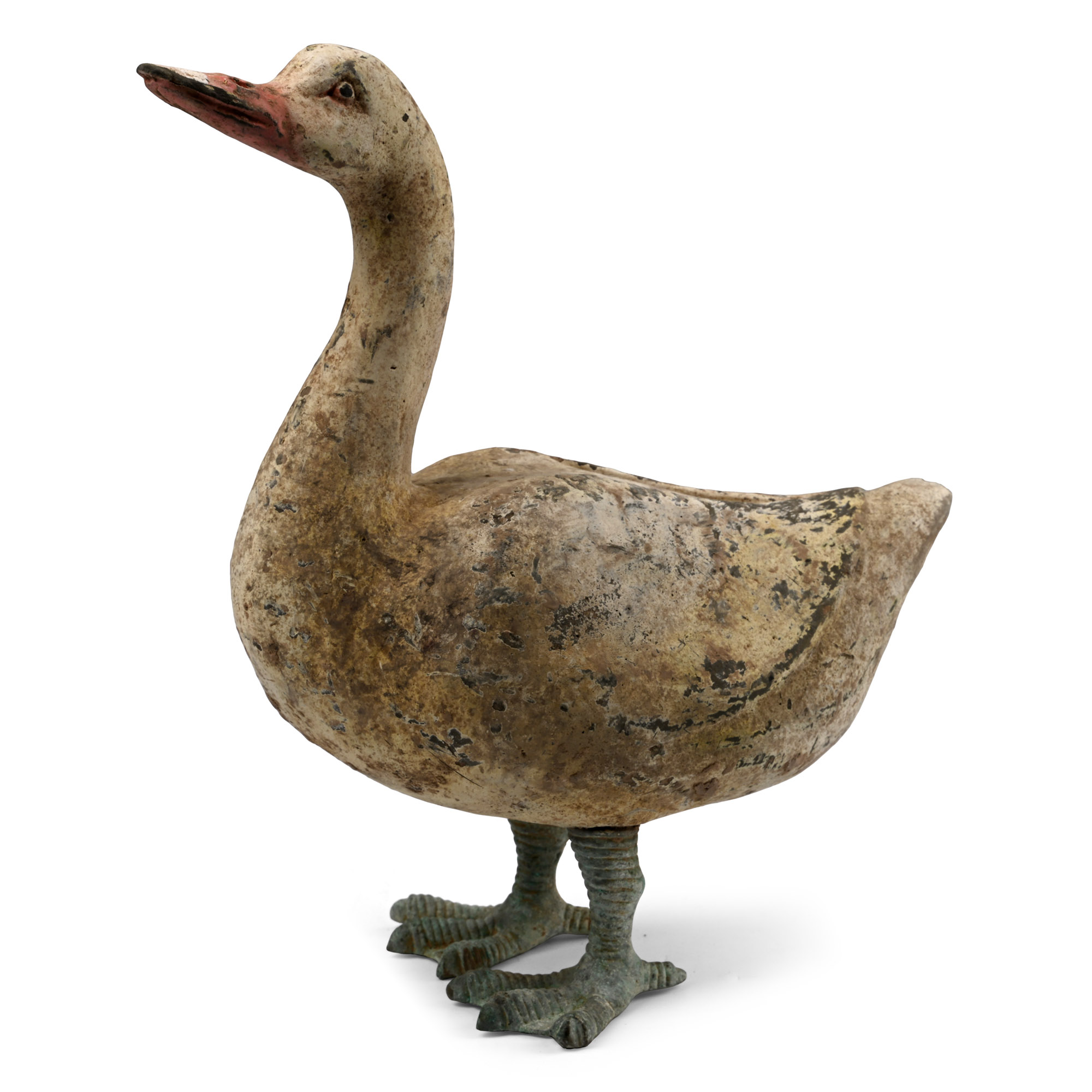
Chinese Han Terracotta Duck with Bronze Feet
HAN DYNASTY, 206 B.C.-220 A.D. OR LATER
9 5/8 in. (1.29 kg, 24.5 cm).
Modelled in the round with head erect, painted detailing; separate webbed feet.
ProvenancePreviously from a Hong Kong collection.
Ex property of a London, UK, gentleman.
This lot is accompanied by an illustrated lot declaration signed by the Head of the Antiquities Department, Dr Raffaele D'Amato.
TimeLine Auctions follows a vetting process to ensure the authenticity and legality of all items, reinforcing our commitment to integrity and responsible trading. Each antiquity, antique, and coin lot undergoes thorough examination by a vetting committee of at least ten external specialists, professional trade association members, scientists, and archaeologists: Our Vetting Process
AUCTIONS:
TimeLine is a leading auction house specialising in antiquities, ancient art, collectables, natural history, coins, medals, and books. Our auctions offer museums, collectors, historians, and enthusiasts the opportunity to acquire unique and historically significant pieces.
-
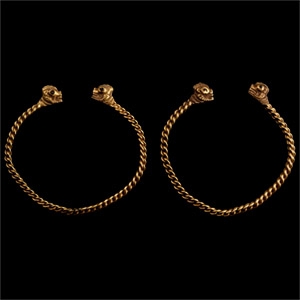
Northern Thai Gold Dragon-Headed Bracelets with Rubies and Sapphires
18th century A.D.Sold for (Inc. bp): £7,800
A matched pair of penannular bracelets, each formed in tightly-bound plaited gold wire with terminals formed as the crested heads of makara, their eyes set with rubies; mounted in a lined presentation case. 24.18 grams total, 64-65mm
Habsburg, Feldman, GOLD, Important Ancient and Ethnic Jewellery and Works of Art in Precious Metal, Hotel des Bergues, Geneva, 14 May 1990, no.105, 111. Acquired by the current owner from the above sale. This lot has been checked against the Interpol Database of stolen works of art and is accompanied by search certificate number no.12800-241416. This lot has been cleared against the Art Loss Register database, and is accompanied by an illustrated lot declaration signed by the Head of the Antiquities Department, Dr Raffaele D'Amato.
Gold jewellery in northern Thailand holds both aesthetic and cultural significance, deeply rooted in regional identity, status, and spiritual belief. Traditionally crafted by skilled artisans, such pieces were not only symbols of wealth and social standing but also believed to offer protection and merit. In Lanna culture (the historic kingdom of northern Thailand), gold was closely associated with religious offerings, marriage rituals, and rites of passage, often passed down through generations as cherished heirlooms. The intricate designs—frequently featuring floral and mythical motifs—reflect both indigenous styles and broader Southeast Asian influences, underscoring gold’s enduring role in both personal adornment and communal heritage. -
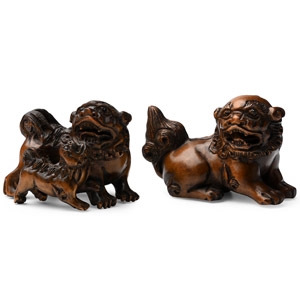
Japanese Carved Wooden Foo Dog Pair
19th-20th century A.D.Sold for (Inc. bp): £59
Each carved in the round as a stylised lion with lace-holes for attachment. 37.26 grams total, 42-55 mm
From the private collection of a Kent, UK, gentleman. This lot is accompanied by an illustrated lot declaration signed by the Head of the Antiquities Department, Dr Raffaele D'Amato. -
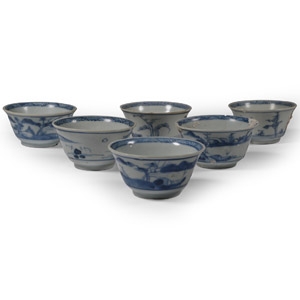
Ca Mau Cargo Shipwreck Glazed Blue and White Tea Cup Set with Fisherman Scenes
Early 18th century A.D.Sold for (Inc. bp): £338
Comprising six deep cups with internal decorative border and central floral motif, the outer face with a lakeside scenery showing a man fishing from a rock. 230 grams total, 64-69 mm
Ex Sotheby's, Amsterdam, 29-31 January 2007. Accompanied by an illustrated information sheet about the Ca Mau shipwreck. This lot is accompanied by an illustrated lot declaration signed by the Head of the Antiquities Department, Dr Raffaele D'Amato.
The Ca Mau shipwreck refers to a cargo of Chinese porcelain sunk between 1723 and 1735 off the coast of Vietnam. The wreck was discovered by Vietnamese fishermen in 1998. It is believed the wreck was a merchant’s junk on its way from Canton (Guangzhou) to Batavia when it caught fire and sank. The ship was carrying goods destined for Dutch traders who had limited access to China and its ports.
