
Loading, please wait...
LOT 1583
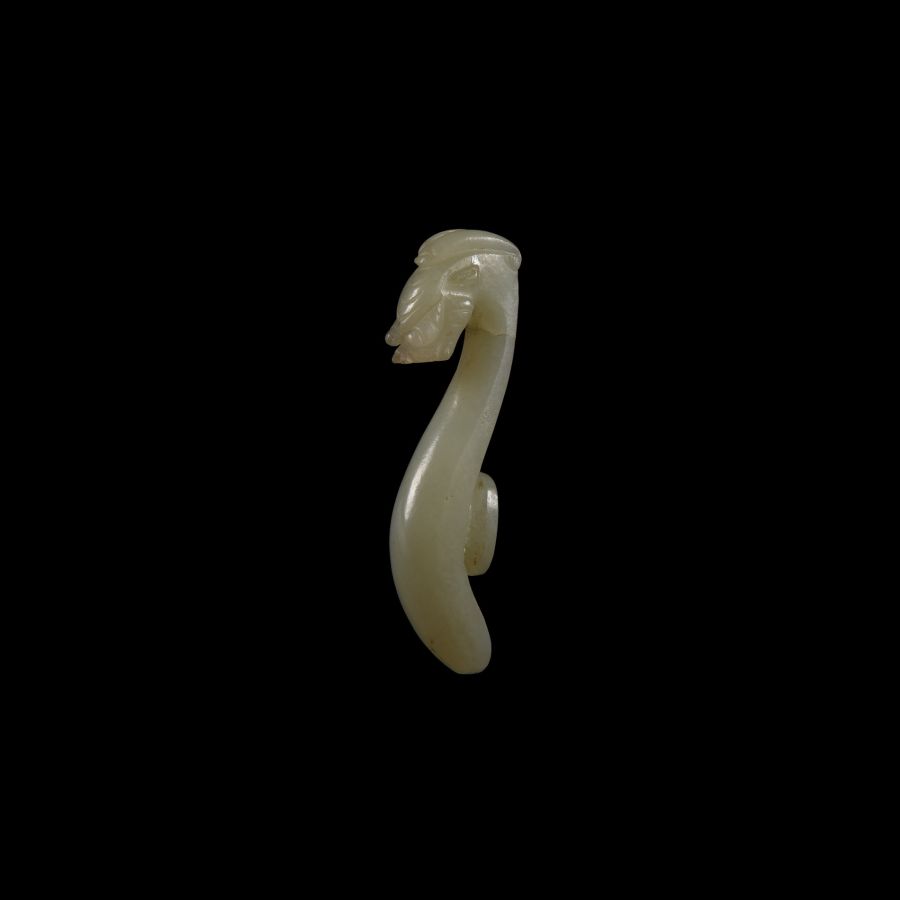
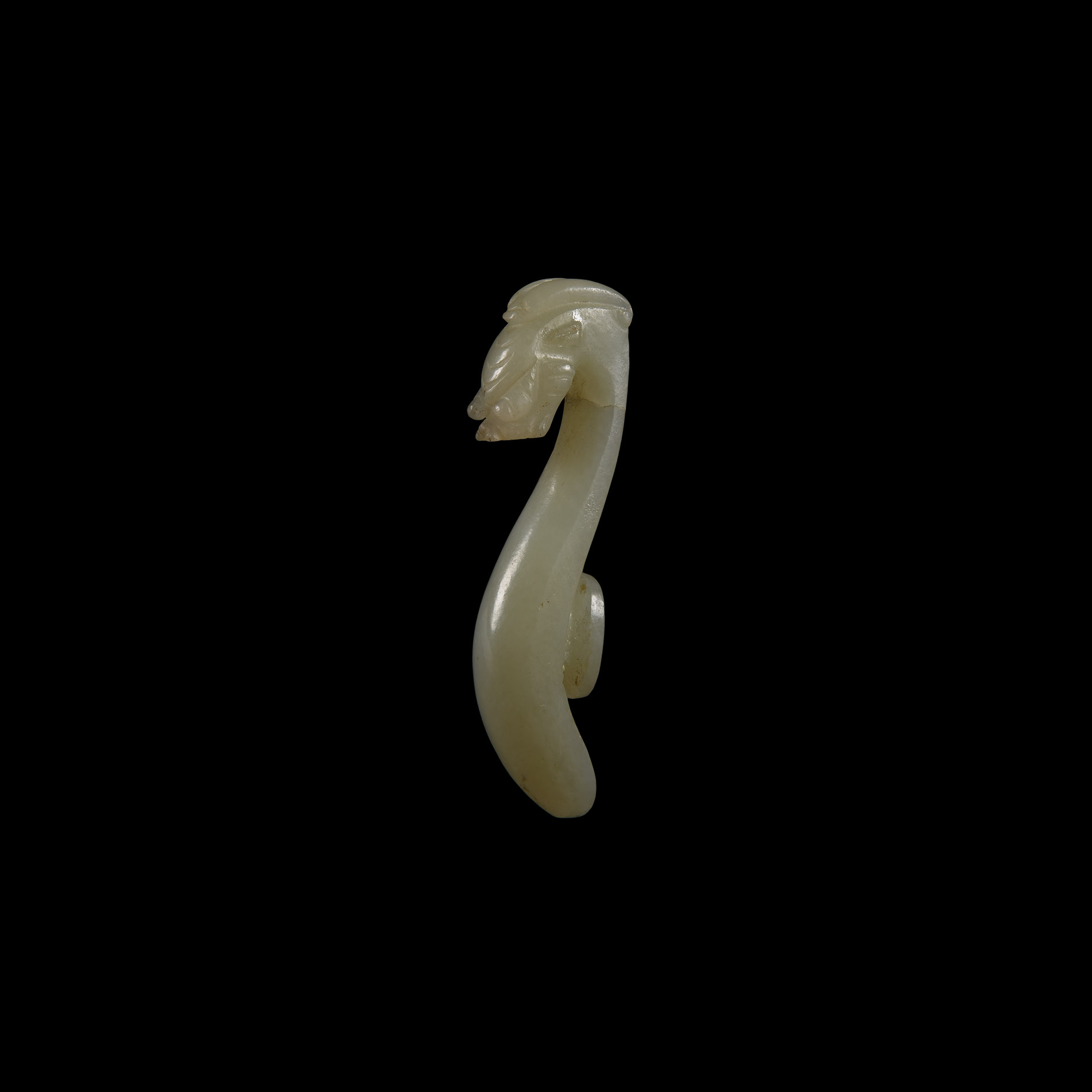
Chinese Han Style Garment Fastener
19TH-20TH CENTURY A.D.
3 in. (32.3 grams, 78 mm).
A jade dragonesque garment fastener with a roughly S-shaped profile, one terminal carved as a dragon's head with bulging eyes and snub nose; oval lug to reverse; repaired.
ProvenanceAcquired 1990s.
Ex French collection.
TimeLine Auctions follows a vetting process to ensure the authenticity and legality of all items, reinforcing our commitment to integrity and responsible trading. Each antiquity, antique, and coin lot undergoes thorough examination by a vetting committee of at least ten external specialists, professional trade association members, scientists, and archaeologists: Our Vetting Process
AUCTIONS:
TimeLine is a leading auction house specialising in antiquities, ancient art, collectables, natural history, coins, medals, and books. Our auctions offer museums, collectors, historians, and enthusiasts the opportunity to acquire unique and historically significant pieces.
LOT 1583
Chinese Han Style Garment Fastener
Estimate £200 - 300€230 - 350 (for guidance only)$270 - 410 (for guidance only)
-
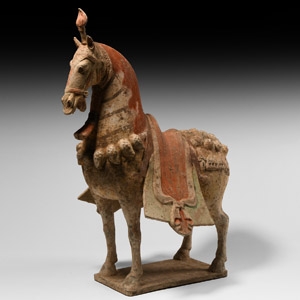
Chinese Northern Qi Caparisoned Horse
Northern Qi Dynasty, 550-577 A.D.Estimate: £3,000 - 4,000 (+bp*)
Opening Bid: £1,600
A large ceramic figurine of a horse with head raised, mouth open and ears pricked, integrally modelled saddle, caparison, bridle and plume; tail absent. 2.85 kg, 39 cm high
Tail absent.
Acquired 1980s-1990s. Ex West Country collection. Accompanied by an original thermoluminescence analysis report no.C122g65 from Oxford Authentication. This lot has been checked against the Interpol Database of stolen works of art and is accompanied by search certificate number no.11701-199226. -
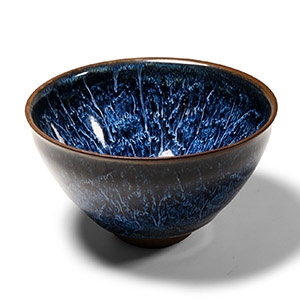
Chinese Blue-Glazed Tea Bowl
20th century A.D.Sold for (Inc. bp): £20
A blue-glazed conical bowl with foot. 366 grams, 13.2 cm wide
Acquired in 2019. Property of a London gentleman. -
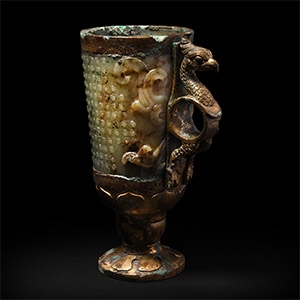
Chinese Han Gilded Bronze and Jade Beaker
Han Dynasty, 206 B.C-220 A.D.Sold for (Inc. bp): £23,400
A gilt bronze and Khotain moonstone quality jade beaker composed of a slender U-shaped body, bulbous stem and discoid foot, the applied handle formed as the head, neck and legs of a mythical bird, likely a fenghuang, with detailing to the creature's feathers, face, beak and limbs, body formed as the handle loop, wings carved in relief in the jade; the jade vessel body carved in relief with neat rows of volute scrolls, stylised petals in relief around the lower body and foot; some restoration. 709 grams, 14.5 cm high
Acquired from Dandelion Fine Arts, Hollywood Road, Hong Kong, 1970s. Ex Prof. David Anderson collection. UK private collection, circa 2010. Accompanied by a copy of metallurgic analytical results, written by Metallurgist Dr Peter Northover (ex Department of Materials, Materials Science-Based Archaeology Group & Department of Materials, University of Oxford). This lot has been checked against the Interpol Database of stolen works of art and is accompanied by search certificate number no.11707-198358.
Khotain jade was available between the years 69 B.C. and 101 A.D. as a result of a military treaty. It was sourced from the White Jade River. This object is believed to be produced for a notable client. The object's original patina, prior to restoration, suggested that the vessel was part of a ritual which involved exposure to intense heat.
