
Loading, please wait...
LOT 1535
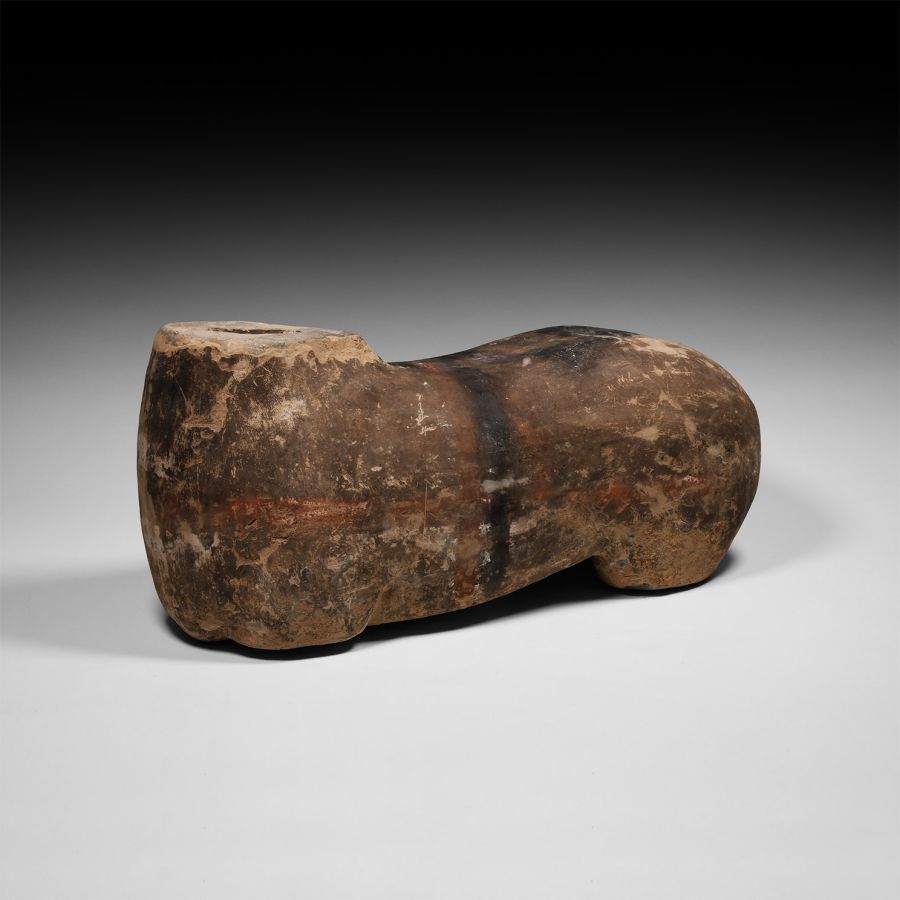
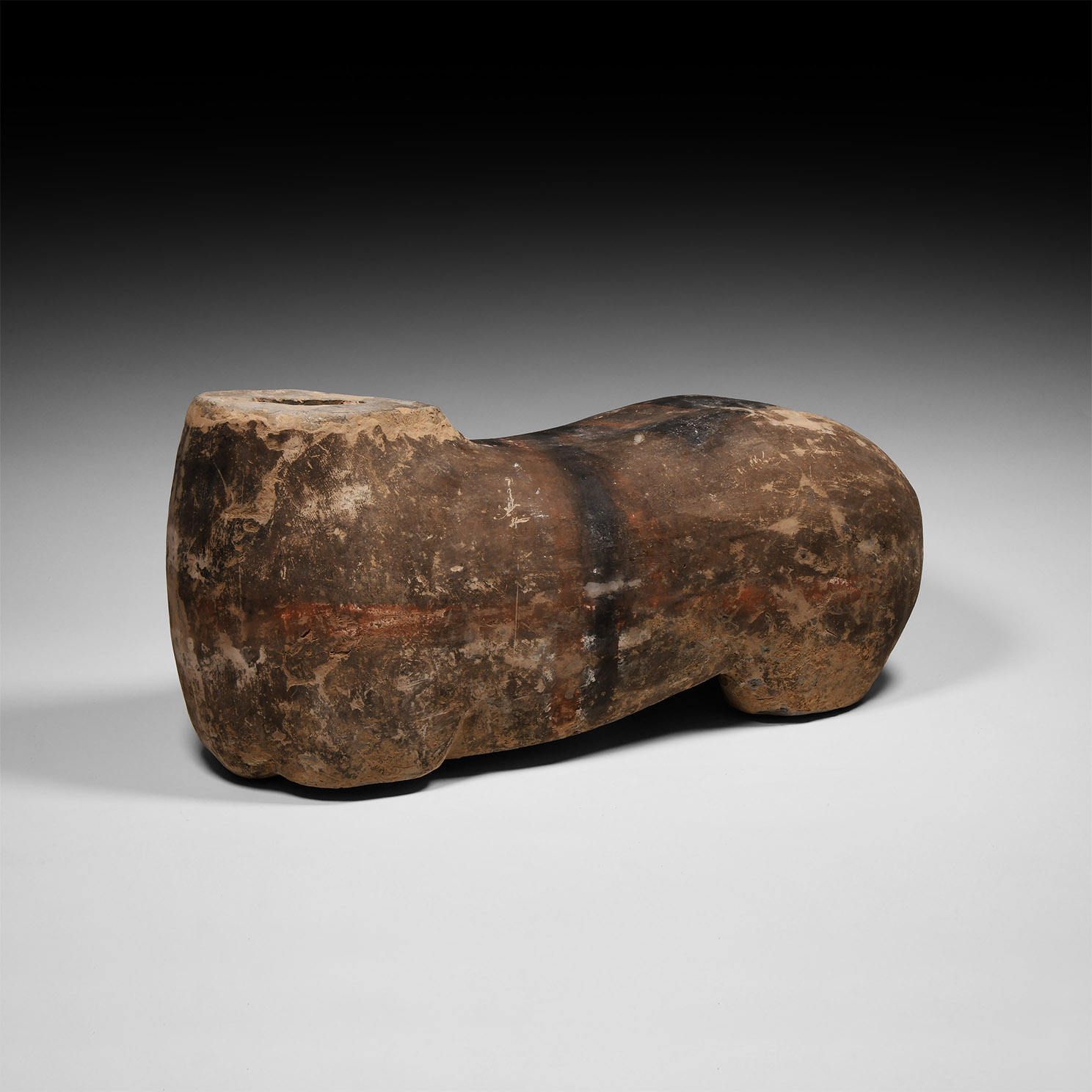
Chinese Han Horse Torso
HAN DYNASTY, 206 B.C.-220 A.D.
18 1/8 in. (3.85 kg, 46 cm).
A terracotta horse torso with socket to neck and underside of legs to accept other body parts, remains of pigmentation delineating harness straps.
ProvenanceAcquired 1960s-1990s.
Late Alison Barker collection, a retired London barrister.
TimeLine Auctions follows a vetting process to ensure the authenticity and legality of all items, reinforcing our commitment to integrity and responsible trading. Each antiquity, antique, and coin lot undergoes thorough examination by a vetting committee of at least ten external specialists, professional trade association members, scientists, and archaeologists: Our Vetting Process
AUCTIONS:
TimeLine is a leading auction house specialising in antiquities, ancient art, collectables, natural history, coins, medals, and books. Our auctions offer museums, collectors, historians, and enthusiasts the opportunity to acquire unique and historically significant pieces.
LOT 1535
Chinese Han Horse Torso
Estimate £200 - 300€230 - 350 (for guidance only)$270 - 410 (for guidance only)
-
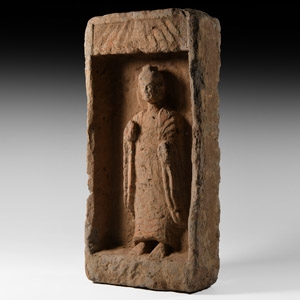
Chinese Wei Buddha Brick
Wei Dynasty, 534-550 A.D.Sold for (Inc. bp): £260
A rectangular ceramic brick displaying Buddha in an ankle-length robe beneath a canopy, in raised relief within a rectangular niche, his hands held in the varada mudra of charity and compassion. 3.7 kg, 34 x 16 cm
Acquired 1970-1990s. Ex Hong Kong collection. From a private West Country collection. -
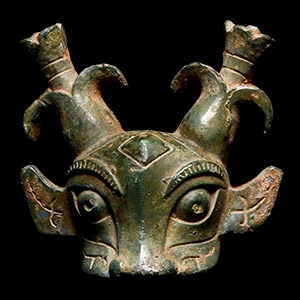
Chinese Han Style Bronze Animal Finial
19th century A.D. or earlierEstimate: £250 - 350 (+bp*)
Opening Bid: £125
A bronze finial or mount in the form of the head of a fantastical creature, with bovine-like ears and eyes, bifurcated horns with erupting flowers, a lozenge in relief to its forehead and detailing to eyebrows and upper lip; hollow reverse with tapering rectangular lug. 90 grams, 60 mm high
Fine condition.
Acquired 1980-1990s. From a West Country collection. -
.jpg)
Chinese Han Dynasty Wooden Decorated Jar
Han Dynasty, 206 B.C.-220 A.D. or earlierEstimate: £4,000 - 6,000 (+bp*)
Opening Bid: £1,400
A rare wooden jar with lid (fanghu) adorned with bestial handles and four dragonesque feet, polychrome lacquered detailing to the zoomorphic figures and over the body, depicting mythic bird creatures, geometric and floral motifs, repeated on the interior and exterior of the lid; fragmentary. 2.5 kg, 47 cm high
Ex Hong Kong collection. London Mayfair gallery, UK. This lot has been checked against the Interpol Database of stolen works of art and is accompanied by search certificate number no.11705-199212.
