
Loading, please wait...
LOT 2157
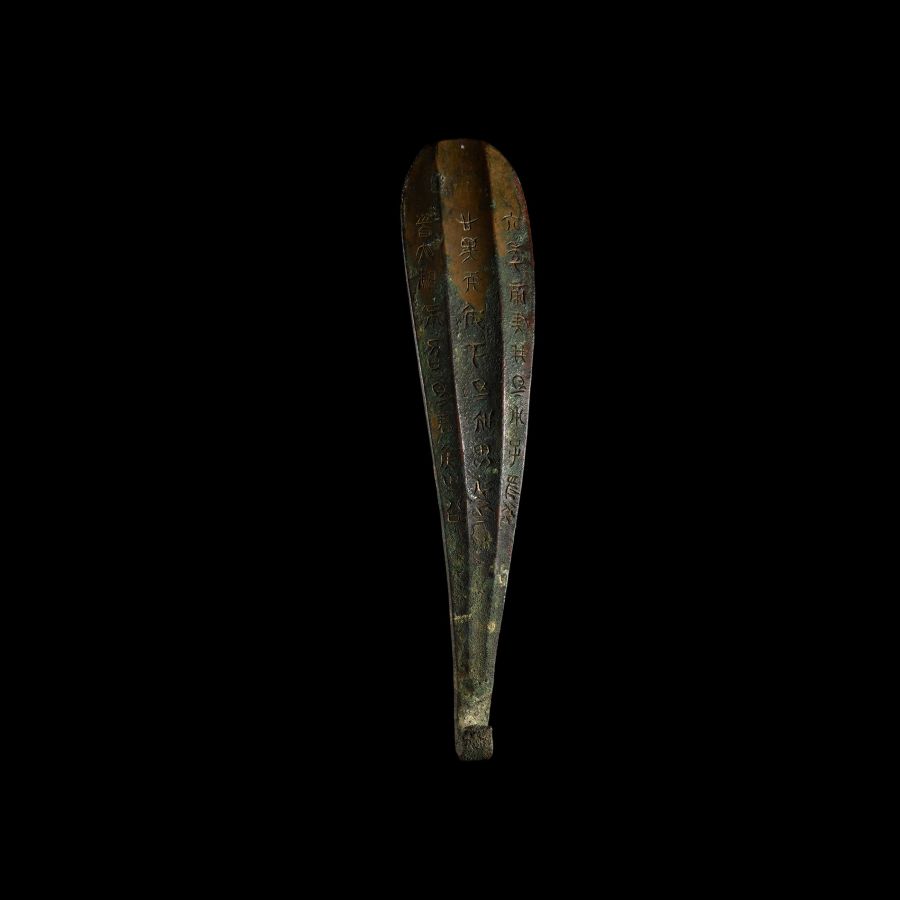
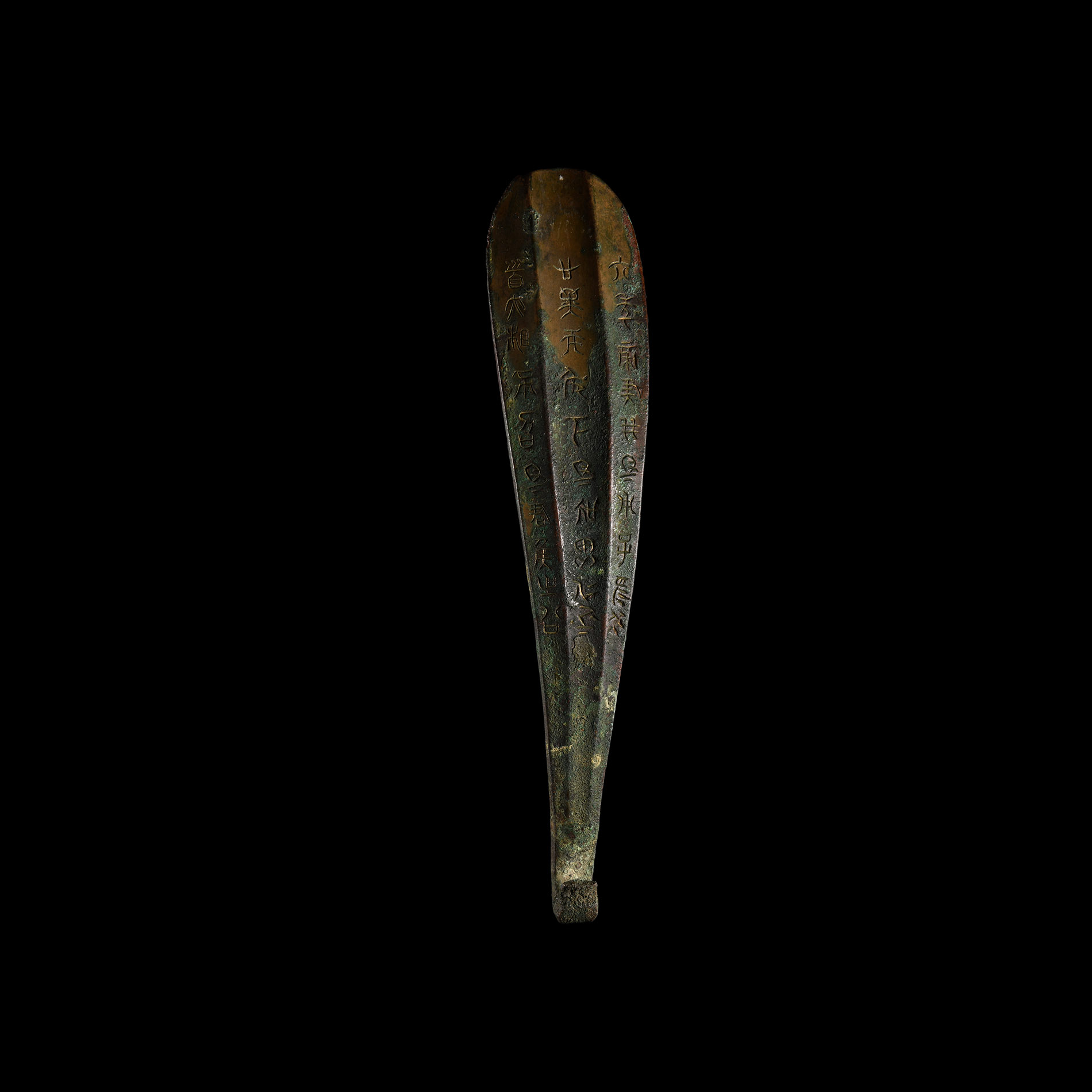
Chinese Han Dynasty Bronze Belt Hook with Inscription
HAN DYNASTY, 206 B.C.-220 A.D. OR LATER
7 1/8 in. (111 grams, 18 cm).
Fluted teardrop shape with hooked narrow end, fixing stud to the reverse, three columns of later stamped text to the face.
ProvenanceFrom an important West Country collection, 1980s.
LiteratureCf. similar in the collection of the British Museum under accession no.1950,1117.138.
CONDITIONTimeLine Auctions follows a vetting process to ensure the authenticity and legality of all items, reinforcing our commitment to integrity and responsible trading. Each antiquity, antique, and coin lot undergoes thorough examination by a vetting committee of at least ten external specialists, professional trade association members, scientists, and archaeologists: Our Vetting Process
AUCTIONS:
TimeLine is a leading auction house specialising in antiquities, ancient art, collectables, natural history, coins, medals, and books. Our auctions offer museums, collectors, historians, and enthusiasts the opportunity to acquire unique and historically significant pieces.
LOT 2157
Chinese Han Dynasty Bronze Belt Hook with Inscription
Estimate £700 - 900€810 - 1,040 (for guidance only)$950 - 1,220 (for guidance only)
-
South East Asian Large Gold Repousse Fruit-Shaped Earrings
Circa 17th-18th century A.D.Estimate: £700 - 900 (+bp*)
Opening Bid: £350
Each with a substantial hook, gold rosette appliqué with filigree detailing, granulated piriform bulb. 35 grams total, 93-95 mm
From the private collection of the late Mr S.M., London, UK, 1969-1999; thence by descent. -
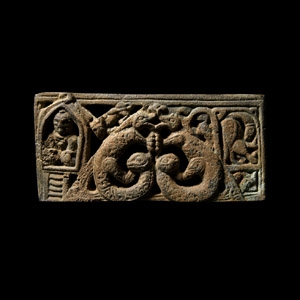
Chinese Ordos Style Bronze Decorative Plaque with Buddha and Beasts
20th century A.D.Sold for (Inc. bp): £286
Displaying two central grappling beasts and a Buddha figure within an arched niche, birds in the field. 503 grams, 17.5 cm
Fair condition.
Acquired on the European art market circa 2000. Private British collection, London, UK, early 2000's. -
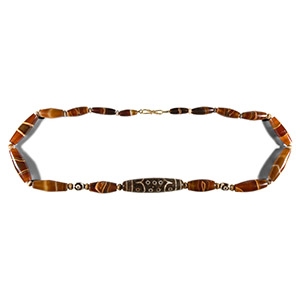
Tibetan Banded Agate Bead Necklace with Glass Eye Beads
20th century A.D.Sold for (Inc. bp): £416
Composed of graduated banded agate beads interspersed with spacer beads of different types, including agate spheres, sheet-metal bulbs embossed with floral motifs and glass eye beads; large central agate pendant bead inlayed with multiple eye motifs; hook-and-eye clasp. 318 grams, 90 cm long
London collection since the 1980s. Property of a Canadian family.
