
Loading, please wait...
LOT 1632
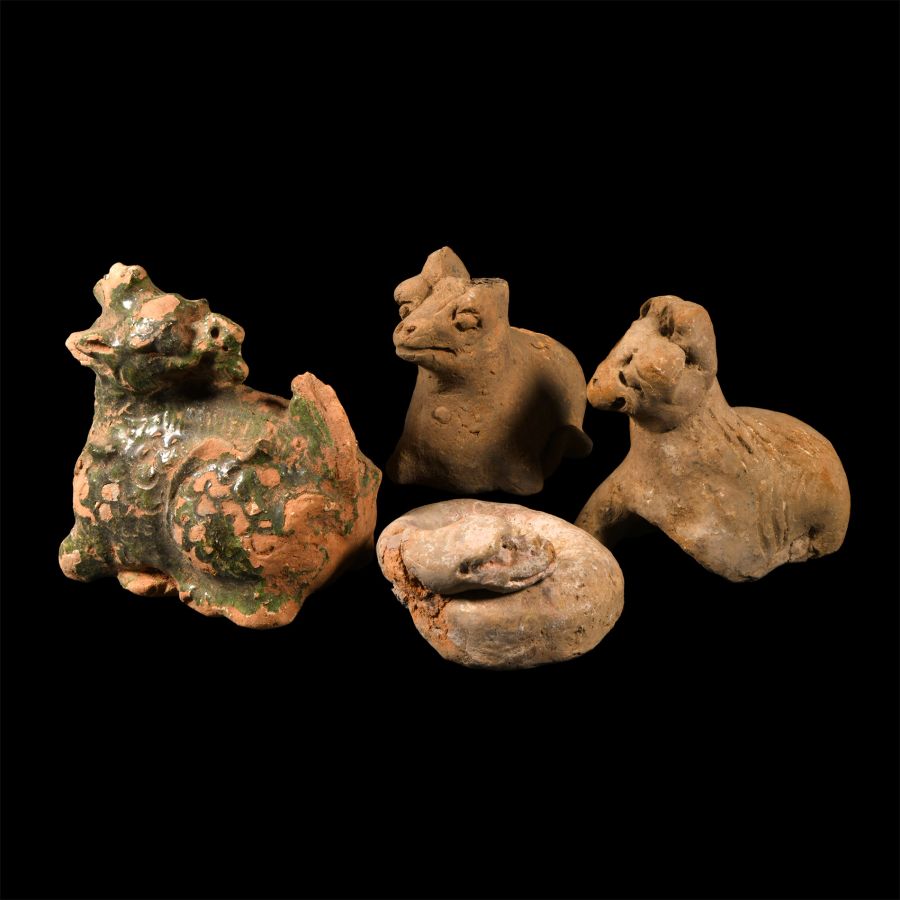
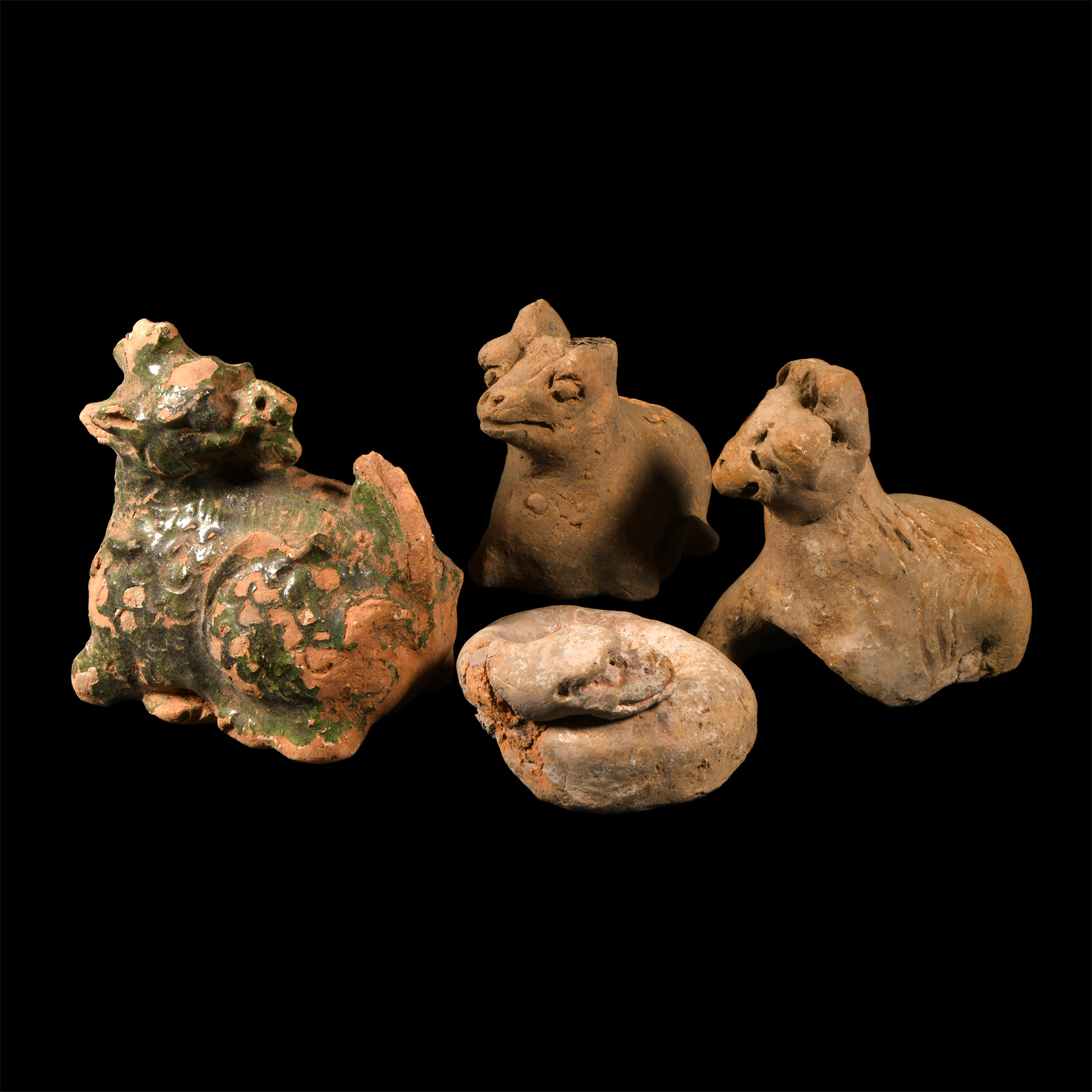
Chinese Han Ceramic Animal Figure Group
HAN DYNASTY, 206 B.C.-220 A.D. OR LATER
3 1/2 - 3 3/4 in. (950 grams total, 9-12 cm).
Including a mythical beast, a serpent and cattle animals modelled couchant; some remains of glazing. [4]
ProvenanceAcquired 1990s-early 2000s.
East Anglian private collection.
TimeLine Auctions follows a vetting process to ensure the authenticity and legality of all items, reinforcing our commitment to integrity and responsible trading. Each antiquity, antique, and coin lot undergoes thorough examination by a vetting committee of at least ten external specialists, professional trade association members, scientists, and archaeologists: Our Vetting Process
AUCTIONS:
TimeLine is a leading auction house specialising in antiquities, ancient art, collectables, natural history, coins, medals, and books. Our auctions offer museums, collectors, historians, and enthusiasts the opportunity to acquire unique and historically significant pieces.
-
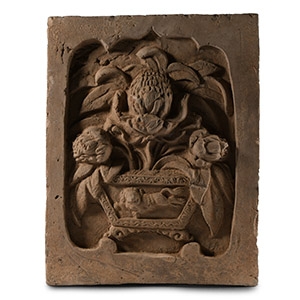
Chinese Song Temple Tile with Chrysanthemums
Song Dynasty, circa 960-1279 A.D.Sold for (Inc. bp): £104
Rectangular with ornate recess, high-relief image of a group of chrysanthemums and foliage in a trapezoidal container with splayed legs and running hound motif to the front. 4.35 kg, 33.5 x 26.5 cm
Ex West Country collection, UK, 1970-1990s. -
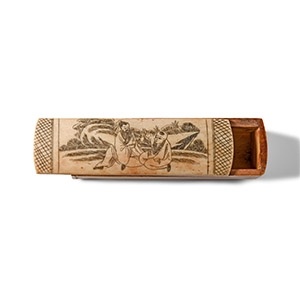
Chinese Carved Bone Snuff Box
19th-early 20th century A.D.Sold for (Inc. bp): £13
Comprising a rectangular box with sliding lid engraved with a tea drinking scene; both men seated on the ground and the younger man pouring tea to the older man holding a cup in his right hand. 83 grams, 98 mm
London, UK gallery, 1971-early 2000s. -
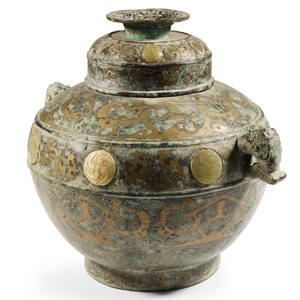
Chinese Inlaid Bronze Vessel
20th century A.D. or earlierSold for (Inc. bp): £442
Of lei form with narrow mouth, band to the equator with loop handles, lid with openwork disc handle; applied bowenite plaques to the median band, each with running-scroll detailing; kuilong inlaid ornament to the shoulder and body, flared base. 4.35 kg, 29 cm high
Ex Paris collection. French gallery, Paris, 1990-2000s.
