
Loading, please wait...
LOT 2142
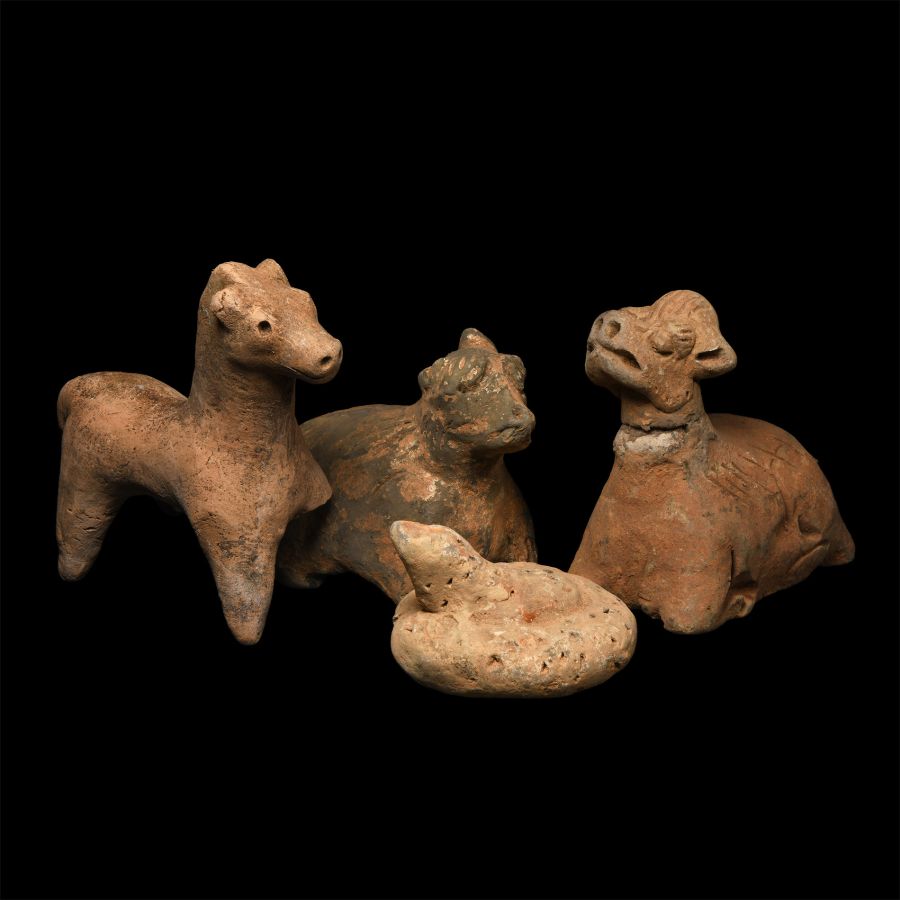
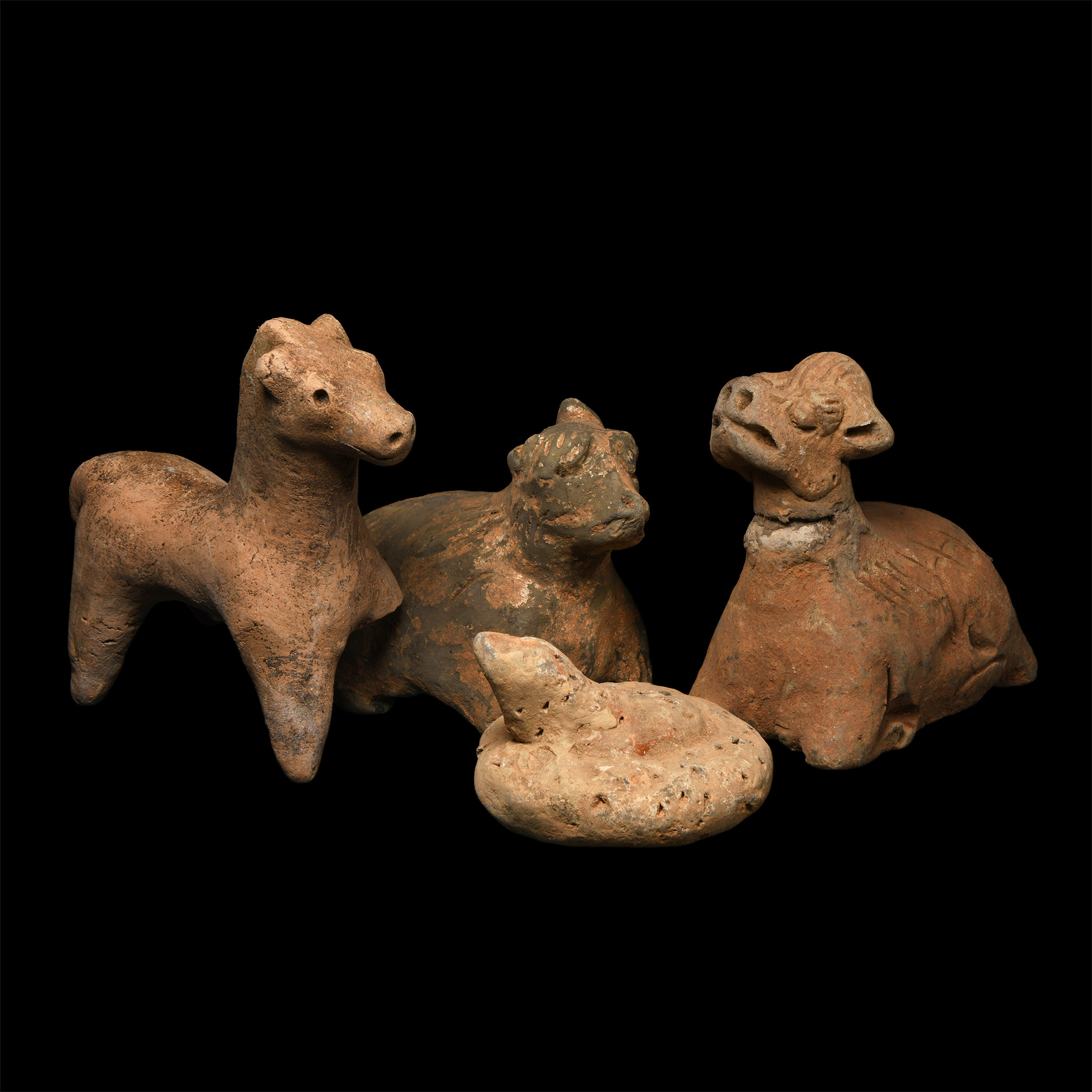
Chinese Han Ceramic Animal Figure Group
HAN DYNASTY, 206 B.C.-220 A.D. OR LATER
3 1/4 - 4 1/4 in. (750 grams total, 7-11 cm).
Including a horse, coiled snake and cattle animal, all with stylised anatomical detailing. [4]
ProvenanceAcquired 1990s-early 2000s.
East Anglian private collection.
Cf. similar ceramic figure group in the Metropolitan Museum of Art, 1st-3rd century AD, inventory no.1994.605.21.
FootnotesThe popularisation of these models of daily life called mingqi over the course of the Han Dynasty (206 B.C.-220 A.D.) reflects dramatic changes in Chinese society. They are an exemplification of how power circulated beyond the imperial government and nobility to a broader bureaucratic classes, that looked for gratification for themselves and their families in the afterlife with clay, fashioned into models ranging from crude earthenware to fine glazed stoneware.
CONDITIONTimeLine Auctions follows a vetting process to ensure the authenticity and legality of all items, reinforcing our commitment to integrity and responsible trading. Each antiquity, antique, and coin lot undergoes thorough examination by a vetting committee of at least ten external specialists, professional trade association members, scientists, and archaeologists: Our Vetting Process
AUCTIONS:
TimeLine is a leading auction house specialising in antiquities, ancient art, collectables, natural history, coins, medals, and books. Our auctions offer museums, collectors, historians, and enthusiasts the opportunity to acquire unique and historically significant pieces.
-
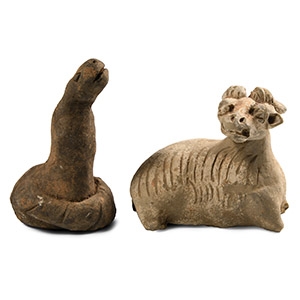
Chinese Terracotta Zodiac Animal Group
Yuan Dynasty, 1279-1368 A.D. or laterSold for (Inc. bp): £20
Comprising a cow modelled reclining with stylised detailing, together with a coiled snake. 398 grams total, 10-11 cm
Acquired 1980s-1990s. From the H.N. collection, Milton Keynes, Bedfordshire, UK. -
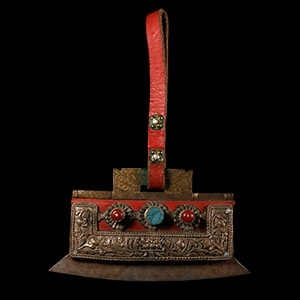
Large Tibetan Fire Steel with Pouch and Flints
Mid 20th century A.D.Sold for (Inc. bp): £33
The ornate body with elaborate foliate motifs, three with central cells set with polished stones; red leather strap. 447 grams, 26.5 cm
Acquired in Germany. Property of RWM Collection. -
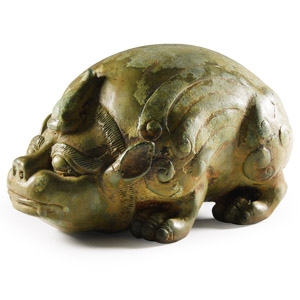
Chinese Han Style Bronze Animal
20th century A.D.Estimate: £200 - 300 (+bp*)
Opening Bid: £100
Formed as a crouching quadruped with stubby legs, large head with long pointed ears, prominent eyebrows and almond-shaped eyes, wide open mouth with fangs; hollow-formed. 569 grams, 12.1 cm
From a Cotswold, UK, collection, 1980-1990s.
