
Loading, please wait...
LOT 1594
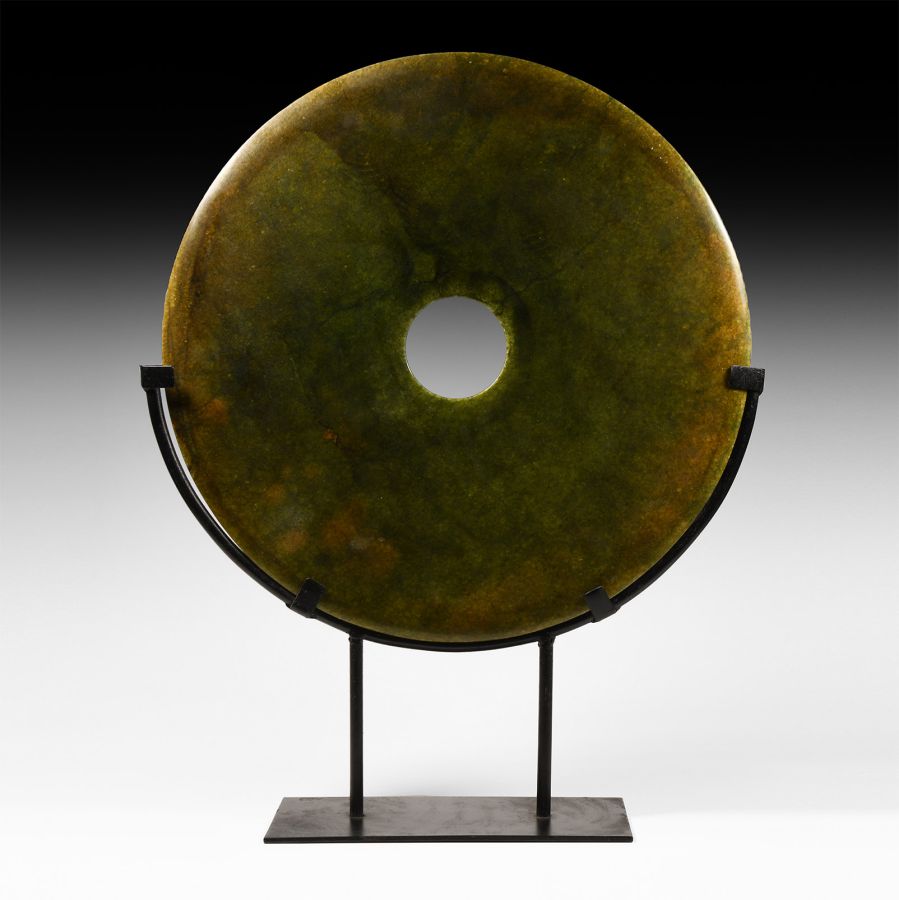
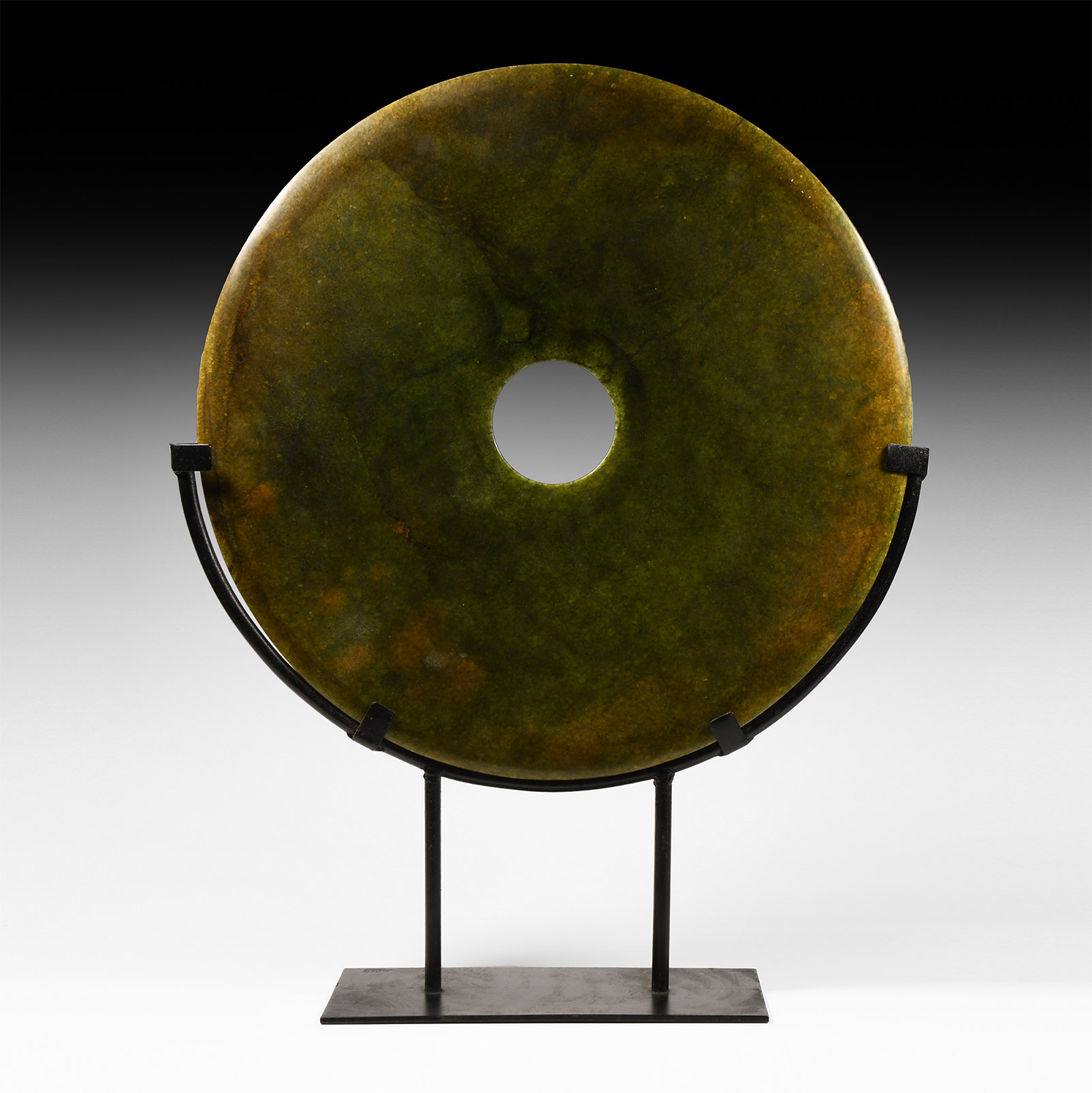
Chinese Green Stone Bi Disc
20TH CENTURY A.D. OR EARLIER
25 5/8 in. (7.75 kg total, 65 cm high including stand).
A large mottled green stone bi disc with central hole; the disc sub-rectangular in cross section, gently tapering towards the outer edge; mounted on a custom-made display stand.
ProvenanceFrench collection, 1960s-early 2000s.
From an important Paris gallery, France.
TimeLine Auctions follows a vetting process to ensure the authenticity and legality of all items, reinforcing our commitment to integrity and responsible trading. Each antiquity, antique, and coin lot undergoes thorough examination by a vetting committee of at least ten external specialists, professional trade association members, scientists, and archaeologists: Our Vetting Process
AUCTIONS:
TimeLine is a leading auction house specialising in antiquities, ancient art, collectables, natural history, coins, medals, and books. Our auctions offer museums, collectors, historians, and enthusiasts the opportunity to acquire unique and historically significant pieces.
-
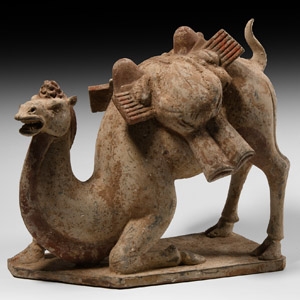
Chinese Tang Kneeling Camel
Tang Dynasty, 618-907 A.D.Estimate: £2,500 - 3,500 (+bp*)
Opening Bid: £1,250
A ceramic Bactrian camel modelled in the round in a dynamic pose, kneeling on a polygonal base and possibly in the act of standing up; saddle bags heavily laden with goods, semi-naturalistic anatomical and facial detailing, short tail held aloft; remains of polychrome painted pigment. 4 kg, 31 cm
Ex Hong Kong collection. London Mayfair gallery, UK. Accompanied by a thermoluminescence analysis report no.C122k20 from Oxford Authentication. This lot has been checked against the Interpol Database of stolen works of art and is accompanied by search certificate number no.11700-199213. -
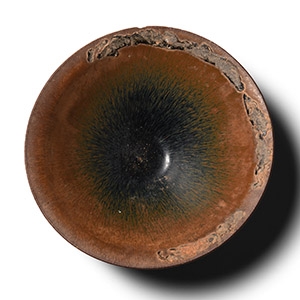
Chinese Jianyao Hare's Fur Tea Bowl
Song Dynasty, 960-1279 A.D.Estimate: £800 - 1,000 (+bp*)
Opening Bid: £400
A hare's fur tea bowl of conical form, with everted rim and discoid foot, the interior decorated with a lustrous blackish glaze shot through with streaks of blue-silver 'hare's fur' markings, the exterior displaying russet and silver markings, the brown ware visible towards the foot. 173 grams, 13 cm wide
Acquired in Hong Kong, 1980s. UK private collection. -
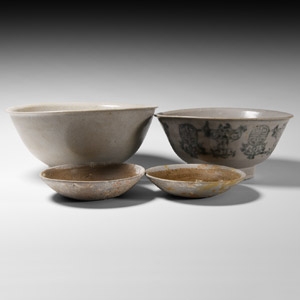
Chinese Tek Sing Shipwreck Pottery Collection
19th century A.D.Estimate: £100 - 140 (+bp*)
Opening Bid: £50
A group of four glazed ceramic vessels: two shallow dishes and two footed bowls with everted rim and basal ring. 659 grams total, 9.1-16 cm wide
Acquired 1980-2015. Ex Abelita family collection.
The Tek Sing (True Star) wreck is one of the famous recovery stories of the 20th century. Sailing from the port of Xiamen (then known as Amoy) in February 1822 the vessel Tek Sing was bound for Jakarta, Indonesia laden with porcelain goods and 1600 Chinese emigrants. The captain decided to pass through the Gaspar Strait, between the Bangka-Belitung Islands, and ran aground on a reef. The vessel sank in about 100 feet of water. The next morning, February 7, an English East Indian vessel captained by James Pearl, passing through the same waters, encountered debris and some survivors and managed to rescue about 190 of the latter.
