
Loading, please wait...

LOT 2428
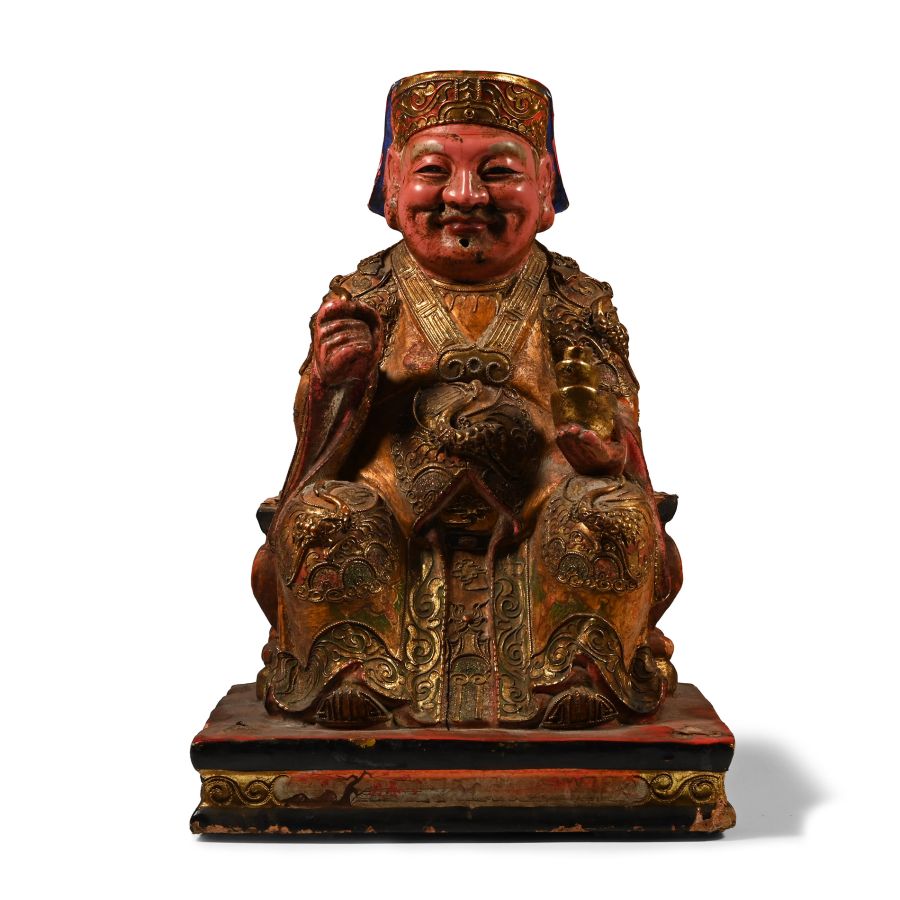
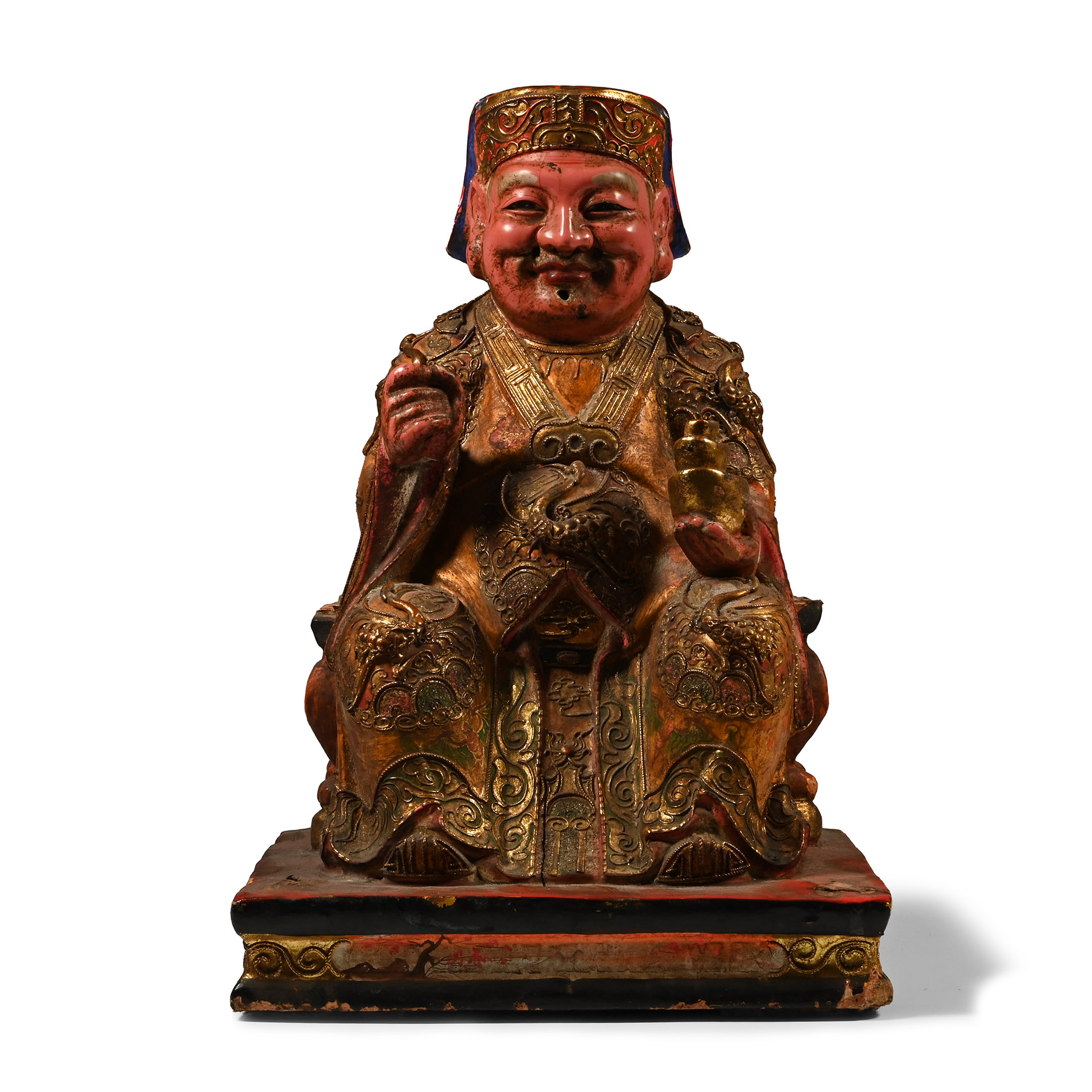
Chinese Gilded Wooden Temple Figure
LATE 19TH CENTURY A.D.
11 3/8 in. (2 kg, 29 cm).
Carved in the round seated on a low bench on a square dais, with gilt detailing to the robes; left hand supporting a stack of three boat-shaped ingots; right hand clenched; hole to chin for insertion of a separate beard. [No Reserve]
ProvenanceIan Wilkinson collection, Nottinghamshire, UK, formed since 1985.
This lot is accompanied by an illustrated lot declaration signed by the Head of the Antiquities Department, Dr Raffaele D’Amato.
TimeLine Auctions follows a vetting process to ensure the authenticity and legality of all items, reinforcing our commitment to integrity and responsible trading. Each antiquity, antique, and coin lot undergoes thorough examination by a vetting committee of at least ten external specialists, professional trade association members, scientists, and archaeologists: Our Vetting Process
AUCTIONS:
TimeLine is a leading auction house specialising in antiquities, ancient art, collectables, natural history, coins, medals, and books. Our auctions offer museums, collectors, historians, and enthusiasts the opportunity to acquire unique and historically significant pieces.
-
Hoi An Cargo Shipwreck Glazed Blue and White Lidded Box Collection
15th century A.D.Sold for (Inc. bp): £195
Comprising three powder boxes with painted scenery with vegetation to the lid. 335 grams total, 64-68 mm
Ex Butterfield and Butterfield auction with official Hoi An Hoard labels. Accompanied by an illustrated information sheet about the Hoi An shipwreck. This lot is accompanied by an illustrated lot declaration signed by the Head of the Antiquities Department, Dr Raffaele D’Amato.
In the mid 15th century a freighting junk loaded with fine Vietnamese pottery sank in an area of the South China Sea called the 'Dragon’s Embrace.' This vessel is part of the shipwreck cargo recovered off the coast of Vietnam at Hoi An. The ceramics themselves were probably made in the area of Chu Dau. -
Chinese Tang Terracotta Mounted Soldier Pair
Tang Dynasty, 618-907 A.D.Estimate: £4,000 - 6,000 (+bp*)
Opening Bid: £2,100
Group of two terracotta figures, each a mounted warrior wearing a riding coat with scooped shoulder-protection and a lion-mask hood, arms bent and hands positioned to hold reins (absent); horse in static pose with head turned; painted detailing to horse's bridle and to tunic and hood. 14.25 kg total, 53.5 cm high each
Ex West Country, UK, collection, 2000s. Accompanied by a thermoluminescence analysis report no.32CM180321 by Laboratory Kotalla for one figure. Accompanied by an academic report by Dr Raffaele D’Amato. This lot has been checked against the Interpol Database of stolen works of art and is accompanied by a search certificate number no.12565-231128. This lot has been cleared against the Art Loss Register database, and is accompanied by an illustrated lot declaration signed by the Head of the Antiquities Department, Dr Raffaele D’Amato. -
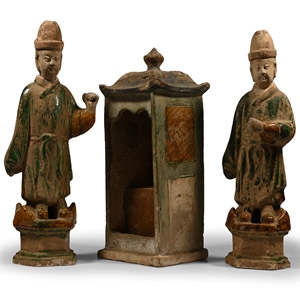
Chinese Ming Terracotta Figure Pair with Chair
Ming Dynasty, 1368-1644 A.D. or laterEstimate: £350 - 450 (+bp*)
Opening Bid: £175
Set comprising: two hollow-formed glaze figures of guards standing erect with left arm bent and hand hollowed to accept a spear (absent), with separate head on a hexagonal-section stepped base; hollow-formed cubicle with pitched roof, knop finial, glazed sat within and hatched glazed panels to the sidewalls. 7 kg total, 38-41 cm
Ex West Country, UK, collection, 1990s. This lot is accompanied by an illustrated lot declaration signed by the Head of the Antiquities Department, Dr Raffaele D’Amato.
