
Loading, please wait...
LOT 1556
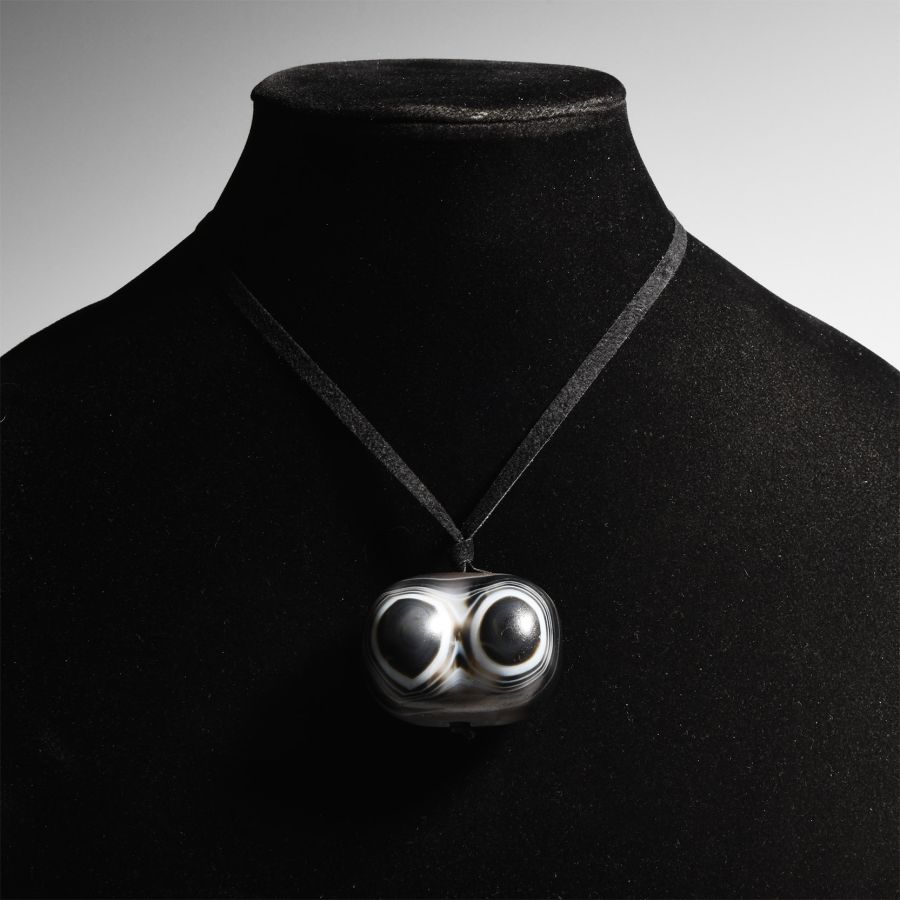
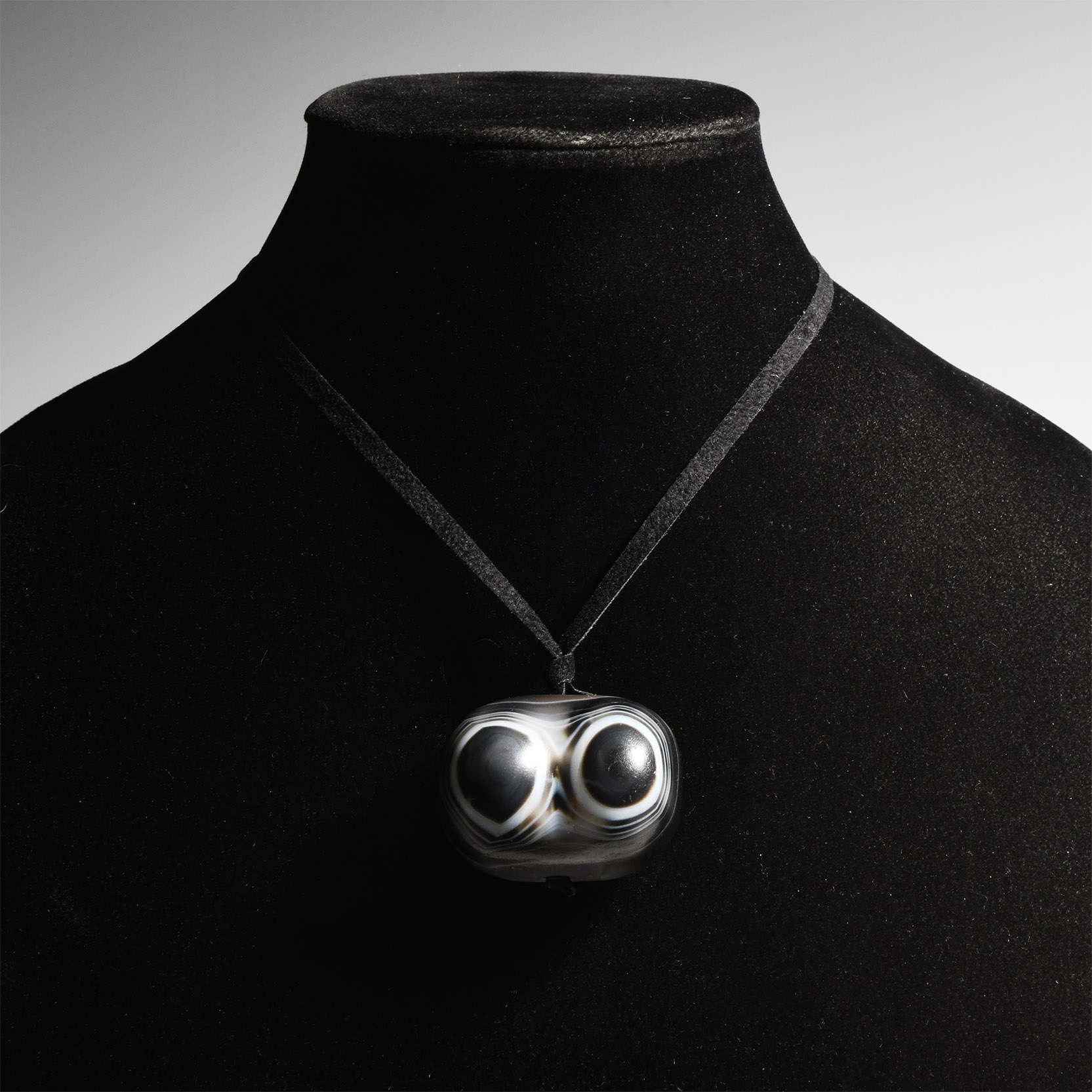
Chinese Giant Banded Agate Bead Necklace
20TH CENTURY A.D. OR LATER
26 in. (97 grams, 66 cm long).
A large banded agate bead of roughly oval form, two domed 'eyes' to one face; suspended on a felt thong. [No Reserve]
ProvenanceEx London, UK, gallery.
Property of a London gentleman.
TimeLine Auctions follows a vetting process to ensure the authenticity and legality of all items, reinforcing our commitment to integrity and responsible trading. Each antiquity, antique, and coin lot undergoes thorough examination by a vetting committee of at least ten external specialists, professional trade association members, scientists, and archaeologists: Our Vetting Process
AUCTIONS:
TimeLine is a leading auction house specialising in antiquities, ancient art, collectables, natural history, coins, medals, and books. Our auctions offer museums, collectors, historians, and enthusiasts the opportunity to acquire unique and historically significant pieces.
-
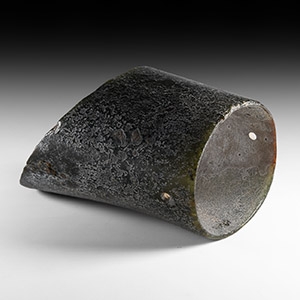
Chinese Hongshan Hoof-Shaped Black Jade Hair Ornament
Hongshan Dynasty, circa 3500 B.C.Estimate: £5,000 - 7,000 (+bp*)
Opening Bid: £2,500
A black jade hoof-shaped hair ornament of open-ended, truncated cylindrical form, two piercings towards the base for attachment; retaining its original patina. 188 grams, 12.5 cm high
Acquired in Hong Kong, 1980s. Ex Prof. David Anderson collection, circa 2009. UK private collection. This lot has been checked against the Interpol Database of stolen works of art and is accompanied by search certificate number no.11709-198346.
The Hongshan Neolithic culture flourished in north-east China between ca. 4700 to 2900 B.C. Such items were tomb deposits, usually found cradling the head of the interred human remains. It is presumed such pieces gathered the hair which would be passed through the cylindrical body. They invariably feature a rippling effect around the top interior, and two holes at the bottom which may once have accommodated a wooden peg. Confucius stated that 'Jade is the incorruptible stone', leading to the trend for those who discovered such artefacts in Chinese tombs to polish them, removing their authenticating patina, before returning them to the grave to be photographed, so as to propagate the myth that they were unearthed in unblemished condition. -
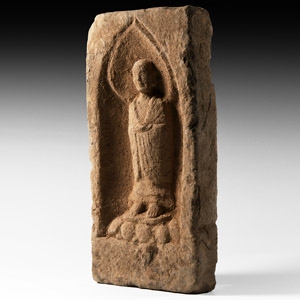
Chinese Wei Buddha Brick
Wei Dynasty, 534-550 A.D.Sold for (Inc. bp): £169
A rectangular ceramic brick displaying Buddha standing in a niche on a lotus flower base, his hands clasped to his chest, padmasana behind the head. 3.19 kg, 29 x 14 cm
Acquired 1970-1990s. Ex Hong Kong collection. From a private West Country collection. -
.jpg)
Chinese Blue and White Glazed Jar
15th-17th century A.D.Estimate: £80 - 100 (+bp*)
Opening Bid: £44
A glazed ceramic Yuan style provincial ware jar with carinated profile and narrow foot, deep shoulder and raised rim, painted floral and tendril motifs to the body. 1.1 kg, 18 cm
Fine condition.
Ex North London collection of ceramics, 1990s.
