
Loading, please wait...
LOT 1570
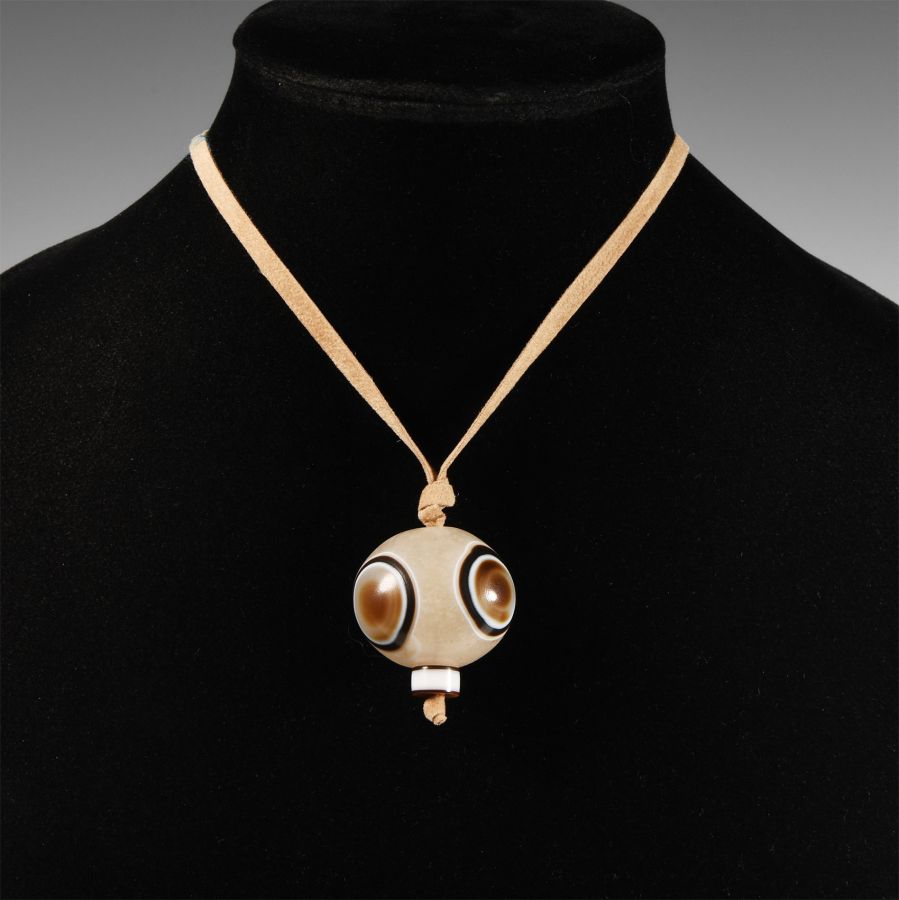
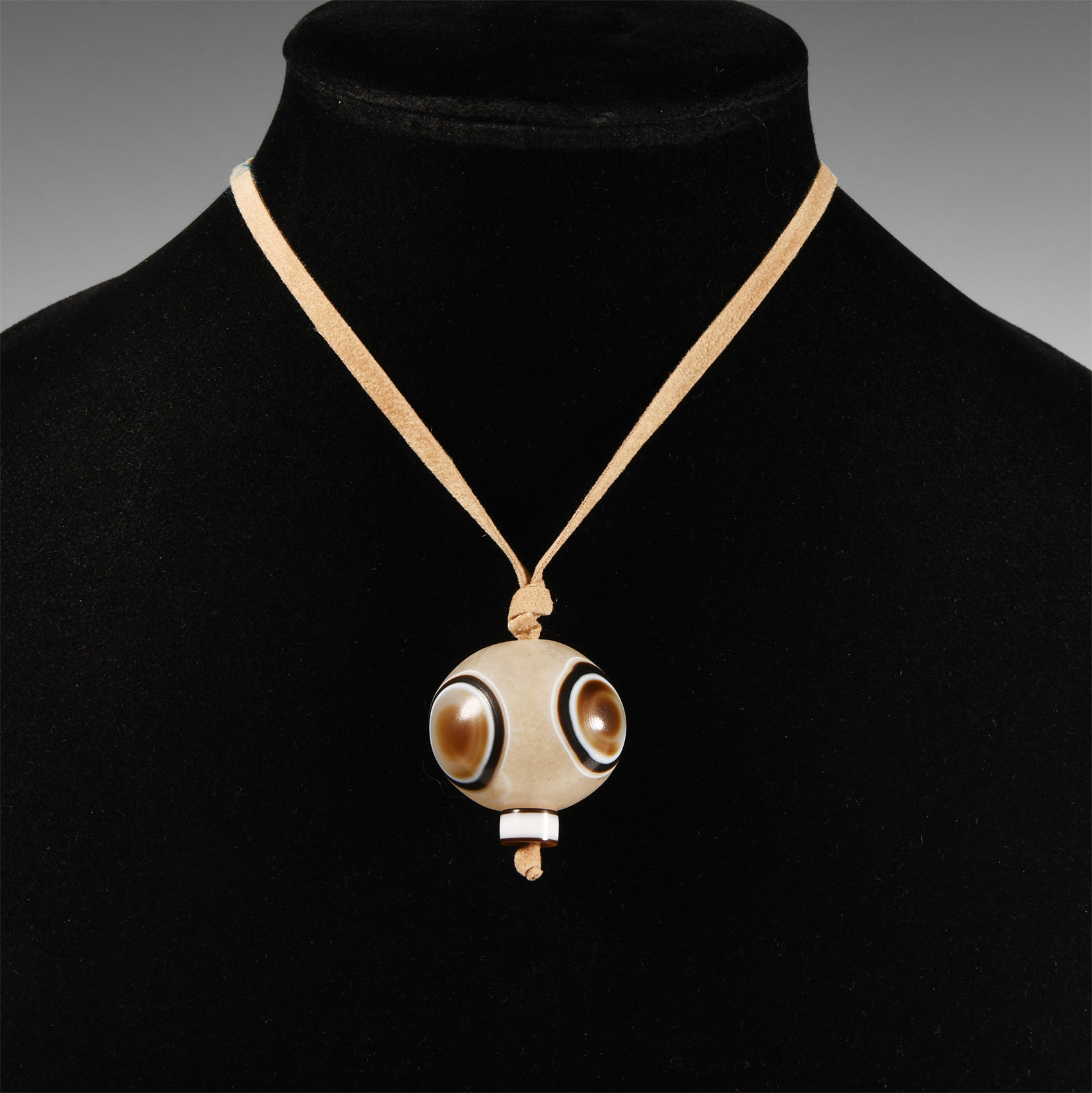
Chinese Giant Banded Agate Bead Necklace
20TH CENTURY A.D. OR LATER
26 in. (45 grams, 66 cm long).
A large agate 'eye' bead suspended on a felt thong, banded agate bead below. [No Reserve]
ProvenanceEx London, UK, gallery.
Property of a London gentleman.
TimeLine Auctions follows a vetting process to ensure the authenticity and legality of all items, reinforcing our commitment to integrity and responsible trading. Each antiquity, antique, and coin lot undergoes thorough examination by a vetting committee of at least ten external specialists, professional trade association members, scientists, and archaeologists: Our Vetting Process
AUCTIONS:
TimeLine is a leading auction house specialising in antiquities, ancient art, collectables, natural history, coins, medals, and books. Our auctions offer museums, collectors, historians, and enthusiasts the opportunity to acquire unique and historically significant pieces.
-
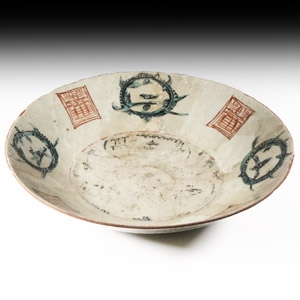
Chinese Ming Dynasty Charger
Ming Dynasty, 1368-1644 A.D.Estimate: £100 - 140 (+bp*)
Opening Bid: £50
A glazed ceramic charger with hand-painted decoration including chop-seals and landscape vignettes. 1.6 kg, 36 cm wide
Acquired early 2000s. Property of a Suffolk, UK, gentleman. Property of an Essex, UK, gentleman. -
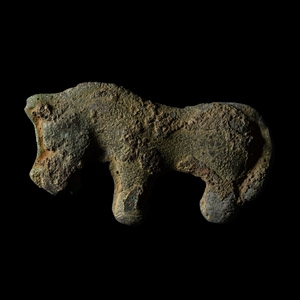
Chinese Ordos Animal Mount
6th-2nd century B.C. or laterEstimate: £80 - 100 (+bp*)
Opening Bid: £44
A copper-alloy mount in the form of a horse standing left, its head facing downwards; some remaining detailing to the body and tail; two mounting lugs to the reverse. 75 grams, 86 mm
Fine condition.
Acquired 1980-2015. Ex Abelita family collection. -
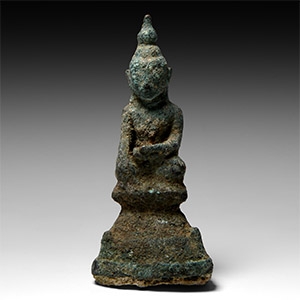
Thai Seated Buddha Statuette
11th-13th century A.D.Sold for (Inc. bp): £65
A copper-alloy Buddha statuette modelled seated cross-legged on a domed trapezoidal base, hands held in a mudra and wearing a conical crown; of Thai or Burmese origin. 157 grams, 10.3 cm high
Essex gallery, early 2000s.
