
Loading, please wait...
LOT 2131
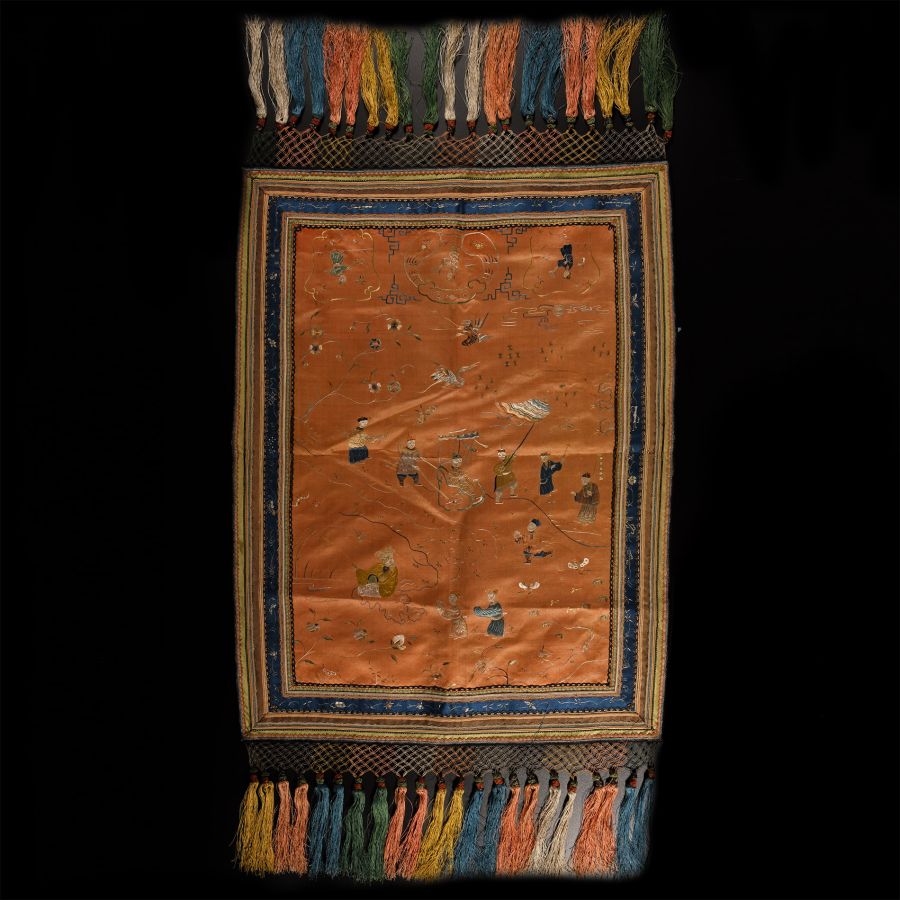
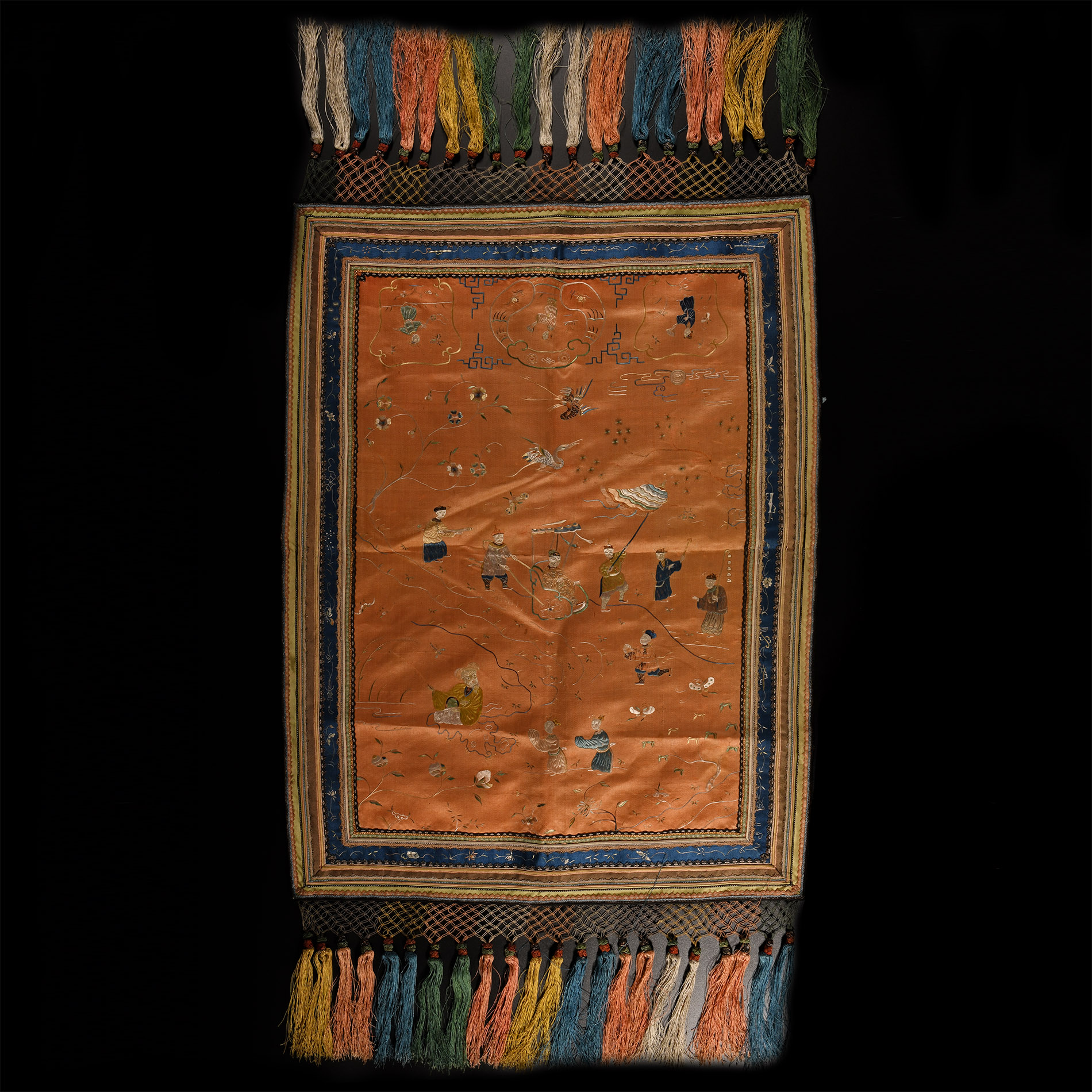
Chinese Embroidered Silk Chair Cover Panel
CH'ING DYNASTY, LATE 19TH CENTURY A.D.
35 1/2 x 17 1/4 in. (142 grams, 90 x 44 cm).
Rectangular with coloured tassels to each end, depicting an individual- possibly an emperor- seated in a chair with attendants behind and before him, a sage seated before a reeded body of water, turning his attention towards two kneeling devotees; flying cranes, butterflies, budding plants and trees around; framed by a series of concentric borders of alternating colour. [No Reserve]
ProvenanceAcquired Germany.
Property of RWM Collection.
Cf. The National Museum of Asian Art, 'Section of a chair cover with cranes, bats, and clouds', Qing Dynasty, for similar.
CONDITIONTimeLine Auctions follows a vetting process to ensure the authenticity and legality of all items, reinforcing our commitment to integrity and responsible trading. Each antiquity, antique, and coin lot undergoes thorough examination by a vetting committee of at least ten external specialists, professional trade association members, scientists, and archaeologists: Our Vetting Process
AUCTIONS:
TimeLine is a leading auction house specialising in antiquities, ancient art, collectables, natural history, coins, medals, and books. Our auctions offer museums, collectors, historians, and enthusiasts the opportunity to acquire unique and historically significant pieces.
-
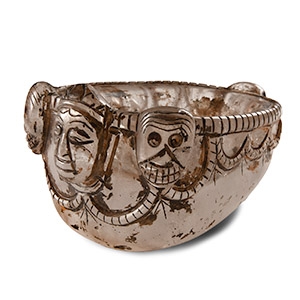
Large Tibetan Rock Crystal Kapala Vessel with Citipati Faces
Late 19th century A.D. or earlierSold for (Inc. bp): £416
A 'skull cup' displaying a crowned head flanked by two monster skulls carved in relief to the front face, a single grinning skull to the rear, notched borders around the vessel rim, swags below; chip to reverse. 1.6 kg, 17 cm
Acquired from an old German collection. Property of RWM Collection. -
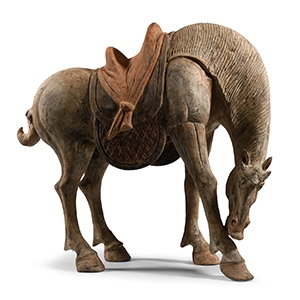
Chinese Tang Terracotta Horse Standing with Head Down
Tang Dynasty, 618-907 A.D.Sold for (Inc. bp): £2,925
With extended neck and head bent forward, mouth open to chew the grass, ears pinned back; saddle and saddle-rug modelled integrally; tail cropped and bound; salmon-pink pigment to the saddle. 13.35 kg, 61 cm wide
Ex West Country collection, Bath, 1990s. Accompanied by an original thermoluminescence analysis report no.CJ182522022 from Laboratory Kotalla. This lot has been checked against the Interpol Database of stolen works of art and is accompanied by search certificate number no.11913-207699. -
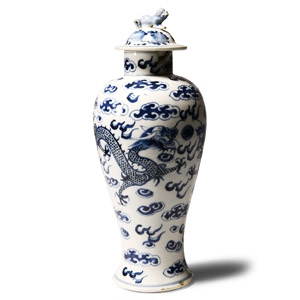
Chinese Blue and White Dragon Jar
20th century A.D.Sold for (Inc. bp): £20
Piriform with splayed foot, dragon figure to the lid and around the shoulder, depicted flying amidst scrolling clouds, chip to rim. 935 grams, 30.5 cm high
Ex UK auction house. Property of an East Sussex, UK, teacher.
