
Loading, please wait...
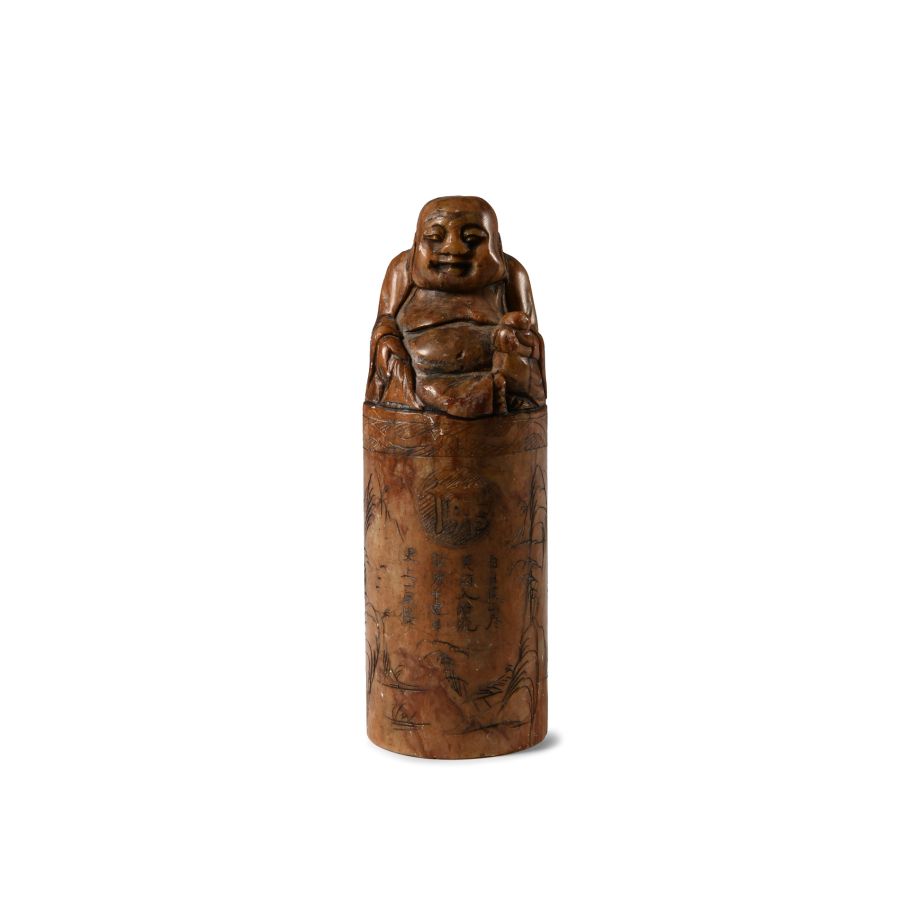
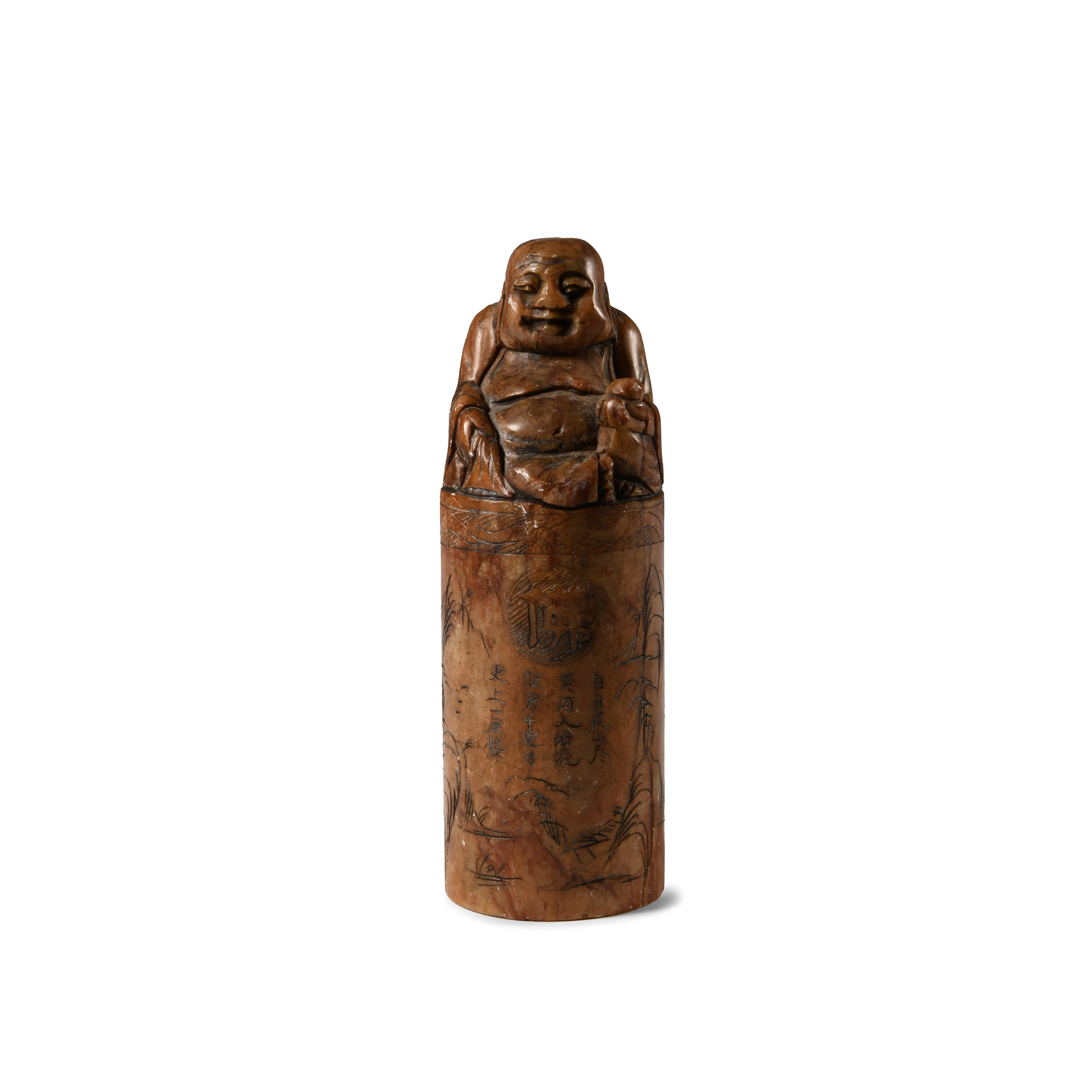
LOT 2164
Chinese Columnar Stone Seal with Seated Figure
19TH-20TH CENTURY A.D.
4 3/4 in. (337 grams, 12 cm high).
The cylindrical soapstone body engraved with Chinese characters amidst a landscape setting; finial carved in the round as a fat Budai; base with a quartered 'maze' design. [No Reserve]
ProvenanceAcquired from a UK auction house.
Property of an Essex gentleman.
TimeLine Auctions follows a vetting process to ensure the authenticity and legality of all items, reinforcing our commitment to integrity and responsible trading. Each antiquity, antique, and coin lot undergoes thorough examination by a vetting committee of at least ten external specialists, professional trade association members, scientists, and archaeologists: Our Vetting Process
AUCTIONS:
TimeLine is a leading auction house specialising in antiquities, ancient art, collectables, natural history, coins, medals, and books. Our auctions offer museums, collectors, historians, and enthusiasts the opportunity to acquire unique and historically significant pieces.
-
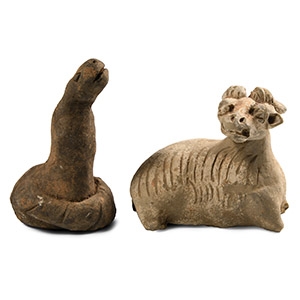
Chinese Terracotta Zodiac Animal Group
Yuan Dynasty, 1279-1368 A.D. or laterSold for (Inc. bp): £20
Comprising a cow modelled reclining with stylised detailing, together with a coiled snake. 398 grams total, 10-11 cm
Acquired 1980s-1990s. From the H.N. collection, Milton Keynes, Bedfordshire, UK. -
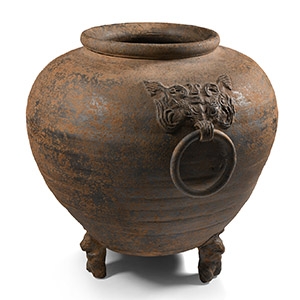
Chinese Han Ceramic Tripod Vessel
Han Dynasty, 206 B.C.-220 A.D.Estimate: £500 - 700 (+bp*)
Opening Bid: £265
Piriform bodied with two opposed Tao Tie, each holding a free-running ring in its mouth, further decorated with a shallow incised dragon to one face and a figure holding a cup on the other, together with an inscription in Chinese; tripod feet formed as squatting animals; restoration to the rings and feet. 3.8 kg, 35.5 cm high
with Galerie Golconda May 2006. Ex private collection, London, UK. Accompanied by a thermoluminescence report no.11270306 from Laboratory Ralf Kotalla dated 5 May 2006.
Dragons in ancient Chinese art could be religious symbols, representatives of clans and creatures linking man to the spirit world. The Tao Tie often evoked mystery and beauty. -
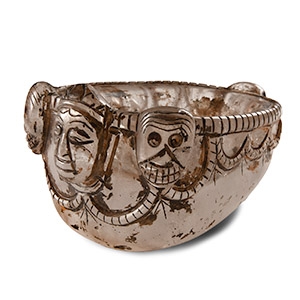
Large Tibetan Rock Crystal Kapala Vessel with Citipati Faces
Late 19th century A.D. or earlierSold for (Inc. bp): £416
A 'skull cup' displaying a crowned head flanked by two monster skulls carved in relief to the front face, a single grinning skull to the rear, notched borders around the vessel rim, swags below; chip to reverse. 1.6 kg, 17 cm
Acquired from an old German collection. Property of RWM Collection.
