
Loading, please wait...
LOT 2008
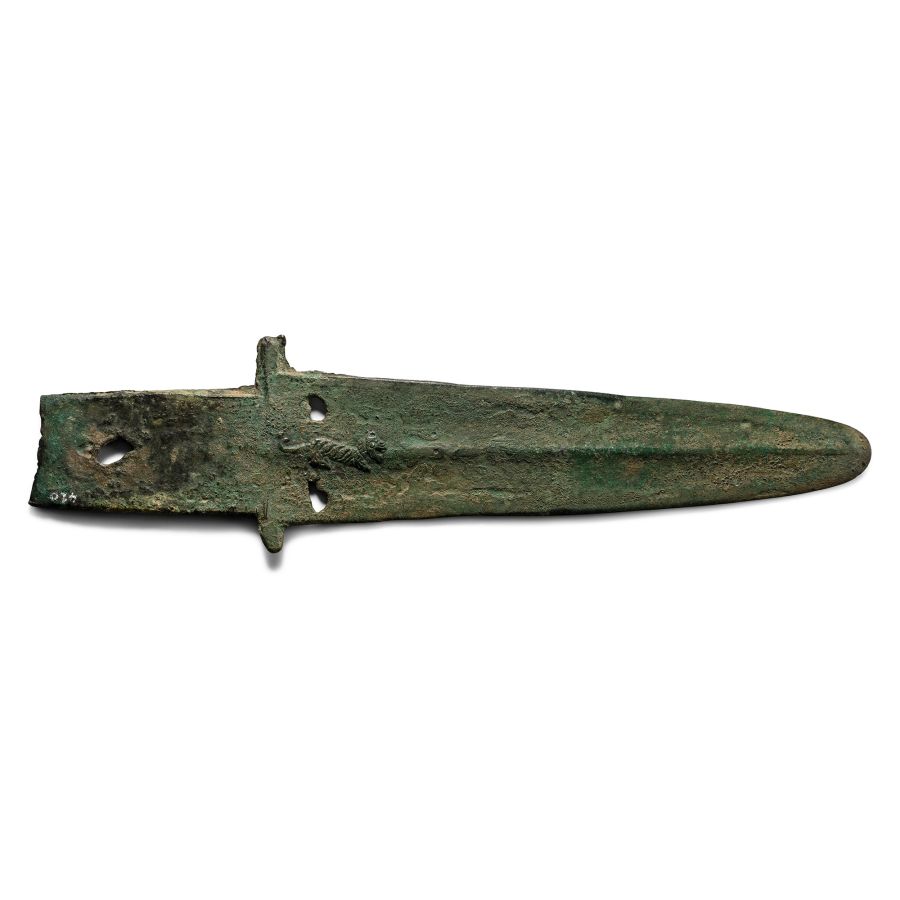
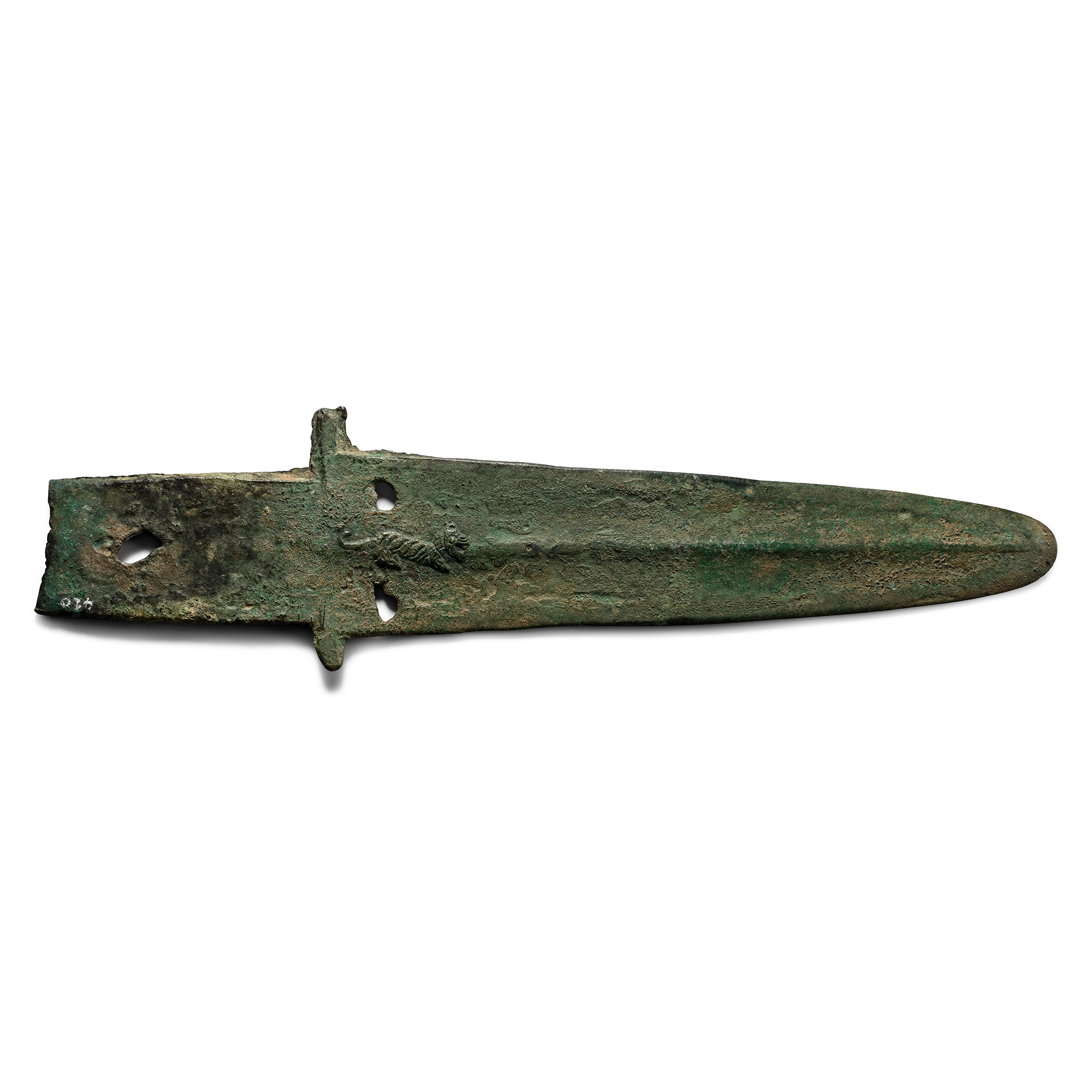
Chinese Bronze Warring States Style Dagger
20TH CENTURY A.D. OR EARLIER
8 3/4 in. (110 grams, 22.2 cm).
Flat-section blade with a rounded tip and a wide, pierced tang. [No Reserve]
ProvenanceEx Ma Gallery, Bath, UK.
From a private Wiltshire, UK, collection, 1990s.
See Peers, C.J., Ancient Chinese Armies 1500-200BC, London, 1990, p.16, for a similar original blade.
CONDITIONTimeLine Auctions follows a vetting process to ensure the authenticity and legality of all items, reinforcing our commitment to integrity and responsible trading. Each antiquity, antique, and coin lot undergoes thorough examination by a vetting committee of at least ten external specialists, professional trade association members, scientists, and archaeologists: Our Vetting Process
AUCTIONS:
TimeLine is a leading auction house specialising in antiquities, ancient art, collectables, natural history, coins, medals, and books. Our auctions offer museums, collectors, historians, and enthusiasts the opportunity to acquire unique and historically significant pieces.
-
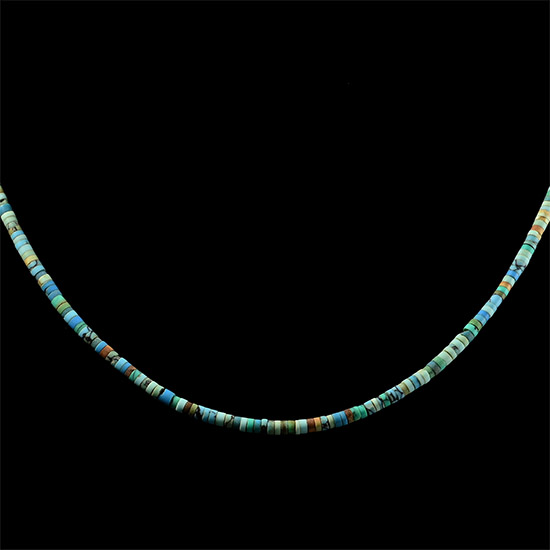
Egyptian Style Stone Bead Necklace String
20th century A.D.Sold for (Inc. bp): £26
Composed of small annular turquoise and other stone beads. 4.6 grams, 36 cm
Acquired in the 1990s. Ex London, UK, collection. -
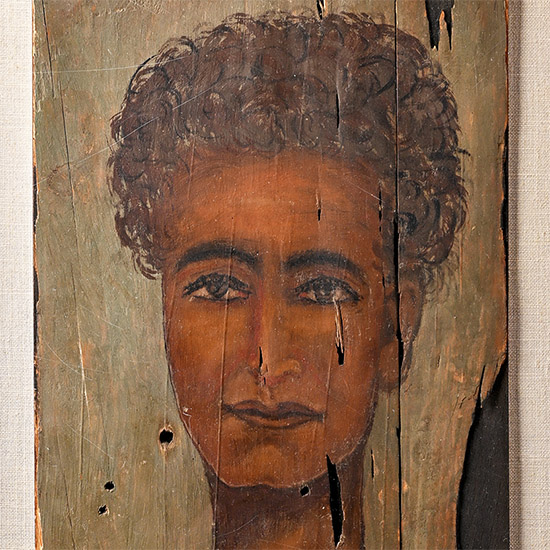
Romano-Egyptian Style Fayum Portrait of a Woman
20th century A.D.Sold for (Inc. bp): £26
Portrait of a young woman, her head turned slightly to the right, with an oval face, thin almond-shaped eyes, and a large mouth with full lips; her curly hair arranged above her forehead in a series of rich curls; her clothing consisting of a pink tunic visible at the neck and shoulders; encaustic on wood. 1.73 kg total, 47 x 33.8 cm including frame
Condition In good condition, the painted board has been mounted on to a piece of wood in recent history. The surface has a dirt overlay that is expected with age. Minor losses, affecting the top edge and and left proper edge. Minor losses throughout and one vertical crack runs the length of the wood grain.
Private collection of Dr Fred Olsen (1891-1986) and Mrs Florence Ellen Olsen (née Quittenton, d.1996), Guilford, Connecticut, by at least 1961. Exhibited at 'Coptic Art', The Minneapolis Institute of Art, Minneapolis, Minnesota, 5 December 1961-7 January 1962, no.L-380-2, loan number L61.711.
Fayum portraits, painted on wood or linen, applied to the mummies of the Graeco-Roman period, are one of the most wonderful legacies that the koiné of the Graeco-Roman world has left us. Due to the favourable climate enhancing the state of preservation, these encaustic paintings have left us an almost photographic testimony of the faces of the inhabitants of Roman Egypt. -
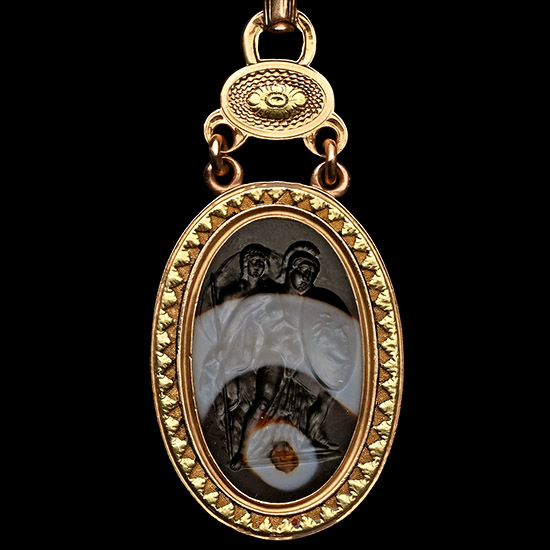
Banded Agate Intaglio Depicting Perseus and Andromeda in Gold Pendant
Italy, 17th-18th century A.D.Estimate: £4,000 - 6,000 (+bp*)
Current Winning Bid: £2,000
Translucent intaglio featuring a dynamic mythological scene of Perseus rescuing Princess Andromeda; Perseus depicted nude and wearing a crested helmet, holding a round shield with a Medusa mask in his hand and a spear in the other, Andromeda standing behind him and dressed in long flowing robes; set in an elaborate late 18th-century English gold frame; supplied with a museum-quality impression. 13.64 grams, 61 mm
Acquired on the European art market. This lot has been checked against the Interpol Database of stolen works of art and is accompanied by search certificate number no.13343-257990.
Andromeda was the daughter of the Aethiopian king Cepheus and Cassiopeia. According to the legend, Cassiopeia angered Neptune by claiming that her daughter was more beautiful than the nereids, and Neptune, in revenge, sent a monster to ravage the coast. Told that the only way to save their country is to sacrifice their daughter to the creature, Andromeda’s parents chained her to a rock by the sea. The demigod Perseus, son of Jupiter, killed the sea monster by petrifying it with the head of Medusa and rescued Andromeda.
