
Loading, please wait...
LOT 1543
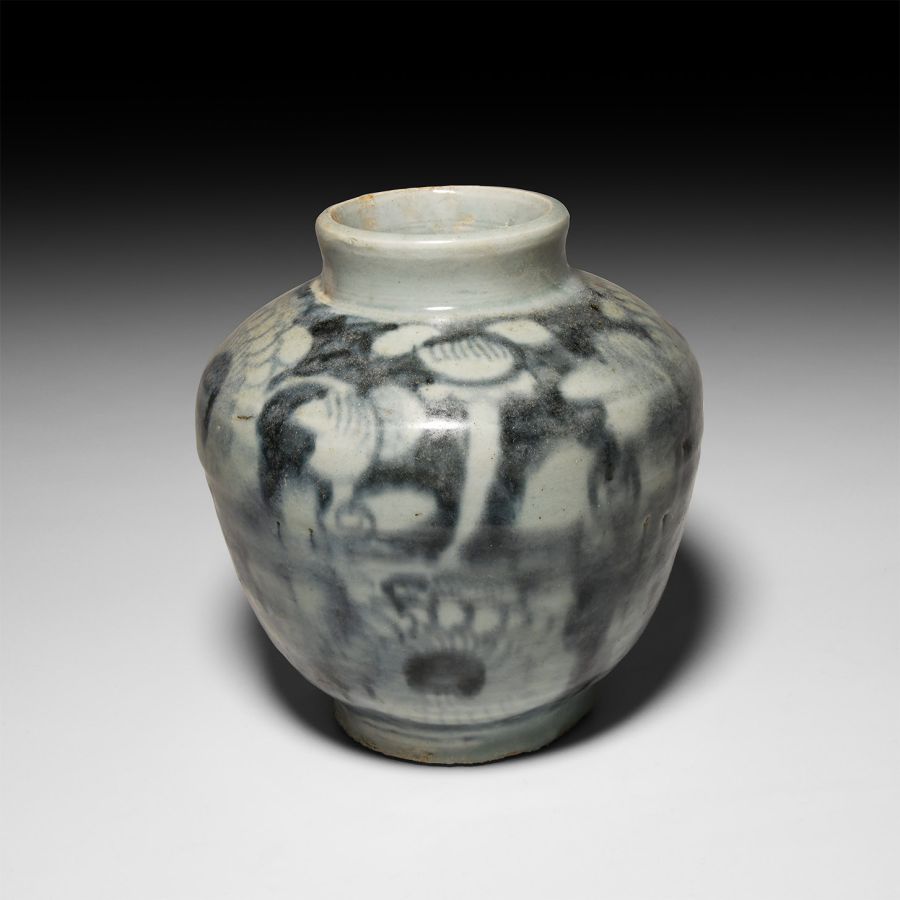
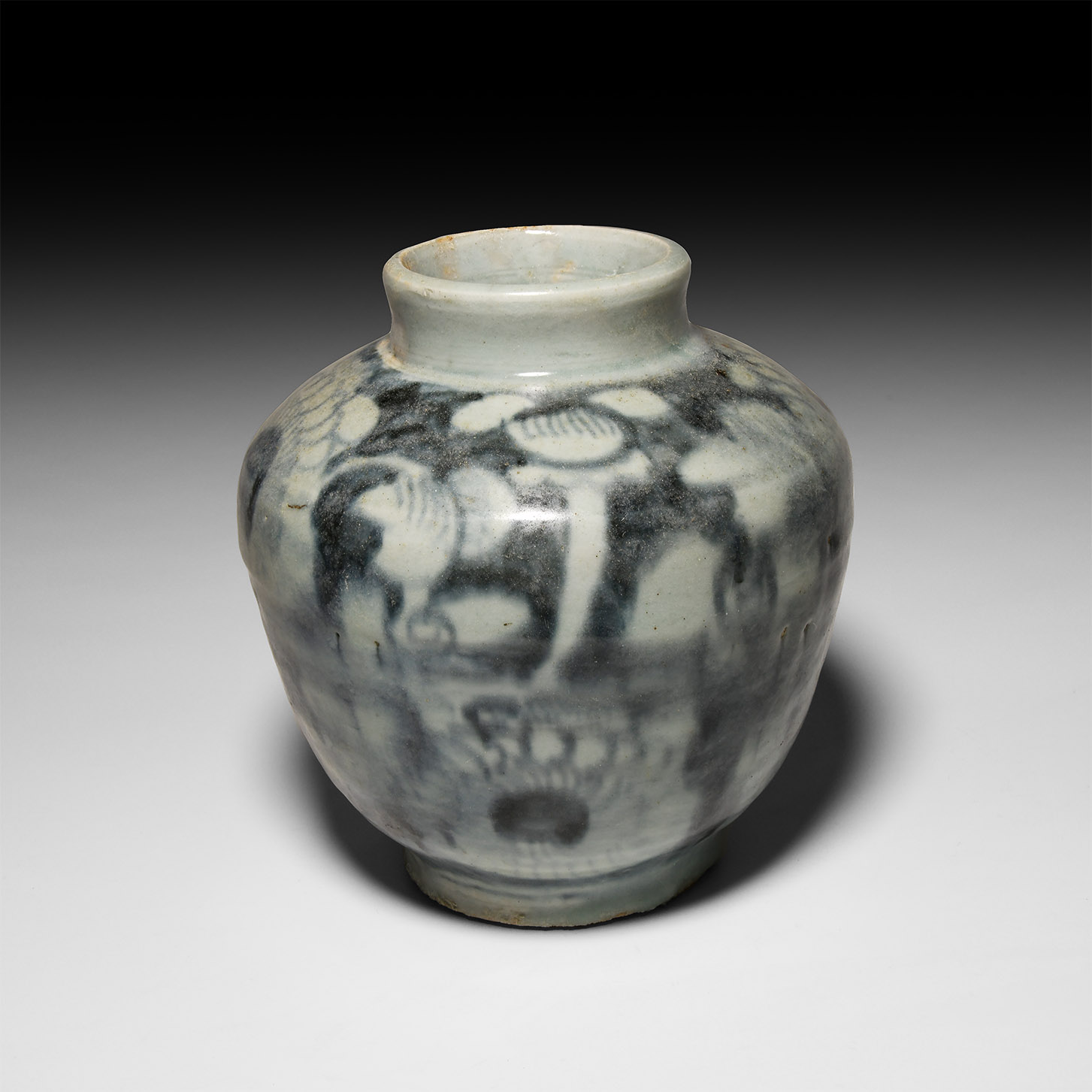
Chinese Blue and White Peony Jar
15TH-17TH CENTURY A.D.
8 1/4 in. (1.75 kg, 21 cm high).
A glazed Yuan style provincial ceramic jar with broad shoulder and low rim to the mouth, painted floral ornament.
ProvenanceAcquired 1970s.
West Country, UK, collection.
TimeLine Auctions follows a vetting process to ensure the authenticity and legality of all items, reinforcing our commitment to integrity and responsible trading. Each antiquity, antique, and coin lot undergoes thorough examination by a vetting committee of at least ten external specialists, professional trade association members, scientists, and archaeologists: Our Vetting Process
AUCTIONS:
TimeLine is a leading auction house specialising in antiquities, ancient art, collectables, natural history, coins, medals, and books. Our auctions offer museums, collectors, historians, and enthusiasts the opportunity to acquire unique and historically significant pieces.
LOT 1543
Chinese Blue and White Peony Jar
Estimate £80 - 100€93 - 116 (for guidance only)$108 - 135 (for guidance only)
-
.jpg)
Chinese Tang Horse with Separate Rider
Tang Dynasty, 618-907 A.D.Sold for (Inc. bp): £975
A ceramic horse and rider figure modelled in the round with semi-naturalistic anatomical detailing, the horse standing on a rectangular base, its stocky neck and head slightly turned to the right, ears pricked forwards, cropped mane and short, dressed tail; rider seated in saddle wearing a knee-length robe, hood and riding boots, one arm held in front of his body, the other raised above his head, detailing to his face; remains of polychrome pigmentation; the upper half of the rider's body modelled separately. 1.75 kg, 32 cm high
From the R.M.Hicks OBE private collection, UK. Accompanied by an original thermoluminescence analysis report no.C106u29 from Oxford Authentication.
A symbol of military strength and social status, the horse was ever a potent mythological and symbolic animal in China. During the Tang Dynasty, both polo and hunting from horseback became fashionable for men and women. It was also during the Tang Dynasty period that female court attendants on horses appeared in art and in tomb sculpture. The fruits of China's relationship with the horse include three of the most important innovations in equestrian history: the horse collar, the stirrup and harnesses based on the breast strap. The failure of China's domestic horse breeding programmes forced them to artificially inflate the price of tea (the production of which was controlled by China), so that tea could be traded for horses from their neighbours. -
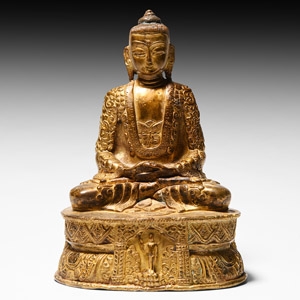
Sino-Tibetan Gilt Buddha Figure
19th-20th century A.D.Estimate: £350 - 450 (+bp*)
Opening Bid: £194
A gilt-bronze statuette of Buddha sitting cross-legged on a lotus flower dais; both hands placed palm-upwards in the lap; the D-shaped base with a lotus detailing to the outer face and icons of Buddha in various poses, hollow with panel to the underside. 1.9 kg, 17 cm high
Fine condition.
Acquired 1970s-2000s. From a Japanese collection of Buddhist art. -
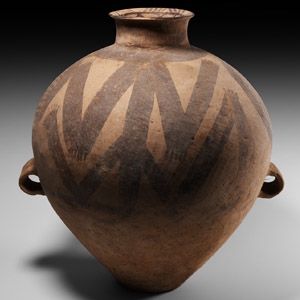
Chinese Neolithic Painted Frog Jar
3rd-2nd millennium B.C.Estimate: £250 - 350 (+bp*)
Opening Bid: £125
A piriform ceramic jar with short neck, everted rim and two integral lug handles, the body painted with degenerate 'frog' motifs, clusters of dashes and scallops to the rim. 3.7 kg, 35 cm hgh
Acquired 1970s-1990s. Ex West Country collection.
