
Loading, please wait...
LOT 2160
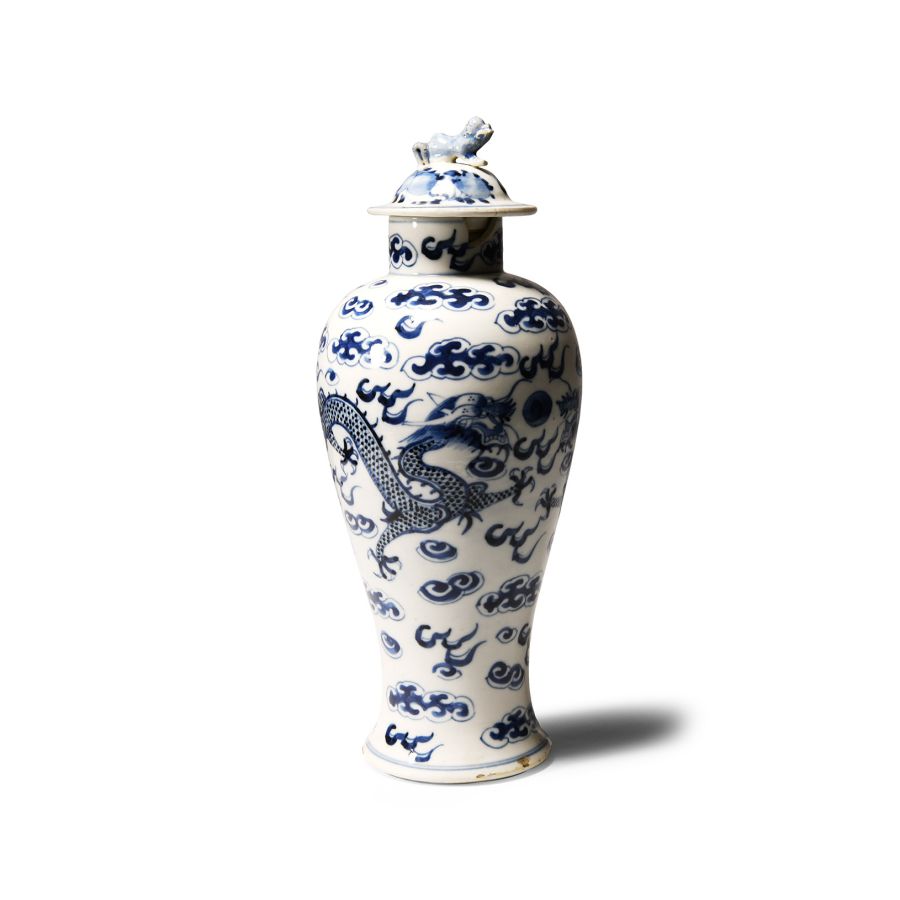
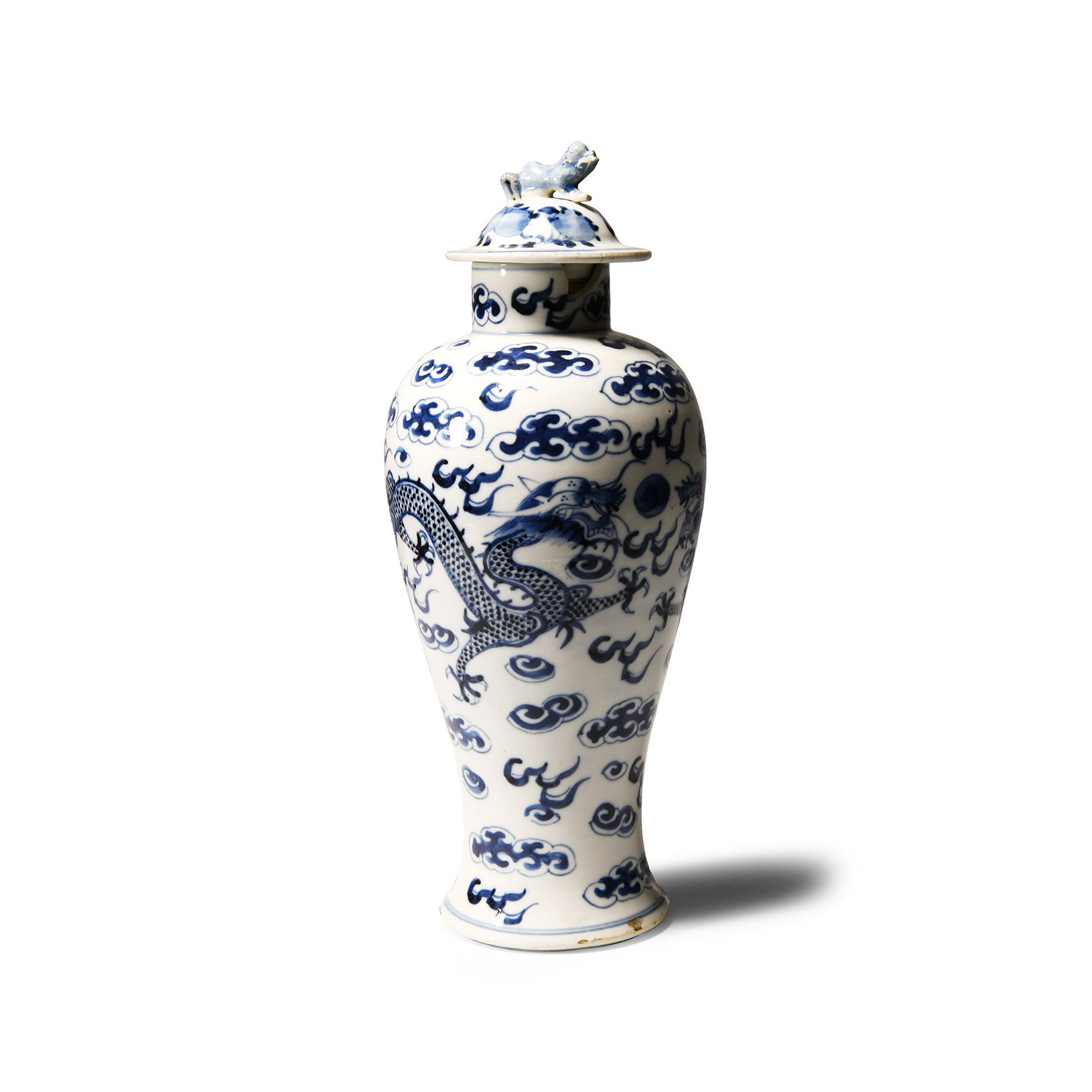
Chinese Blue and White Dragon Jar
20TH CENTURY A.D.
12 in. (935 grams, 30.5 cm high).
Piriform with splayed foot, dragon figure to the lid and around the shoulder, depicted flying amidst scrolling clouds, chip to rim. [No Reserve]
ProvenanceEx UK auction house.
Property of an East Sussex, UK, teacher.
TimeLine Auctions follows a vetting process to ensure the authenticity and legality of all items, reinforcing our commitment to integrity and responsible trading. Each antiquity, antique, and coin lot undergoes thorough examination by a vetting committee of at least ten external specialists, professional trade association members, scientists, and archaeologists: Our Vetting Process
AUCTIONS:
TimeLine is a leading auction house specialising in antiquities, ancient art, collectables, natural history, coins, medals, and books. Our auctions offer museums, collectors, historians, and enthusiasts the opportunity to acquire unique and historically significant pieces.
-
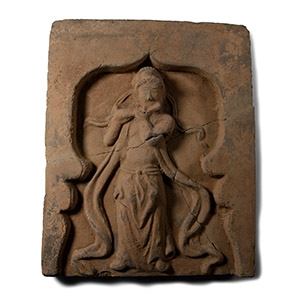
Chinese Song Wall Tile with Flute Player
Song Dynasty, circa 960-1279 A.D.Sold for (Inc. bp): £65
Rectangular in plan displaying a female flautist in relief within an elaborate ogival niche; repaired. 3 kg, 31 x 25 cm
Ex North London collection from 1980s-1990s. Property of a Ruislip, UK, gentleman, by inheritance. -
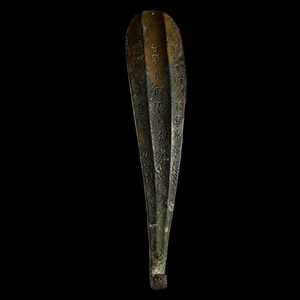
Chinese Han Dynasty Bronze Belt Hook with Inscription
Han Dynasty, 206 B.C.-220 A.D. or laterEstimate: £700 - 900 (+bp*)
Opening Bid: £350
Fluted teardrop shape with hooked narrow end, fixing stud to the reverse, three columns of later stamped text to the face. 111 grams, 18 cm
From an important West Country collection, 1980s. -
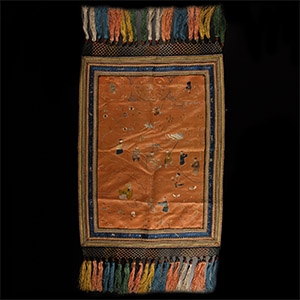
Chinese Embroidered Silk Chair Cover Panel
Ch'ing Dynasty, late 19th century A.D.Sold for (Inc. bp): £65
Rectangular with coloured tassels to each end, depicting an individual- possibly an emperor- seated in a chair with attendants behind and before him, a sage seated before a reeded body of water, turning his attention towards two kneeling devotees; flying cranes, butterflies, budding plants and trees around; framed by a series of concentric borders of alternating colour. 142 grams, 90 x 44 cm
Acquired Germany. Property of RWM Collection.
