
Loading, please wait...
LOT 2172
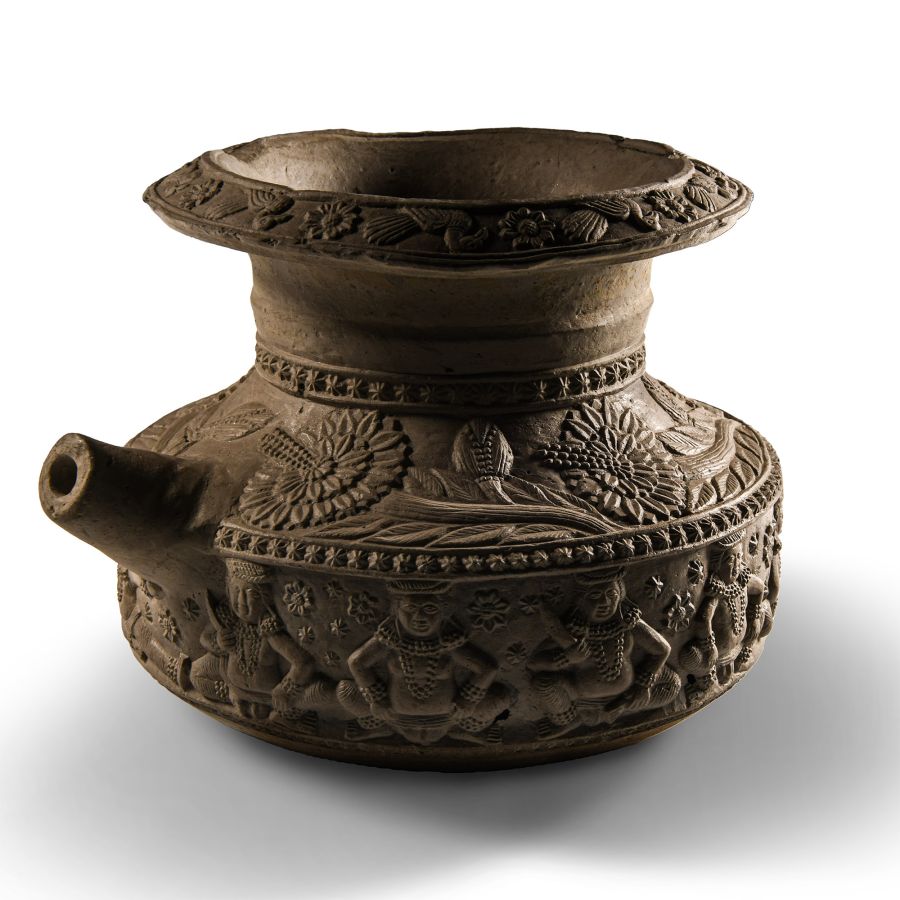
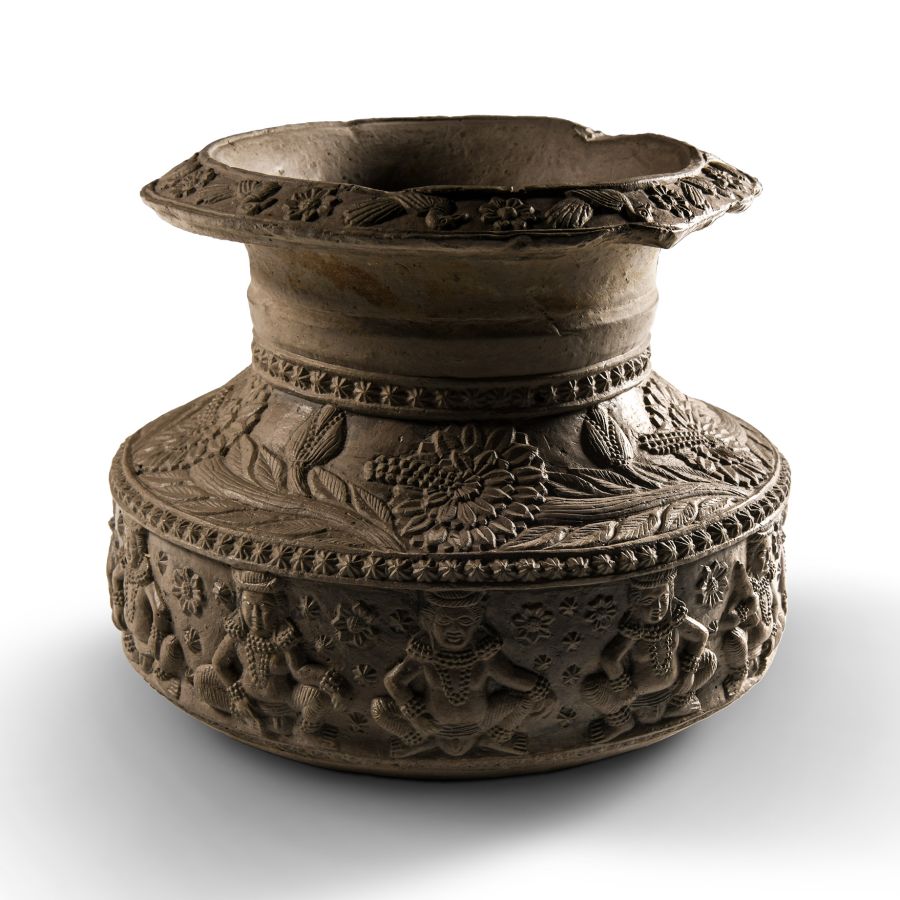
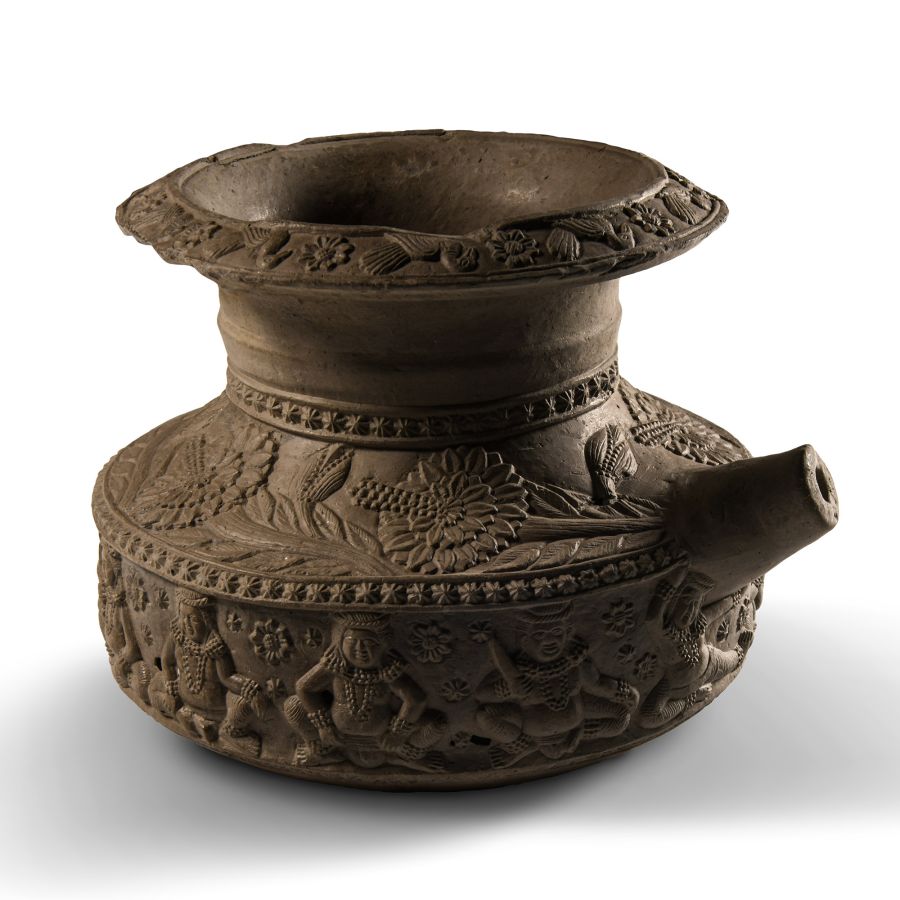
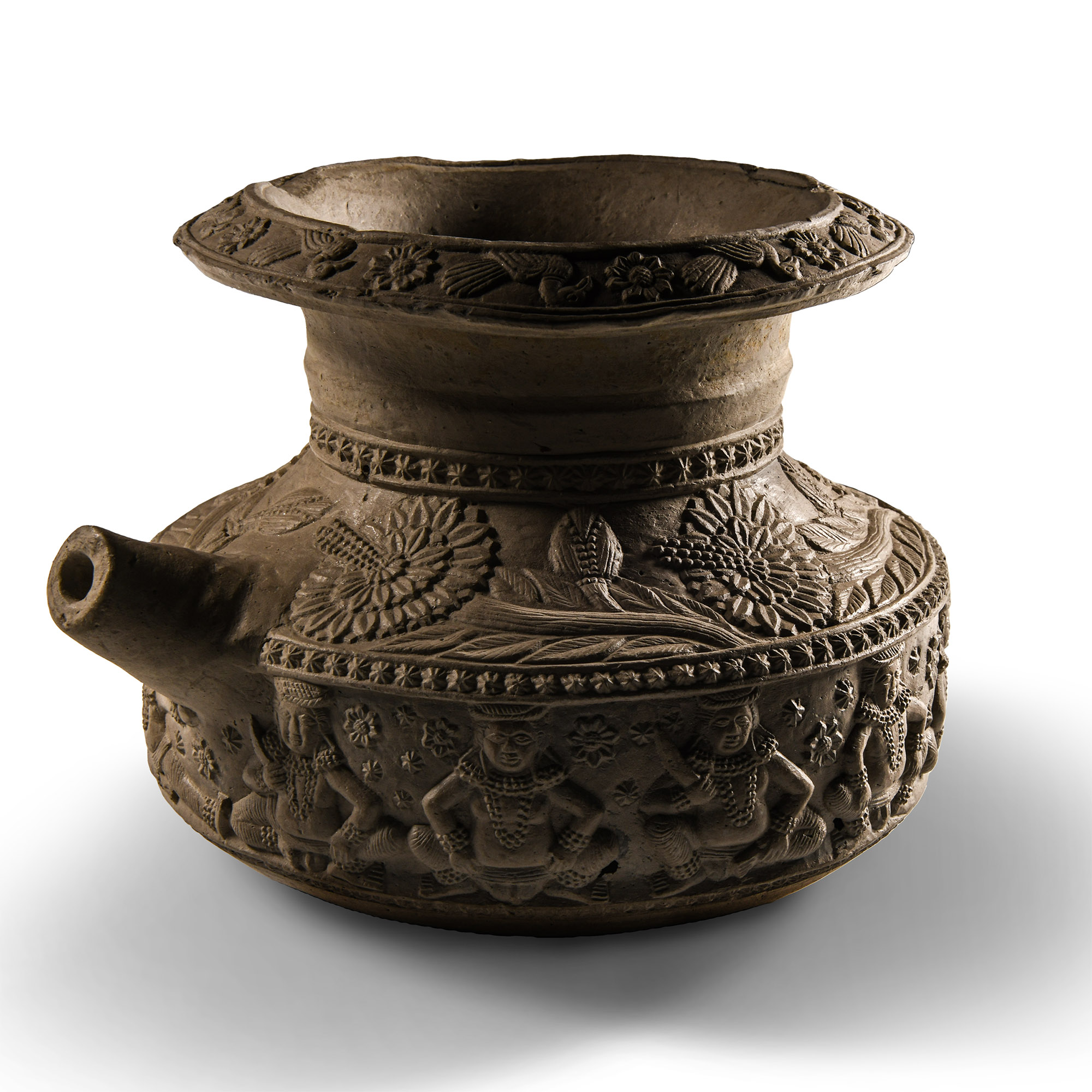
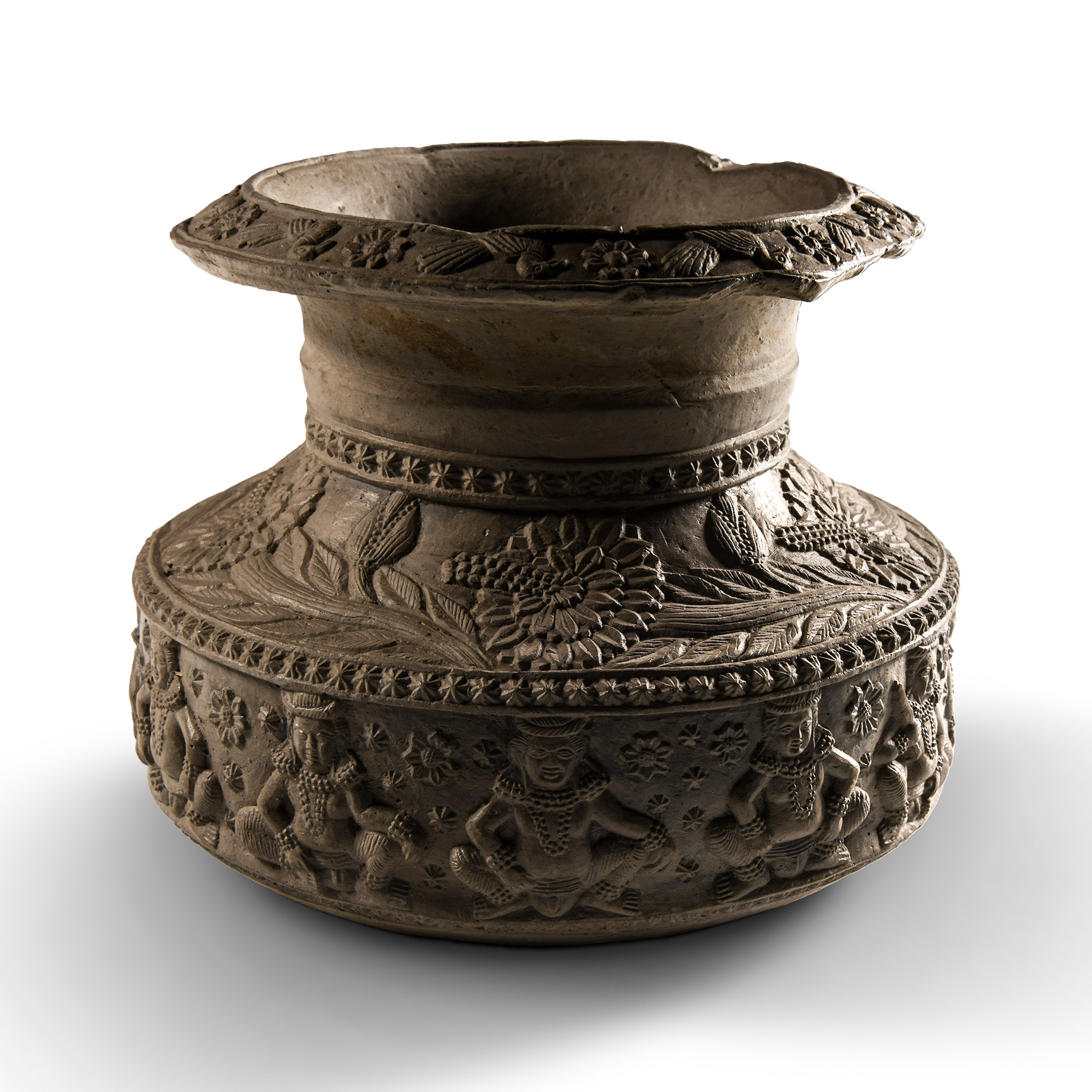
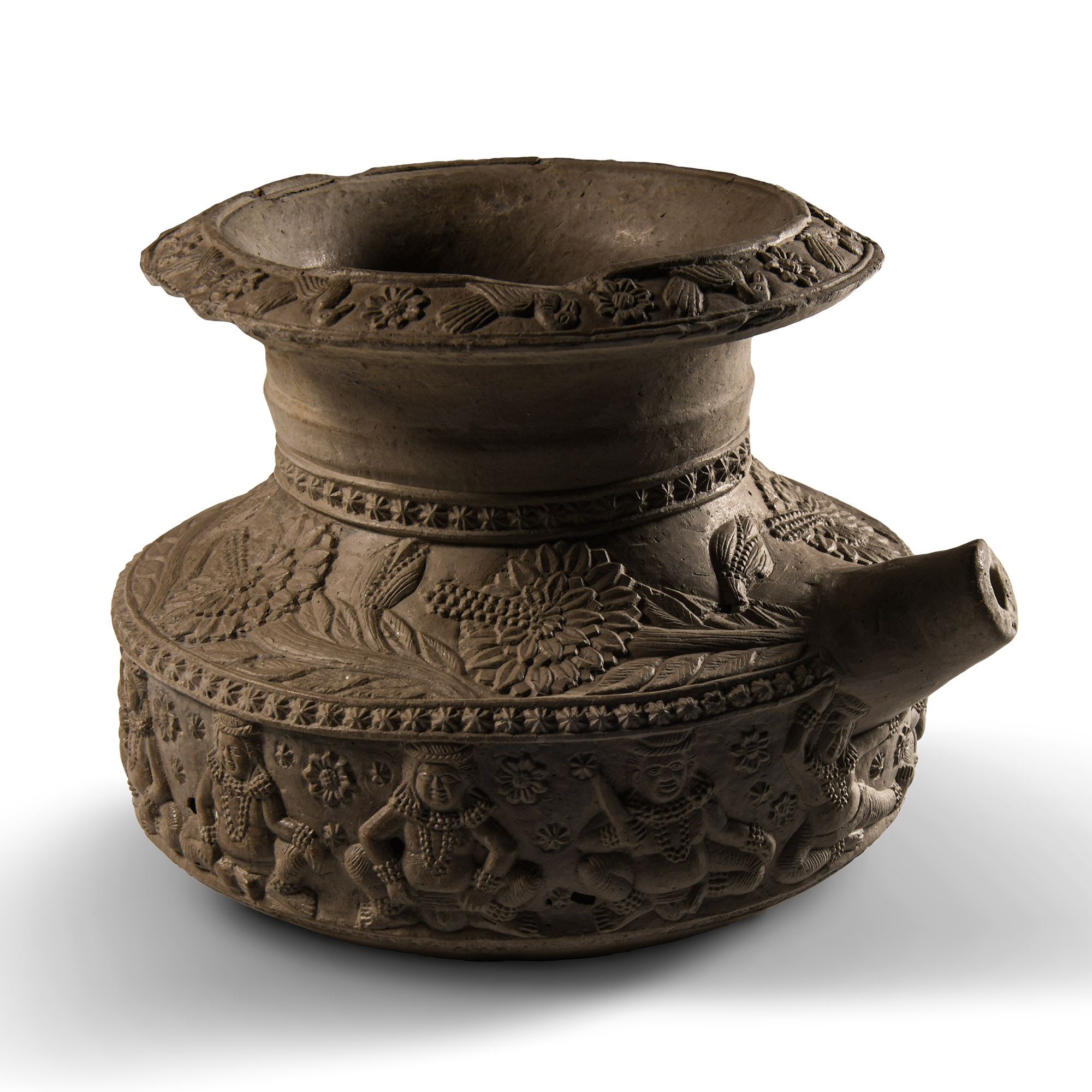
Chandraketugarh Ceramic Vessel with Seated Gods
2ND CENTURY B.C.-1ST CENTURY A.D.
6 1/4 in. (416 grams, 16 cm wide).
The squat, drum-shaped pouring vessel with conical spout, broad neck, chamfered rim and rounded base; dense panels of moulded ornament displaying alternating rosettes and birds to the rim, large-headed flowers between band of rosettes to the shoulder, lower body featuring a frieze of squatting male figures displaying their genitalia, all wearing cloth headdresses, ornamental collars, arm bangles and anklets, a number holding knives; chipped.
ProvenancePrivate collection, 1989.
Acquired on the UK art market.
TimeLine Auctions follows a vetting process to ensure the authenticity and legality of all items, reinforcing our commitment to integrity and responsible trading. Each antiquity, antique, and coin lot undergoes thorough examination by a vetting committee of at least ten external specialists, professional trade association members, scientists, and archaeologists: Our Vetting Process
AUCTIONS:
TimeLine is a leading auction house specialising in antiquities, ancient art, collectables, natural history, coins, medals, and books. Our auctions offer museums, collectors, historians, and enthusiasts the opportunity to acquire unique and historically significant pieces.
LOT 2172
Chandraketugarh Ceramic Vessel with Seated Gods
Estimate £800 - 1,000€930 - 1,160 (for guidance only)$1,080 - 1,350 (for guidance only)
-
Indus Valley Etched Orange Carnelian Necklace Bead Group
Circa 2nd millennium B.C. or laterSold for (Inc. bp): £3,380
Composed of polished carnelian beads including spherical, conical, drum, oval and other types, etched with geometric designs. 41 grams total, 6-14 mm
UK gallery, early 2000s. -
Framed Watercolour Painting
Persia, late 20th century A.D.Estimate: £80 - 100 (+bp*)
Opening Bid: £40
Showing what appears to be the judgement of a captive man by a nobleman in a lavish court setting, broad border decorated with various plants; mounted in a reveal and a glazed wooden frame. 1 kg, 39.5 x 34.3 cm
Very fine condition.
Acquired on the UK art market, 1980s-1990s. The Woodbridge collection of Indo-Persian art. -
Gandharan Dish with Female Anguiped
20th century A.D. or earlierSold for (Inc. bp): £468
Carved steatite with mural border, central anguiped with collar, armrings, bracelets and hair decorations; rimm stepped to the reverse; mounted on a custom-made stand. 112 grams total, 80 mm (205 grams total, 12 cm high including stand)
Ex London gallery stock.
